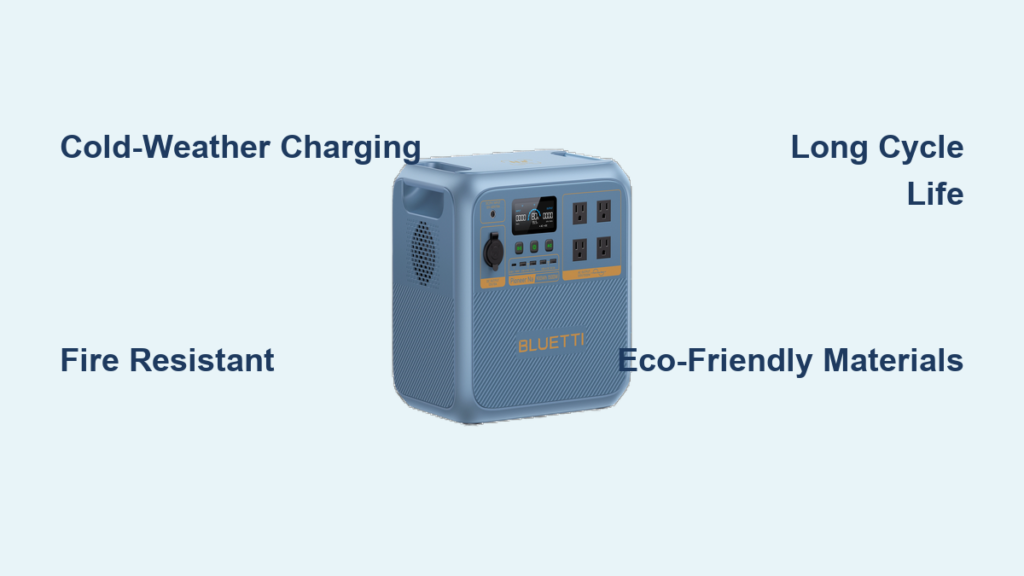
Portable power stations are changing fast, and sodium-ion technology is emerging as a powerful alternative to traditional lithium batteries. If you have ever struggled with a dead battery in freezing weather, worried about indoor fire risks, or wanted a more sustainable energy solution, sodium-ion might be exactly what you need. The launch of the Blue Pioneer NA, the first commercially available sodium-ion portable power station in Western markets, marks a turning point in off-grid energy options.
This guide covers every major advantage of sodium-ion portable power stations, from cold-weather performance to environmental benefits. Whether you are preparing for winter emergencies, living off-grid, or seeking greener energy choices, you will find clear comparisons and practical insights to help you decide if sodium-ion fits your needs.
Superior Cold-Weather Performance
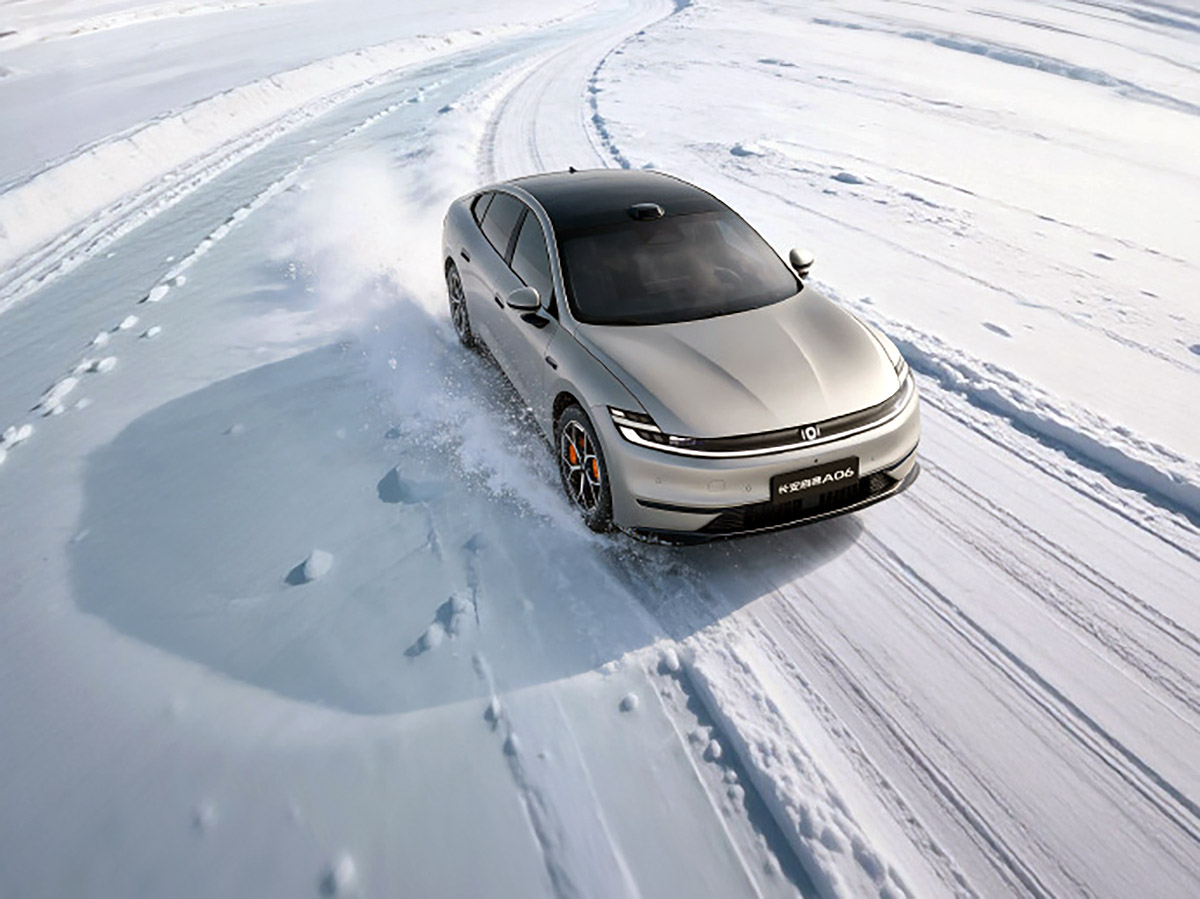
Sodium-ion power stations outperform lithium batteries in freezing conditions, making them a game-changer for winter use and cold climates.
Charging and Discharging Below Freezing
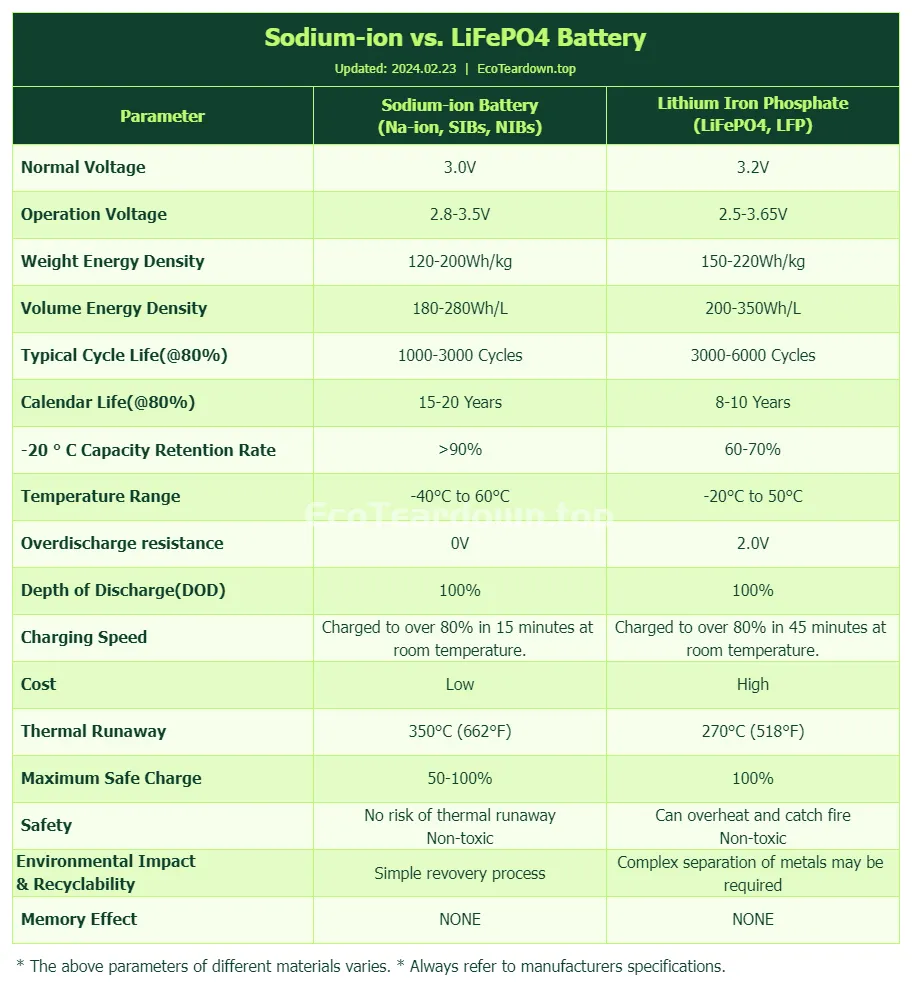
Unlike most lithium iron phosphate batteries, which cannot charge at temperatures below zero, sodium-ion units like the Blue Pioneer NA can charge at -15°C and discharge at -25°C. They deliver 80% of rated capacity even in extreme cold, meaning you can recharge from solar panels on a snowy morning or run critical gear during an Arctic storm. Most LFP stations simply shut down in these conditions.
Why Sodium Handles Cold Better
The chemistry behind this resilience includes lower freezing point of sodium-based electrolytes, stable ion movement at low temperatures, and reduced internal resistance when cold. As a result, sodium-ion batteries maintain consistent voltage output and efficiency in sub-zero environments where lithium performance drops sharply.
Ideal Applications for Cold Weather
These capabilities make sodium-ion perfect for mountain camping, alpine expeditions, emergency winter power outages, Arctic research stations, and high-latitude off-grid cabins.
Enhanced Safety and Fire Resistance
Sodium-ion batteries are inherently safer than lithium-ion, reducing fire and explosion risks for home and outdoor use.
Lower Risk of Thermal Runaway
Thermal runaway, a chain reaction that causes overheating or fire, is rare in sodium-ion cells due to higher thermal stability of electrode materials, lower cell voltage reducing energy release during failure, and no oxygen release from cathodes under stress. This makes sodium-ion units safer for indoor use, vehicles, and confined spaces.
Overcharging and Abuse Tolerance
Sodium-ion batteries can survive prolonged overcharging without catching fire, resist ignition after puncture or short-circuit, and operate safely in high-heat environments like parked cars or tropical climates. Unlike lithium-ion, which may vent flammable gases as a safety measure, sodium-ion cells remain chemically stable under extreme conditions.
Best Uses for Safety-Critical Applications
This safety profile is ideal for home backup power, medical device support, disaster preparedness kits, and use around children or pets.
Exceptional Cycle Life and Longevity
Sodium-ion power stations last longer than many lithium alternatives, delivering better long-term value.
4,000 Plus Full Charge Cycles
The Blue Pioneer NA is rated for 4,000 cycles at 80% capacity retention, matching or exceeding most LFP batteries that typically range from 3,000 to 4,000 cycles. Some sodium-ion cells from manufacturers like Lecom claim 5,000 cycles, and CATL projects 10,000 or more in future models. This means over ten years of daily use in some scenarios, lower replacement frequency, and better return on investment for high-use applications.
Slower Degradation in Extreme Temperatures
Sodium-ion batteries maintain performance longer in cold climates where lithium degrades faster, and in hot environments due to superior thermal stability. This extended lifespan is especially valuable for off-grid solar systems, commercial rental fleets, and emergency response equipment.
Abundant Materials and Ethical Sourcing

Sodium-ion batteries use globally available materials, cutting costs and avoiding ethical supply chain concerns.
Sodium Versus Lithium Supply Chain Advantages
Sodium is the sixth most abundant element on Earth, found in seawater and salt, while lithium is concentrated in only a few countries creating geopolitical and price volatility. This abundance translates to lower raw material costs and greater supply resilience for sodium-ion technology.
No Copper or Cobalt Required
Sodium-ion batteries use aluminum for both electrodes, unlike lithium-ion which requires copper for the anode current collector and often cobalt or nickel in some chemistries. By eliminating these materials, sodium-ion reduces weight, cost, and environmental and human rights risks associated with mining.
Enables Local Manufacturing
Because sodium-ion production is compatible with existing lithium-ion production lines, manufacturers can retrofit factories with only about ten percent added investment, scale production without building new plants, and support domestic battery production in countries without lithium reserves.
Eco-Friendly and Sustainable Design
Sodium-ion batteries have a smaller environmental footprint across their entire lifecycle.
Lower Mining Impact
Lithium mining consumes vast amounts of water, often in fragile desert ecosystems like the Atacama Desert. Sodium extraction is far less resource-intensive, using common salt. This reduces aquifer depletion, soil and water contamination, and ecosystem disruption.
Non-Toxic and Easily Recyclable
Materials in sodium-ion batteries, including sodium, iron, carbon, and manganese, are non-toxic, easily recyclable, and safer to dispose of. This supports circular economy goals and simplifies end-of-life handling.
Aligns With Green Energy Trends
Sodium-ion complements renewable energy systems by offering sustainable storage for solar and wind, low-impact backup power, and ESG-compliant solutions for businesses and communities.
Deep Discharge and Long-Term Storage
Sodium-ion power stations handle real-world storage scenarios better than lithium alternatives.
Safe to Discharge to Zero Volts
Unlike lithium-ion, which can be permanently damaged if drained too low, sodium-ion batteries can be fully discharged to zero volts without harm and can be recharged even after complete drain. This is ideal for emergency kits left unused for months, seasonal equipment like RVs and boats, and users who forget to recharge.
Extended Shelf Life
Sodium-ion batteries have a very low self-discharge rate, allowing them to retain charge for up to eighteen months in storage and start reliably after long periods of inactivity. There is no need for maintenance charging, so you can simply turn it on when you need it.
Perfect for Backup and Rental Use
These features make sodium-ion ideal for disaster preparedness systems, commercial rental fleets, remote monitoring stations, and military or expedition gear.
High-Temperature Resilience
Sodium-ion power stations perform reliably in hot climates, not just cold environments.
Stable Operation in Heat
Sodium-ion batteries resist overheating during charging and discharging, maintain efficiency in tropical and desert environments, and do not require cooling systems in enclosed spaces like vans or sheds. This dual tolerance, cold and heat, makes them uniquely suited for global deployment.
No Thermal Throttling in Summer
Many lithium-ion stations reduce output or shut down in high heat. Sodium-ion units maintain full power delivery, avoid thermal throttling, and operate safely in parked vehicles or sun-exposed locations. This makes them ideal for use in Southeast Asia, India, the Middle East, and summer camping trips.
Manufacturing Compatibility and Scalability
Sodium-ion can be produced on existing lithium-ion production lines, speeding up adoption and reducing costs.
Production Line Compatibility
Most sodium-ion manufacturing processes work on repurposed lithium-ion equipment, existing industrial supply chains, and current quality control systems. This reduces time-to-market, capital costs, and research and development barriers.
Faster Global Scaling
Companies like CATL and HiNa are already mass-producing sodium-ion batteries in China. The United States and Europe are now investing in domestic production to reduce lithium dependence, diversify energy storage options, and meet growing demand for sustainable technology.
Real-World Use Cases and Best Applications

Sodium-ion power stations excel in specific niches where their advantages matter most.
Cold-Climate and Outdoor Survival
Their ability to start and charge in extreme cold makes sodium-ion ideal for winter camping, search and rescue operations, polar research, and snowmobile or ski lodge power.
Home and Emergency Backup
Safety and deep discharge tolerance reduce risks during long blackouts, making sodium-ion suitable for power outages in freezing regions, indoor backup systems, and medical device support.
Off-Grid and Renewable Energy
Long cycle life and sustainability align with green energy goals for solar-powered cabins, microgrids in remote areas, and community energy projects.
Commercial and Industrial Use
Durability and shelf life reduce maintenance and downtime for rental equipment fleets, construction site power, and data backup in harsh environments.
When Lithium Still Performs Better
Sodium-ion is not ideal for everyone, so understanding its limitations helps you make the right choice.
Maximum Portability Needs
If you need ultra-lightweight gear for backpacking, hiking, or drone operations, sodium-ion units are twenty to twenty-five percent heavier than comparable LFP stations. The Pioneer NA weighs sixteen kilograms, which works fine for stationary use but becomes bulky for travel.
Fast Charging Requirements
Lithium systems like the Bluetti Elite 100 V2 charge to eighty percent in forty-five minutes using AC power. Sodium-ion lacks ultra-fast charging data so far, offering moderate speed only, which may be a limitation for time-sensitive operations or daily high-use scenarios.
Highest Energy Density Demands
Sodium-ion energy density ranges from one hundred twenty to one hundred seventy-five watt-hours per kilogram, while advanced LFP reaches one hundred eighty watt-hours per kilogram. The gap is closing, but lithium still leads for high-wattage mobile use and space-limited installations.
Future Outlook: Coexistence, Not Replacement
Sodium-ion will not replace lithium, but it is growing fast in key markets.
Projected Market Growth
BloombergNEF forecasts sodium-ion capturing twenty-three percent of stationary storage by 2030, over fifty gigawatt-hours. China leads research and development with fifty-three percent of global patents, and over fifteen EV models already use hybrid sodium-LFP batteries. Fully sodium EVs are expected in mass production within twelve months.
A Breakthrough Year Ahead
Experts predict 2026 will bring wider commercial availability, improved energy density, lower consumer prices, and more United States and European models.
The Future Is Diversified
The energy storage future is not lithium or sodium, but both. Lithium-ion will dominate portability, speed, and high-density applications, while sodium-ion will grow in safety, sustainability, and extreme-environment roles.
Frequently Asked Questions About Sodium-Ion Portable Power Stations
Can sodium-ion batteries be charged in freezing weather?
Yes, sodium-ion batteries like the Blue Pioneer NA can be charged at temperatures as low as -15°C, unlike most lithium batteries that require temperatures above 0°C. This makes them ideal for winter use and cold climate applications.
How long do sodium-ion portable power stations last?
The Blue Pioneer NA offers 4,000 charge cycles at 80% capacity retention, which translates to over ten years of daily use. Some manufacturers project up to 10,000 cycles in future models.
Are sodium-ion batteries safer than lithium-ion?
Sodium-ion batteries are inherently safer due to higher thermal stability, lower risk of thermal runaway, and resistance to overcharging abuse. They do not vent flammable gases and are less likely to catch fire under extreme conditions.
What are the main disadvantages of sodium-ion power stations?
The main trade-offs are higher weight and lower energy density compared to lithium-ion. Sodium-ion units are about twenty to twenty-five percent heavier and cannot charge as quickly as high-end lithium systems.
Can sodium-ion batteries be stored for long periods without use?
Yes, sodium-ion batteries can retain charge for up to eighteen months in storage and can be safely discharged to zero volts without damage. This makes them perfect for emergency kits and seasonal equipment.
Key Takeaways for Choosing Sodium-Ion Power Stations
Sodium-ion portable power stations offer real advantages in safety, longevity, cold performance, and sustainability that lithium cannot match. They excel in extreme temperatures from -25°C to hot climates, can be stored for eighteen months without maintenance, and use abundant, non-toxic materials that support ethical and environmental goals. With four thousand or more cycle life, they deliver excellent long-term value for stationary backup, off-grid use, and emergency preparedness.
The trade-offs are weight and charging speed. If you need ultra-portable gear or fastest possible recharge times, lithium still leads. But for users who prioritize reliability in harsh conditions, sustainable sourcing, and safe indoor use, sodium-ion is a strategic upgrade that fills critical gaps in the portable power market. As production scales and technology improves through 2026 and beyond, sodium-ion will become an increasingly mainstream choice for resilient, responsible energy storage.