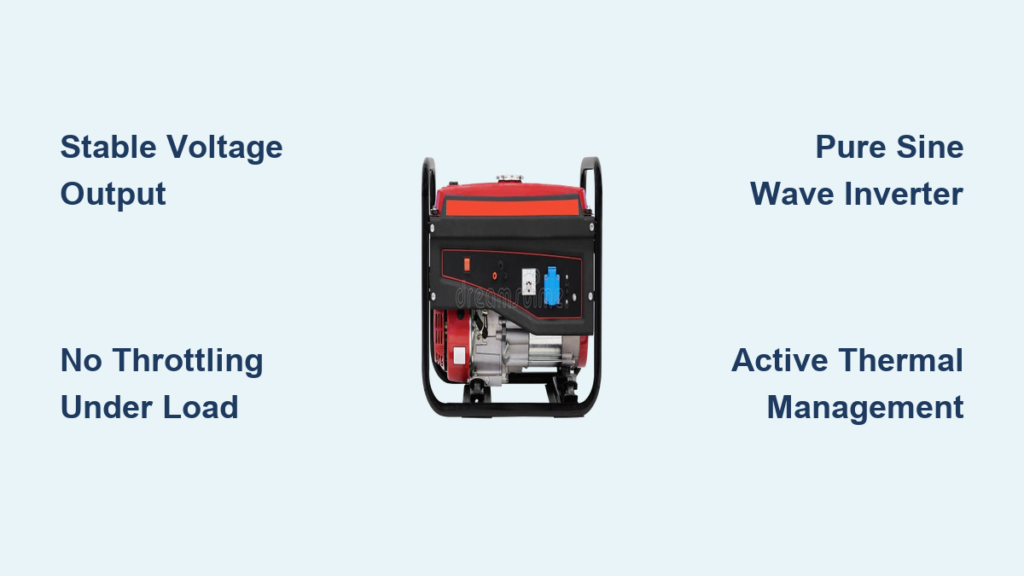
Imagine running a sensitive laptop, medical device, or power tool from your portable power station—only to have it suddenly reboot, underperform, or fail. You check the wattage: you’re well under the unit’s rated capacity. So why did it happen? The culprit is often voltage throttling, a hidden flaw in many portable power stations that causes output voltage to drop under load.
A portable power station that does not throttle voltage delivers stable, consistent AC output even when powering high-demand or sensitive devices. Unlike cheaper models that prioritize peak wattage numbers, these units are engineered for real-world reliability. They maintain voltage within safe, regulated limits regardless of load fluctuations.
Why Voltage Stability Matters for Your Devices
Prevents Costly Device Malfunctions
Unstable voltage leads to erratic behavior in electronics. Routers reboot, refrigerators fail to start, and medical devices trigger error codes. A non-throttling power station ensures your devices receive clean, consistent power just like grid electricity.
Protects Sensitive Equipment
Laptops, camera batteries, and lab equipment rely on precise voltage. Fluctuations can cause charging failures, data loss, or long-term damage. Stable voltage mimics high-quality wall outlets, reducing these risks significantly.
Ensures Power Tools Perform at Full Strength
Power tools with motors like drills, saws, and compressors need full voltage to deliver rated torque. Voltage sag reduces cutting speed, increases heat, and shortens motor life. A stable output keeps tools running at full strength throughout your work.
How Voltage Throttling Occurs in Power Stations
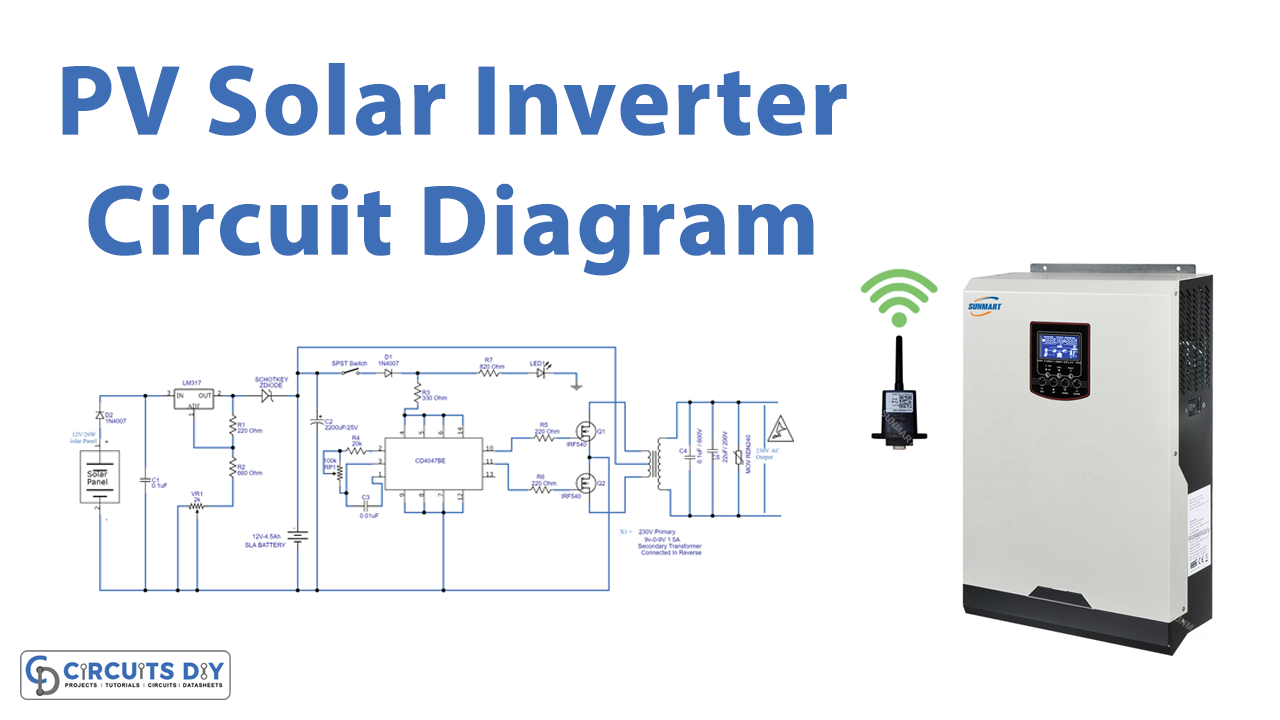
Weak Inverter Design
Many budget units use underpowered inverters that cannot sustain voltage under load. Even if rated for 1000W, the inverter may drop below 110V when powering just 800W of mixed devices. This design flaw is the most common cause of voltage instability.
Poor Battery Discharge Response
Lithium-ion or LFP cells with high internal resistance cannot deliver the current needed during load spikes. This causes voltage to dip at the source before it even reaches the inverter. Battery quality directly impacts voltage consistency.
Thermal Derating
As internal components heat up, some models automatically reduce output voltage to avoid overheating. This happens even if the load is below rated capacity. The unit protects itself at the expense of your devices.
Marketing Over Engineering
Manufacturers often advertise peak wattage with minimal testing data. These numbers look good on paper but do not reflect real-world voltage behavior under sustained use. Always verify actual performance, not just marketing claims.
Signs Your Power Station Is Throttling Voltage
Devices Reboot Unexpectedly
If your router or CPAP machine restarts when the refrigerator kicks on, voltage instability is likely the cause. This is one of the most noticeable symptoms of throttling under load.
Power Tools Lose Power Mid-Use
A circular saw slowing down after 30 seconds even with plenty of battery left indicates voltage sag. Motors require consistent voltage to maintain performance.
Multimeter Shows Voltage Below 108V
Plug in a digital multimeter or kill-a-watt meter. If voltage drops below 108V on a 120V system under load, your unit is throttling. This is a clear indicator that voltage regulation is failing.
Charging Behavior Becomes Inconsistent
Devices charge slowly or stop charging intermittently, especially when other appliances are running. This often points to voltage fluctuations affecting charging circuits.
What Sets Non-Throttling Power Stations Apart

High-Performance Pure Sine Wave Inverters
Top-tier models use industrial-grade inverters with tight voltage regulation. These maintain 120V within plus or minus 3% even during load transients. This level of precision prevents device failures.
Optimized Battery Architecture
Units designed to avoid throttling use low-resistance cell layouts, often with parallel configurations and robust busbars. This minimizes voltage drop during high-current draw and maintains consistent output.
Active Thermal Management Systems
Instead of throttling, advanced systems use fans and heat sinks to maintain performance. Some adjust output in stages, reducing wattage slightly while preserving voltage stability.
Realistic Rated Output Claims
Manufacturers of non-throttling stations publish continuous load test data showing voltage behavior at 50%, 75%, and 100% load over time. This transparency helps buyers make informed decisions.
Key Specifications That Reveal Voltage Stability
Continuous Versus Peak Wattage
Look for units where continuous wattage equals or is very close to peak wattage. A large gap suggests instability. For example, 1000W continuous with 1200W surge is more reliable than 600W continuous with 1000W peak.
Voltage Regulation Range
Check specs for voltage regulation tolerance. High-quality units specify plus or minus 3% to plus or minus 5%. If this is not listed, assume poor regulation.
Load Test Transparency
Brands like EcoFlow, Jackery, and Bluetti often publish voltage graphs under load. Look for flat voltage curves, not downward slopes indicating throttling.
Top Models That Maintain Stable Voltage

EcoFlow Delta 2
The EcoFlow Delta 2 offers 1200W continuous output with 1800W surge capacity. It maintains 115 to 125V under full load thanks to active cooling that prevents thermal throttling. Third-party load testing verifies its performance.
Bluetti AC200P
The Bluetti AC200P features a 2000W pure sine wave inverter with stable voltage up to 1800W sustained. It uses oversized inverter components and LFP cells with low internal resistance for consistent power delivery.
Anker SOLIX F3800
The Anker SOLIX F3800 delivers 3600W continuous output with less than 5% voltage fluctuation. Its industrial-grade inverter is designed for whole-home backup with stable voltage throughout operation.
Pro Tip: Always check firmware version and model year. Some brands improved voltage stability in later revisions.
How to Test for Voltage Throttling at Home
Using a Kill-A-Watt Meter
Plug the meter into the power station and connect a resistive load like a space heater or hair dryer. Gradually increase load in 200W increments while monitoring AC voltage. If it drops more than 5%, throttling is occurring.
Simulating Real-World Load
Run a refrigerator or sump pump. These have high startup surges. If the compressor struggles or cycles repeatedly, voltage is likely unstable. This test reveals how the unit handles inductive loads.
Checking Under Sustained Load
Run a 75% load for 30 minutes. If voltage drops over time rather than just at startup, thermal throttling is active. This reveals long-term performance issues.
Common Mistakes to Avoid
Relying Only on Wattage Ratings
A 1000W rating means nothing if voltage collapses at 700W. Always verify sustained performance, not just peak numbers. Wattage alone does not indicate voltage stability.
Ignoring Waveform Quality
Even pure sine wave is not enough. Low-quality inverters can still distort voltage under load. Look for total harmonic distortion below 3% at full load.
Assuming All LFP Stations Are Equal
Lithium iron phosphate batteries are stable, but poor system integration can still cause voltage drop. Design matters more than chemistry alone when it comes to voltage stability.
When Voltage Stability Becomes Critical
Medical Device Power
CPAP machines, oxygen concentrators, and insulin pumps require stable voltage. Voltage sag can trigger shutdowns or damage internal circuits, creating serious health risks.
Home Office Reliability
Routers, NAS drives, and laptops need clean power. Voltage fluctuations cause data corruption, slow charging, or unexpected reboots that interrupt work.
Off-Grid Refrigeration
Refrigerators with compressors draw 3 to 5 times their running wattage at startup. Unstable voltage prevents startup, risking food spoilage during power outages.
How to Choose a Non-Throttling Unit
Define Your Load Profile
List all devices you plan to run simultaneously. Include startup surges like refrigerators that need 600W running but 1800W surge. This gives you accurate power requirements.
Prioritize Continuous Output
Choose a unit with continuous wattage at least 125% of your max running load. This headroom prevents stress and throttling during normal operation.
Check for Load Test Data
Visit manufacturer websites or YouTube reviews. Look for voltage graphs during sustained load tests rather than marketing claims.
Read Real User Feedback
Search forums for phrases like voltage drop, fridge won’t start, or tools underperform. Real user experiences reveal actual performance issues.
Opt for Active Cooling
Passive cooling often leads to thermal throttling. Units with smart fans maintain performance longer under sustained loads.
Maintenance Tips to Preserve Voltage Stability
Keep Vents Clear
Dust buildup traps heat and causes thermal throttling. Clean intake and exhaust ports every 3 months to maintain proper cooling.
Avoid Full Discharge Cycles
Deep discharges increase battery stress and internal resistance. Recharge before dropping below 20% to maintain battery health.
Store at 50% Charge
Long-term storage at full or empty charge degrades battery performance. Store at approximately 50% charge in a cool location.
Frequently Asked Questions About Voltage Throttling
What does voltage throttling mean in simple terms?
Voltage throttling means the power station lowers its output voltage when under load, which can cause devices to malfunction or underperform even when the load is within the rated wattage.
Is voltage throttling the same as power limiting?
No. Power limiting restricts total wattage output, while voltage throttling reduces the actual voltage level. Voltage throttling can be more harmful to sensitive devices because it affects how they function.
Can voltage throttling damage appliances?
Yes. Prolonged exposure to unstable voltage can stress motors, damage power supplies, and harm sensitive electronics. Motors may overheat, and devices may experience shortened lifespans.
Do all portable power stations throttle voltage?
No. Well-designed models from reputable manufacturers maintain stable voltage within safe tolerances even under heavy loads. Budget models are more likely to throttle.
Why do manufacturers not clearly state voltage stability?
Voltage stability is harder to market than peak wattage numbers. It also requires more detailed testing data that many manufacturers do not provide.
Are pure sine wave inverters enough to prevent throttling?
Pure sine wave inverters help, but inverter quality, battery design, and thermal management all play important roles. A pure sine wave does not guarantee voltage stability.
How can I test voltage stability at home?
Use a multimeter or power analyzer while applying a consistent load. Monitor the voltage reading as you increase the load to see if it remains stable.
Is higher capacity always better for voltage stability?
Not necessarily. Design quality matters more than capacity alone. A well-designed 500W unit may provide more stable voltage than a poorly designed 2000W unit.
Key Takeaways for Choosing Stable Power Stations
Portable power stations that do not throttle voltage are essential for anyone who depends on reliable power whether at home, on the job, or off the grid. By focusing on voltage regulation, continuous output specifications, and real-world testing data, you can avoid the hidden dangers of unstable power delivery.
Always prioritize continuous wattage over peak ratings, look for load test data from independent sources, and choose units with active thermal management. Your devices and your peace of mind depend on stable, consistent voltage output.