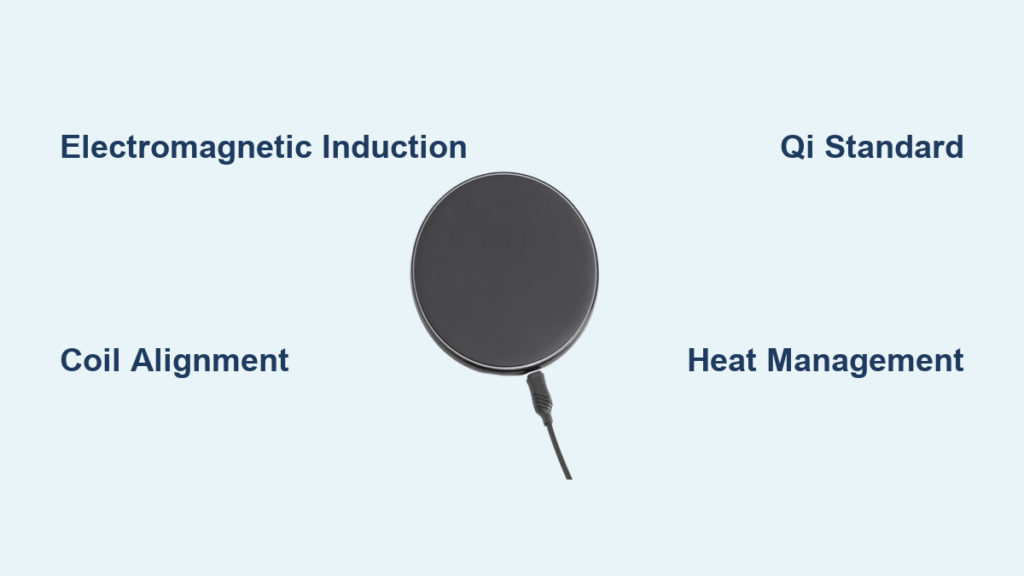
You place your phone on a sleek pad, and it starts charging no cables, no plugging in. It feels like magic, but the truth is even more fascinating: wireless charging works through electromagnetic induction, a principle discovered nearly 200 years ago. This invisible transfer of energy powers everything from smartphones to electric toothbrushes and even experimental roads that charge EVs as they drive.
In this guide, we will break down exactly how wireless chargers work, why alignment matters, what limits their efficiency, and where the technology is headed. Whether you are troubleshooting slow charging or curious about the science behind it, you will leave knowing not just how it works but why it sometimes does not.
Electromagnetic Induction: The Foundation of Wireless Power
The science behind wireless charging starts with a simple truth: moving magnetic fields can create electricity. This phenomenon, called electromagnetic induction, was discovered by Michael Faraday in the 1830s and remains the foundation of modern wireless power.
How Magnetic Fields Transfer Power
When alternating current flows through a copper wire coil in the charger, it generates a rapidly changing magnetic field around it. This field extends just a few millimeters into the air, enough to reach your phone when placed on the pad.
Inside your phone is another coil, precisely positioned to intercept this magnetic field. As the field passes through the receiver coil, it induces an alternating current, essentially creating electricity from magnetism. This induced current is then converted into direct current by a rectifier circuit and used to charge the battery.
Think of it like two fans facing each other: when one spins, the airflow makes the second fan turn even though they are not touching. Here, the magnetic field is the air, transferring energy between coils.
Why Coils Must Be Close and Aligned
Efficiency drops fast with distance. For standard inductive charging like Qi, coils must be within 8 mm, ideally flush against each other. Beyond that, the magnetic field weakens significantly, reducing power transfer.
Misalignment also disrupts the connection. Even a 3 cm offset can cut charging speed in half. That is why newer systems like Apple MagSafe use magnets to snap the coils into perfect alignment, boosting efficiency and enabling faster charging.
Step-by-Step: How Energy Travels From Pad to Phone
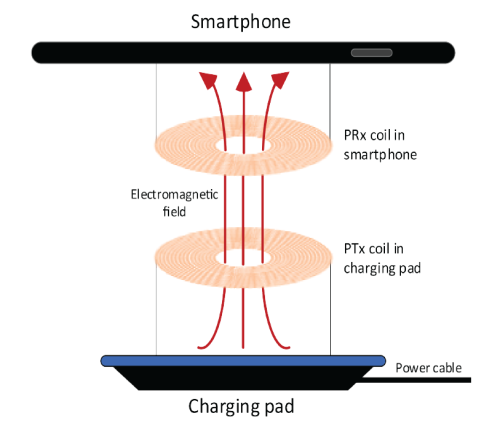
Let us follow the journey of energy from wall outlet to phone battery.
Power Enters the Charger
The wireless charging pad plugs into a power source. Standard USB-C or AC adapters deliver electricity, usually at 5V or 9V depending on the charger is specs.
This power feeds into the transmitter circuit, where it is converted into high-frequency alternating current, typically between 87 and 205 kHz for Qi devices.
Magnetic Field Oscillates
The AC flows through the transmitter coil, made of tightly wound copper wire. As the current alternates, it creates an oscillating magnetic field perpendicular to the coil is plane.
Ferrite material beneath the coil helps focus and contain the field, preventing energy loss and reducing electromagnetic interference.
Receiver Coil Captures Energy
When you place your phone on the pad, its internal receiver coil enters the magnetic field. The changing flux induces a voltage in the receiver, Faraday is law in real time.
The strength of this induced current depends on distance between coils, alignment, coil size and design, and frequency of oscillation.
AC Becomes DC for Battery
The induced current is still alternating, but batteries need direct current. A rectifier circuit converts AC to DC.
Then, a voltage regulator adjusts the output to match the battery is charging requirements, typically 5V or lower for lithium-ion cells.
Device and Charger Communicate
Modern wireless systems are not dumb. They use communication protocols to negotiate power levels.
Your phone tells the charger it supports 15W fast charging, it is getting too hot so reduce power, or battery is full so stop charging. This two-way dialogue ensures safe, efficient charging and prevents overheating or overcharging.
Types of Wireless Charging Technologies
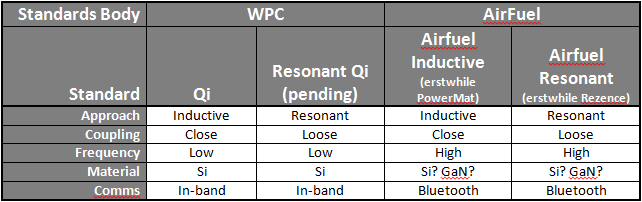
Not all wireless charging is the same. Three main technologies power today is devices, each with different capabilities.
Inductive Charging: Close Contact Only
This is the most common type, used by Qi chargers, electric toothbrushes, and MagSafe.
The distance is up to 8 mm. Alignment is critical. The efficiency is 70 to 80 percent when aligned. The frequency is 87 to 205 kHz.
Best for devices that sit directly on a pad. Misalignment or thick cases can block charging entirely.
Pro tip: Remove metal cases or pop sockets before charging. They can overheat or disrupt the field.
Resonant Charging: More Flexibility
An advanced form of inductive charging that uses resonance to boost efficiency over distance.
Both transmitter and receiver coils are tuned to the same frequency, usually 85 kHz, like two tuning forks vibrating in sync.
The distance is up to 50 mm or 2 inches. Alignment is less critical, it works even with lateral offset. Applications include multi-device charging pads, public kiosks, and some EVs.
Resonant systems allow spatial freedom: place your phone anywhere on the pad, and it charges.
RF Charging: Power Through Air
Instead of coils, radio frequency charging uses antennas to transmit energy via radio waves.
The range is centimeters to meters. The power level is very low, milliwatts to a few watts. Use cases include IoT sensors, wearables, and medical implants.
No physical alignment needed. Devices harvest energy from ambient RF signals or dedicated transmitters.
While not strong enough for phones yet, it enables true cord-free charging in smart homes and hospitals.
Key Components Inside Your Charger and Phone

Wireless charging relies on precise engineering. Here is what makes it work.
Transmitter and Receiver Coils
Both are typically copper spiral coils, optimized for maximum coupling.
Larger coils mean better range. More turns mean higher inductance. They are often shielded with ferrite sheets to direct the magnetic field.
Ferrite prevents energy leakage and protects nearby electronics from interference.
Rectifier and Control Circuits
Located inside the device, these manage the conversion from AC to DC and regulate charging.
The rectifier converts induced AC to usable DC. The controller IC monitors temperature, voltage, and current. The communication chip talks to the charger using protocols like Qi Baseline Power Profile or Extended Power Profile.
These chips enable features like foreign object detection and adaptive charging speeds.
Safety Systems Built In
Modern chargers include multiple safeguards.
Foreign object detection detects metal debris like coins or keys and shuts off power. Overheating protection reduces power if the device gets too hot. Overcharge prevention stops charging at 100 percent. EMF shielding contains magnetic fields using ferrite.
Without foreign object detection, a forgotten paperclip could heat up dangerously. These systems prevent that.
Qi Standard: The Global Wireless Charging Language
When you buy a wireless charger, chances are it supports Qi, the dominant global standard.
Why Qi Won the Standards War
Launched in 2010 by the Wireless Power Consortium, Qi unified a fragmented market.
Apple, Samsung, Google, and most Android brands use Qi. Power levels include standard at 5W and fast charging at 10 to 15W, some up to 20W. Features include foreign object detection, thermal management, and bidirectional charging on select devices.
By the mid-2020s, Qi became the default for smartphones, ending competition from PMA and Rezence.
Qi2: The Next Generation
Coming in 2024, Qi2 promises major upgrades.
Magnetic alignment like MagSafe brings better efficiency. Faster charging reaches up to 15W reliably. Improved foreign object detection enhances safety. Universal compatibility works across brands.
With magnets ensuring perfect coil alignment, Qi2 could finally make wireless charging as fast and reliable as wired.
Efficiency Trade-offs: Why Wireless Uses More Energy
Wireless charging is convenient, but not free. It uses more energy than wired charging, mostly lost as heat.
Where Energy Is Lost
Magnetic coupling loses energy through misalignment and distance. Coil resistance creates heat from current flow. Rectification loses efficiency during AC-to-DC conversion. Thermal regulation reduces power when the device heats up.
Overall efficiency is 60 to 80 percent for wireless charging, compared to 85 to 95 percent for wired. Misaligned wireless can drop as low as 50 percent.
A 2020 test found charging a Pixel 4 wirelessly used 39 percent more energy than wired, 19.8 Wh versus 14.26 Wh. With misalignment, it jumped to 80 percent more energy.
Heat and Battery Longevity
Your phone gets warm during wireless charging, especially at 15W or higher. That heat stresses the battery over time, potentially reducing lifespan.
Manufacturers combat this with throttling power when hot, using efficient coil designs, and adding thermal sensors.
Still, frequent overnight wireless charging may accelerate battery wear compared to cooler, faster wired sessions.
Distance and Alignment: The Real Limits
Despite marketing claims, wireless charging is not truly wire-free. It demands proximity and precision.
Optimal versus Maximum Distance
Inductive Qi has an ideal gap of 0 to 4 mm and maximum functional gap of 8 mm or less. Resonant charging has an ideal gap of 0 to 10 mm and maximum gap around 50 mm. RF charging works up to 1 meter.
Even a thick case can push you beyond the 8 mm limit. Cases over 3 mm thick may block charging.
Magnetic Alignment Fixes Misalignment
Apple MagSafe uses ring-shaped magnets to align the phone perfectly every time.
The benefits include faster charging up to 15W, no guesswork, and support for accessories like wallets and stands.
Qi2 will bring similar magnetic alignment to all Android devices, finally solving the where do I place it problem.
Phone Cases and Wireless Charging Compatibility
Most cases do not interfere, but some do.
Safe to Use
Silicone, plastic, and leather cases under 3 mm work fine. MagSafe-compatible cases are designed for it. Fabric-covered cases also work.
These materials do not block magnetic fields.
Problematic Cases
Metal plates or kickstands cause issues. Wallets with metal clips are problematic. Thick armor cases over 3 mm may block charging. Magnetic mounts without Qi optimization can prevent charging.
Metal distorts the magnetic field, causing inefficiency or triggering foreign object detection. Some magnetic mounts even prevent charging entirely.
Pro tip: If your phone is not charging, remove the case first. It is the fastest diagnostic step.
Wireless Charging Beyond Smartphones
Wireless charging is not just for phones. It is transforming multiple industries.
Medical Devices: No Wires Through Skin
Implanted devices like pacemakers, neurostimulators, and insulin pumps use wireless charging to avoid infection risks.
Transdermal power transfer eliminates wires piercing the skin. Patients charge externally, safely and painlessly. Research explores flexible, printable antennas under the skin.
This is life-saving tech, enabling long-term implants without surgical battery replacements.
Electric Vehicles: Charging Without Plugs
EVs are adopting wireless charging for convenience and automation.
Stationary wireless charging lets you park over a pad in your garage or parking spot. Power reaches up to 11 kW using the SAE J2954 standard. Efficiency is 70 to 85 percent. It is used in luxury models like the BMW 530e.
Dynamic wireless power transfer charges EVs while driving. Roads with embedded coils do this. Trials exist in France, Germany, USA, and Norway. Challenges include coils heating to 100 degrees Celsius, risk of road damage, and cost of about 6.5 million dollars per mile to install.
While promising, dynamic charging remains experimental due to cost and thermal issues.
Industrial and Commercial Uses
Drones land on pads for automatic recharging. Warehouse robots recharge without human help. Medical carts stay always powered with no cords. Appliances get sealed, waterproof designs with no ports.
Portless devices last longer and survive harsh environments.
Safety Features You Can Trust
Wireless charging is safe, but not without trade-offs.
Built-in Protections
All certified chargers include foreign object detection that shuts off if metal is detected, temperature monitoring that slows charging if too hot, overcharge protection that stops at 100 percent, and EMF shielding that keeps magnetic fields contained.
These systems make accidents rare. No verified cases of fires from Qi chargers exist when using certified gear.
Environmental Pros and Cons
The pros include fewer cables meaning less e-waste, enabling sealed durable devices, and reducing port wear and corrosion. The cons include higher energy use due to inefficiency, heat that reduces battery life, and infrastructure cost that limits scalability for things like wireless roads.
While wireless charging reduces cable clutter, its higher energy consumption means it is not the greenest option yet.
The Future of Wireless Charging
Wireless charging is evolving fast.
Room-Scale Charging
Researchers are testing focused RF beams and resonant cavities to charge devices across rooms.
Imagine walking into your office and your phone starts charging, no pad required.
Still experimental, but companies like Energous and Ossia are pushing boundaries.
Embedded Charging Surfaces
Furniture with built-in charging includes desks, nightstands, car dashboards, and airplane trays.
Airports and cafes are already installing Qi-enabled tables. Just set down your phone and go.
Dynamic Electric Roads
Highways that charge EVs while driving could revolutionize transport.
France tested a 1 km wireless road in 2023. USA has pilot projects in Michigan and Indiana. Norway plans 1,000 km of wireless highways by 2025.
But cost and heat remain huge hurdles.
Qi2 and Universal Adoption
With magnetic alignment and faster speeds, Qi2 could make wired charging optional for most users.
By 2025, expect faster cooler wireless charging, universal compatibility across brands, and seamless integration into daily life.
Frequently Asked Questions About Wireless Charging
Does wireless charging work through phone cases?
Most cases under 3 mm work fine with wireless charging. Thicker cases, metal cases, or cases with magnetic accessories may block or slow charging. Remove the case if your phone is not charging.
Is wireless charging slower than wired charging?
Yes, wireless charging is generally slower. Most wireless chargers max out at 15W, while wired fast charging reaches 65W or higher. Alignment also affects speed significantly.
Why does my phone get hot during wireless charging?
The energy transfer process generates heat, especially when power levels are high or alignment is poor. Both the phone and charger warm up. Manufacturers throttle power when temperatures get too high to protect battery health.
Can wireless charging damage my battery?
Excessive heat from wireless charging can accelerate battery degradation over time. However, modern chargers include thermal protection and will reduce power if things get too hot. Overnight charging with quality certified chargers is generally safe.
What is the difference between Qi and MagSafe?
Qi is the universal standard used by most devices. MagSafe is Apple is proprietary system with magnets for alignment. Qi2 will bring magnetic alignment to all devices, similar to MagSafe.
Can any phone be charged wirelessly?
Only phones with built-in wireless charging coils support wireless charging. Older phones or phones without this hardware require an external receiver case to add wireless charging capability.
Final Thoughts on How Wireless Chargers Work
Next time you drop your phone on a charging pad, remember: it is not magic, it is physics. Electromagnetic induction, refined over decades, makes it possible to power devices without wires.
While less efficient than cables, wireless charging offers unmatched convenience, design freedom, and safety. From smartphones to medical implants and electric cars, it is reshaping how we interact with technology.
As Qi2, resonant charging, and embedded surfaces go mainstream, the future is clear: charging will become invisible, effortless, and everywhere.