Nothing kills your morning faster than turning the key and hearing that dreaded click. Your car battery is dead, and you do not have another vehicle to jump it. The good news: you can jump start a car with a battery charger, whether it is a heavy-duty stationary unit or a compact portable jump starter. This guide walks you through the safe, step-by-step process using only a charger, no second car required.
Whether you are a weekend DIYer with a garage setup or a commuter keeping a portable unit in the glove box, knowing how to use your battery charger as a jump starter is a critical skill. We will cover equipment setup, correct connection order, safety protocols, troubleshooting tips, and post-start care to get you back on the road in minutes.
Choose the Right Charger Type for Your Needs
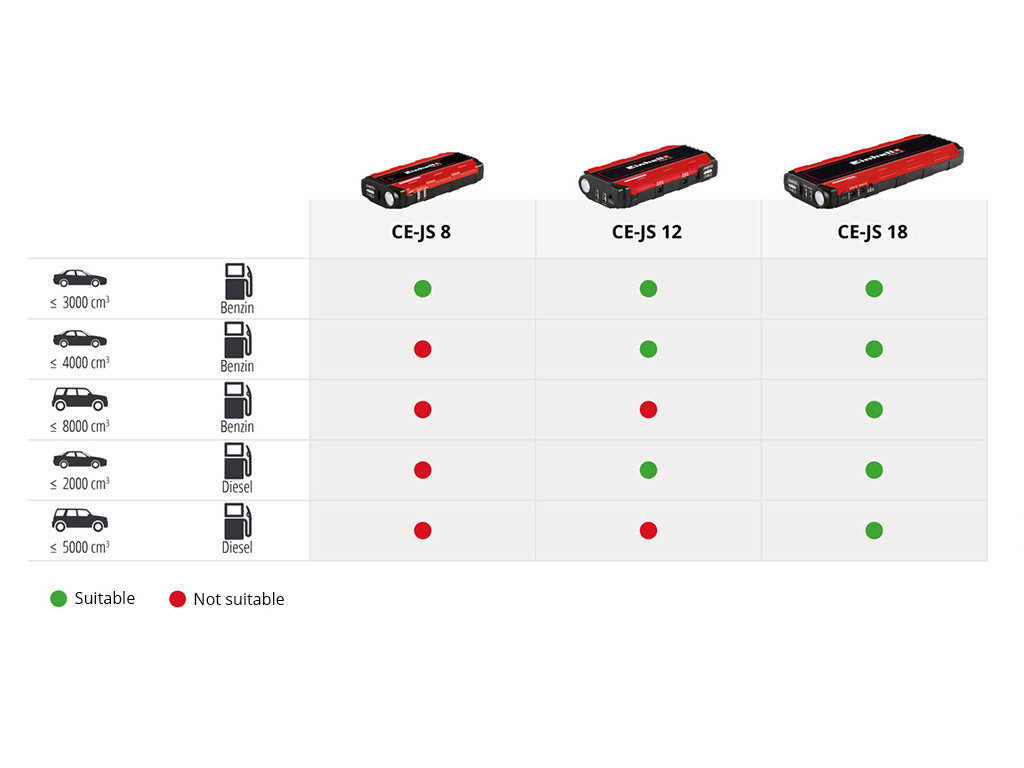
Not all battery chargers work the same way for jump starting. The method depends on which type you own.
Stationary Battery Chargers
These units plug into a wall outlet and sit in your garage or workshop. They offer charge, maintain, and start modes. The Shure 50-Amp Battery Charger is a popular example. You may need extension cords if the power outlet is far from your vehicle. These chargers provide steady power and are ideal for home use.
Portable Jump Starters
These compact, self-powered units store in your vehicle and are ready for emergencies. They include boost mode, USB ports, and flashlights. Most models cost around $100 and can deliver four to five successful jump starts on a full charge. You must recharge them every three to six months, even when unused.
Pro Tip: If you drive in cold climates or own older vehicles, keep a fully charged portable jump starter in your car year-round.
Essential Safety Precautions Before Jump Starting
Jump starting involves high current and potentially explosive hydrogen gas from the battery. Follow these non-negotiable safety steps every time.
Work in a ventilated area to prevent buildup of flammable gases. Wear safety glasses and gloves to protect against acid splashes and sparks. Keep flammable items away from the work area, including gasoline and solvents.
Inspect the battery before proceeding. Do not attempt to charge if the battery is cracked, leaking, or bloated. Never connect clamps backward. Red clamp goes to positive, black clamp goes to negative or ground. Never touch both clamps together once connected.
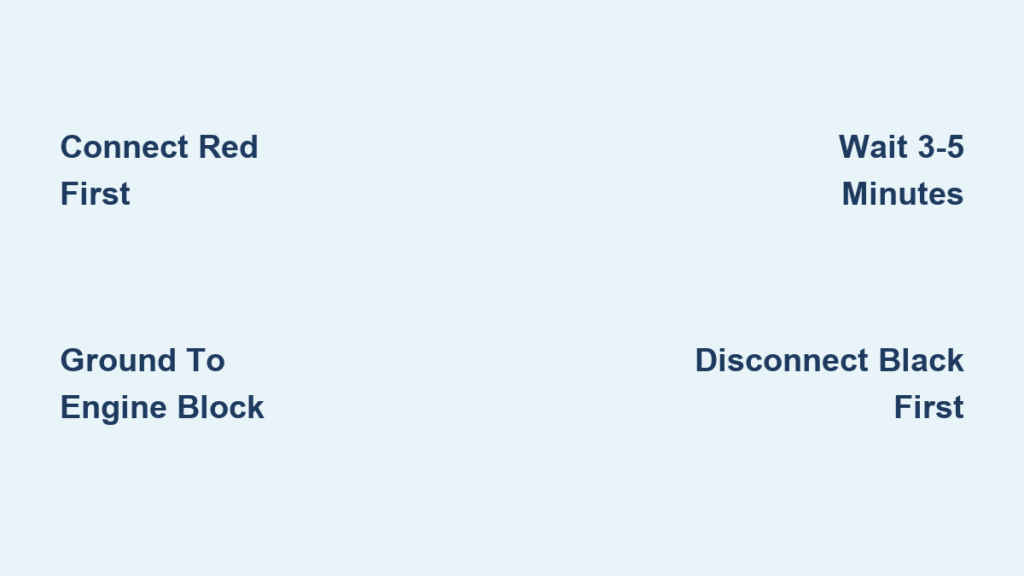
Critical Rule: Always connect positive first, disconnect negative first.
Prepare the Vehicle and Charger for Connection
Proper preparation prevents most common jump start failures.
For Stationary Chargers
Place the unit on a dry, non-conductive surface such as a rubber mat or concrete floor. Plug in the extension cord if needed and verify the outlet works. Confirm the charger is in Start or Boost mode. On Shure models, press the gray button twice to select Start mode.
For Portable Jump Starters
Check the charge level via LED indicators or screen. Fully recharge every three to six months, even if unused. Power on the unit before connecting the clamps.
General Vehicle Preparation
Turn off all electronics including the radio, lights, and air conditioning. Open the hood and locate the battery. Remove plastic terminal covers to expose the metal posts.
Visual Cue: All electronics must be off before making any connections.
Clean and Inspect Battery Terminals
Dirty or corroded terminals block current flow and prevent successful starts.
Wipe terminals with a clean rag to remove surface grime. For white or green corrosion, scrub gently with a battery terminal brush or mix baking soda with water. Dry thoroughly before connecting clamps. Check for secure hold-down brackets, as a loose battery can shift and cause short circuits.
Visual Cue: Terminals should be shiny metal, not crusty or green-tinged.
Connect the Charger Cables in the Correct Order
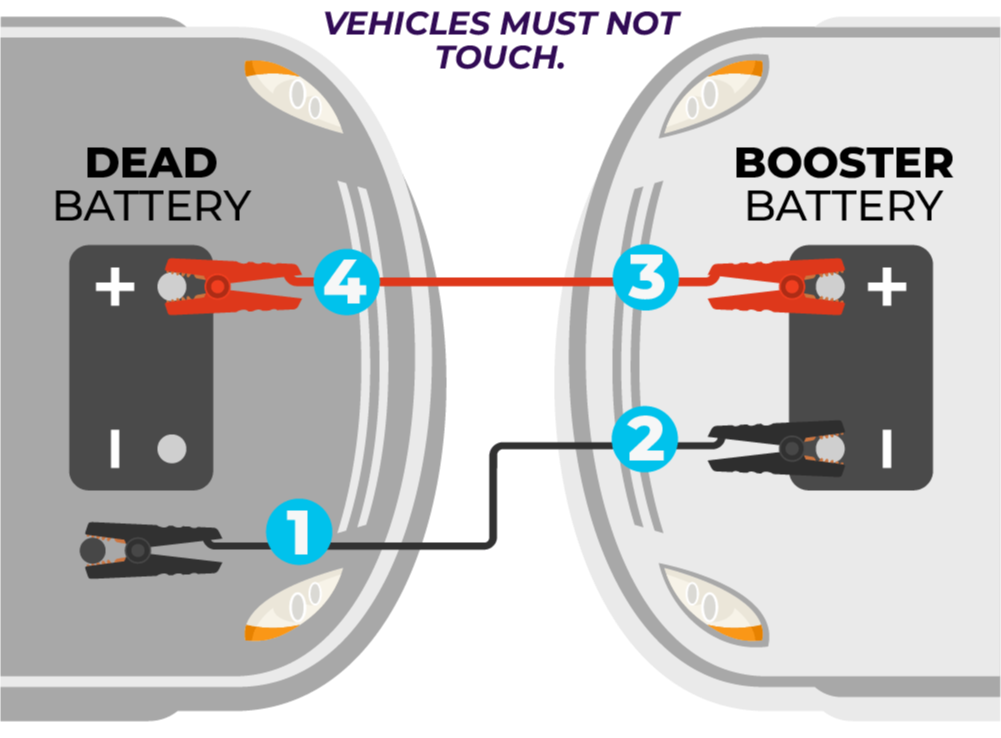
Connection order prevents sparks and short circuits. The process differs slightly by charger type.
For Stationary Chargers
Attach the red positive clamp to the battery positive terminal. Attach the black negative clamp to the battery negative terminal. These units supply lower current initially, so direct negative connection is acceptable.
For Portable Jump Starters
Connect the red positive clamp to the positive battery terminal. Connect the black negative clamp to a clean, unpainted metal part of the engine block such as a bolt or bracket. This grounding method reduces spark risk near hydrogen-emitting battery cells.
Why Ground Instead of Battery Negative? Grounding away from the battery prevents sparks from igniting hydrogen gas that the battery releases during charging.
Activate the Charger and Begin Boosting
Now power up the system and prepare for ignition.
Stationary Charger Steps
Plug into the outlet. Ensure the unit is in Start mode, not Charge or Maintain mode. Wait two to five minutes for initial boost. Watch indicator lights for a Ready to Start signal.
Portable Jump Starter Steps
Press the power or boost button. Wait three to five minutes for charge transfer. Some models beep or flash when ready.
Time Tip: Do not rush. Let the dead battery absorb enough charge to crank the engine properly.
Start the Engine and Verify Success
Now attempt to start the car.
Turn the ignition key or press the start button. If the engine cranks slowly, wait two to three more minutes. Recheck clamp tightness and polarity. If there is no crank at all, verify charger power and mode. Test connections, as loose clamps are the number one failure point.
Success Signal: Engine fires and runs steadily. > Failure Signal: Clicking noise, dim lights, or silence indicates deeper issues requiring troubleshooting.
Disconnect the Charger Safely in Reverse Order
Always disconnect in reverse to avoid sparks and shorts.
Turn off the portable unit or unplug the stationary charger. Remove the black negative clamp first from the engine block for portable units or from the negative terminal for stationary units. Remove the red positive clamp from the positive terminal last. Store cables neatly and replace terminal covers.
Critical Safety Reminder: Never remove the red clamp first. This risks shorting across the battery if the clamp touches metal.
Recharge Your Battery After Jump Starting
Starting the car is only half the battle. You must recharge the battery properly to prevent another dead battery.
Let the engine idle for 15 to 20 minutes. Better yet, take a 30-minute drive at highway speed. Avoid stopping soon after, as deeply discharged batteries may not restart. The alternator needs time to replenish the battery, and short trips will not cut it.
If the car will not restart after shutting off, the battery may be old or failing. Get it load-tested at an auto parts store, where this service is often free.
Troubleshoot Common Jump Start Problems
| Problem | Likely Cause | Solution |
|---|---|---|
| Engine will not crank | Loose or corroded connections | Clean terminals, reattach clamps securely |
| Charger not in Start mode | Switch to boost mode | |
| Dead battery beyond recovery | Replace if over three to five years old or swollen | |
| Charger will not turn on | Portable unit uncharged | Recharge for eight to twelve hours before reuse |
| Faulty outlet | Test with phone charger or lamp | |
| Sparks on connection | Clamps touching or wrong order | Connect red first, black last; keep clamps apart |
| Car starts but dies | Alternator not charging | Test alternator output at 13.5 to 14.5 volts at idle |
Pro Tip: Keep a small wire brush and terminal cleaner in your toolkit for quick fixes on the road.
Understand When a Charger Cannot Help
A battery charger solves only low-charge conditions. It will not fix a failed starter motor, which produces a loud click but no crank. It cannot repair a bad alternator that causes the battery to die repeatedly. It will not resolve ignition or fuel system issues where the engine cranks but will not start.
Never jump-start a frozen battery. It can explode. > Never use a charger on a damaged or leaking battery. Replace it instead.
Maintain Your Battery Charger for Long-Term Use
A well-maintained charger lasts years and saves you in emergencies.
For Portable Jump Starters
Recharge every three to six months. Store in a cool, dry place, not in extreme heat or cold. Check charge level before winter. Expect a lifespan of three to five years with regular use.
For Stationary Chargers
Inspect cables for fraying or corrosion. Keep in a dry garage or shed. No regular charging is needed since it plugs in when used.
Label Faded Cables: Use red and black tape or markers if clamp colors fade over time to prevent polarity confusion.
Frequently Asked Questions About Jump Starting with a Battery Charger
Can I use a battery charger to jump start my car without another vehicle?
Yes. Both stationary battery chargers and portable jump starters can jump start a car without another vehicle. Portable units contain their own power source, while stationary chargers connect to a wall outlet. Neither requires a second car.
How long does it take to jump start a car with a charger?
For portable jump starters, wait three to five minutes after connecting before starting the engine. For stationary chargers in Start mode, wait two to five minutes. If the engine cranks slowly, wait an additional two to three minutes for more charge.
Can I use a regular battery charger to jump start a car?
Regular battery chargers work if they have a Start or Boost mode. Standard chargers in maintain or charge mode may not deliver enough power to crank the engine. Check your model for a dedicated jump start function.
What is the difference between a portable jump starter and a battery charger?
A portable jump starter is a self-contained unit that stores in your vehicle for emergencies. It requires no external power and works immediately. A battery charger typically plugs into a wall outlet and takes longer but offers deeper charging and maintenance capabilities.
Why should I connect the negative clamp to the engine block instead of the battery?
Connecting to a grounded metal surface reduces spark risk near the battery. Batteries emit hydrogen gas during charging, and sparks near the battery can cause ignition. Grounding away from the battery is safer.
How many times can a portable jump starter be used before recharging?
A fully charged portable jump starter typically provides four to five successful jump starts. This varies based on battery condition, engine size, and ambient temperature.
Key Takeaways for Jump Starting Your Car with a Battery Charger
A battery charger can safely jump start your car if used correctly. Choose the right type of charger for your situation, whether a stationary unit for home use or a portable jump starter for roadside emergencies. Always follow the correct connection order, connect positive first and disconnect negative first. Prioritize safety by working in ventilated areas, wearing protective gear, and grounding portable units away from the battery.
After a successful jump start, recharge your battery by driving for 30 minutes rather than letting the engine idle. If the car will not restart after shutting off, have the battery load-tested or replaced. Keep your charger maintained by recharging portable units every three to six months and inspecting cables for damage.
Bottom Line: Follow these steps, respect the safety rules, and you will be back on the road in minutes.