You flip a switch, and the lights come on, but behind that simple action lies an extraordinary process. In about 10% of homes worldwide, the electricity starts with splitting atoms. A nuclear power station works by harnessing the immense energy released when uranium atoms undergo fission. That heat turns water into steam, which spins turbines connected to generators, producing electricity. While the final step mirrors coal or gas plants, the heat source is fundamentally different: no combustion, no smoke, just controlled atomic reactions.
This guide breaks down exactly how a nuclear power station works, from the microscopic fission of uranium-235 to the massive turbines generating megawatts for entire cities. You’ll learn how reactors control chain reactions, why cooling systems matter, how electricity reaches your home, and what happens to spent fuel. We’ll also explore different reactor designs, safety systems, waste management, and what the future holds for nuclear energy.
The Physics Behind Nuclear Fission
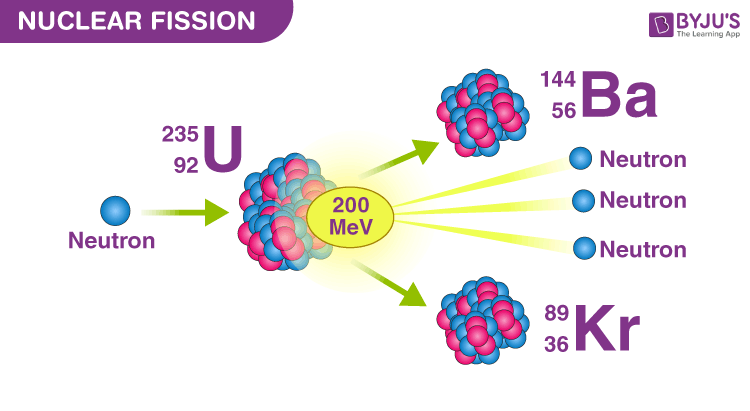
At the heart of every nuclear reactor lies nuclear fission, the process of splitting heavy atomic nuclei to release vast amounts of heat. This isn’t combustion. It’s physics on the subatomic level, and it produces energy density far beyond anything fossil fuels can match.
How Uranium-235 Powers the Reaction
When a neutron strikes a uranium-235 nucleus, the atom becomes unstable and splits into two smaller atoms, typically barium and krypton. This split releases 2 to 3 additional neutrons along with energy in the form of heat and radiation. These newly freed neutrons can then strike other uranium-235 atoms, triggering more fissions in a self-sustaining chain reaction.
The key to maintaining this reaction is balance. Too many neutrons cause runaway energy production. Too few, and the reaction dies out completely. Engineers achieve this balance through enriched fuel, control rods, and moderators working together.
Why Uranium Requires Enrichment
Natural uranium consists mostly of uranium-238, which doesn’t readily undergo fission. Only about 0.7% is uranium-235, the fissile isotope needed for sustained reactions. That’s far too low for most reactors, so uranium undergoes enrichment to boost uranium-235 concentration to 3 to 4%.
This level is enough to sustain fission but remains far below the 50%+ enrichment required for weapons. Once enriched, uranium is converted into uranium dioxide and pressed into tiny ceramic pellets. Each pellet, about the size of a sugar cube, contains as much energy as one tonne of coal.
From Pellets to Fuel Assemblies
These pellets stack inside long, corrosion-resistant tubes made from zirconium alloy, called fuel rods. Hundreds of rods bundle together into fuel assemblies, and a typical reactor core contains hundreds of these assemblies. Fuel remains in the reactor for 3 to 5 years before replacement becomes necessary due to fission byproducts accumulating and absorbing neutrons.
Controlling the Chain Reaction

A nuclear reactor isn’t a bomb. It’s a precision machine designed to sustain a steady, controlled fission rate. Three key components make this possible: control rods, moderators, and continuous monitoring systems.
Control Rods: The Neutron Brakes
Control rods contain neutron-absorbing materials like boron, cadmium, silver, or hafnium. They function like brakes for the chain reaction. Inserting them deeper into the core absorbs more neutrons, slowing or stopping fission. Pulling them out allows more neutrons to trigger additional fissions, increasing power output.
In emergency situations, control rods can fully insert into the core in just 1.3 seconds, shutting down the reactor almost instantly. This rapid shutdown is called a scram.
Moderators: Slowing Neutrons for Efficiency
Fast-moving neutrons are less likely to trigger fission in uranium-235. Reactors use moderators to slow neutrons to optimal speeds, increasing the probability they will split another uranium-atom and sustain the chain reaction.
Most commercial reactors use light water as both coolant and moderator. Other options include heavy water and graphite. Water slows neutrons through repeated collisions, making the reaction far more efficient.
The Hidden Danger of Residual Heat
Even after a reactor shuts down, fission products continue decaying radioactively. This decay heat produces about 7% of the reactor’s full heat output. This residual heat must be removed continuously to prevent fuel damage or meltdown. Emergency cooling systems remain active long after the chain reaction stops for this critical reason.
Reactor Designs: How Types Differ
While all nuclear reactors use fission, they vary significantly in design, coolant choice, and efficiency. Over 90% of the world’s reactors are water-cooled, but several distinct designs serve different needs.
Pressurized Water Reactor: The Global Standard
The Pressurized Water Reactor, also called PWR, powers over 65% of U.S. reactors and all 56 reactors in France. This design is the most common nuclear technology worldwide.
In a PWR, water in the primary circuit flows through the reactor core under extremely high pressure, approximately 155 bar. This pressure prevents boiling even when water reaches 320°C. This superheated water transfers heat to a secondary loop via a steam generator. The secondary water boils into steam, which then drives the turbine.
This three-circuit system provides crucial safety advantages. The primary circuit contains radioactive water. The secondary circuit produces non-radioactive steam safe for turbines. The tertiary circuit cools the condenser using water from rivers, lakes, or cooling towers. This separation prevents radioactive contamination of the turbine and environment.
Notable PWR examples include Palo Verde in Arizona, the only U.S. nuclear plant not using natural water, and the European Pressurized Reactor design operating in Finland and China with 1,660 MW capacity.
Boiling Water Reactor: Simpler Design
In a Boiling Water Reactor, water boils directly inside the reactor core, and the resulting steam drives the turbine without a secondary loop. This simpler design means fewer components and lower construction costs.
The tradeoff is radioactive steam. The steam passing through the turbine contains trace radioactivity, requiring shielded turbines and strict access controls. About 33% of U.S. reactors and 22% of global reactors use this design.
Other Notable Reactor Types
Heavy Water Reactors use deuterium oxide as both coolant and moderator. This allows operation with natural, unenriched uranium, reducing fuel processing costs. Canada and India operate CANDU reactors using this technology.
Fast Neutron Reactors don’t use moderators. They rely on fast neutrons to fission plutonium and other actinides, burning nuclear waste while operating in a closed fuel cycle. France’s Phénix reactor demonstrates this capability.
Molten Salt Reactors remain experimental. Fuel dissolves in liquid fluoride salts, allowing continuous refueling and passive safety features. These designs promise greater efficiency and reduced waste.
Converting Heat Into Electricity
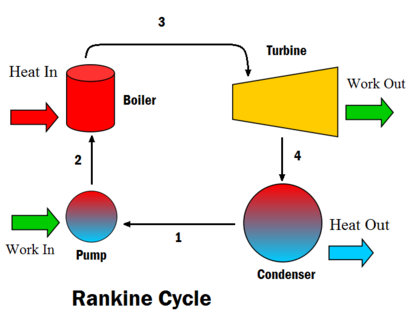
Once fission generates heat, the process resembles conventional power plants but with far greater energy density. The system follows the Rankine cycle, converting thermal energy into mechanical energy, then electrical energy.
Step-by-Step Power Conversion
The process begins with heat generation as fission in the core heats the primary coolant. In PWRs, this heat transfers via steam generator to secondary water, producing non-radioactive steam. In BWRs, steam forms directly inside the reactor vessel.
High-pressure steam then spins a steam turbine at thousands of revolutions per minute. The turbine shaft turns an electric generator, producing alternating current. Transformers boost voltage to 225,000 to 400,000 volts for efficient long-distance transmission.
Exhaust steam cools in a condenser using cold water from rivers, lakes, or cooling towers. This condensed water pumps back to the steam generator in PWRs or returns to the reactor in BWRs, completing the cycle.
Nuclear plants achieve 35 to 40% efficiency, converting about one-third of fission heat into electricity. The rest becomes waste heat. This efficiency is slightly lower than fossil fuel plants but comes with zero operational carbon dioxide emissions.
Cooling Systems and Heat Management
Nuclear plants generate enormous amounts of heat, and approximately 60% of thermal energy must be discarded after electricity production. Cooling systems handle this safely through several methods.
Three-Circuit Cooling in PWRs
The primary circuit transfers heat from the reactor core to the steam generator at approximately 320°C under 155 bar pressure. This water remains radioactive but stays contained. The secondary circuit generates steam at around 300°C to drive turbines. The tertiary circuit condenses exhaust steam using external water sources.
Cooling Methods
Once-through cooling draws water from rivers, lakes, or seas and returns it slightly warmer. Cooling towers use evaporation to cool water, and the visible plumes are pure water vapor, not pollution or radiation.
Hybrid systems combine both methods based on environmental regulations and water availability. The water vapor from cooling towers is completely harmless, a common misunderstanding worth addressing.
Managing Spent Fuel and Waste
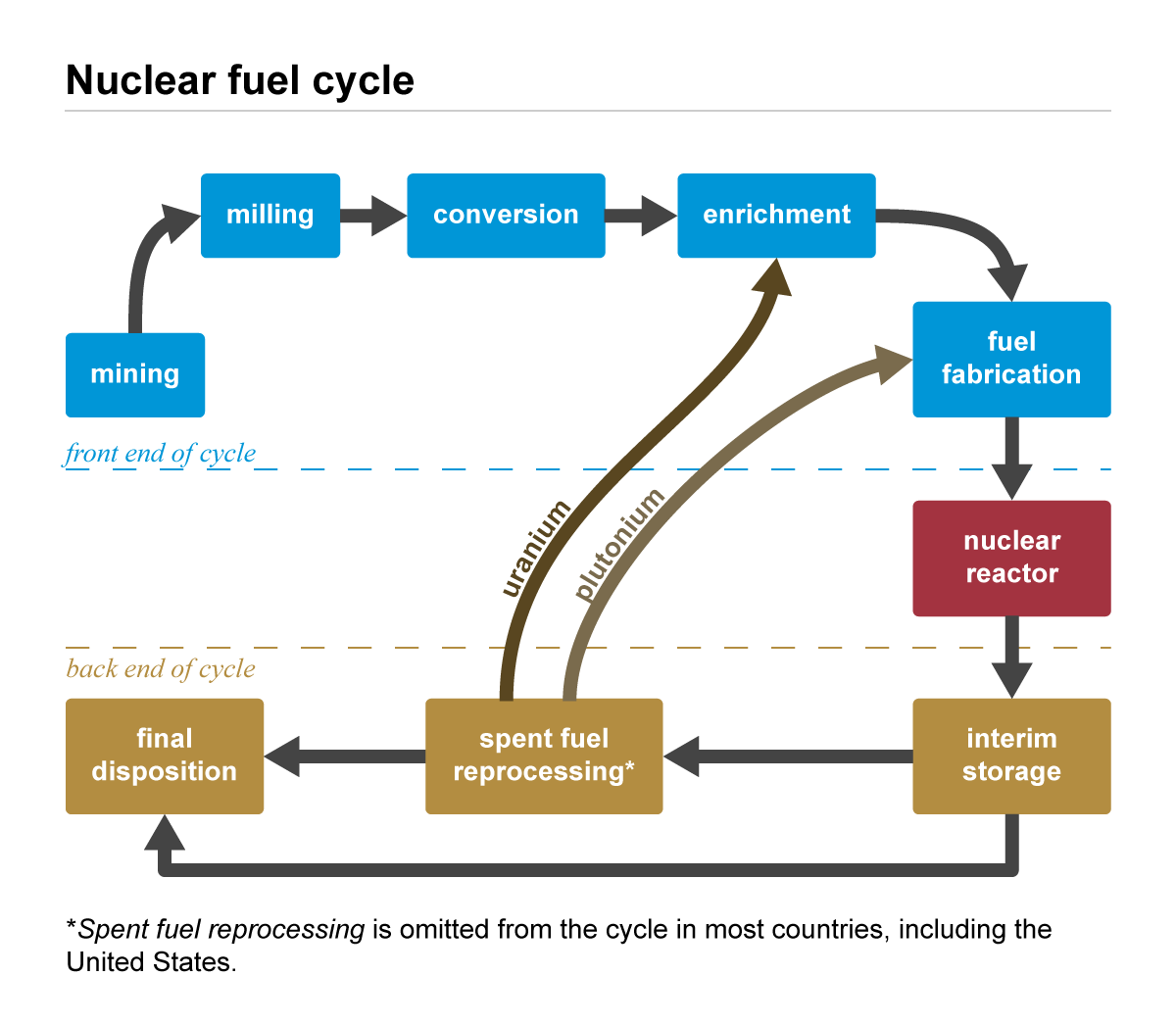
Used nuclear fuel remains intensely hot and radioactive. Safe handling requires multiple storage stages and careful management.
Spent Fuel Storage
After 3 to 5 years in the reactor, fuel assemblies move to spent fuel pools on-site. Water cools the fuel for 5 to 10 years while radiation levels decrease. Once sufficiently cooled, fuel transfers to dry cask storage, where sealed steel-concrete containers provide safe, passive storage for decades.
Reprocessing Options
Some countries reprocess spent fuel to extract plutonium and uranium for reuse in mixed oxide fuel. France and Russia use this approach, reducing waste volume. However, plutonium separation raises nuclear proliferation concerns.
Long-Term Disposal
High-level waste requires isolation for hundreds of thousands of years. Deep geological repositories provide this isolation. Finland’s Onkalo is the world’s first operational deep repository. Sweden, France, and Canada are developing similar facilities.
Despite public concerns, nuclear waste volume is remarkably small. One person’s annual electricity use generates only about 5 grams of high-level waste, roughly the weight of a sheet of paper.
Safety Systems and Multiple Barriers
Modern reactors employ defense-in-depth, creating multiple physical and procedural barriers against radiation release.
Key Safety Components
The containment building is a reinforced concrete and steel dome serving as the final barrier against radiation escape. Passive safety systems use gravity, convection, and natural circulation, as seen in AP1000 reactors. Emergency core cooling systems automatically activate if coolant is lost. Reactor scram provides full control rod insertion within seconds during emergencies.
Radiation Containment Layers
Four barriers protect the environment from radioactive material. The fuel pellet traps fission products in a ceramic matrix. Zirconium cladding seals in radioactive material. The reactor vessel is a thick steel pressure container. The containment building provides the final barrier against any leaks.
Major Accidents and Lessons Learned
Three events have fundamentally shaped nuclear safety worldwide.
Three Mile Island in 1979 involved a partial meltdown from valve failure and operator error. Minimal radiation escaped, but the accident led to improved training and monitoring systems.
Chernobyl in 1986 resulted from a flawed reactor design and reckless testing. The explosion destroyed the reactor, causing widespread contamination. The absence of a containment building made the disaster far worse.
Fukushima Daiichi in 2011 experienced meltdowns after a tsunami knocked out power and cooling systems. No direct deaths resulted from radiation exposure, though the evacuation caused significant disruption.
Post-Fukushima upgrades include hardened backup power systems, enhanced flood defenses, and improved spent fuel pool safety measures.
Nuclear’s Role in Global Electricity
Nuclear power provides approximately 10% of global electricity and about 25% of the world’s low-carbon power. As of 2025, 416 operational reactors operate across 31 countries.
France derives about 70% of its electricity from nuclear power, the highest percentage globally. Ukraine, Slovakia, Belgium, and Hungary rely on nuclear for roughly 50% of their electricity. The United States gets about 19% from nuclear sources.
Construction trends show 62 reactors under construction worldwide. China leads with 25 reactors being built. Russia exports reactors to Turkey, Egypt, and India.
Economics and Challenges
Nuclear power involves high upfront costs exceeding $10 billion for large reactors. Construction takes 5 to 10 years. However, fuel costs remain extremely low. A typical reactor uses only about 27 tonnes of uranium annually, compared to over 2.5 million tonnes of coal for equivalent output.
Nuclear plants excel at baseload power, providing constant reliable output. France adjusts nuclear output daily to match demand. Some reactors can ramp 15% per minute between 40% and 100% capacity.
Barriers to growth include public fear of accidents and waste, lack of permanent waste solutions in many countries, construction cost overruns, and competition from cheaper natural gas and renewables.
Environmental Impact
Nuclear plants produce zero operational carbon dioxide emissions. Lifecycle emissions are approximately 11 grams of carbon dioxide per kilowatt-hour, comparable to wind and far below solar, gas, or coal. Newer reactors emit as little as 1.31 grams per kilowatt-hour.
Thermal pollution from warm discharge water can affect aquatic ecosystems, but this is managed through cooling towers and regulatory limits. Uranium mining impacts local environments, though the small fuel volume minimizes overall footprint.
The Future of Nuclear Energy
Generation IV reactors represent the next advancement in nuclear technology. Six designs are under development through international cooperation. Goals include higher efficiency, closed fuel cycles, reduced waste, enhanced safety, and proliferation resistance.
China’s Shidao Bay plant became the world’s first commercial Generation IV reactor in 2023, using high-temperature gas-cooled technology. This marks a significant milestone in nuclear evolution.
Nuclear fusion remains in research phases. ITER in France aims to achieve net energy gain by 2036, with commercial demonstration targeted for 2050. Private companies are accelerating fusion development, potentially offering limitless clean energy if technical challenges resolve.
Small Modular Reactors offer factory-built compact units between 100 and 300 megawatts. These designs provide enhanced safety, scalability, and deployment flexibility for remote areas.
Floating nuclear plants are already operating in Russia, powering remote Arctic communities. The United States and Canada are exploring offshore SMR deployments.
Frequently Asked Questions About Nuclear Power Stations
How does a nuclear power station generate electricity?
A nuclear power station generates electricity through nuclear fission. Uranium atoms split in the reactor core, releasing heat. This heat turns water into steam, which spins turbines connected to generators. The generators produce electricity that transformers step up for transmission to the grid.
What is nuclear fission and why does it produce so much energy?
Nuclear fission occurs when a neutron strikes a uranium-235 nucleus, causing it to split into two smaller atoms and release 2 to 3 additional neutrons plus energy as heat. The binding energy holding the nucleus together converts to thermal energy. This process releases millions of times more energy per reaction than chemical reactions like burning fossil fuels.
How do control rods prevent nuclear accidents?
Control rods contain materials that absorb neutrons, such as boron or cadmium. Inserting them deeper into the reactor core absorbs more neutrons, slowing the chain reaction. Withdrawing them allows more fissions, increasing power. In emergencies, automatic systems drop control rods into the core within 1.3 seconds, stopping the reaction almost instantly.
What happens to nuclear waste after fuel is used?
Spent fuel first cools in on-site pools for 5 to 10 years. It then moves to dry cask storage, steel-concrete containers that safely store fuel for decades. Some countries reprocess spent fuel to extract reusable materials. Long-term disposal involves deep geological repositories, such as Finland’s Onkalo, designed to isolate waste for hundreds of thousands of years.
Are nuclear power plants safe from accidents?
Modern reactors incorporate multiple safety layers, including containment buildings, passive safety systems, and emergency core cooling. While historical accidents like Three Mile Island, Chernobyl, and Fukushima occurred, they resulted from design flaws, human error, or natural disasters. Post-Fukushima regulations significantly strengthened backup power, flood defenses, and monitoring systems.
How does nuclear power compare to renewable energy for climate goals?
Nuclear power provides steady baseload electricity with zero operational emissions. Lifecycle emissions are comparable to wind and far lower than solar, gas, or coal. Unlike wind and solar, nuclear provides constant power regardless of weather conditions. Combining nuclear with renewables offers a pathway to reliable, low-carbon electricity systems.
Key Takeaways for Understanding Nuclear Power
Nuclear power stations work by controlling fission to generate heat, producing steam, and turning turbines to create electricity. They are complex, highly engineered systems designed for safe, continuous, low-carbon baseload power.
The process begins with uranium enrichment, progresses through controlled chain reactions managed by control rods and moderators, and culminates in conventional steam turbine generation. Multiple safety barriers and cooling systems ensure reliable, safe operation.
Despite challenges involving cost, waste management, and public perception, nuclear remains vital for global decarbonization. With Generation IV reactors, small modular designs, and fusion research advancing, the next era of nuclear energy promises greater safety, sustainability, and global reach. Whether powering cities today or enabling clean hydrogen tomorrow, nuclear technology shapes a cleaner energy future.