Running out of power with no charger in sight can be frustrating, especially when you’re miles from home or in the middle of a critical task. Whether it’s your AA-powered flashlight, cordless drill, camera, or even a dead car battery, knowing how to charge a battery without a charger can be a literal lifesaver. While using the original charger is always the safest option, emergencies sometimes call for improvised solutions.
The truth is, you can charge many types of batteries without their dedicated chargers if you understand the risks, use the right tools, and follow precise voltage and current guidelines. This guide breaks down proven, safe methods for charging common rechargeable batteries using alternative power sources like USB ports, bench supplies, jump starters, solar panels, and even other batteries.
Identifying Your Battery Type Before Charging

Before attempting any charging method, you must know what kind of battery you’re dealing with. Charging the wrong type or misidentifying voltage can lead to fire, explosion, or permanent damage to the battery and connected devices.
Checking Battery Chemistry Labels
Look for printed markings on the battery casing to identify the chemistry type. Common rechargeable battery chemistries include NiMH (Nickel-Metal Hydride) found in AA and AAA batteries and cordless phones, NiCd (Nickel-Cadmium) used in older power tools and some RC toys, Li-ion (Lithium-ion) used in phones cameras drones and 18650 cells, Lead-Acid used in car batteries lawn mowers and UPS systems, and LiPo (Lithium Polymer) used in drones and RC vehicles.
One critical point to remember is that you should never attempt to recharge alkaline, zinc-carbon, or primary non-rechargeable batteries. These are not designed for charging and can leak, rupture, or pose fire hazards.
Verifying Voltage and Capacity Requirements
Use a digital multimeter to measure the open-circuit voltage of your battery. For AA and AAA NiMH batteries, the nominal voltage is approximately 1.2V with a full charge around 1.4V. Single Li-ion cells typically measure around 3.7V nominal with a maximum of 4.2V when fully charged. An 18V power tool pack should read approximately 18V (or 21V max for a 5S Li-ion configuration). Car batteries should read approximately 12.6V when fully charged.
If voltage falls below 1V per cell or below 3V for a 12V battery, the battery may be too deeply discharged to safely revive and should be disposed of properly rather than attempting to charge it.
Safe Methods for Charging AA and AAA Rechargeables
AA and AAA rechargeable batteries are among the most common types you might need to charge without a dedicated charger. Several methods exist, ranging from simple to advanced.
Using USB or DC Power Sources
You can charge NiMH or Li-ion AA and AAA batteries using a regulated 5V USB source, but only if the device has internal voltage regulation. The safest approach is to insert batteries into a USB-rechargeable device such as a Bluetooth headset or solar lantern, then connect the device to a power bank, laptop, or wall adapter. Allow charging for 2 to 4 hours and remove once the device indicates a full charge.
A critical warning is that you should never connect bare AA or AAA cells directly to a USB port. The 5V output will severely overcharge and likely destroy the batteries.
Building a DIY Charger With an LM317 Regulator
For advanced users with loose NiMH or Li-ion cells, you can build a simple charger using an LM317 voltage regulator circuit to create a controlled current source. This method requires several components including an LM317 IC, a resistor such as 2.4 ohms for 500mA output, a heat sink, and a 9V battery or DC power supply.
The setup involves connecting the LM317 to your power source, setting the output voltage to 1.5V for NiMH or 4.2V for Li-ion, limiting current using the resistor, and monitoring voltage continuously. Disconnect immediately once the battery reaches full charge. A helpful pro tip is to add a red LED in series to act as a visual charge indicator so you know when current is flowing.
Charging Power Tool Batteries Without a Charger
Power tool batteries, typically 18V, 20V, or 24V lithium-ion packs, can be safely charged using a variable DC bench power supply. This is the best alternative method when your original charger is unavailable.
Step-by-Step Bench Power Supply Method
First, identify the cell configuration of your battery pack. An 18V battery typically uses 5 cells in series (5S) with 3.6V nominal per cell, while a 20V pack charges to 21V (4.2V multiplied by 5) and a 24V pack uses 6S configuration charging to 25.2V.
Set your power supply voltage to slightly above the full charge voltage, which means 21V for a 20V pack or 25.2V for a 24V pack. Set the current limit to 1 to 3 amps, starting low for safety. Connect the positive (red) lead to the positive terminal and the negative (black) lead to the negative terminal. Monitor the charging process noting that current should remain steady during the constant current phase and taper off as voltage reaches the target. Stop charging when the current drops below 0.1A or when the battery reaches full voltage.
An important safety note is to never leave the charging battery unattended. Stop immediately if the battery becomes warm, hot, or begins to swell.
Extending Battery Life Through Partial Charging
Instead of charging to the maximum 4.2V per cell, consider stopping at 3.8V to 4.0V per cell. This practice significantly reduces stress on the battery chemistry and can extend cycle life by up to two times. This approach is ideal for daily-use tools, batteries stored long-term, and batteries used in hot environments.
Jump-Starting a Car Battery Without a Charger
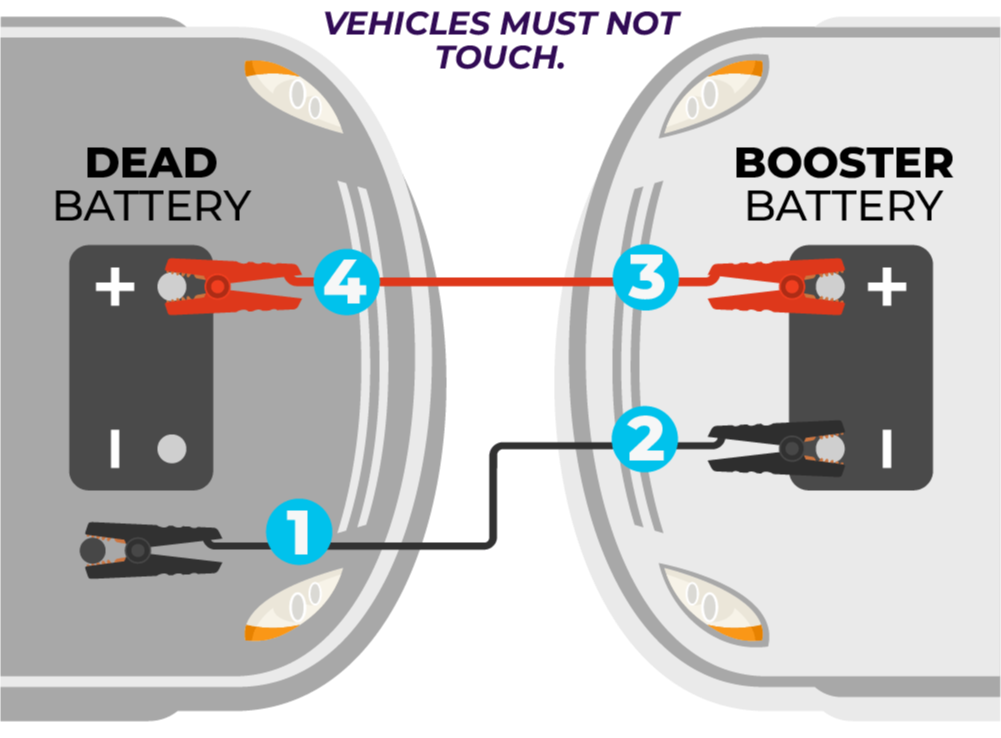
Car batteries (12V lead-acid) can be revived using another vehicle or a portable jump starter when no charger is available. This is often the fastest and most reliable emergency method.
Using Another Vehicle to Jump-Start
Park the donor vehicle close to the dead car but ensure the two vehicles do not touch. Turn off both engines before connecting the jumper cables. Connect the red (positive) clamp to the dead battery’s positive terminal, then connect the other red clamp to the donor battery’s positive terminal. Connect the black (negative) clamp to the donor battery’s negative terminal, and connect the final black clamp to an unpainted metal engine block on the dead vehicle (this is the ground connection).
Start the donor vehicle and let it run for 2 to 3 minutes. Attempt to start the dead vehicle. If successful, drive for at least 30 minutes to allow the alternator to recharge the battery. Note that alternators maintain charge but may not fully recharge a deeply discharged battery.
Using a Portable Jump Starter
Compact lithium jump starters can not only jump-start a car but can also slowly charge the battery over time. Recharge the jump starter regularly and store it in a cool, dry place. Some models like the NOCO Boost offer both boost mode for starting and trickle mode for charging over 6 to 12 hours.
Reviving Deeply Discharged Batteries Below 10V
Smart chargers often refuse to charge batteries that have fallen below 10V due to built-in safety protocols. However, you can apply a surface charge to wake up these batteries.
Applying a Surface Charge Technique
Use a high-capacity power pack or a donor battery to apply a temporary surface charge. Connect the red (positive) lead to both positive terminals and the black (negative) lead to both negative terminals. Apply power for 1 to 2 minutes, then check the voltage with a multimeter. Once the voltage rises above 10V, you can safely use a smart charger to complete the full charge cycle. This method works well for car batteries, lawn mower batteries, and large lead-acid batteries.
Charging Camera Batteries Without a Charger
Many modern cameras support charging via USB, which provides a convenient alternative when your dedicated charger is unavailable.
USB Charging Through the Camera Body
Insert the battery into the camera and power off the camera completely. Connect a USB-C or micro-USB cable from the camera to a wall adapter, power bank, or laptop USB port. Allow 2 to 3 hours for a full charge depending on battery capacity. An important note is that some camera models require a memory card to be inserted for charging to begin, so check your camera manual first.
Using a Power Bank in the Field
For outdoor shoots or travel, a power bank with sufficient capacity serves as an excellent backup power source. Use a power bank with 5V USB output and ensure your camera supports USB charging. This approach allows you to charge your camera 3 to 4 times with a 20,000mAh power bank.
Solar Charging for Long-Term Battery Maintenance
Solar charging provides an excellent solution for maintaining batteries over extended periods, particularly for vehicles in storage or off-grid applications.
Setting Up a 12V Solar Panel System
Use a 12W solar panel (such as those from PulseTech or Samlex) connected to a solar charge controller to prevent overcharging. Connect using Battery Tender cables with ring terminals for secure connections. Mount the panel outside the windshield for best results, noting that indoor placement through glass can reduce output by approximately 50 percent due to UV coating interference. This setup produces approximately 3 to 4.5 amps per day depending on sunlight conditions.
Using DC-to-DC Charging as an Alternative
When solar exposure is poor, a DC-to-DC charger can draw power from a healthy source battery to charge the target battery. The OptiMATE 12V 2A DC-to-DC charger works with both lead-acid and lithium batteries and draws from a source battery with approximately 1.5 times the capacity of the target battery. This method is not suitable for continuous use, so recharge the source battery regularly.
Methods That Are Dangerous or Ineffective
Several methods circulate online that either don’t work or pose significant safety risks.
Why USB Power Banks Cannot Charge Car Batteries
USB ports deliver only 5V at 2 to 3 amps, which is nowhere near the 12V and 100+ amps needed to start a car. Attempting this can damage the power bank, overheat cables, and create serious fire hazards. This method should always be avoided.
Why Push-Starting Modern Vehicles Is Unreliable
Modern vehicles use electronic ignition and fuel injection systems, making push-starting unreliable and potentially unsafe. This method should be avoided entirely.
Why Freezing Batteries Is Not Recommended
Some internet claims suggest that freezing NiMH batteries can recover capacity, but test results are inconsistent. Freezing can cause condensation, damage internal seals, and reduce performance. This method is not recommended by battery manufacturers.
Why Lemon and Potato Batteries Are Useless
While fun for science class demonstrations, a lemon generates only about 0.8V per cell. You would need 10 or more lemons connected in series to reach 1.5V, and the setup would still produce no usable current for actual charging. This method is great for teaching electrochemistry but completely impractical for real-world charging needs.
Essential Tools for DIY Battery Charging
Having the right tools makes improvised charging safer and more effective.
A digital multimeter is essential for checking voltage, continuity, and polarity. A bench power supply with adjustable voltage and current is the best tool for charging lithium and NiMH batteries safely. For AA and AAA charging, consider the Nitecore i2 or EBL charger, both affordable and widely available. The Opus C3100 or C3400 provides smart charging for both Li-ion and NiMH batteries. A solar charge controller is necessary for safe solar charging setups. Finally, alligator clips and wires are needed for making secure connections.
Critical Safety Warnings for Improvised Charging
Safety must be your top priority when charging batteries without their dedicated chargers.
Never leave charging unattended because improvised methods lack automatic cutoff protection. Overcharging can damage battery chemistry, cause swelling or venting, and potentially trigger thermal runaway leading to fire. Monitor battery temperature continuously by touching the battery every 10 to 15 minutes. If the battery feels warm or hot, disconnect immediately. Always verify polarity before connecting, ensuring red (positive) connects to positive and black (negative) connects to negative. One wrong connection can destroy the battery or power source.
Key Takeaways for Charging Batteries Without a Charger
While it is possible to charge a battery without a charger using alternative methods, this should never be your primary approach for regular charging. The safest options include using a multi-chemistry charger for AA and AAA batteries, a bench power supply for power tool and lithium packs, jump-starting or a portable jump starter for car batteries, and USB charging for compatible cameras and devices.
For emergency situations, always prioritize safety by verifying battery chemistry, monitoring temperature, avoiding overcharging, and using proper tools. When in doubt, purchasing a proper charger is always the safer and more reliable choice. These improvised techniques are best reserved for true emergencies when no other options exist.
Frequently Asked Questions About Charging Batteries Without a Charger
Can I charge AA batteries with a USB cable?
You cannot charge bare AA or AAA batteries directly from a USB port because USB provides 5V, which will overcharge and destroy the cells. However, you can charge them if they are inside a device that has internal voltage regulation, such as a USB-rechargeable flashlight or Bluetooth headset.
Is it safe to charge a car battery with a laptop charger?
No, laptop chargers typically output 19V at 3 to 4 amps, which is insufficient for a 12V car battery. They cannot provide the voltage or current needed to start a vehicle or properly charge a lead-acid battery. Use a jump starter, another vehicle, or a proper battery charger instead.
How long does it take to charge a car battery with a solar panel?
A 12W solar panel produces approximately 3 to 4.5 amps per day depending on sunlight conditions. To fully charge a dead car battery would take several days of direct sunlight. Solar panels are better suited for maintenance charging and keeping batteries topped off rather than quickly recharging a dead battery.
Can I use a power bank to charge my camera battery?
Yes, many modern cameras support USB charging. Simply connect your camera to a power bank using the appropriate USB cable. This is an excellent option for travel or field work where you need to charge camera batteries without access to a wall outlet.
What happens if I charge a non-rechargeable battery?
Attempting to charge a non-rechargeable alkaline or zinc-carbon battery can cause leakage, overheating, or even explosion. These batteries are not designed to accept charge and the chemical composition cannot be reversed. Always ensure batteries are specifically labeled as rechargeable before attempting any charging method.