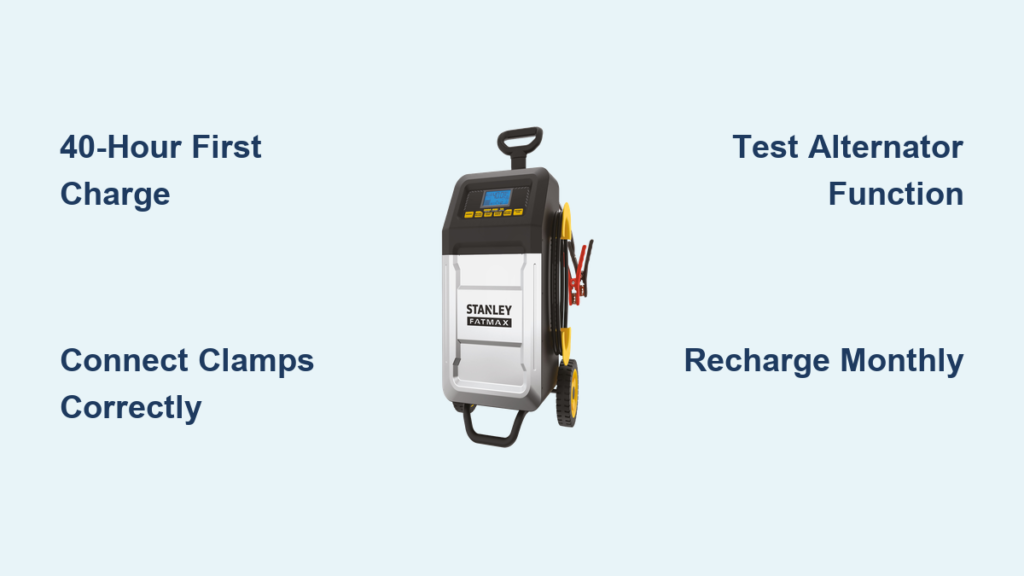
If your car won’t start in a parking lot and roadside help is minutes away, the Stanley FatMax battery charger can get you back on the road. This compact multi-function device combines a jump starter, air compressor, USB power station, LED work light, and alternator diagnostics in one rugged unit. Whether you own the 1000 Peak Amps model or the 1200 Amp version with power station, knowing how to use each feature properly ensures you’re never stranded.
This guide walks you through every function of the Stanley FatMax battery charger, from the critical 40-hour initial charge to jump-starting, inflation, device charging, and alternator testing. You’ll learn safety procedures, maintenance tips, and troubleshooting steps to keep this tool reliable for years.
40-Hour First Charge Before First Use
The Stanley FatMax battery charger does not come pre-charged from the factory. You must charge it for 40 hours continuously before the first use. Skipping this step may cause failure during your first emergency situation.
To charge the unit, plug the male end of an extension cord into a standard wall outlet. Connect the female end to the charging port on the unit. Let it charge without interruption. Do not unplug early to test the device.
Mark your calendar or set a timer. A full 40-hour charge ensures maximum readiness for jump-starting, diagnostics, and power delivery across all functions.
Power On and Check Battery Status
Press the power switch to turn on the unit. The LCD display shows the current voltage of the internal battery.
Read the voltage display to confirm readiness. A reading of 12.6 V or higher means the unit is ready for jump-starting. The healthy charge range falls between 12.5 and 12.8 V. If the display shows below 12.0 V, the battery is low and needs immediate recharging.
After completing the 40-hour charge, verify that voltage reads 12.7 V or higher with no blinking warning lights. The unit should respond instantly when buttons are pressed. If voltage remains below 12.6 V after a full charge cycle, contact the manufacturer for potential battery defects.
Jump-Start a Dead Battery Safely
Before attempting a jump-start, verify that the dead battery is 12V. Do not use this device on 6V or 24V systems. Most cars, trucks, lawn mowers, and food trucks use 12V batteries.
Turn off all vehicle accessories including the radio, lights, and air conditioning. Locate the battery or a solid ground point on the vehicle. Confirm the terminals are accessible and not frozen, cracked, or leaking.
Never attempt to jump-start a cracked, leaking, or frozen battery. These conditions could cause explosion or serious injury.
Connect the Jumper Clamps
Follow this exact order when connecting the clamps.
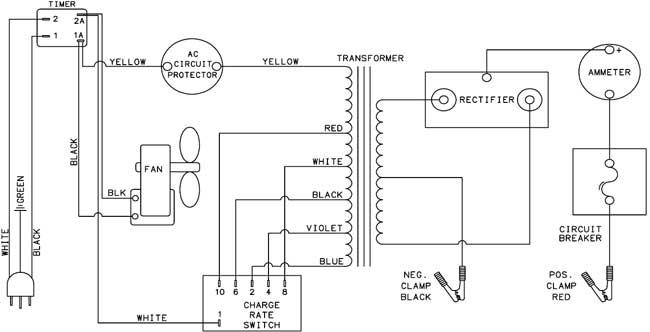
First, attach the red clamp to the positive terminal of the dead battery. Then attach the black clamp to the negative terminal or a grounded metal surface such as the engine block or chassis bolt. Using a ground point instead of the negative terminal reduces spark risk near battery gases.
The Stanley FatMax includes automatic polarity detection. The unit beeps once or displays “correct polarity” when the connection is right. If it beeps rapidly and flashes a warning light, polarity is reversed. Disconnect immediately and reattach the clamps.
If no beep occurs but no warning appears, the connection is likely correct. Some models display two battery icons or an engine light when properly connected.
Activate Boost and Start the Engine
Turn on the boost function if your model has a separate switch. Attempt to start the engine. Most vehicles start within 3 to 5 seconds.
If the engine doesn’t crank, wait 10 to 15 seconds and try again. The display may dip slightly when power is drawn, which confirms boost mode is active.
Do not hold the ignition for more than 5 seconds. Let the starter rest between attempts to avoid damage.
Disconnect in Reverse Order
After the engine starts, turn off the jump starter first. Remove the black negative clamp second, then remove the red positive clamp last. Always disconnect in reverse order to prevent short circuits.
Use the Built-In Air Compressor
The Stanley FatMax includes a 120 to 150 PSI air compressor with auto-shutoff functionality. This feature handles car tires, truck tires, lawn mower tires, air mattresses, and sports balls.
Set your desired pressure on the control panel. For car tires, 32 PSI is typical. For lawn mowers, 12 PSI is usually correct. Attach the hose to the tire valve and turn on the compressor. The unit stops automatically when the target PSI is reached, such as shutting off at 11.9 PSI when set to 12 PSI.
Because of auto-shutoff, you cannot over-inflate tires. Check tire pressure weekly to maintain fuel efficiency and reduce blowout risk.
Charge Devices with the USB Power Station
The Stanley FatMax functions as a 500 Wh portable power station with USB ports. Plug in smartphones, tablets, GPS devices, or flashlights. You can use this feature while jump-starting or independently without running the car.
Use high-quality USB cables for fastest charging. Avoid daisy-chaining multiple devices if possible. Recharge the unit after extended USB use to maintain readiness for emergencies.
This feature eliminates the need for separate power banks during long road trips or power outages.
Run an Alternator Diagnostic Test

Once the engine runs after a jump-start, use the alternator check feature to verify the vehicle’s charging system is working. The unit must be fully charged before testing for accurate results.
No-Load Alternator Test
Keep the clamps connected with red to positive and black to negative or ground. Turn off all vehicle accessories. Let the engine idle, then press the Alternator Check button.
Four bars displayed with “Alt Good” indicates the alternator is working properly. An “Alt” display with a warning symbol suggests possible alternator failure.
Load Test Under Demand
Turn on headlights, the heater, and the radio. Press the Alternator Check button again. If it still reads “alternator good,” the system holds up well under electrical load.
This test identifies whether a failing alternator killed your battery, preventing a repeat breakdown.
Operate the LED Work Light
Press the dedicated light button to activate the bright LED work light. This feature illuminates dark workspaces for nighttime jump-starts, engine bay inspections, and power outages.
The light faces outward, so it won’t interfere with clamp connections. Use it during alternator testing for better visibility. Turn it off when not needed to conserve battery power.
Maintain Your Stanley FatMax Charger
Recharge Monthly
Even when not in use, charge the unit every 30 days. Monthly charging prevents deep discharge, extends internal battery life, and ensures readiness during emergencies.
Letting the unit sit discharged for months can permanently damage the battery.
Store Properly
Keep the unit in a cool, dry place. Ideal temperature range is above freezing but below 100°F. Avoid direct sunlight and moisture.
Do not store the unit in a vehicle trunk where extreme temperatures degrade battery performance.
Clean and Inspect After Each Use
Wipe the clamps clean after each use. Check for corrosion or frayed wires. Store with cords neatly wrapped. Apply dielectric grease to terminals if storing long-term.
Troubleshoot Common Issues
No Power After Charging
If the unit doesn’t turn on after charging, check the outlet and extension cord. Try a different wall socket. Ensure the female end is fully plugged into the unit.
Some models only charge via the extension cord method with no USB-C or car charging option.
Clamps Not Detecting Polarity
If the unit beeps and flashes, double-check that red clamp goes to positive and black goes to negative or ground. Clean battery terminals if corroded. Reattach clamps firmly.
Poor connection mimics reverse polarity symptoms.
Compressor Won’t Start
If the compressor fails to start, confirm the preset PSI is set correctly. Ensure the hose is tightly connected to the tire valve. Check for kinks in the hose.
Reset by turning the compressor off and restarting.
Maximize Long-Term Performance
Recharge After Every Use
Even a partial jump-start drains power from the unit. Recharge immediately after use. Plug in as soon as you return home and let it charge fully before storing.
Test Monthly
Press the power button once a month to verify the display lights up. Confirm voltage is at least 12.6 V. Ensure all functions respond properly.
Monthly testing catches battery degradation early before it becomes a problem.
Replace If Voltage Won’t Hold
If the unit won’t stay above 12.0 V after charging, the internal battery may be failing. Contact Stanley support for warranty information or replacement options.
With proper care, most units last 3 to 5 years of regular use.
Key Takeaways for Using Your Stanley FatMax Battery Charger
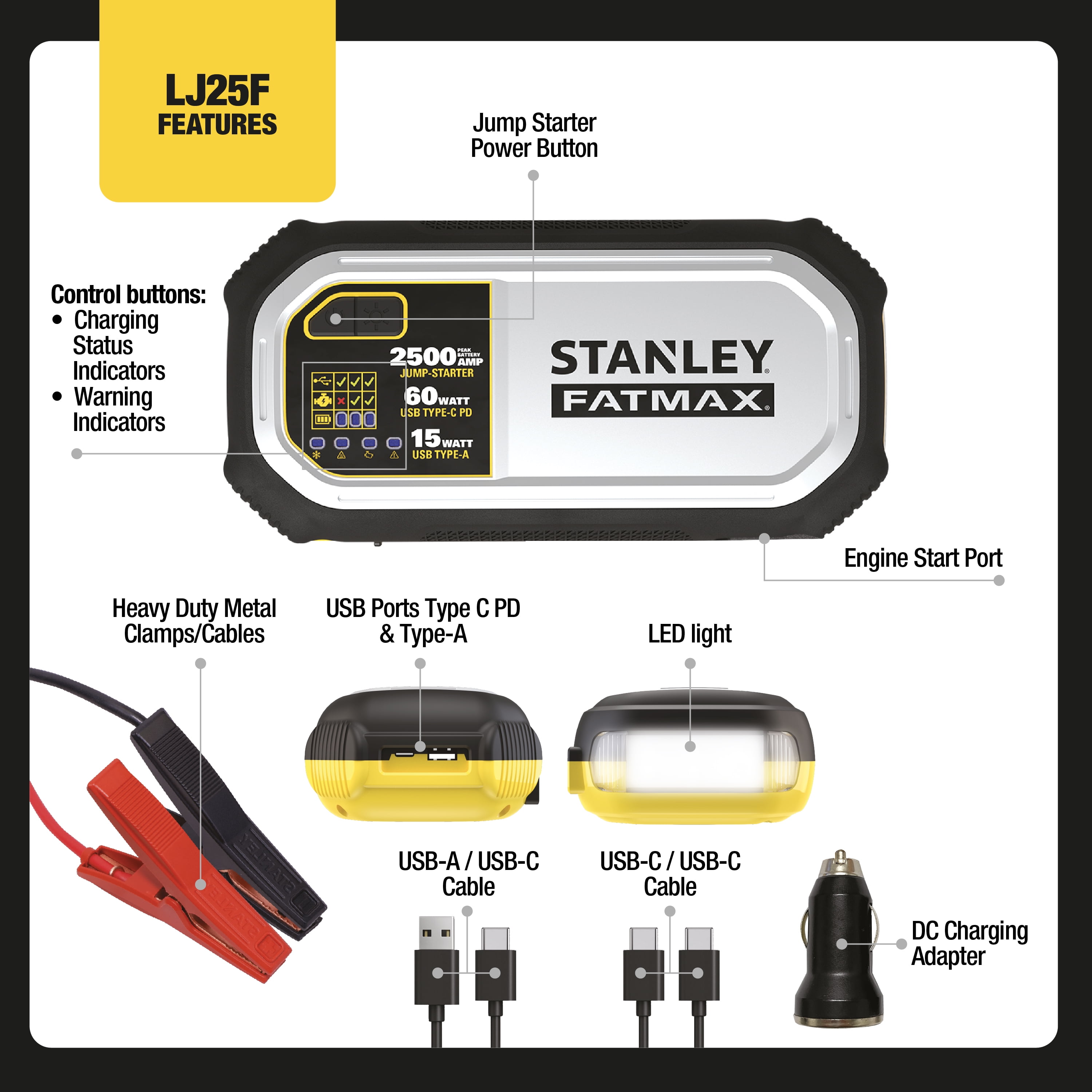
The Stanley FatMax battery charger is more than a jump starter. It’s a complete roadside survival kit combining five tools in one rugged case. The critical 40-hour first charge sets the foundation for reliable performance. Always use ground connections instead of the negative battery terminal to reduce spark risk. Test the unit monthly and recharge after every use to maintain readiness.
From jump-starting a dead car battery to inflating tires, diagnosing alternator problems, and charging USB devices during power outages, this tool delivers real-world reliability. Keep it charged, store it properly, and treat it like the emergency device it is. When your car won’t start, having a working Stanley FatMax means seconds matter instead of waiting for roadside assistance.
Frequently Asked Questions About Stanley FatMax Battery Chargers
How long does the Stanley FatMax battery charger take to fully charge?
The initial charge requires 40 hours continuously. After regular use, recharge time varies but takes several hours depending on how depleted the battery is.
Can I use the Stanley FatMax to charge devices while jump-starting a car?
Yes. The 500 Wh power station allows USB charging while jump-starting or independently. You can charge phones, tablets, and other electronics without running the vehicle.
What voltage indicates the Stanley FatMax is ready for jump-starting?
A reading of 12.6 V or higher on the LCD display means the unit is ready for jump-starting. The healthy range is 12.5 to 12.8 V.
Can I use the Stanley FatMax on a frozen battery?
No. Never attempt to jump-start a frozen, cracked, or leaking battery. These conditions pose explosion risk and could cause serious injury.
How do I test my vehicle’s alternator using the Stanley FatMax?
With the engine running and clamps connected, press the Alternator Check button. Four bars with “Alt Good” means the alternator is working. A warning symbol indicates possible alternator failure.