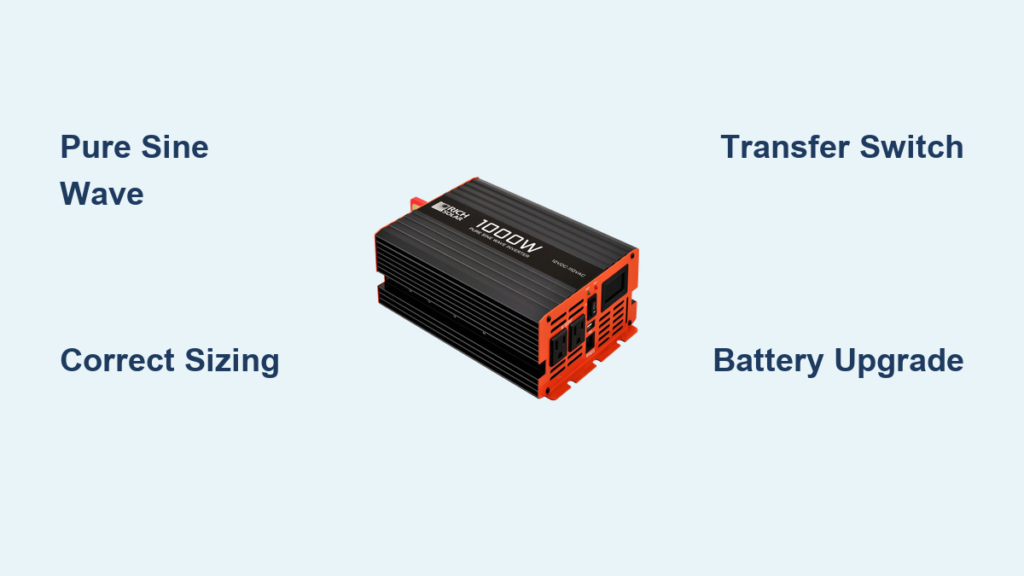
Imagine being deep in the wilderness, miles from the nearest power outlet, yet still able to power your laptop, charge your phone, run a coffee maker, or watch TV without firing up a noisy generator. This is the freedom an inverter brings to your RV. An inverter converts stored 12V DC power from your house batteries into 120V AC power, enabling you to use standard household appliances while off-grid. For RVers who love boondocking or dry camping, installing an inverter is one of the most practical upgrades you can make.
But not all inverters are the same, and installation is not just about plugging in a box. Done incorrectly, it can lead to equipment damage, safety hazards, or rapid battery drain. This guide walks you through choosing the right inverter, sizing it correctly, wiring it safely, and avoiding common pitfalls like backfeeding or feedback loops.
Choose the Right Inverter Type for Your RV
Pure Sine Wave vs Modified Sine Wave
Always choose a pure sine wave inverter for your RV. While modified sine wave models are cheaper, they produce a choppy electrical signal that can cause overheating in motors, buzzing noises in electronics, and permanent damage to sensitive devices like laptops, medical equipment, and modern refrigerators. Pure sine wave inverters deliver smooth, grid-quality power, ensuring quiet operation and full compatibility with all your appliances.
Standard Inverter vs Inverter Charger
Decide between a standard inverter and an inverter charger. A standard inverter only converts DC to AC and requires manual management, like turning off your converter to prevent feedback. An inverter charger combines three functions: inverting, battery charging, and automatic transfer switching. It seamlessly switches between shore power and battery power, recharges batteries with optimized profiles, and eliminates the need for external transfer switches. Models like the Victron MultiPlus or Magnum MS-PAE are ideal for advanced or solar-ready systems.
Size Your Inverter Correctly

Calculate Total Power Needs
List all AC devices you plan to run at the same time and add their running watts. Then include surge watts for motor-driven appliances like microwaves or fridges, which can spike 2 to 3 times their normal draw at startup.
Example calculation:
- Laptop: 60W
- 50-inch LED TV: 100W
- Coffee maker: 800W (1000W surge)
- Blender: 600W (800W surge)
- Total running: 1560W
- Total surge: approximately 1800W
Apply Safety Margin
Multiply total running watts by 1.15 to account for inefficiencies. Using the example above: 1560W times 1.15 equals 1794W, so round up to a 2000W pure sine wave inverter. For air conditioners, you will need 3000W or more due to high startup surge.
Match Voltage to System Size
- Up to 2000W: use 12V system
- 2000 to 4000W: upgrade to 24V to reduce current and heat
- 4000W and up: 48V systems are most efficient
Higher voltage means lower current, allowing smaller cables and less voltage drop.
Pick the Best Integration Method

Standalone Plug-In Setup
Ideal for beginners or temporary use. Mount the inverter near the battery and power devices via its built-in outlets or a dedicated external outlet. You can plug your shore power cord into this outlet when off-grid, letting the inverter power the entire RV, but only if you turn off the converter breaker first.
Pros include no rewiring, low cost, and easy testing. Cons include manual setup and not supporting hardwired loads unless rewired.
Pro Tip: Install a 30A waterproof RV outlet under the trailer and label it clearly.
Full Integration with Transfer Switch
Connect the inverter to your AC panel using a manual or automatic transfer switch. This isolates shore power and inverter output, preventing dangerous backfeeding. Automatic switches switch seamlessly when shore power drops, while manual switches are cheaper but require user action.
Warning: Never connect inverter output directly to the panel without a transfer switch, as this can destroy the inverter.
Use an Inverter Charger with Built-In ATS
Best for permanent, automated setups. The inverter charger replaces your converter. Shore power enters the unit, which passes it to the panel and charges the batteries. When shore power disconnects, it automatically switches to inverter mode.
Top models include Victron MultiPlus, Magnum MS-PAE, and Xantrex Freedom X.
Mimic Factory Circuit Isolation
Some RVs have a pre-wired inverter circuit that powers only select outlets. If yours does, just connect your inverter to this circuit. Keep high-draw loads like AC or water heater off-grid disabled.
Mount the Inverter Close to Batteries
Select a Safe Location
Install the inverter within 6 feet of the battery bank to minimize voltage drop. Ideal spots include forward storage compartment, under-bed electrical bay, and dedicated service enclosure.
Avoid areas with moisture or condensation, dust or debris, hydrogen gas (never mount above flooded lead-acid batteries), and poor ventilation.
Ensure Proper Ventilation
Leave 6 to 12 inches of clearance around all sides for airflow. Inverters generate heat under load, and overheating triggers shutdowns. Mount on a stable, level surface using bolts or lag screws. Use rubber mounts if near engine vibration.
Best Practice: Mount within 12 inches of batteries for shortest cable run.
Use Correct DC Cables and Fusing

Select Proper Wire Gauge
High current demands require thick cables. Use this guide:
| Inverter Size | 12V System | 24V System |
|---|---|---|
| 1000W | 4 AWG | 6 AWG |
| 2000W | 0 AWG | 2 AWG |
| 3000W+ | 2/0 AWG | 0 AWG |
Note: 2/0 AWG is much thicker than 2 AWG. Do not confuse them.
Install In-Line Fuse
Place a DC-rated fuse or breaker on the positive cable within 18 inches of the battery terminal. This protects against short circuits. For a 2000W inverter at 12V, use a 200A fuse. For a 3000W inverter at 12V, use a 300A fuse.
Use ANL or Class T fuses with a fuse holder.
Cable Best Practices
Use stranded copper, high-flexibility cables. Seal entry points with silicone or grommets. Protect with conduit or wire loom. Avoid sharp bends.
Warning: Never use undersized cables, as this causes voltage drop, overheating, and fire risk.
Ground the Inverter Properly
Connect to Chassis or Ground Bus
Locate the green grounding screw on the inverter. Attach a 6 to 8 AWG copper wire and run it to the RV chassis frame, ground bus bar in electrical panel, or battery negative terminal if no dedicated ground is available.
Why Grounding Matters
Grounding prevents electric shock, reduces electromagnetic interference, provides safe path for fault current, and is required by NEC and RVIA codes.
Critical: Never skip grounding. It is a safety essential.
Connect DC Cables to Battery
Follow Safe Wiring Sequence
Connect negative black cable to battery first. Connect positive red cable last. This prevents sparks and shorts. Use insulated tools and wear gloves.
Torque Connections Correctly
Tighten terminals to 12 to 14 N·m. Use copper lugs and flanged nuts for solid contact. Cover terminals with insulating caps.
Warning: Reversing polarity destroys most inverters instantly.
Verify Power-Up
After connection, the inverter should power on, display shows battery voltage, and no error codes appear. If not, check fuses, grounding, and polarity.
Wire AC Output to Panel or Switch
For Transfer Switch Installations
Use 10 AWG stranded SO cord for 15 to 20A circuits. Longer runs require 8 AWG.
Wiring follows standard convention: black (hot) to hot terminal, white (neutral) to neutral, and green (ground) to ground.
For Plug-In Setups
Wire inverter output to a 30A RV outlet mounted externally. Plug your shore cord into it when off-grid.
Seal holes by drilling tight and using silicone on both sides.
Connect Shore Power to Transfer Switch
Route shore power through the transfer switch. Shore cord goes to input of transfer switch. Output goes to breaker panel. Inverter AC output goes to inverter input on switch.
This ensures only one power source feeds the panel at a time.
Avoid cheap auto switches. Low-quality units can fail and backfeed, destroying your inverter.
Test the System Safely
Safety First
Ensure all connections are tight and insulated. Check for no exposed wires. Converter breaker must be OFF for plug-in setups. Inverter should be OFF.
Power-Up Sequence
Turn inverter ON. Check output with multimeter: should read 110 to 120V AC. Plug in a lamp or phone charger. Gradually add larger loads.
Load Testing
Monitor for low voltage shutdown (below 10.5V), overheat warnings, and overload tripping. Start small, then scale up. Never turn on inverter with heavy loads already connected.
Pro Tip: Use a remote on/off switch mounted inside (near bed) for convenience.
Prevent the Death Cycle Feedback Loop
What Is the Death Cycle
When the inverter powers the RV, the factory converter senses AC and tries to charge the batteries. But since the inverter is draining the batteries to create that power, you get a loop: Battery to Inverter to AC to Converter to Battery, repeat.
This wastes energy, generates heat, and can drain a full battery in under 2 hours.
How to Stop It
Turn off converter breaker. This is the simplest fix: switch off the converter breaker before turning on the inverter. Remember to turn it back on when reconnecting to shore power.
Use a transfer switch. This isolates the converter from inverter output, so no AC is detected and no charging attempt occurs.
Upgrade to inverter charger. This eliminates the factory converter entirely. The inverter charger manages both functions intelligently, switching modes automatically.
Install subpanel or isolated circuits. Only power select outlets via inverter. Keep converter on a separate circuit.
Best Long-Term Fix: Replace converter with inverter charger.
Match Inverter to Battery Bank
Choose Lithium Over Lead-Acid
Lithium (LiFePO4) provides 80 to 100% usable capacity, 2000 to 5000+ cycle life, and is best for inverters and frequent use. AGM provides 50% usable capacity and 300 to 500 cycle life, best for occasional use. Flooded lead-acid provides 50% usable capacity and 200 to 300 cycle life, best for budget builds.
Lithium provides stable voltage, faster charging, and longer runtime.
Size Battery Bank for Runtime
For a 1560W load on a 12V system, current draw is approximately 130A. A 230Ah lithium bank can support 8 to 12+ hours of light use (laptop, lights, fan).
User Example: ImpossibleResolve348 runs 2000W inverter on 230Ah lithium for 12+ hours.
Charge Smartly
Use shore power with inverter charger or converter. Add solar with MPPT controller later. Use driving with DC-DC charger (Victron Orion, Renogy DCC50S). Use generator for fast recharge for large banks.
Note: 7-pin trailer connector provides only about 10A, too slow for big lithium banks.
Follow Best Practices for Reliability
Label Breakers Clearly
Mark the converter breaker with a red tag: Turn Off Before Inverter Use.
Install Remote Control
Mount a remote switch inside, eliminating crawling into bays to turn inverter on/off.
Monitor Battery Voltage
Use a digital voltage monitor or Bluetooth system (Victron BMV) to avoid deep discharge.
Test Monthly
Run a full load test. Check connections for heat or corrosion.
Avoid Common Mistakes
Common mistakes include forgetting to turn off converter, using undersized cables, skipping the fuse, poor ventilation, and backfeeding due to no transfer switch.
Maintain for Longevity
Inspect Annually
Check cable connections for looseness or heat damage. Clean dust from vents and fans. Verify ground integrity. Tighten mounting hardware.
Update Firmware
Smart inverters (Victron, Magnum) receive updates for performance and safety.
Use Surge Protection
Install an EMS (Electrical Management System) on shore power input to protect against voltage spikes.
Warranty Tip: Most quality inverters offer 3 to 5 years. Proper installation ensures coverage.
Frequently Asked Questions About Installing an Inverter in an RV
What size inverter do I need for my RV
Calculate your total running watts by adding up all appliances you plan to use simultaneously. Add a 15% safety margin and round up. For most RVers, a 2000W pure sine wave inverter handles common loads like laptops, TVs, and coffee makers. If you plan to run an air conditioner, you will need 3000W or more.
Can I install an inverter myself in my RV
Yes, if you have basic electrical knowledge and follow safety protocols. You need to understand DC wiring, fusing, grounding, and AC panel connections. Always disconnect shore power and battery bank before working. If you are uncomfortable with electrical work, hire a professional.
What is the death cycle and how do I prevent it
The death cycle occurs when your inverter powers the RV while the factory converter tries to charge the batteries, creating a feedback loop that drains batteries in under 2 hours. Prevent it by turning off the converter breaker before using the inverter, using a transfer switch, or upgrading to an inverter charger.
How close should the inverter be to the batteries
Install the inverter within 6 feet of the battery bank, ideally within 12 inches. Shorter DC cable runs minimize voltage drop, which causes power loss and overheating. Use the appropriate wire gauge for your inverter size to handle the current safely.
Do I need a transfer switch for my RV inverter
Yes, a transfer switch is essential for full integration setups. It prevents backfeeding, which can destroy your inverter when shore power is connected. Standalone plug-in setups can work without one if you manually turn off the converter breaker, but transfer switches provide automatic, safe switching.
What type of battery is best for RV inverter use
Lithium LiFePO4 batteries are best for inverter applications. They provide 80 to 100% usable capacity (vs 50% for lead-acid), last 2000 to 5000+ cycles, and maintain stable voltage under load. This means longer runtime and better inverter performance.
Key Takeaways for Installing Your RV Inverter
Installing an inverter in your RV unlocks true off-grid independence. Whether you choose a simple plug-in setup or a full inverter charger system, success comes down to correct sizing, safe wiring, and preventing feedback loops. Start by calculating your power needs and choosing a pure sine wave inverter with appropriate wattage. Mount it close to your batteries using proper gauge cables and fusing. Always ground the unit and use a transfer switch or inverter charger to prevent dangerous backfeeding.
With pure sine wave power, proper fusing, and a lithium battery upgrade, you can run modern electronics silently and reliably anywhere, even when the grid is not an option. Plan carefully, follow safety codes, test your system before relying on it, and enjoy the freedom of AC power on the road.