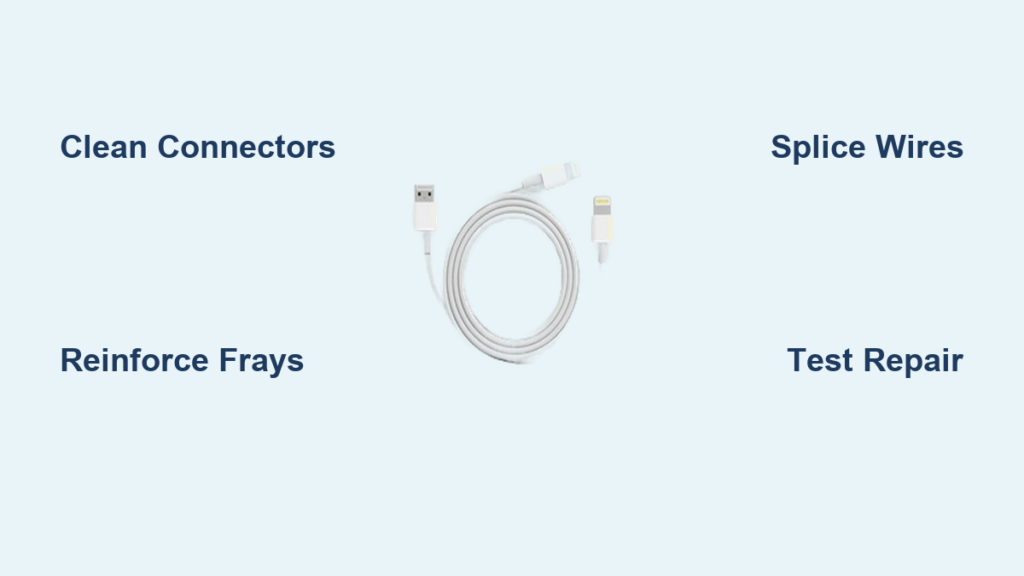
Your iPhone charger stops working again. The cable frays near the plug, wiggling it sporadically triggers charging, or worse—your phone displays “Accessory Not Supported.” You’re not alone. Millions face this frustrating, recurring issue every year. The good news: most broken iPhone charger cables can be fixed, at least temporarily, and sometimes permanently, without spending $20 on a replacement.
This guide reveals proven, step-by-step repair methods, from simple cleaning tricks to advanced splicing, while highlighting what actually works and what does not. You will learn how to diagnose the exact problem, choose the right fix, and extend your cable’s life for months or even years.
Diagnose the Damage First
Before grabbing tools, identify the root cause. A broken cable is not always beyond repair. Many issues are fixable with the right approach.
Check for Physical Fraying
Inspect both ends of the cable, especially the Lightning connector. Most failures occur within 1 inch of the plug due to constant bending. Look for cracked or split insulation, exposed copper wires or shielding, and discoloration or kinks. If the outer sheath is damaged but wires are intact, mechanical reinforcement can save the cable.
Test for Electrical Failure
Plug the cable in and observe your iPhone. Does it show no response, display intermittent charging, or pop up “Accessory Not Supported”? These point to electrical issues, not just physical wear. Possible causes include oxidized or dirty connector contacts, lint buildup in the iPhone’s charging port, internal wire break even if not visible, and failed MFi authentication chip.
Quick Tip: Try a different cable. If it works, the problem is your charger, not the phone.
Fix Frayed Cables with Reinforcement

When the insulation cracks but the cable still charges, reinforcement prevents total failure.
Use Electrical Tape for Quick Fixes
Wrap exposed areas to stop further fraying. Clean the area with isopropyl alcohol first. Anchor the tape to the connector’s plastic housing, then wrap downward at a slight stretch for better adhesion. Overlap each layer by 50 percent and seal the end.
Best for: Emergency fixes or low-stress use.
Limitation: Tape peels off within weeks under daily use. Avoid relying on it long-term.
Apply Heat-Shrink Tubing for Semi-Permanent Results
This method creates a sealed, durable layer that outperforms tape.
You will need:
• Heat-shrink tubing (3/16 inch diameter)
• Lighter or heat gun
Steps:
1. Slide tubing over the damaged section.
2. Position it to cover both the fray and half an inch of intact cable.
3. Rotate the cable while applying heat until the tube shrinks tightly.
4. Let cool before use.
Pro Tip: Use a two-layer system. Small tube over the joint, larger one underneath for padding. This repair lasts 6 to 12 months with regular use.
Upgrade with Marine Heat-Shrink and Spring
For maximum durability, combine marine-grade tubing with mechanical strain relief.
Materials:
• Marine heat-shrink (1/4 inch, 3:1 ratio with adhesive lining)
• Pen spring from a ballpoint pen
• Electrical tape
• Heat source
Steps:
1. Wrap the damaged area with electrical tape to build thickness.
2. Slide the pen spring over the taped section.
3. Slide marine tubing over the spring.
4. Apply heat evenly. The adhesive melts and seals the joint completely.
5. Cool and test.
Why it works: The spring resists bending stress. The adhesive-lined tubing creates a waterproof, rigid shield. These repairs last 1 to 2 plus years, even with heavy use.
Restore Charging with Contact Cleaning
If the cable looks fine but will not charge, the issue is likely dirty or corroded contacts.
Clean the Lightning Connector
Oxidation (green or white residue) or lint blocks electrical flow.
Safe cleaning tools:
• Glass fiber pen (best): Gently rubs off corrosion without scratching
• Pencil eraser: Mild abrasion removes light grime
• Fine nail file: Carefully scrape across contacts
Steps:
1. Power off the iPhone.
2. Gently clean each metal contact.
3. Wipe with a dry cloth.
4. Reconnect and test.
Warning: Never use metal tweezers or pins. Risk of shorting or damaging contacts exists.
Clear the iPhone Charging Port
Lint buildup is a major cause of charging failure.
Safe method:
1. Use a wooden toothpick.
2. Gently scrape along the port edges.
3. Remove visible debris.
4. Blow out residue with compressed air (optional).
Repeat this process every few months to prevent future issues. Over 60 percent of “broken” cables work again after cleaning both ends.
Repair Broken Wires by Splicing
When internal wires snap, splicing restores continuity.
Identify the Wire Functions
iPhone cables contain five conductors. Red carries positive 5V power (VCC). Black is ground (GND). White is data positive (D plus). Green is data negative (D minus). The braided shield connects to ground (black wire).
Note: Data lines are needed for syncing. For charging-only, VCC and GND suffice.
Steps to Splice and Solder
Tools needed:
• Wire strippers
• Soldering iron plus solder
• Heat-shrink tubing (three sizes)
• Multimeter
• 26 AWG stranded wire for extensions
Process:
1. Cut off 1 to 2 cm of the damaged end.
2. Strip insulation to expose inner wires.
3. Test continuity with a multimeter to confirm breaks.
4. Cut splice wires and strip both ends.
5. Solder connections: red to red, black to black, white to white, green to green. Connect braided shield to black wire.
6. Insulate each joint with small heat-shrink tubes.
7. Bundle and cover with a larger tube.
8. Add strain relief with epoxy or hot glue at the base.
Critical: Test for shorts before plugging into your iPhone.
Charging-only shortcut: Disconnect D plus and D minus. Solder only VCC and GND. This creates a dedicated charging cable with no data capability but longer lifespan.
Replace the Connector (Advanced)

For cables with dead connectors but good wires, full replacement is possible, but not easy.
Buy a Replacement Module
Aftermarket Lightning connectors are available on AliExpress, eBay, or Alibaba for $5 to $10. Choose MFi-certified modules to avoid iOS errors.
Required Tools
• Micro-soldering iron
• Flux
• Magnifying glass or microscope
• Tweezers
• Hot air station (optional)
Why It Is Risky
Pins are micro-sized and easily bridged. No polarity markings exist on the PCB. MFi chip alignment is critical. One mistake can kill the cable. While TikTok videos claim “easy fix,” most users fail without professional training.
Know When Not to Repair
Some cables are beyond saving.
Unrepairable Scenarios
No continuity in power wires: Multimeter shows no connection in red (VCC) or black (GND). This indicates internal PCB failure with no fix possible.
Authentication chip failure: Cable fits, but iPhone shows “This accessory is not certified and may not work reliably.” The MFi chip is encrypted and cannot be cloned or bypassed.
Tip completely broken off: No wire length exists to work with. No anchor point for repair exists.
Solution: Recycle or repurpose as a USB breakout cable.
Test the Repair Thoroughly
Never plug a repaired cable into your iPhone without testing.
Step-by-Step Validation
- Continuity test: Use a multimeter to verify VCC and GND show continuity. Ensure no short between wires exists.
- Power test: Plug into charger. iPhone should show charging icon and battery percentage increasing.
- Data test (optional): Connect to computer. Device should appear in Finder (macOS) or iTunes.
- Stress test: Wiggle the repaired section while charging. No flickering means stable repair.
- Heat check: Monitor for overheating after 10 minutes.
Prevent Future Damage
Avoid repeating the cycle with these habits.
Handle Cables Properly
• Unplug by the connector, not the cord.
• Avoid sharp bends near the ends.
• Do not yank from the wall or device.
Store Correctly
• Loosely coil, no tight wraps.
• Use a cable organizer or Velcro strap.
• Avoid kinks in pockets or bags.
Upgrade to Durable Alternatives
• Nylon-braided cables: Resists fraying, lasts 2 to 3 times longer
• USB-C to Lightning: Sturdier connector, faster charging
• MagSafe chargers: No cable wear, magnetic snap-on
• Wireless charging (Qi2): Eliminates cable use entirely
Top brands: Anker, Belkin, Apple (MFi-certified)
When to Just Replace the Cable
For most people, replacing the cable is smarter than repairing it.
Cost vs. Effort
• New MFi-certified cable: Starts at $4 (Amazon, Walmart)
• Genuine Apple cable: $19 to $29
• Repair time investment: 30 to 60 minutes
• Tool cost (if starting from scratch): $20 plus
Bottom line: If you are not experienced, buy a new one.
AppleCare Plus Replacement
Enrolled in AppleCare Plus? You may qualify for a free replacement, but only if no physical damage exists (no fraying, crushing, or cuts). Failure must be due to manufacturing defect. Apple does not cover chewed, sat-on, or frayed cables.
Frequently Asked Questions About Fixing Broken iPhone Charger Cables
Can I fix a frayed iPhone charger cable myself?
Yes, you can fix a frayed cable yourself using electrical tape for temporary fixes or heat-shrink tubing for longer-lasting repairs. For best results, use marine-grade heat-shrink with a pen spring for maximum durability. The method depends on the extent of damage and your skill level.
Why does my iPhone say “Accessory Not Supported” on a seemingly working cable?
This error typically indicates one of three problems. The Lightning connector contacts are oxidized or dirty. The MFi authentication chip inside the connector has failed. Or lint buildup in your iPhone’s charging port is blocking proper connection. Try cleaning both the cable connector and phone port first.
Is splicing an iPhone charger cable difficult?
Splicing requires basic soldering skills and specific tools (soldering iron, multimeter, heat-shrink tubing). It is moderately difficult for beginners but achievable with practice. For charging-only functionality, you can simplify by splicing only the red (VCC) and black (GND) wires, ignoring data lines.
How long do DIY cable repairs last?
Electrical tape repairs last less than one month. Standard heat-shrink tubing lasts 6 to 12 months. Marine heat-shrink with spring reinforcement lasts 1 to 2 plus years. Spliced connections that carry both power and data last 1 year or more with proper strain relief.
Should I replace or repair my broken iPhone cable?
Replace the cable if you are a casual user. A new MFi-certified cable costs only $4 and comes with a warranty. Repair makes sense if the cable has sentimental value, is unusually long or specialized, or you want to reduce e-waste. Repair also makes sense if you enjoy DIY projects and have the necessary tools.
Can I use glue to fix my iPhone charger cable?
No, avoid glue entirely. Using Vaseline, glue, or similar substances creates serious risks. These include short circuits, material degradation, and potential fire hazards. Stick to mechanical repair methods like heat-shrink tubing or proper soldering with appropriate insulation.
Key Takeaways for Fixing Your Broken iPhone Charger Cable
Most broken iPhone charger cables are repairable, but success depends entirely on the damage type and your skill level. Start with the simplest solution: clean the Lightning connector and phone charging port. This single step fixes over 60 percent of “broken” cables that appear undamaged. For frayed insulation, heat-shrink tubing (especially marine-grade with spring reinforcement) provides the most durable DIY repair, lasting 1 to 2 years with daily use.
Splicing and resoldering work for broken internal wires but require tools and basic electronics skills. Full connector replacement is not practical for average users due to micro-soldering complexity and MFi authentication chip constraints. Finally, recognize when to cut losses: cables with failed authentication chips, broken tips with no wire length, or internal PCB failures cannot be repaired by consumers.
Your next step: Try the contact cleaning method first. It costs nothing, takes five minutes, and often restores “dead” cables to full functionality. If that fails, assess whether the cable is worth the repair investment or whether simply buying a new MFi-certified cable (starting at $4) makes more sense.