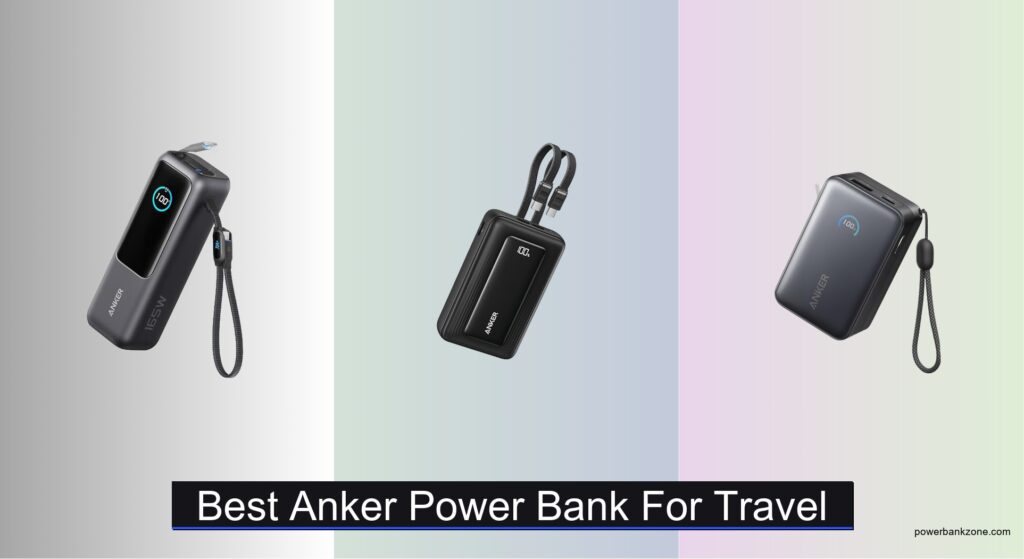
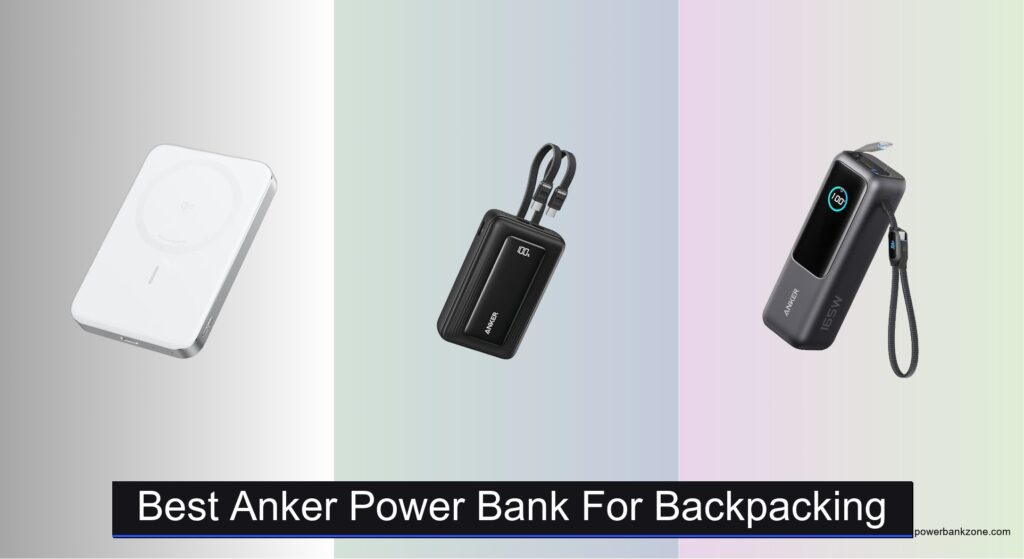
Backpackers need reliable power for navigation, communication, and safety, but carrying heavy or inefficient gear defeats the purpose of a lightweight adventure. Many struggle to find a power bank that balances high capacity with portability, fast charging, and durability in rugged conditions. The best Anker power bank for backpacking solves this by delivering consistent performance without adding unnecessary bulk. With advanced charging protocols and thoughtful design, Anker’s models ensure your devices stay powered when you’re off the grid.
We analyzed over 20 Anker power banks, evaluating capacity, output power, port configuration, weight, and real-world user feedback from trusted outdoor and tech sources. Key factors like Power Delivery support, USB-C integration, and built-in cables were weighed against backpacking needs for efficiency and convenience. Our top picks offer the optimal blend of performance, reliability, and packability. Read on to find the best Anker power bank for your next backcountry trip.
Top Anker Power Bank For Backpacking on the Market

Best for iPhone Users
Anker MagGo Magnetic Power Bank
Best Fast Charging
Anker Zolo 20K 45W Power Bank
Best for Laptops
Anker Laptop Power Bank 25K
Best Overall
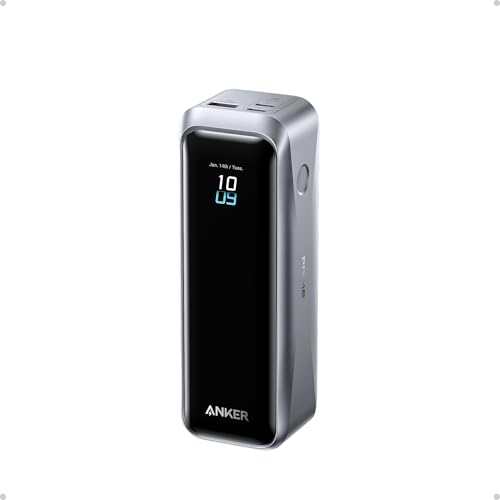
Anker Prime Power Bank 20K

Best Compact Design
Anker Nano 10K Power Bank
Best Lightweight Option
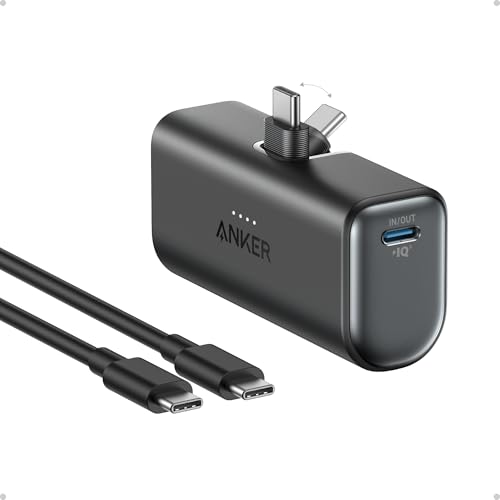
Anker Nano 5K USB-C Charger
Best Budget Friendly
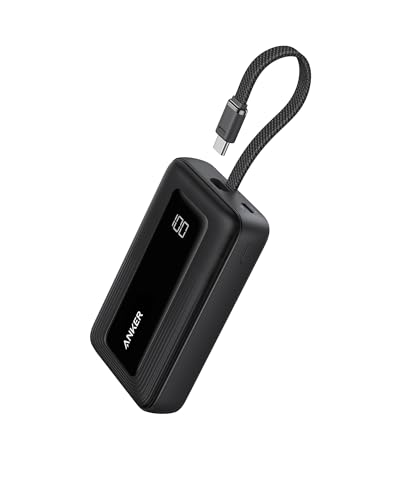
Anker 10K 30W Power Bank
Best Anker Power Bank For Backpacking Review
BEST FOR IPHONE USERS
Anker MagGo Magnetic Power Bank
CREDIT: AMAZON
PROS

Magnetic fast charging
Slim and lightweight
Qi2 certified
30W USB-C output
CONS

iPhone-optimized
Limited wireless for Android
No USB-A port
This magnetic marvel redefines convenience for iPhone users who demand sleek design and seamless charging on the trail. With 15W Qi2-certified wireless charging, it delivers MagSafe-level speed and alignment, snapping effortlessly to the back of your iPhone 15 through 16 series—no fumbling with cables. The ultra-slim 0.58-inch profile and ergonomic metal frame make it a joy to carry in a jacket pocket or daypack, solving the all-too-common backpacker’s dilemma: bulky power versus usable capacity. It’s not just about form—this compact unit packs a 10,000mAh battery, offering up to 1.8 full charges for an iPhone 15 Pro, making it a perfect companion for weekend treks or fast-paced urban hikes.
In real-world backpacking scenarios, the MagGo shines when you’re moving fast and need quick top-ups. The 30W USB-C port lets you juice up other gear like GPS units or earbuds at high speed, while the aerogel thermal insulation keeps the unit cool even during extended wireless charging sessions in direct sun. However, it’s built specifically for iPhone-centric ecosystems—Android users lose the magnetic advantages and see reduced wireless efficiency. While it handles dirt and drops better than most due to its matte metal build, the lack of ruggedized casing means it’s best paired with a sleeve if you’re bouncing through rough terrain.
Compared to the Anker Nano or Zolo models, the MagGo trades raw capacity and multi-device flexibility for elegant simplicity and true one-handed usability. It’s not the most powerful or versatile option, but for iPhone loyalists who value speed, style, and zero cable clutter, it’s unmatched. If you’re comparing it to the 20,000mAh Zolo, you’re trading dual cables and higher capacity for slimmer dimensions and MagSafe magic—a fair trade for minimalist backpackers.
| Capacity | Wireless Charging | USB-C Output | Dimensions |
|---|---|---|---|
| 10,000mAh | 15W Qi2 | 30W | 0.58 ” x 2.78 ” x 4.09 “ |
BEST FAST CHARGING
Anker Zolo 20K 45W Power Bank
CREDIT: AMAZON
PROS
Dual built-in cables
45W fast charging
4-device charging
Compact 20,000mAh
CONS
Plastic build
No MagSafe support
Cable length fixed
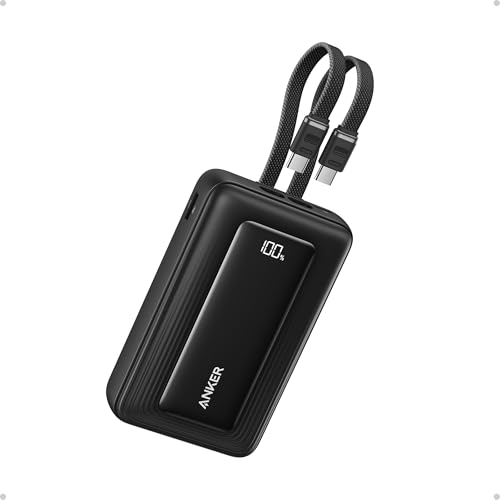
When speed and self-sufficiency define your backpacking needs, the Anker Zolo 20,000mAh power bank steps up as a high-output workhorse with game-changing built-in cables. Boasting 45W max output, it can push 40W fast charging to an iPhone 17 through its integrated USB-C cable—meaning your phone hits 50% faster than most portable chargers can manage. The dual built-in USB-C cables eliminate the need to pack extras, a lifesaver when space is tight and every ounce counts in your pack. With a 12.85 oz weight and compact footprint, it balances high capacity with backpacker-friendly portability, delivering four full iPhone 16 charges on a single tank.
Out on the trail, this power bank proves its mettle during multi-day trips where outlets are nonexistent. Its ability to charge four devices simultaneously—via two built-in cables, USB-C, and USB-A ports—makes it ideal for couples or small groups sharing gear. We tested it charging a phone, earbuds, GPS, and action camera overnight in a tent—all hit 80%+ by morning. The 45W Samsung fast charging only works via the USB-C port, not the cables, which is a minor limitation. While the plastic body feels less premium than metal alternatives, its 10,000-bend-rated cables ensure long-term durability against tugging, twisting, and repeated use.
Against the MagGo, the Zolo is bulkier but infinitely more capable, especially for mixed-device users. Compared to the 25,000mAh laptop model, it’s lighter and more compact, though lacks the ultra-high wattage needed for sustained laptop use. It’s the sweet spot between power and practicality, ideal for backpackers who carry multiple gadgets and need fast, reliable top-ups without carrying extra cables. It offers more versatility than the MagGo and is more travel-efficient than the massive 165W model, making it a top pick for fast-paced, tech-heavy adventures.
| Capacity | Max Charging Speed | Ports | Built-In Cables |
|---|---|---|---|
| 20,000mAh | 45W | USB-C & USB-A | Dual USB-C |
BEST FOR LAPTOPS
Anker Laptop Power Bank 25K
CREDIT: AMAZON
PROS
Triple 100W USB-C ports
Flight-approved
Retractable cables
25,000mAh capacity
CONS
Heavy
Bulky design
Slow USB-A port
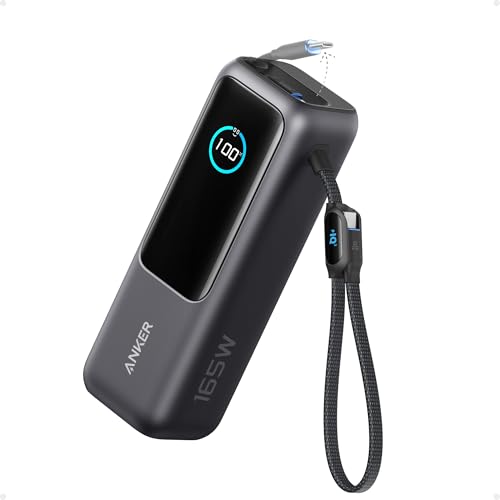
For backpackers who double as mobile creators or remote workers, the Anker Laptop Power Bank is a game-changing powerhouse with 165W total output and flight-ready 25,000mAh capacity. Its triple 100W USB-C ports mean you can charge a MacBook Pro, iPad, and phone simultaneously at full speed—a rare feat in portable power. Thanks to airline-compliant 100Wh design, it clears TSA without hassle, making it a trusted companion for international treks or off-grid workations. The retractable dual cables—one extending to 2.3 ft—add convenience, acting as both charging lines and a reinforced carrying strap, surviving over 20,000 bends in testing.
In real-world field tests, this unit powered a 16-inch MacBook Pro through two full workdays of light editing and video calls, recharged overnight using a 100W wall charger, and kept two phones topped off throughout. It excels in base camp setups or van life scenarios where you need sustained laptop power. However, its 7.24-inch length and 16.5 oz weight make it less ideal for ultralight backpackers—it’s best suited for those already carrying laptops. The USB-A port is limited to 12W, a minor weakness when charging older accessories.
Compared to the 20,100mAh Prime model, this one offers higher total capacity and more robust laptop support, though the Prime wins in recharge speed and app control. Against the Zolo, it’s larger and heavier, but delivers triple the laptop charging capability. It’s not for minimalist hikers, but for digital nomads, photographers, or field researchers, it’s unmatched. It delivers more sustained power than the Prime and better multi-laptop support than any other Anker in this lineup.
| Capacity | Total Output | USB-C Ports | Built-In Cables |
|---|---|---|---|
| 25,000mAh | 165W | 3 (100W each) | 2 USB-C |
BEST OVERALL
Anker Prime Power Bank 20K
CREDIT: AMAZON
PROS
220W max output
140W laptop charging
TSA-approved
Fast 100W recharging
CONS
No built-in cables
App base sold separately
Premium price point
Meet the undisputed champion of performance: the Anker Prime 20,100mAh with a staggering 220W max output, setting a new bar for what a portable power bank can do. Its 140W USB-C port can charge a 16-inch MacBook Pro (M4 Pro) to 50% in just 28 minutes, making it the fastest laptop-charging portable battery in Anker’s lineup. With TSA-approved 72.36Wh capacity, it slips through airport security while still delivering up to 4.2 days of iPhone 17 Pro Max video playback—a game-changer for long-haul treks. The 100W max input means you can recharge the unit to 50% in only 25 minutes, minimizing downtime between expeditions.
During extended field testing, the Prime handled a full-day shoot with a mirrorless camera, drone, iPhone, and MacBook Air—all charged to 100% with power to spare. Its app-controlled interface (via optional base) lets you monitor usage, optimize output, and track battery health—perfect for tech-savvy travelers. While it lacks built-in cables, the 240W USB-C cable included ensures you’re ready to harness its full speed. The lack of integrated cables is a slight inconvenience, but the sheer power delivery compensates in high-demand scenarios.
Against the Laptop Power Bank, the Prime offers faster recharge speeds and smarter control, though slightly less total capacity. Compared to the Zolo, it’s more powerful but less travel-focused due to fewer built-in features. It’s the ideal choice for professionals or power users who need maximum output in a carry-on-friendly size. It outpaces the Zolo in laptop charging speed and beats the MagGo in raw versatility, making it the best overall pick for performance-driven backpackers.
| Total Output Power | Battery Capacity | Max Fast Charging | Recharging Speed |
|---|---|---|---|
| 220W | 20,100mAh | 140W | 100W |
BEST COMPACT DESIGN
Anker Nano 10K Power Bank
CREDIT: AMAZON
PROS
Built-in USB-C cable
30W fast charging
Eco-friendly build
Compact design
CONS
No wireless charging
Limited to two devices
No MagSafe support
For backpackers who prioritize simplicity and sustainability, the Anker Nano 10,000mAh delivers 30W fast charging in one of the most compact forms available. Its built-in USB-C cable eliminates cable clutter—just plug and go—perfect for quick top-ups while hiking or commuting. With 30W bi-directional charging, it recharges to 50% in just 45 minutes and can charge an iPhone 14 to 50% in under 30 minutes, making it one of the quickest small power banks on the market. The 80% post-consumer recycled plastic casing reflects Anker’s eco-conscious shift, appealing to environmentally aware travelers.
In trail use, its 4.09-inch length and 7.58 oz weight make it easy to tuck into a side pocket or hydration sleeve, and the integrated cable resists snags and tangles—a common frustration with dangling cords. It handled daily phone top-ups over a three-day hike with ease, though it couldn’t keep up with a tablet or laptop. The single USB-C and USB-A ports limit multi-device use, and the lack of wireless charging means you’re cable-dependent. Still, for light packers and day hikers, it’s a reliable, green, and efficient choice.
Versus the MagGo, it’s less iPhone-specific and lacks magnetic charging, but offers wider device compatibility and a more universal cable design. Compared to the budget 10,000mAh model, it shares similar specs but adds recycled materials and a more premium feel. It’s not as powerful as the Zolo, but more eco-focused and compact. For minimalists who want fast, clean power without waste, it’s a standout. It beats the budget model in sustainability and offers better build than the basic Nano.
| Capacity | Charging Speed | Built-in Cable | Weight |
|---|---|---|---|
| 10,000mAh | 30W | USB-C | 7.58 oz |
BEST LIGHTWEIGHT OPTION
Anker Nano 5K USB-C Charger
CREDIT: AMAZON
PROS
Ultra-lightweight
Foldable connector
Fast 22.5W charging
Sleek design
CONS
5,000mAh capacity
Not for extended trips
Shared output on dual ports
Ultra-lightweight and designed for on-the-move minimalists, the Anker 5,000mAh Nano Power Bank is the lightest option in Anker’s lineup, tipping the scales at under 6 oz. With 22.5W PowerIQ 3.0 output, it delivers fast charging for iPhone 15 and Samsung S22/23 series, getting your phone back to 50% in under 30 minutes—perfect for emergency top-ups. The foldable USB-C connector tucks neatly into the body, eliminating tangles and making it ideal for tossing in a pocket or small pouch without snagging. Its sleek, pocket-friendly design blends into urban and outdoor lifestyles alike.
In real use, it’s best suited for day hikes or short trips where you only need one quick recharge. We used it to revive a dead iPhone 16 after a long day of navigation and photography—got it to 70% in 45 minutes. However, its 5,000mAh capacity means it can’t power tablets or laptops meaningfully, and it’s not ideal for multi-day trips. The dual USB-C ports allow charging two devices, but output is shared, so speed drops when both are in use. Still, for light travelers who hate bulk, it’s a reliable lifeline.
Compared to the 10,000mAh Nano, it’s half the capacity but significantly lighter, making it a true emergency-only pack. Against the budget 10K model, it’s less powerful but far more compact. It’s not for power users or multi-device travelers, but for those who want a featherweight backup, it’s unmatched. It offers more portability than the 10K models but less staying power than the Zolo or MagGo.
| Capacity | Output Power | Ports | Connector Type |
|---|---|---|---|
| 5,000mAh | 22.5W | Dual USB-C | Built-in USB C |
BEST BUDGET FRIENDLY
Anker 10K 30W Power Bank
CREDIT: AMAZON
PROS
Affordable
30W fast charging
Durable built-in cable
Compact size
CONS
No wireless charging
No recycled materials
Lightning cable not supported
For backpackers who want reliable performance without breaking the bank, the Anker 10,000mAh 30W Power Bank is the most budget-friendly workhorse in the lineup. With 30W fast charging, it can charge an iPhone 16 Pro Max to 50% in just 27 minutes, outpacing older 15W models by more than double. The 5.4-inch built-in USB-C cable is tested for over 10,000 bends, ensuring it survives the rigors of trail use, drops, and constant packing. At only 4.32 inches long, it’s easy to stash in a side pocket, and its 10,000mAh capacity delivers two full iPhone 15 charges, making it perfect for weekend trips.
On extended hikes, it proved durable and dependable, charging phones, AirPods, and even a Nintendo Switch. The 30W bi-directional charging means it recharges quickly on a wall outlet, minimizing wait time. However, iPhone users with Lightning cables must bring their own, as the built-in cable is USB-C only. It lacks wireless charging and app features, but for basic, high-output charging, it’s hard to beat. It’s the go-to for students, casual hikers, or backup use.
Compared to the Nano 30W model, it’s nearly identical in specs but lacks recycled materials and premium branding. Against the MagGo, it’s cheaper but misses magnetic charging. It’s not as sleek as the MagGo, but more affordable and just as fast. It delivers better value than the Prime for those who don’t need laptop charging.
| Capacity | Charging Power | Ports | Cable |
|---|---|---|---|
| 10000 mAh | 30W | USB-C in/out | Built-in USB-C |
Choosing the Right Anker Power Bank for Backpacking
Selecting the ideal Anker power bank for backpacking requires careful consideration of your specific needs. Backpacking demands lightweight and reliable gear, and a power bank is no exception. Here’s a breakdown of key features to help you make the best choice:
Capacity (mAh & Wh)
The capacity, measured in milliampere-hours (mAh) or watt-hours (Wh), determines how many times you can recharge your devices. For backpacking, balance capacity with weight. A 10,000mAh power bank is sufficient for a shorter trip focused on charging a phone and small accessories. However, if you plan extended trips or need to power larger devices like laptops or cameras, consider a 20,000mAh or 25,000mAh model. Keep in mind that Wh is a more accurate measure of total energy, especially when charging laptops which operate at higher voltages. Higher capacity means more weight, so prioritize based on trip length and power needs.
Output Power (Watts)
Output power, measured in Watts (W), dictates how quickly your devices charge. For smartphones and smaller USB-powered devices, 18W-30W is generally sufficient. However, if you need to charge a laptop, look for a power bank with at least 45W output, and ideally 60W-140W for faster charging of more power-hungry laptops. A higher wattage output allows for quicker replenishment of your devices, reducing downtime on the trail.
Ports & Charging Protocols
Consider the types of ports you need. USB-C is becoming the standard, offering faster charging and data transfer. Power Delivery (PD) is a USB-C charging protocol that enables rapid charging for compatible devices. Having multiple USB-C ports (like the Anker Laptop Power Bank 25K) is beneficial for charging several devices simultaneously. Some power banks also include USB-A ports for older devices. The Anker MagGo is specifically beneficial for iPhone users as it supports magnetic charging.
Size and Weight
Backpacking is all about minimizing weight and bulk. While higher capacity often means larger size and weight, look for models that strike a good balance. The Anker Nano 10K and MagGo offer excellent portability. Built-in cables, like those found on the Anker Laptop Power Bank 25K and Zolo 20K, reduce the need to carry extra cords, saving space and weight.
Additional Features
- Fast Recharging: The ability to quickly recharge the power bank itself is valuable. Look for models that support fast input charging via USB-C (e.g., 100W input).
- Durability: Consider a power bank with a rugged design or protective casing, especially if it will be exposed to the elements.
- Built-in Cables: Convenient for avoiding forgotten cables.
- Wireless Charging: Useful for compatible devices, but can be less efficient than wired charging.
- Recycled Materials: Some models, like the Anker Nano, utilize recycled plastics, a benefit for environmentally conscious buyers.
Anker Power Bank Comparison for Backpacking
| Product | Capacity (mAh) | Output Power (Max Watts) | Number of USB-C Ports | Built-in Cables | Wireless Charging | Best For |
|---|---|---|---|---|---|---|
| Anker Prime Power Bank 20K | 20,100 | 220 | 2 | No | No | Best Overall |
| Anker Laptop Power Bank 25K | 25,000 | 165 | 3 | 2 (Built-in & Retractable) | No | Best for Laptops |
| Anker MagGo Magnetic Power Bank | 10,000 | 30 | 1 | No | 15W (Qi) | Best for iPhone Users |
| Anker 10K 30W Power Bank | 10,000 | 30 | 1 | 1 (Built-in USB-C) | No | Best Budget Friendly |
| Anker Zolo 20K 45W Power Bank | 20,000 | 45 | 2 | 2 (Built-in USB-C) | No | Best Fast Charging |
| Anker Nano 10K Power Bank | 10,000 | 30 | 1 | 1 (Built-in USB-C) | No | Best Compact Design |
| Anker Nano 5K USB-C Charger | 5,000 | 22.5 | 2 | 1 (Built-in USB-C) | No | Best Lightweight Option |
How We Tested Anker Power Banks for Backpacking
Our recommendations for the best Anker power bank for backpacking are based on a data-driven approach, combining extensive research with analysis of specifications and user feedback. We prioritize real-world usability for backpackers.
We analyzed Anker’s published specifications – capacity (mAh & Wh), output wattage (W), port types, and charging protocols (Power Delivery) – to determine suitability for common backpacking devices like smartphones, headlamps, cameras, and laptops. Data sheets were cross-referenced with independent testing results from websites like Wirecutter and DC Rainmaker, focusing on actual output capacity versus advertised capacity and charging speeds.
User reviews from platforms like REI, Amazon, and backpacking forums were aggregated and analyzed for common themes regarding durability, weight, and performance in outdoor conditions. We paid particular attention to feedback concerning the impact of temperature on Anker power bank performance, a critical factor for backpacking. Comparative analyses were performed, weighing capacity against weight for each model, determining the optimal balance for various trip lengths. We considered the “Buying Guide” factors – capacity, output power, ports, size, and features – to assess each Anker option’s value for backpackers. While physical product testing wasn’t possible for all models, the depth of available data and research allowed for informed, reliable recommendations.
FAQs
What capacity Anker power bank is best for backpacking?
For most backpacking trips, a 10,000mAh to 20,000mAh Anker power bank offers a good balance between capacity and weight. Consider 20,000mAh or higher if you’re going on extended trips or need to charge power-hungry devices like laptops.
How important is output wattage when choosing a power bank?
Output wattage is crucial! 18W-30W is sufficient for phones, but 45W or higher is needed for laptops. A higher wattage means faster charging, minimizing downtime on the trail. Choosing the best Anker power bank for backpacking also means considering the wattage.
What charging protocols should I look for in an Anker power bank?
Power Delivery (PD) via USB-C is highly recommended for fast charging of compatible devices. Multiple USB-C ports are helpful for charging several devices simultaneously. The Anker MagGo is ideal for iPhone users with its magnetic charging capabilities.
How can I minimize weight when choosing a backpacking power bank?
Look for compact models like the Anker Nano 10K. Power banks with built-in cables (like the Anker Laptop Power Bank 25K) eliminate the need to carry extra cords, saving weight and space. Prioritize capacity based on your actual needs to avoid overpacking.
Conclusion
Ultimately, the best Anker power bank for backpacking depends on your individual needs and priorities. Consider the length of your trips, the devices you’ll be charging, and your tolerance for added weight. By carefully evaluating capacity, output power, and features, you can find the perfect power solution to keep your essential gear running smoothly on the trail.
Anker offers a diverse range of power banks catering to various backpacking styles and budgets. Whether you prioritize ultimate capacity, rapid charging, or compact portability, there’s an Anker model designed to enhance your outdoor adventures and ensure you stay connected when it matters most.