Imagine waking up to no electricity—no lights, no coffee maker, no smartphone charging. This would be daily life without power stations. A power station is a facility that generates electricity by converting various forms of energy like heat, motion, or sunlight into electrical energy. These facilities form the backbone of modern civilization, supplying homes, hospitals, schools, and industries with the power they need to function.
In this guide, you will learn how different power stations convert energy into electricity, what components make them work, how electricity travels from plant to your home, and what environmental impacts each type creates. You will also discover why the global energy transition toward renewables is accelerating and what it means for the future.
How Power Stations Generate Electricity
At the heart of every power station lies one fundamental process: spinning a generator to produce electricity through electromagnetic induction. The method used to spin that generator depends entirely on the type of power station and its energy source.
Most conventional stations use heat to produce steam, which drives a turbine. In fossil fuel and nuclear plants, water is heated under high pressure until it becomes steam. This steam rushes through pipes and spins the blades of a turbine at high speed. The turbine shaft connects directly to a generator, where rotating magnets inside copper wire coils induce an electric current.
Renewable stations take different approaches. Wind turbines use natural air flow to turn their blades. Hydroelectric stations rely on falling or fast-moving water from dams or rivers. Solar power stations skip turbines entirely, using photovoltaic panels to convert sunlight directly into electricity using semiconductor materials.
The Generator: Where Electricity Is Born
The generator is the central component where electricity is produced. Inside, a rotor spins within a stationary component called a stator. The rotor contains electromagnets powered by a small DC source, while the stator holds copper windings. As the rotor turns, its magnetic field induces electron flow in the stator, creating alternating current electricity.
Modern generators can convert over 95% of mechanical input into electrical output. However, losses occur due to heat, friction, and electrical resistance. Regular maintenance ensures optimal performance and prevents costly downtime.
Turbines: Converting Energy into Motion
Turbines come in multiple forms, including steam, gas, water, and wind variants, but all serve the same purpose: converting energy into rotational motion.
• Steam turbines are used in coal, natural gas, and nuclear plants, where high-pressure steam expands across blade stages
• Gas turbines burn fuel directly to produce hot gases that drive the turbine, common in peaking power plants
• Hydraulic turbines like Pelton or Francis types harness kinetic and potential energy from flowing water
• Wind turbines use aerodynamic blades designed to capture wind energy efficiently
Types of Power Stations and How They Work

Different energy sources require different power station designs. Each type has unique advantages, limitations, and operational methods that determine how it fits into the global electricity supply.
Coal-Fired Power Stations
Coal plants burn pulverized coal in a boiler to produce high-pressure steam. This steam powers a turbine-generator set, then cools in a condenser and recycles back into water. Despite declining use due to pollution concerns, coal still provides significant global electricity, especially in developing nations. These stations offer stable baseload power but emit large amounts of carbon dioxide, sulfur dioxide, and particulates.
Natural Gas Power Stations
Natural gas burns in a combustion chamber to either produce steam in combined-cycle plants or directly drive a gas turbine. Combined-cycle plants are highly efficient because they reuse waste heat to generate additional steam. These stations start quickly, making them ideal for balancing variable renewable sources, though they still contribute to greenhouse gas emissions.
Nuclear Power Stations
Nuclear plants generate heat through controlled fission of uranium-235 atoms. This heat produces steam to drive turbines. Unlike fossil fuels, nuclear reactions release no carbon dioxide during operation. A single fuel pellet about the size of a fingertip can produce as much energy as one ton of coal. However, challenges include radioactive waste storage, high construction costs, and public safety concerns.
Hydroelectric Power Stations
Hydropower uses gravity-fed water from reservoirs to spin turbines. Dams control water flow, allowing energy production on demand. Pumped-storage hydropower can store excess electricity by pumping water uphill when demand is low. This is one of the most efficient and flexible renewable sources, though building large dams can displace communities and disrupt river ecosystems.
Wind Power Stations
Wind farms consist of multiple turbines mounted on tall towers where wind speeds are highest. When wind blows, it turns the blades, spinning a shaft connected to a gearbox and generator. Onshore wind is now one of the cheapest forms of new electricity generation. Offshore wind offers stronger, more consistent winds but carries higher installation and maintenance costs.
Common Mistake: Many people assume wind turbines need constant strong wind, but modern systems can generate power at wind speeds as low as 3 to 4 meters per second.
Solar Power Stations
Solar stations use two main technologies. Photovoltaic farms feature arrays of solar panels that convert sunlight directly into electricity. Concentrated solar power uses mirrors to focus sunlight and heat a fluid, producing steam to drive turbines. Solar is modular and scalable, suitable for rooftops or utility-scale installations, though output drops at night or during cloudy weather.
Core Components of Every Power Station
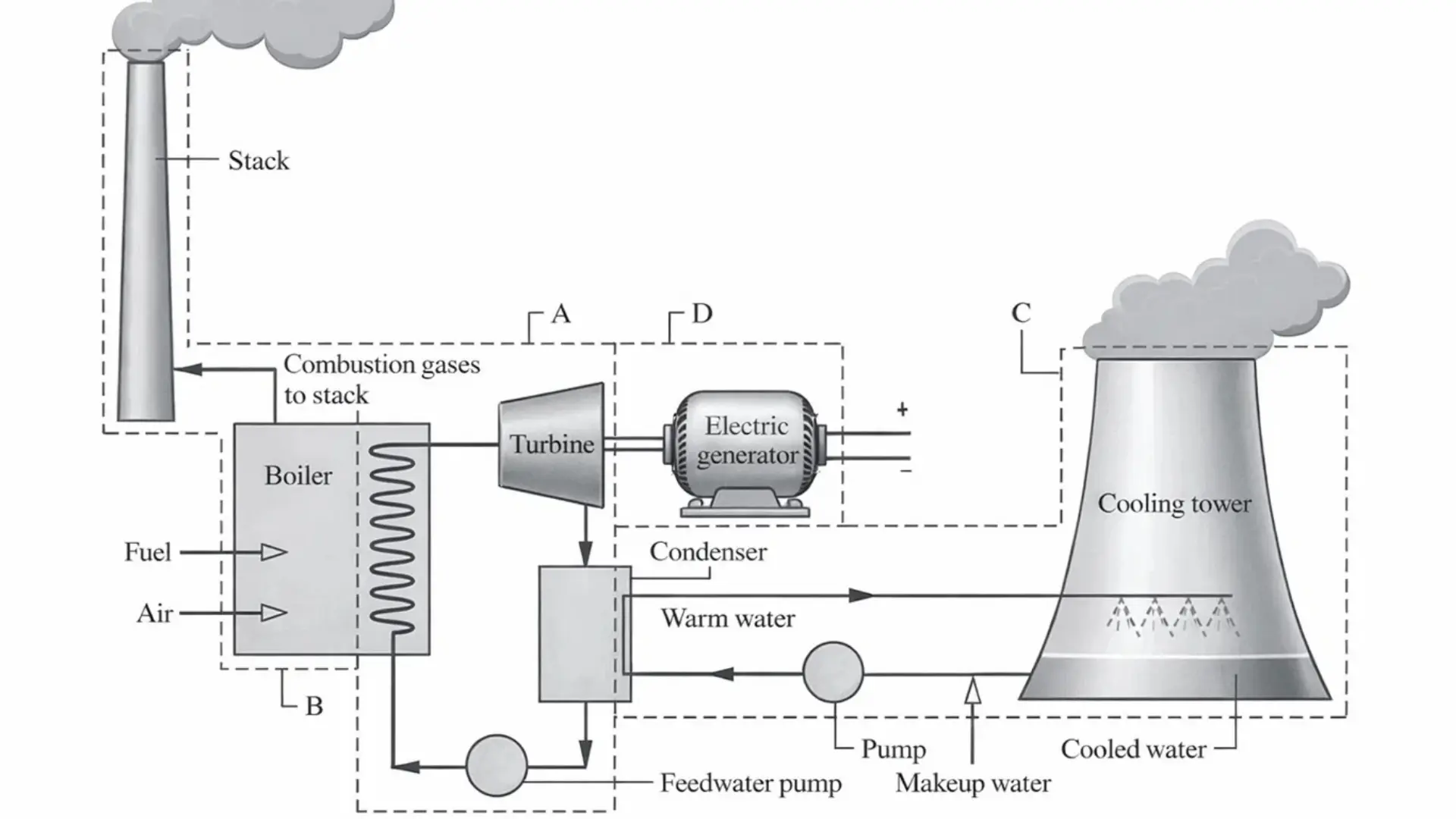
While designs vary by energy source, all power stations share essential components that work together to generate and deliver electricity.
Boiler and Steam System
In thermal plants, the boiler heats water to create high-pressure steam. It must withstand extreme temperatures and pressure. Regular inspections prevent leaks and safety hazards. In nuclear reactors, the steam generator serves a similar purpose but uses a secondary loop to isolate radioactive materials.
Cooling System
After passing through the turbine, steam must be condensed back into water. Cooling towers or nearby water bodies absorb excess heat. Dry cooling systems exist but are less efficient and more expensive, used mainly in arid regions.
Transformers and Switchyard
Electricity from the generator typically produces at 11 to 25 kilovolts. Transformers step this up to 110 to 765 kilovolts for long-distance transmission, reducing energy loss. The switchyard manages electricity flow, connecting the plant to the grid and isolating equipment during faults.
Control Room and Monitoring Systems
Operators monitor voltage, frequency, temperature, and pressure in real time. Advanced SCADA systems automate responses to fluctuations, ensuring stability and safety. These digital systems help prevent equipment failures and blackouts.
From Plant to Plug: Transmission and Distribution
Generating electricity is only half the job. Getting it to homes and businesses requires a complex network known as the power grid.
High-Voltage Transmission
Once electricity leaves the plant, it travels via high-voltage transmission lines mounted on steel towers. These lines minimize energy loss over long distances, typically losing only 2 to 3% per 100 miles. Transmission infrastructure must withstand storms, ice, and falling trees that can cause outages.
Substations: Voltage Transformation
Substations reduce voltage from transmission levels to distribution levels, typically 11 to 33 kilovolts. Step-down transformers make electricity safe for local use. Smart substations now include sensors and remote controls, improving fault detection and response time.
Local Distribution Network
From substations, electricity moves through smaller poles or underground lines to neighborhoods. Pole-mounted transformers further reduce voltage to 120 or 240 volts for household use. Urban grids face high demand and congestion, while rural areas may experience longer lines and fewer backup connections.
Global Electricity Mix by Fuel Source
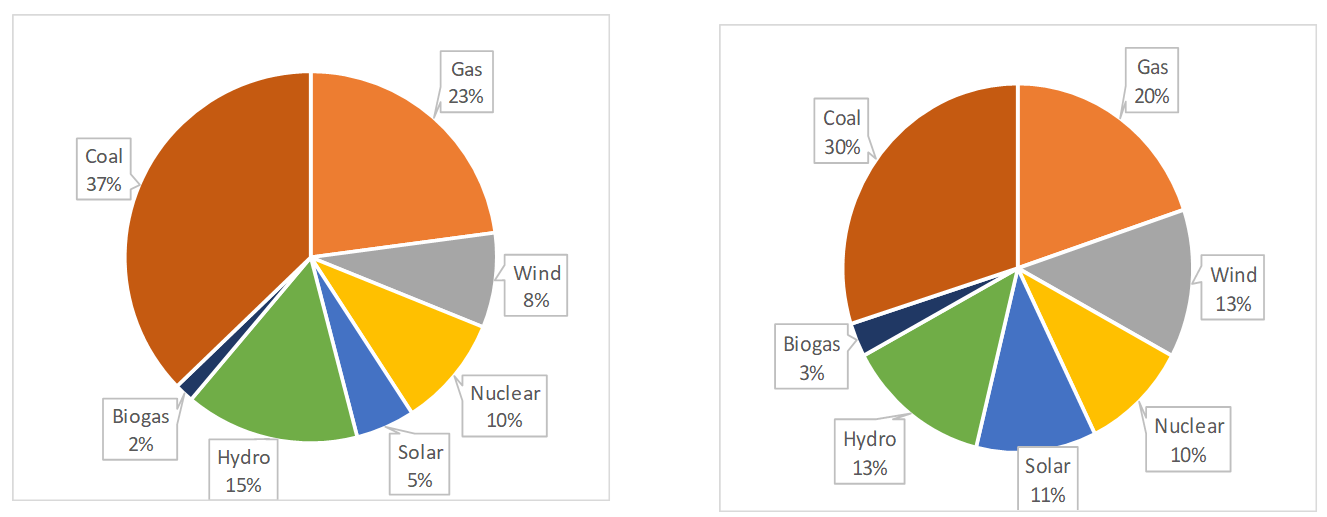
The world electricity supply comes from a diverse mix shaped by geography, policy, and economics. As of 2022, fossil fuels dominated global electricity generation, though renewables were growing rapidly.
| Energy Source | Share of Global Electricity (2022) | Carbon Intensity (gCO₂/kWh) |
|---|---|---|
| Coal | 35% | 820 |
| Natural Gas | 23% | 490 |
| Hydro | 15% | 24 |
| Nuclear | 10% | 12 |
| Wind | 7% | 11 |
| Solar | 4% | 45 |
Fossil fuels still account for approximately 60% of global electricity, while renewables represent about 30% and nuclear provides 10%. Wind and solar alone accounted for over 80% of new power capacity added globally in recent years.
Environmental Impact and Sustainability
Power stations have major environmental footprints that affect air quality, climate change, land use, and biodiversity.
Emissions from Fossil Fuels
Burning coal and natural gas releases carbon dioxide as the primary climate change driver, sulfur dioxide causing acid rain, nitrogen oxides contributing to smog, and particulate matter linked to heart and lung diseases. Carbon capture technology can trap up to 90% of carbon dioxide emissions but remains expensive and underutilized.
Land and Ecosystem Effects
Large solar farms and hydropower dams require significant land, leading to habitat loss, disrupted fish migration from dams, and soil degradation. Careful site selection and environmental impact assessments help minimize harm.
Nuclear Waste Considerations
Spent nuclear fuel remains radioactive for thousands of years. Safe disposal requires deep geological repositories, which few countries have fully implemented. However, new reactor designs promise reduced waste and enhanced safety.
Future Trends in Power Generation
The power station of tomorrow will look very different from todays plants as innovation reshapes how we generate, store, and use electricity.
Renewable Energy Growth
Solar and wind are now the cheapest sources of new electricity in most countries. By 2030, renewables could supply over 40% of global power. Floating solar farms, offshore wind turbines, and agrivoltaics are pushing boundaries in renewable deployment.
Decentralized Energy Systems
Instead of relying solely on large power stations, homes and businesses are generating their own power with rooftop solar and home batteries. Microgrids can operate independently during outages, providing resilience.
Digitalization and Artificial Intelligence
AI optimizes power plant operations, predicts maintenance needs, and balances grid loads. Digital twins, virtual models of physical plants, help engineers test changes before implementation.
Frequently Asked Questions About Power Stations
How does a power station generate electricity?
A power station generates electricity by spinning a turbine connected to a generator. The turbine converts heat, wind, or water energy into rotational motion. The generator then uses electromagnetic induction to convert that mechanical energy into electrical energy.
What are the main types of power stations?
The main types include coal-fired, natural gas, nuclear, hydroelectric, wind, and solar power stations. Each uses a different energy source to produce electricity, with some using steam turbines and others using direct conversion methods like photovoltaic panels.
How does electricity travel from a power station to my home?
Electricity leaves the power station at high voltage, traveling through transmission lines to substations. Transformers reduce the voltage at substations, and local distribution lines carry electricity to neighborhoods. Pole-mounted transformers further reduce voltage to safe household levels.
Why are countries shifting toward renewable power stations?
Countries are shifting toward renewables because fossil fuel plants emit greenhouse gases that drive climate change. Renewable sources like wind and solar produce minimal emissions and are becoming cheaper than fossil fuels. Additionally, energy security concerns motivate countries to develop domestic renewable resources.
What is the most efficient type of power station?
Hydroelectric power stations are among the most efficient, converting about 90% of water energy into electricity. Nuclear and natural gas combined-cycle plants also achieve high efficiency. However, efficiency varies by design, age, and energy source.
Can power stations store energy for later use?
Some power stations can store energy. Pumped-storage hydropower pumps water uphill during low demand and releases it to generate electricity during peak demand. Battery storage systems are increasingly being added to solar and wind farms to store excess electricity for use when the sun is not shining or wind is not blowing.
Key Takeaways on Power Stations
A power station is a facility that converts various forms of energy into electrical energy through turbines and generators. Whether powered by coal, nuclear reactions, falling water, wind, or sunlight, all power stations share the core principle of spinning a generator to produce electricity through electromagnetic induction. The electricity then travels through transmission and distribution networks to reach homes and businesses.
The global energy mix is shifting rapidly, with renewables like wind and solar growing faster than any other source. While fossil fuels still dominate, environmental concerns and falling renewable costs are accelerating the transition toward cleaner energy systems. Understanding how power stations work helps you appreciate the complexity behind every light switch and prepares you to engage with the energy decisions shaping our future.