If you’ve ever found yourself waiting hours for your power bank to recharge before a trip, you’re not alone. The time it takes to fully charge a portable charger, commonly known as a power bank, can vary dramatically, from just 1.5 hours for small fast-charging models to over 24 hours for high-capacity units using slow inputs. This difference isn’t random. It depends on several key factors including battery size, charger power, cable quality, and even ambient temperature. Whether you’re charging a compact 5,000 mAh backup battery or a massive 50,000 mAh travel power station, understanding what influences charging speed helps you avoid frustration and maximize efficiency.
In this guide, you’ll learn how to estimate charging times for different capacity levels, troubleshoot slow charging issues, and apply best practices to keep your power bank ready when you need it most. We’ll cover the technical factors that affect speed, provide real-world time estimates, and share tips for faster and safer charging.
Key Factors That Affect Charging Time

Several interconnected variables determine how long your portable charger needs to reach full capacity. Understanding these factors helps you set realistic expectations and optimize your charging setup.
Battery Capacity and Charging Time
The larger the battery, the longer it takes to charge. This is the most fundamental rule. Power banks are rated in milliamp-hours (mAh) or watt-hours (Wh), and this number directly impacts recharge duration.
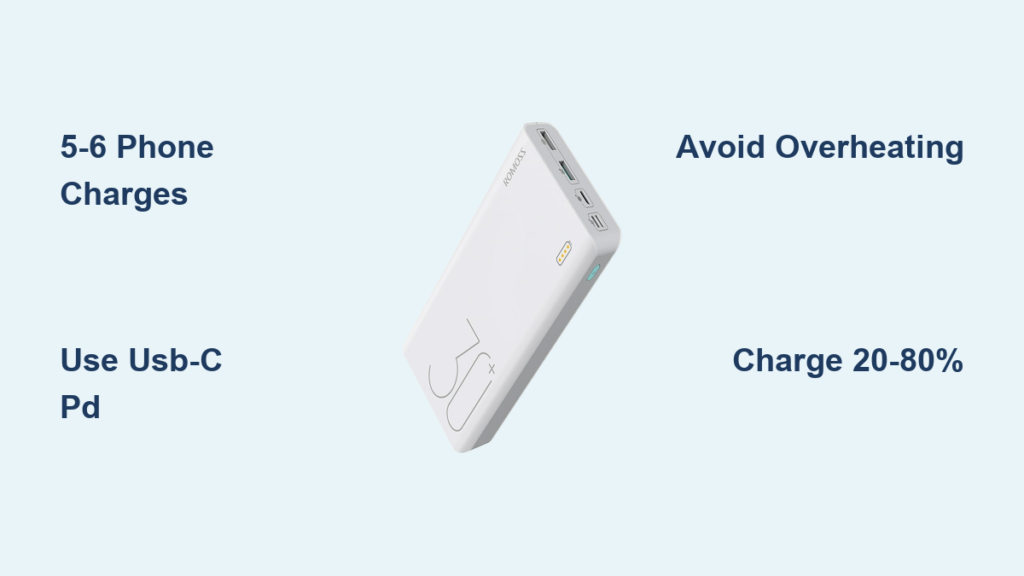
A 5,000 mAh unit fills quickly and is ideal for emergency phone top-ups. 10,000 mAh models are the most popular, offering a balance of portability and multiple device charges. 20,000 mAh units can recharge most smartphones 4 to 6 times but take significantly longer to refill. High-capacity 30,000 mAh and above power banks may require 12 to 18 plus hours under standard conditions and are often used for camping, travel, or powering laptops.
Without fast-charging support, even a 20,000 mAh bank can take all day to charge.
Charger Output: Speed Matters
The wall charger you use plays a critical role in determining how long does a portable charger take to charge. A 5W (5V/1A) phone charger, common with older devices, will charge a 10,000 mAh power bank in 5 to 6 hours, making it painfully slow for larger units.
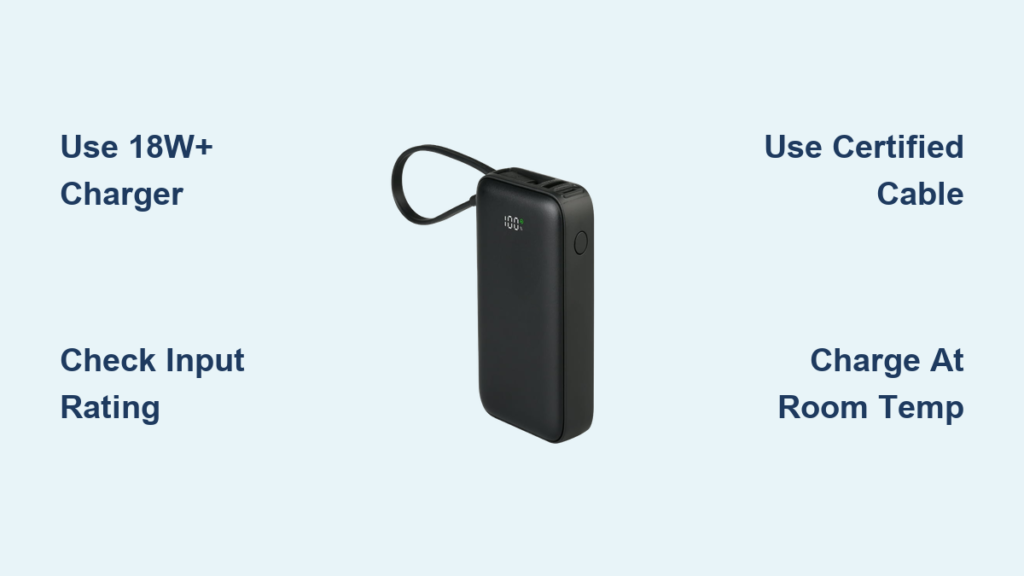
A 10W (5V/2A) charger cuts that to 4 to 6 hours. Fast chargers like 18W Power Delivery (PD) or Quick Charge (QC) can reduce charging time by up to 50 percent, bringing a 10,000 mAh bank to full in just 3 to 4 hours. Top-tier models with 65W to 100W plus input support can recharge in under 2 hours when paired with a compatible charger. But remember, even with a 100W charger, your power bank will only charge as fast as its maximum input rating allows.
Cable Quality: The Hidden Bottleneck
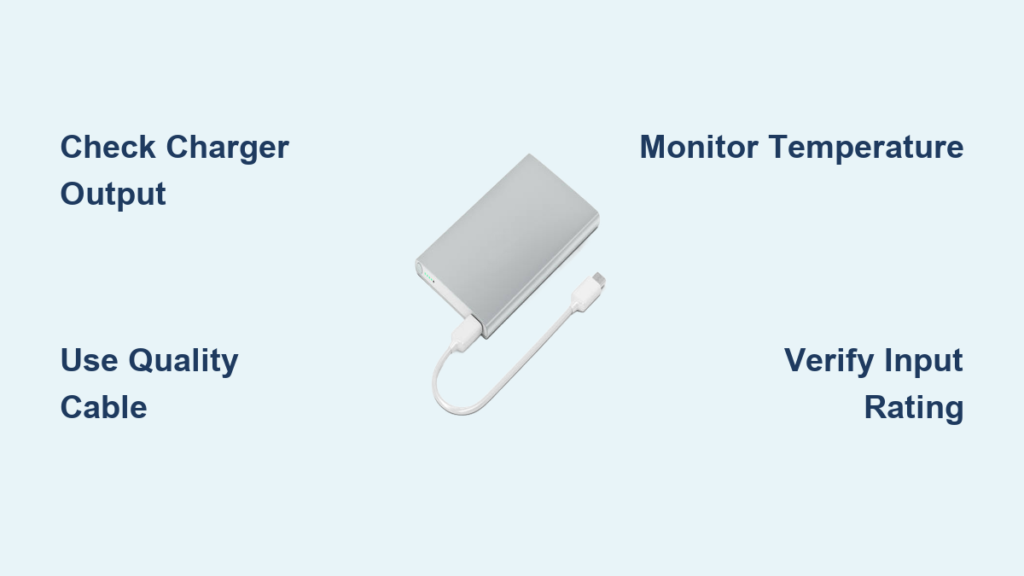
A poor-quality or damaged cable can slash charging speed by 30 percent or more. Thin or uncertified USB cables often cannot handle high current, causing voltage drop and overheating.
For fast charging, use a certified USB-C cable rated for 3A or 5A, especially when using PD or QC. One user reported their Samsung charger overheating with a Bavin power bank, likely due to a mismatched or low-quality cable. Always replace frayed or stiff cables, and avoid using phone cables meant only for data syncing.
Power Bank Input Rating Limit
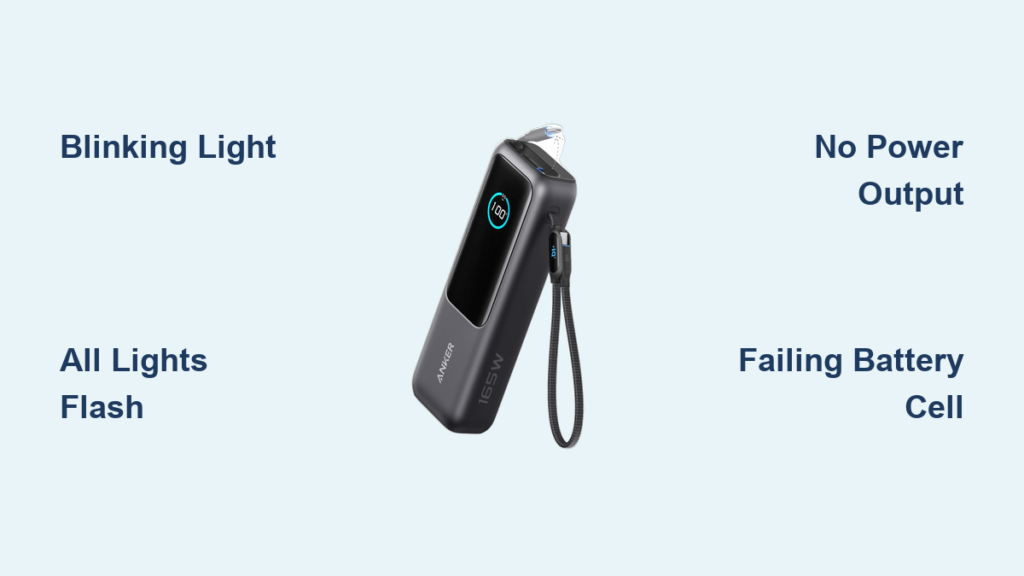
Your power bank’s input specification is a hard cap on charging speed. Even with a 65W charger, a model limited to 15W input will charge no faster than a 15W device. Premium power banks like the Anker 165W model support 100W input, enabling ultra-fast recharging.
Check your device’s manual or product label for input specs like “Input: 5V/3A, 9V/3A, 12V/3A” to ensure compatibility. If your charger exceeds the input rating, the power bank will simply draw what it can handle.
Battery Age and Health Impact
Lithium-ion batteries degrade over time, reducing both capacity and charging efficiency. A 2-year-old power bank may already show signs of slowing down. Users have reported 3-day charging times for units just a few years old, indicating early degradation.
A 7-year-old model taking 4 days to charge is a clear sign of severe cell wear. Frequent deep discharges, exposure to heat, and long-term storage at low charge accelerate aging. If your power bank charges unusually slowly, age could be the culprit.
Temperature Effects on Charging
Lithium-ion batteries perform best between 15°C and 25°C (59°F to 77°F). In cold environments below 0°C, chemical reactions slow, drastically reducing charging speed or stopping it entirely.
High temperatures increase resistance and trigger thermal throttling, where the battery management system reduces input power to prevent damage. Never charge a power bank in direct sunlight, on a heater, or in freezing conditions. Room temperature charging ensures both speed and safety.
Charging Time Estimates by Capacity

Here are typical charging times you can expect based on your power bank’s capacity and the charger used. These estimates assume optimal conditions including room temperature and a quality cable.
5,000 mAh Power Banks
These compact units charge quickly and are perfect for daily carry. With a 5W charger, expect 2.5 to 3 hours. A 10W charger reduces this to 2 to 2.5 hours. Using an 18W PD charger, most 5,000 mAh models reach full in about 1.5 hours.
Some models with built-in folding AC plugs charge in 1.5 to 2 hours, offering convenience without sacrificing speed.
10,000 mAh Power Banks
The sweet spot for most users, 10,000 mAh power banks take 5 to 6 hours with a 5W charger, 4 to 6 hours with 10W, and 3 to 4 hours with 18W PD. High-end models with 30W plus input can charge in under 3 hours.
If your 10,000 mAh bank takes 6 to 8 hours, it may be using a low-output charger or have limited input capability.
20,000 mAh Power Banks
Large-capacity models need more time. With a 5W charger, expect 10 to 12 hours, essentially overnight. A 10W charger takes 8 to 12 hours. Fast-charging models with 18W input charge in 6 to 8 hours, while those supporting 100W input can reach full in under 2 hours.
Always use a high-wattage charger to avoid excessive wait times.
30,000+ mAh Power Banks
Designed for extended trips or powering laptops, these units take the longest. A 5W charger may require 15 to 18 hours or more. With 18W PD, expect 9 to 12 hours. Ultra-fast models with 60W to 100W input can recharge in 6 to 9 hours.
Some users report 3-day charging times, a red flag for battery degradation or use of incompatible chargers.
How to Calculate Charging Time

Simple Formula for Estimation
You can estimate recharge time using this formula. Charging Time (hours) equals Capacity (mAh) divided by Input Current (mA) times 0.85, multiplied by 1.2.
The 0.85 accounts for 15 percent energy loss due to heat and circuitry, and 1.2 is a simplified multiplier for inefficiency.
Example: 20,100 mAh Power Bank
With 1.7A (1700mA) input: 20,100 divided by (1700 times 0.85) equals approximately 14 hours. With 1A (1000mA) input: 20,100 divided by (1000 times 0.85) equals approximately 23.6 hours.
This shows how halving input current can nearly double charging time.
Real-World Charging Experiences
Typical User Reports
Most users report 6 to 8 hours to fully charge a 10,000 to 20,000 mAh power bank with a standard charger. This is normal. Some see 4-day charging times, which strongly suggest battery degradation or use of a low-output source like a laptop USB port.
Others complain of slow charging with phone chargers, confirming that 5V/1A adapters are insufficient for larger banks. One user’s 50,000 mAh power bank dropped from 100 percent to 40 percent after charging a phone, likely due to inaccurate LED indicators or low conversion efficiency, not charging speed.
Fast Charging Success Stories
Users praise Anker, Ugreen, and Bavin power banks for fast recharge, but only when paired with high-output chargers. A 100W MacBook charger can refill a compatible 25,000 mAh bank in about 2 hours, but using it on a low-input model will not help.
One user reported 3-day charging with a 100W charger, indicating either a faulty unit or severe battery aging.
Speed Up Your Charging
Optimize for Faster Recharge
You can significantly reduce how long does a portable charger take to charge by following these tips. Use a PD or QC wall charger (18W plus for fast, 65W plus for ultra-fast). Use a certified 3A USB-C cable. Avoid thin or worn cables.
Charge via AC outlet, not laptop, car port, or USB hub. Avoid pass-through charging (using while charging slows input). Charge at room temperature. Avoid heat or cold exposure.
Avoid Common Mistakes
Do not use phone chargers for large power banks. Do not rely on laptop USB ports for full recharges. Do not use micro-USB inputs if USB-C PD is available. They are capped at about 10W. Do not ignore overheating. Unplug if the unit or charger gets hot.
Safety and Longevity Tips
Charge Safely
Follow these safety guidelines to protect your power bank and yourself. Use the original charger or a compatible high-wattage adapter. Monitor temperature. Unplug if hot.
Do not charge on beds or couches. They trap heat. Avoid overnight charging for old or unbranded units without auto-cutoff. Always read the manual for first-charge instructions.
Extend Battery Life
To get the most from your power bank, avoid complete discharges. Recharge when at 20 to 30 percent. Store at 50 percent charge if not used for long periods. Keep away from direct sunlight and high humidity.
Use only reputable brands with built-in protection circuits.
First-Time Charging Guide
Initial Charge Best Practices
Always charge your new power bank to 100 percent before first use, even if it arrives partially charged. Use a high-output charger, not a low-power phone adapter.
Expected times are 3.5 to 6 hours for 10,000 mAh and 6 to 12 hours for 20,000 mAh. Watch the LED or digital display for full charge indication. After the lights turn solid, leave it plugged in for 20 to 30 minutes to complete the trickle charge phase, which ensures full cell saturation.
Refer to the manual for model-specific advice, especially for solar or fast-charging models.
How to Know When It Is Fully Charged
Indicator Types
Modern power banks provide several ways to indicate full charge. LED lights flash during charging and turn solid or off when full. Digital displays show 100 percent or full voltage.
Most modern units stop drawing power automatically through auto-cutoff. Some adapters reduce output or go idle when charging is complete.
If unsure, unplug after the estimated time and test by charging a device. Persistent slow charging after full indication may signal a faulty battery or inaccurate gauge.
Charging Myths Debunked
Overnight Charging Is Dangerous
This is a myth. Most modern power banks have overcharge protection and auto-stop circuits. Overnight charging is safe for reputable brands.
Fast Charging Ruins Batteries
This is a myth. Only if unsupported. PD and QC are designed with thermal management and voltage regulation. The slight heat increase has minimal long-term impact.
Any Charger Works at Full Speed
This is a myth. Charging speed is capped by the weaker of two: charger output or power bank input. A 65W charger will not speed up a 15W-limited bank.
Laptop USB Ports Charge Quickly
This is a myth. Most deliver only 0.5A to 1A, making them 4 to 5 times slower than wall chargers. Use only for emergency top-ups.
Charging by Source Type
Wall Chargers
Standard USB-A (5V/2A) outputs 10W and is suitable for basic use. A 5,000 mAh bank charges in about 3 hours. Fast USB-C PD (18 to 30W) outputs 18 to 30W and enables full fast-charging. A 5,000 mAh bank charges in about 1.5 hours.
Built-in folding plugs are typically 15 to 20W and convenient for travel. A 5,000 mAh unit charges in 1.5 to 2 hours.
Car Chargers
Built-in USB ports often deliver only 0.5A (2.5W), making them extremely slow. A 5,000 mAh bank may take 6 plus hours. This is not recommended.
High-output car adapters (18W plus) match wall charger speed and are ideal for long drives. These require separate purchase.
Laptop USB Ports
Most laptop USB ports output about 2.5W (5V/0.5A). This is 4 to 5 times slower than wall chargers. Use only for emergency trickle charging.
Why Is Charging So Slow?
Common Causes
If your power bank charges slower than expected, check these common issues. Using a laptop USB port outputs only 2.5W and slows charging by 4 to 5 times. Low-quality cable blocks fast-charging protocols like PD. Old or weak charger may not deliver rated power.
Cold or hot environment triggers thermal throttling. Pass-through charging splits input power and increases heat. Micro-USB input maxes out at about 10W, far below USB-C PD speeds.
If your power bank takes days to charge, suspect battery degradation or incompatible hardware.
Frequently Asked Questions About Portable Charger Charging Times
How Long Should I Charge a New Power Bank?
Charge to 100 percent before first use. Expect 3.5 to 6 hours for 10,000 mAh and 6 to 12 hours for 20,000 mAh. Use a high-output charger and allow an extra 20 to 30 minutes after full indication.
Is It Safe to Leave a Power Bank Charging Overnight?
Yes, for modern, reputable models. They include auto-cutoff and overcharge protection. Avoid doing so with old or unbranded units.
Why Does the Last 20 Percent Take So Long?
After about 80 percent, the battery enters trickle charge mode to prevent overheating and extend lifespan. This phase can take 30 to 60 minutes and is completely normal.
Can I Bring a Power Bank on a Plane?
Yes, but only in carry-on luggage. Maximum allowed is 100Wh (approximately 26,800 mAh at 3.7V) without approval. 100 to 160Wh requires airline permission, maximum 2 units. Above 160Wh is prohibited.
Does Fast Charging Damage the Battery?
Minimal long-term impact. Fast charging generates more heat, which can slightly accelerate battery degradation over time. However, the convenience outweighs the negligible reduction in lifespan for most users. Built-in thermal management systems mitigate excessive heat.
What Charger Do I Need for Fastest Charging?
Use a high-wattage PD charger (30W or higher), a certified USB-C cable rated for 3A or higher, and an AC wall outlet. Your power bank must also support fast input charging for these to be effective.
Key Takeaways for Optimizing Portable Charger Charging Time
Understanding how capacity, charger output, cable quality, and environment affect charging time empowers you to make smarter choices. Use a high-wattage PD charger, a certified cable, and charge at room temperature for best results.
Choose power banks with high input ratings (18W plus) from trusted brands like Anker or Ugreen. With the right setup, even a 20,000 mAh power bank can be ready in under 6 hours, so you are never left powerless.
If you experience consistently slow charging times despite using the right equipment, your power bank may be aging. Consider replacing units that are more than 3 years old showing signs of degradation.