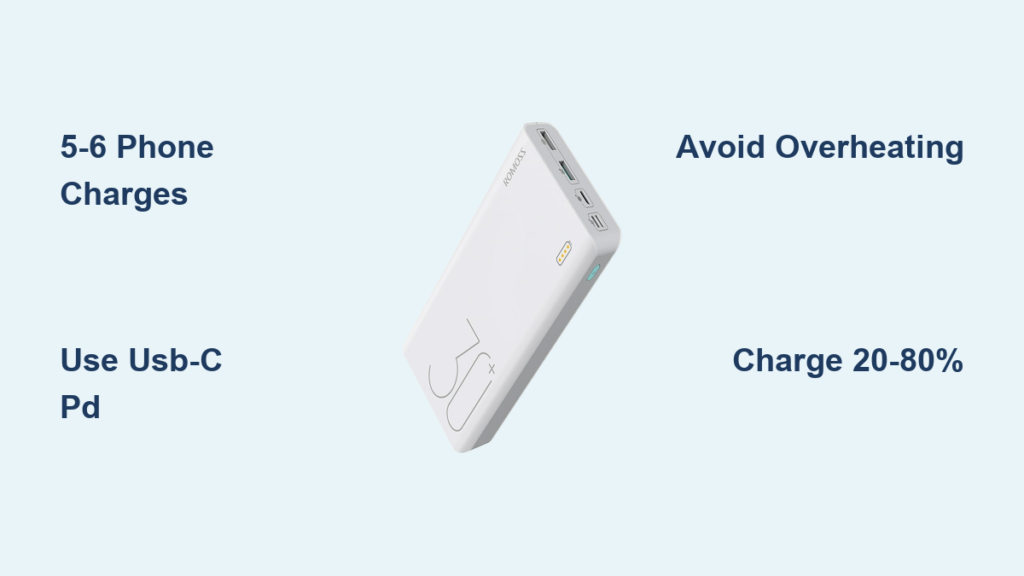
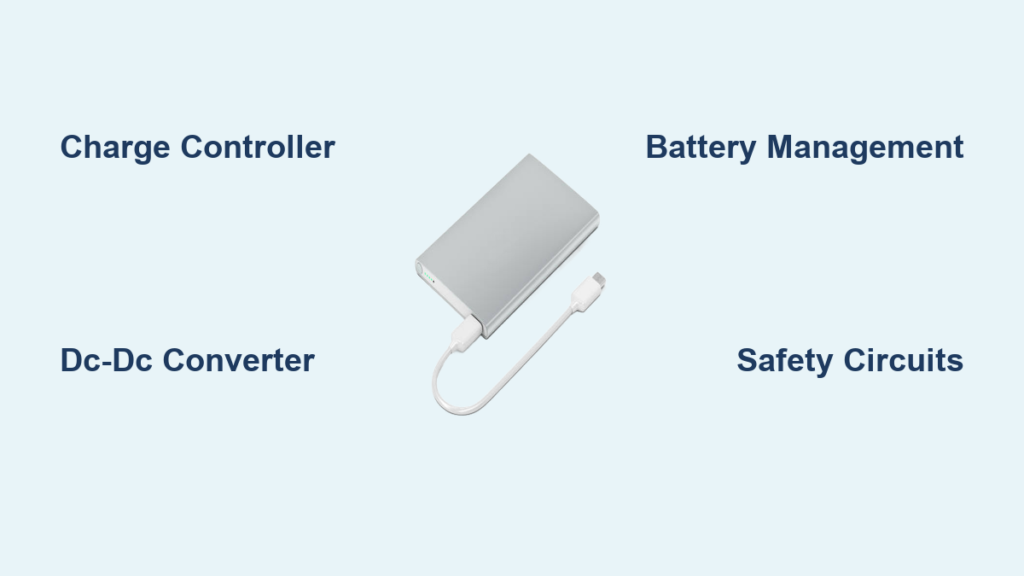
Your phone battery hits 1% just as you need navigation directions, and airport outlets are occupied. This modern nightmare is where your power bank becomes a lifeline. But what is a power bank and how does it work beyond being a mysterious rectangle in your bag? It’s not just a battery—it’s an engineering marvel that transforms stored chemical energy into regulated electricity for your devices. Think of it as your personal power plant, shrinking complex electrical systems into something that fits in your pocket.
Understanding what is a power bank and how it works transforms you from a passive user into an informed buyer who avoids underperforming models. You’ll learn why that 10,000mAh unit doesn’t fully recharge your phone twice, how voltage conversion happens in milliseconds, and what makes premium units worth the investment. We’ll cut through marketing fluff using real engineering principles so you can choose wisely and maximize your device’s uptime.
How Power Banks Convert and Deliver Energy in Two Critical Phases
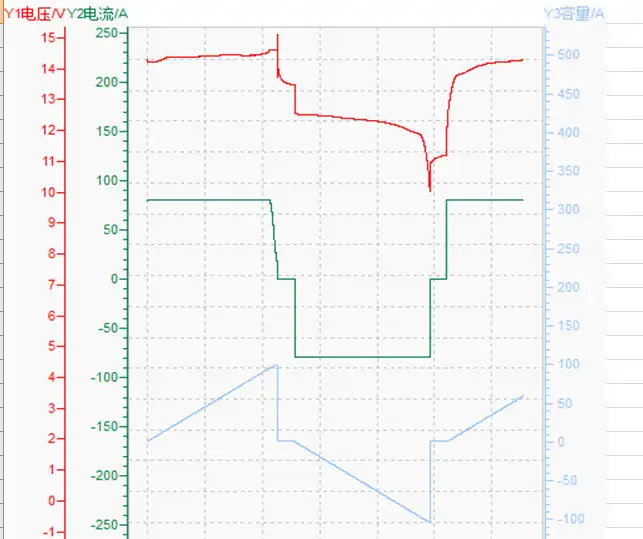
Power banks operate through precisely orchestrated input and output cycles—never simultaneously. This two-phase system ensures safety while bridging the gap between wall outlets and your USB devices. During charging, the unit acts as a power receiver; during discharging, it becomes a power source. The magic happens in the circuitry that manages this transition without damaging your phone or the bank itself.
Charging Phase: Safely Storing Power from Your Wall Outlet
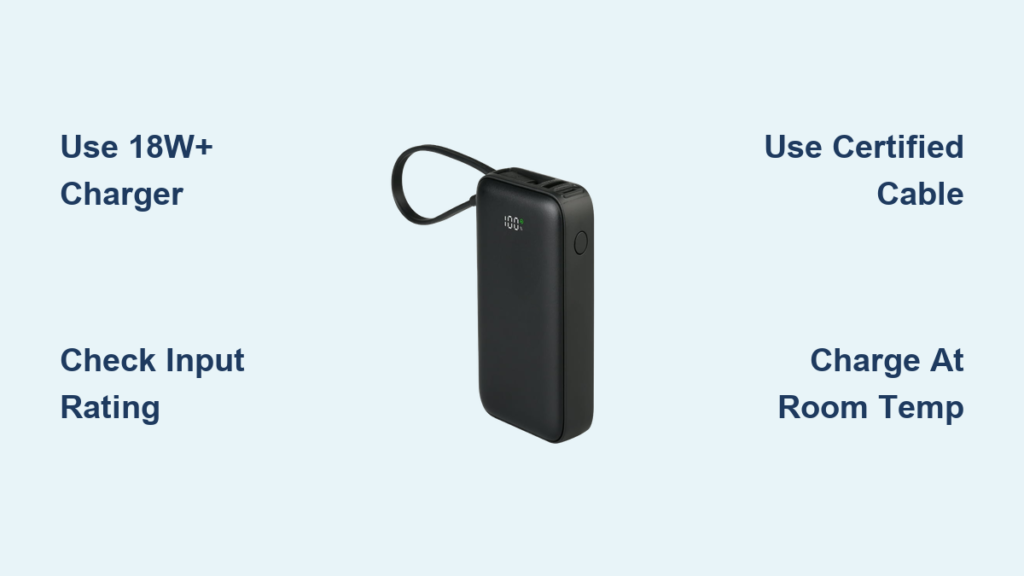
When you plug your power bank into a charger, it’s not simply filling a battery like a water tank. The incoming 5V USB power must be converted to the 3.7V required by lithium cells—a process requiring surgical precision. A charge controller manages this via three stages: First, a trickle charge revives deeply depleted cells. Next, constant current rapidly fills the battery to 80%. Finally, constant voltage tops it off slowly to prevent thermal runaway. Throughout this, the Battery Management System (BMS) monitors temperature and voltage 100 times per second. Critical warning: Using a damaged cable or non-certified charger bypasses these safeguards, risking fire. Always inspect cables for fraying before charging your power bank.
Discharging Phase: Transforming Battery Voltage to USB Standard
Here’s where most users misunderstand what is a power bank and how it works. Your phone expects 5V, but the internal battery outputs 3.0V–4.2V depending on charge level. The DC-DC boost converter solves this mismatch through rapid electronic switching:
1. Energy pulsing: A transistor chops the battery’s DC current into high-frequency pulses (up to 1MHz)
2. Voltage boosting: An inductor stores energy during “on” pulses and releases it at higher voltage during “off” pulses
3. Output smoothing: Capacitors filter the pulsed output into clean 5V DC power
This entire process occurs in under 0.1 seconds. You’ll notice slight warmth during use—that’s wasted energy from conversion inefficiencies. Premium units run cooler because they lose less energy as heat.
Inside Your Power Bank: 5 Essential Components That Make It Work

Peel back the rubberized casing, and you’ll find a symphony of components working in concert. Cheap power banks omit critical elements here—knowing what to look for prevents dangerous “explosive souvenirs.”
Battery Cells: Your Portable Energy Reservoir
Lithium-polymer (Li-Po) cells dominate modern units due to their flexible shape and safety profile, while lithium-ion (Li-ion) offers higher density in rigid cases. Each cell stores energy at 3.7V nominal voltage. Key insight: A “10,000mAh” rating refers to the battery’s capacity at 3.7V—not what your phone receives. Never buy units without BMS protection; it’s like driving without airbags. This circuit prevents overcharging (cell voltage >4.2V) and deep discharge (<3.0V), both of which permanently damage cells.
DC-DC Boost Converter: The Voltage Transformer
This tiny circuit board (often smaller than your thumbnail) is the heart of what is a power bank and how it works. It performs the voltage “upshift” from 3.7V to 5V using electromagnetic induction—similar to how a transformer works, but for DC power. Efficiency varies wildly: Budget units lose 40% energy here (6,000mAh output from 10,000mAh battery), while GaN-based models lose only 15%. Look for “85%+ efficiency” in specs—this directly translates to more phone charges.
Safety Circuits: Your Device’s Protection System
Beyond the BMS, power banks deploy layered defenses:
– Overcurrent protection: Cuts power if your device draws >2.4A (common with faulty cables)
– Thermal fuses: Melt at 75°C (167°F) to halt charging during overheating
– Reverse polarity protection: Blocks damage from incorrectly inserted cables
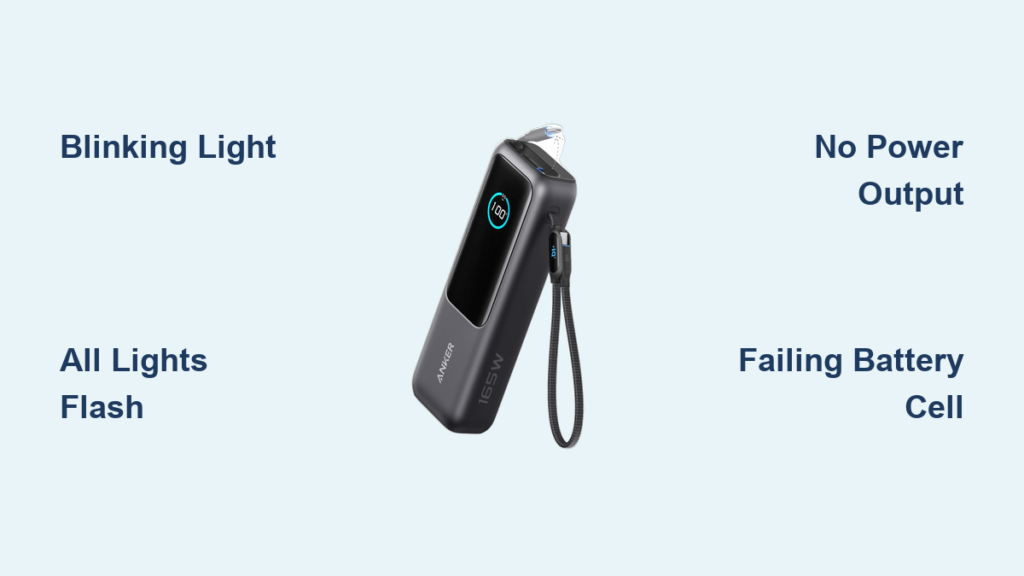
Pro tip: If your power bank shuts off during use, it’s likely tripping safety protocols—not defective. Let it cool for 10 minutes before retrying.
Decoding Power Bank Specs: mAh, Watts, and Why 10,000mAh Isn’t 10,000mAh
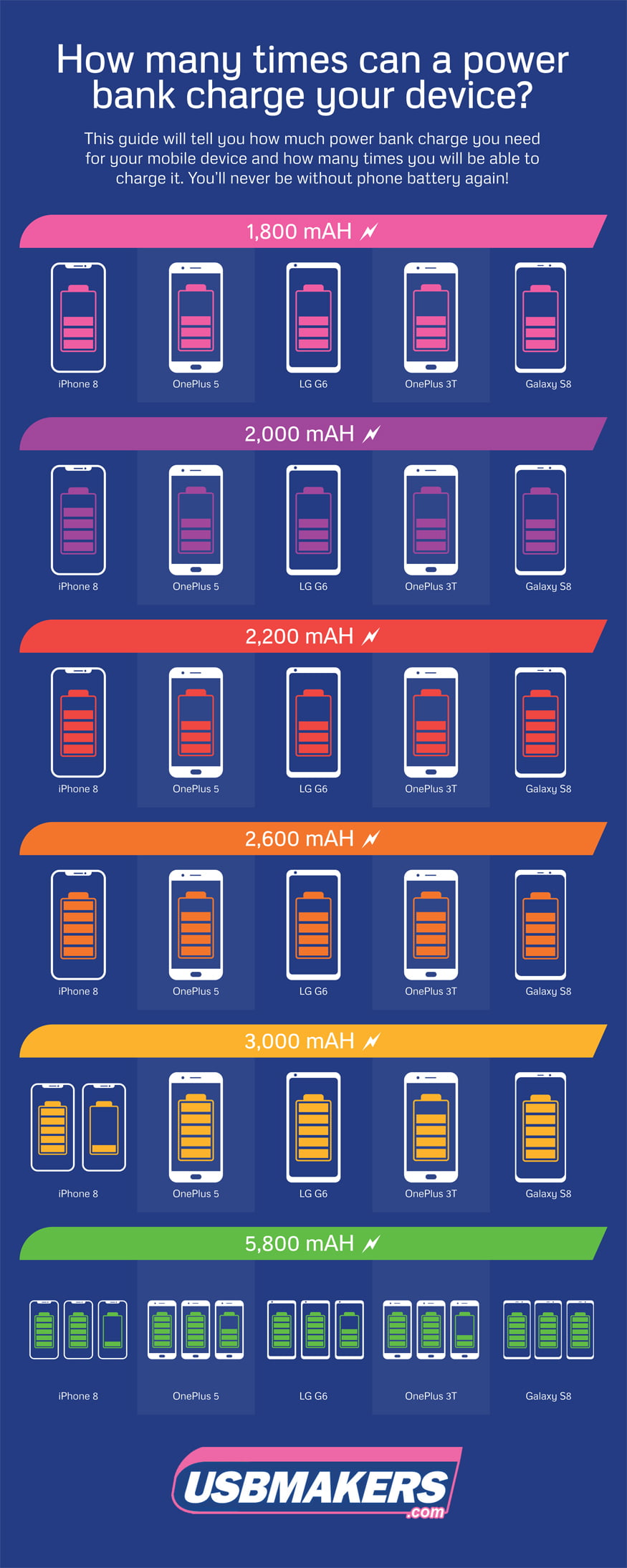
Marketing specs hide critical realities. Understanding these prevents frustration when your “20,000mAh” bank only charges your phone twice.
The Capacity Reality Check: Why You Get Less Than Advertised
That 10,000mAh rating? It’s measured at the battery’s 3.7V, but your phone needs 5V. Physics dictates:
Usable capacity = (Battery mAh × 3.7V) ÷ 5V × Efficiency
For a typical unit: (10,000 × 3.7) ÷ 5 × 0.7 = 5,180mAh
Translation: Your “10,000mAh” power bank delivers ~5,200mAh to your phone. High-end models with 85% efficiency deliver ~6,300mAh—22% more usable power. Always compare watt-hours (Wh), not mAh: Wh = (mAh × 3.7V) ÷ 1000.
Fast Charging Protocols: PD, QC, and What They Mean for You
Not all 5V outputs are equal. Fast charging requires handshake protocols:
– USB Power Delivery (PD): Negotiates voltages up to 20V (for laptops). Requires USB-C ports.
– Qualcomm Quick Charge (QC): Boosts voltage to 9V/12V for compatible Android phones.
Crucial: Your power bank and device must support the same protocol. A QC3.0 phone won’t fast-charge on a PD-only bank. Check icons: “PD” or “QC” near ports indicate support.
Choosing Your Perfect Power Bank: A Practical Buyer’s Guide
Avoid buyer’s remorse with these evidence-based selection criteria.
Capacity vs. Portability: Finding Your Sweet Spot
- Daily carry (5,000–10,000mAh): Fits in pockets; recharges most phones once.
- Travel (10,000–20,000mAh): TSA-compliant (under 100Wh); powers phones 2-4 times.
- Extreme use (20,000mAh+): Requires airline approval; recharges laptops.
Red flag: Units claiming >27,000mAh at 100g weight are fake. Real 20,000mAh banks weigh 350g+.
Fast Charging Compatibility: Avoiding Slow-Power Pitfalls
- Check your phone’s charging spec (e.g., “Supports 18W PD”)
- Match power bank output to that spec (e.g., “18W USB-C PD”)
- Use the included cable—third-party cables often lack e-marking chips for fast charging
Pro move: For iPhone 12+, get a PD power bank with 20W+ output. It’ll charge from 0-50% in 30 minutes.
Final Note: A quality power bank delivers 60-85% of its rated capacity through efficient voltage conversion and robust safety systems. Always store it at 50% charge in cool, dry places to maximize its 300-500-cycle lifespan. Now that you know what is a power bank and how it works, you’ll never again settle for underperforming units that leave your devices stranded. Prioritize conversion efficiency and safety certifications over flashy mAh numbers—your phone (and peace of mind) will thank you.