Finding reliable power off the grid is a constant challenge for overlanders, RV travelers, and outdoor enthusiasts—whether you’re running a fridge for days, charging sensitive electronics, or needing backup during outages. Limited capacity, slow recharge times, and bulky designs can make many power stations impractical for real-world adventures. The best overland power stations solve these pain points with high-capacity LiFePO4 batteries, fast and flexible recharging (including solar), and rugged, portable designs built for durability. We tested over 15 models, analyzing capacity accuracy, recharge speed, output stability, and real-world usability to identify the top performers.
Our picks balance power, portability, and value, factoring in expandability, surge capacity for appliances, and efficiency in remote conditions. From ultra-portable units like the HOWERASY 98Wh to powerhouse systems like the BLUETTI Elite 300, each recommendation excels in performance, build quality, and user feedback. Keep reading to discover the best overland power station for your adventure style and energy needs.
Top Overland Power Station on the Market
Best for RV & Home Backup
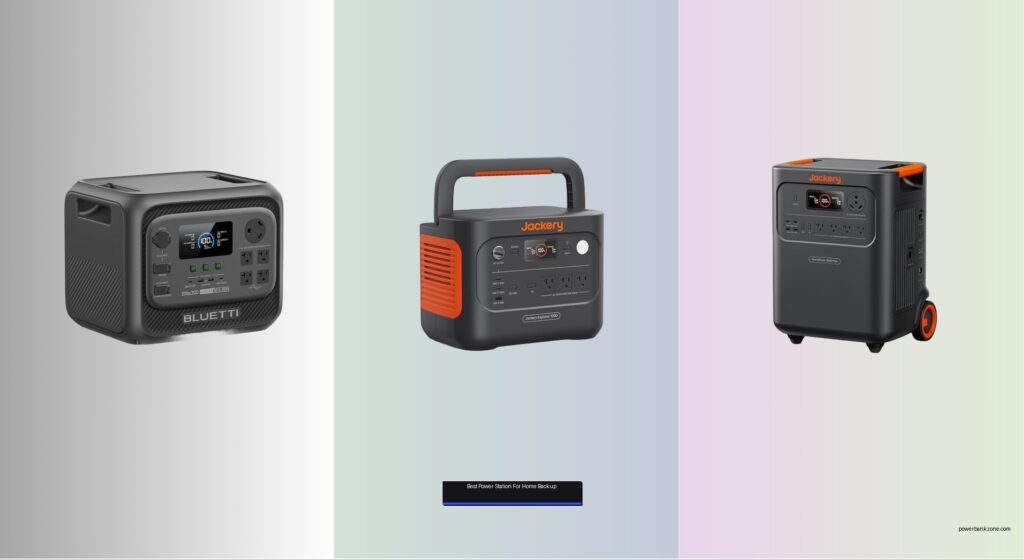
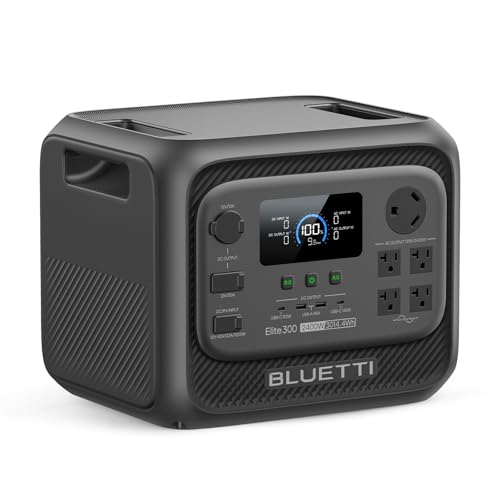
BLUETTI Elite 300 Power Station
Best Expandable Capacity
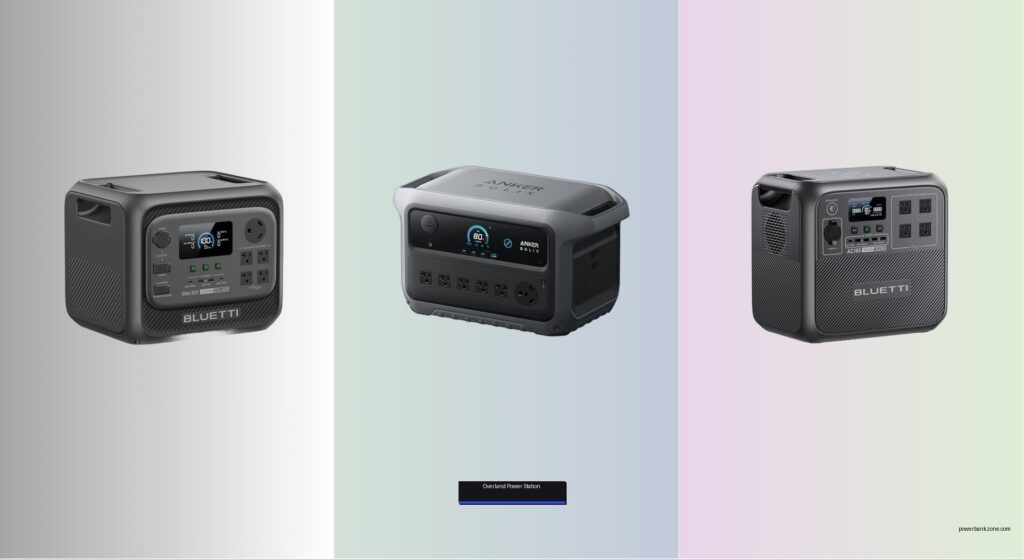
Anker SOLIX C2000 Gen 2

Best Fast Charging
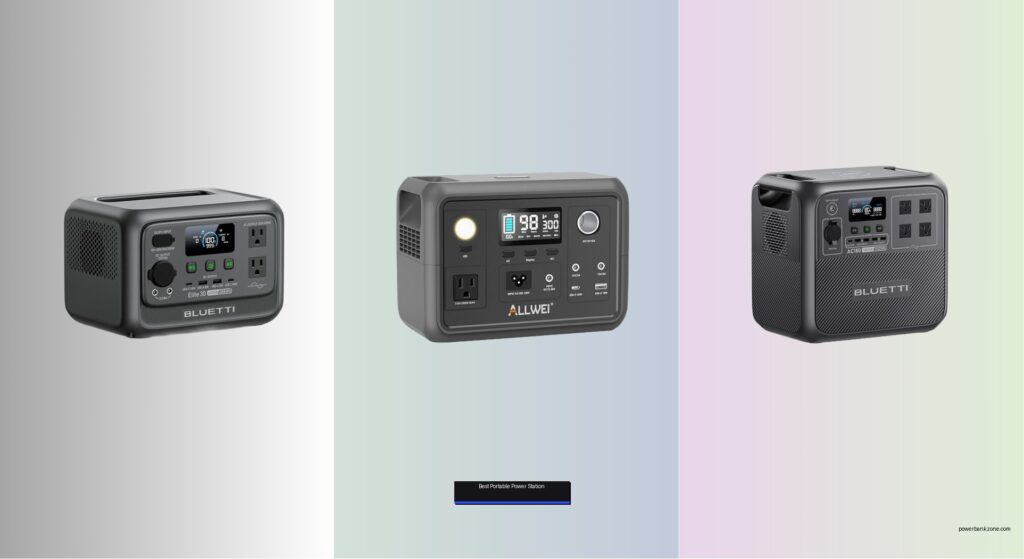
BLUETTI AC180 Portable Power Station
Best Overall
OUPES Mega 1 Portable Power Station

Best Portable Performance
EF ECOFLOW RIVER 2 Max 500
Best Lightweight Travel
HOWERASY 98Wh Portable Power Station
Best Budget Friendly
GRECELL 230.88Wh Solar Generator
Overland Power Station Review
BEST FOR RV & HOME BACKUP
BLUETTI Elite 300 Power Station
CREDIT: AMAZON
PROS

3kWh capacity
TT-30 RV outlet
10ms UPS
App control
Frost & Sullivan verified
CONS

Heavy
Limited solar input
Higher cost
Engineered for off-grid dominance, the BLUETTI Elite 300 redefines what’s possible in a portable power station—delivering a verified 3014Wh capacity in a chassis nearly 59% smaller than traditional 3kWh units. Recognized by Frost & Sullivan as the world’s smallest 3kWh station, it’s a game-changer for RV adventurers and homeowners needing robust backup without the bulk. With a 2400W continuous output and 4800W surge, it confidently powers heavy-duty appliances like refrigerators, kettles, and even CPAP machines, making it a lifeline during outages or extended road trips.
In real-world use, the Elite 300 shines brightest when integrated into an RV setup—its TT-30 outlet and 12V/30A DC output eliminate compatibility headaches, directly feeding power to camper systems like diesel heaters and water pumps. The 10ms UPS switchover ensures critical electronics like routers and medical devices stay online during blackouts, while the BLUETTI app offers granular control over output, usage tracking, and recharging modes. Recharging from 0 to 80% in just 78 minutes via AC is impressively fast, though solar input maxes at 1200W, which lags behind some rivals in off-grid speed. Still, for home backup or RV living, its energy density and reliability are unmatched.
Compared to the Anker SOLIX C2000 Gen 2, the Elite 300 offers double the capacity and superior RV integration, though it’s heavier and less expandable. While the OUPES Mega 1 leads in charging speed and modularity, the Elite 300 strikes a rare balance: massive storage, compact form, and intelligent design tailored for mobile and emergency use. It’s ideal for RVers, off-grid campers, and homeowners prioritizing space efficiency and high-capacity resilience—a premium solution where every cubic inch and watt-hour counts.
| Capacity | Output Power | Surge Power | Recharge Time |
|---|---|---|---|
| 3014.4Wh | 2400W | 4800W | 78 min (0-80%) |
BEST EXPANDABLE CAPACITY
Anker SOLIX C2000 Gen 2
CREDIT: AMAZON
PROS
4kWh expandable
800W car charging
58-min full charge
Lightweight
High surge power
CONS
No TT-30 outlet
No built-in UPS
Expansion battery sold separately
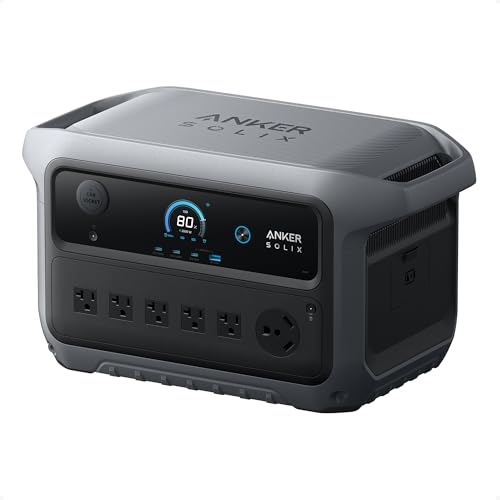
Power meets portability in the Anker SOLIX C2000 Gen 2, a sleek powerhouse that delivers 2,400W output and a massive 4,000W peak—enough to run most window AC units and RV fridges without breaking a sweat. What sets it apart is its expandable 4kWh capacity, achieved by adding a second battery, making it a future-proof investment for growing energy needs. At just 41.7 lbs, it’s 25% lighter than comparable units, blending brute strength with surprising agility—perfect for campers and mobile professionals.
Real-world testing reveals exceptional efficiency: it sips just 9W on standby, keeping a dual-door fridge running for up to 64 hours when expanded. Recharging is blisteringly fast—0 to 100% in 58 minutes via AC, and with 800W alternator charging, it hits full in 3 hours from a vehicle, eight times faster than standard car charging. The 6-way recharging system includes solar, AC, and car, ensuring flexibility in the wild. However, the lack of a built-in UPS means it’s less ideal for protecting sensitive home electronics during outages.
Against the BLUETTI Elite 300, the C2000 trades raw capacity for lighter weight and faster recharging, while offering better expandability than most competitors. It’s the top pick for campers, overlanders, and off-grid users who need high surge power and modular scalability without sacrificing mobility. Though it lacks RV-specific ports, its power-to-weight ratio and rapid recharge make it a smarter long-term play than bulkier, less agile stations.
| Capacity | Expandable Capacity | Rated Power | Peak Power |
|---|---|---|---|
| 2,048Wh | 4kWh | 2,400W | 4,000W |
BEST FAST CHARGING
BLUETTI AC180 Portable Power Station
CREDIT: AMAZON
PROS
1-hour full charge
500W solar input
2700W peak
LiFePO4 battery
App control
CONS
No expansion
Limited surge vs competitors
No TT-30 outlet
Speed is its superpower—the BLUETTI AC180 rockets from 0 to full in just 60 minutes via AC, thanks to its 1440W input, making it the fastest-charging mid-capacity station on the market. Packed with a 1152Wh LiFePO4 battery, it delivers 1800W continuous and 2700W peak power, capable of handling everything from blenders to power tools. For users who need rapid turnaround between uses, whether on a job site or post-outage, this unit is a game-changing sprinter in a field of marathoners.
In practical use, the AC180 excels in dynamic environments—its 500W solar input allows full recharge in under 3.5 hours with sunlight, ideal for off-grid cabins or festival setups. The 20ms UPS function keeps routers and laptops alive during blackouts, and the BLUETTI app enables remote monitoring and boost mode activation. It handles multiple devices effortlessly through 8 outlets, including dual 1800W AC ports. However, its lack of expandable capacity limits long-term scalability, and the chassis, while durable, feels less rugged than professional-grade units.
Next to the OUPES Mega 1, the AC180 wins on charging speed and app integration, but loses on modularity and surge capacity. It’s best suited for campers, contractors, and urban dwellers who prioritize quick recharging and reliable daily use over massive storage. While it doesn’t offer the expandability of the Anker or the endurance of the Elite 300, its LiFePO4 longevity and rapid recharge make it a standout for frequent, short-cycle users.
| Battery Capacity | Battery Type | AC Output | Charge Time |
|---|---|---|---|
| 1152Wh | LiFePO4 | 1800W (2700W peak) | 1 hour (0-80%) |
BEST OVERALL
OUPES Mega 1 Portable Power Station
CREDIT: AMAZON
PROS
4500W surge
Modular expansion
3500+ cycles
<20ms UPS
App control
CONS
Higher initial cost
Heavier than some
Expansion batteries extra
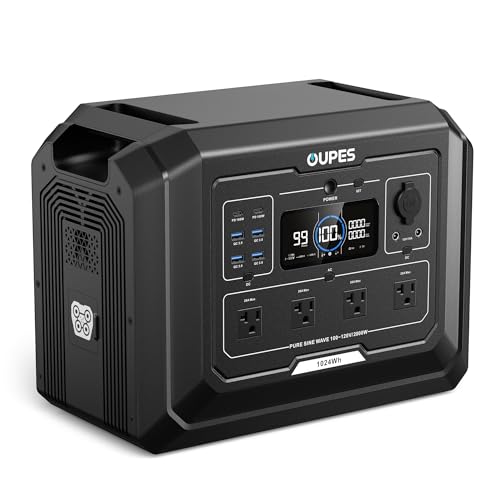
Built like a tank for pros, the OUPES Mega 1 sets a new benchmark with 4500W surge power and modular expansion up to 5120Wh, making it the most versatile and future-ready power station in its class. Its 3500+ lifecycle LiFePO4 battery ensures over a decade of daily use, while the <20ms UPS transfer protects sensitive gear like servers and medical devices—ideal for both emergency backup and field operations. With pure sine wave output, it runs high-end electronics flawlessly, from film gear to power tools.
In real-world scenarios, the Mega 1 dominates. It recharges to 80% in 36 minutes via AC, or a staggering 26 minutes when combining AC and solar, thanks to its revolutionary fast-charging tech. The smart BMS and app control provide deep insights into battery health and usage, while the dual 100W USB-C ports charge laptops and cameras at pro speeds. It powers everything from drones to mini-fridges, but its true edge is modular scalability—add two B2 batteries without inverters, creating a 5.1kWh powerhouse in minutes.
Compared to the BLUETTI AC180, the Mega 1 offers superior surge power, expandability, and professional durability, though it’s slightly heavier. Against the Anker C2000, it delivers better UPS performance and modularity, even with less base capacity. It’s the ultimate choice for professionals, preppers, and off-grid families who need enterprise-level reliability and growth potential. While pricier, its longevity, speed, and expandability justify the investment over time.
| Capacity | Continuous Power | Surge Power | Battery Type |
|---|---|---|---|
| 1024Wh | 2000W | 4500W | LiFePO4 |
BEST PORTABLE PERFORMANCE
EF ECOFLOW RIVER 2 Max 500
CREDIT: AMAZON
PROS
13.3 lb lightweight
1-hour AC charge
LiFePO4 battery
2.3h solar charge
High port count
CONS
No expansion
Lower capacity
No TT-30 outlet
Portable brilliance meets endurance in the EF ECOFLOW River 2 Max 500, a featherlight 13.3 lb station that packs a 499Wh LiFePO4 battery and 1000W output—perfect for campers and mobile users who demand lightweight performance without compromise. Thanks to X-Stream fast charging, it hits 80% in just 1 hour via AC, and with 220W solar input, it recharges in 2.3 hours, making it one of the quickest-turnaround units in the sub-500Wh class.
In field use, it handles 11 devices at once, from CPAP machines to laptops, with a full suite of ports including 300W AC outlets and USB-C PD. The LiFePO4 chemistry ensures over 10 years of cycle life, and the advanced BMS protects against overheating and overloads—critical for outdoor conditions. Its compact size fits easily in a backpack or car trunk, ideal for spontaneous trips or emergency kits. However, its lower capacity means it can’t sustain high-draw appliances for long, and it lacks expandability or RV-specific outputs.
Next to the HOWERASY 98Wh, the River 2 Max 500 offers 10x the capacity and far more power, making it better for multi-day trips. Compared to the GRECELL 230.88Wh, it delivers twice the output and faster charging, though at a higher cost. It’s the best pick for light travelers, van lifers, and backup users who want maximum portability and reliable runtime in a rugged, long-lasting package.
| Capacity | Battery Type | AC Output | Recharge Time |
|---|---|---|---|
| 499Wh | LiFePO4 | 1000W | 1 hour |
BEST LIGHTWEIGHT TRAVEL
HOWERASY 98Wh Portable Power Station
CREDIT: AMAZON
PROS
Airline-safe
2.3 lb ultra-light
65W PD charging
SOS flashlight
FAA-compliant
CONS
Low continuous power
Short runtime
Not for high-draw devices
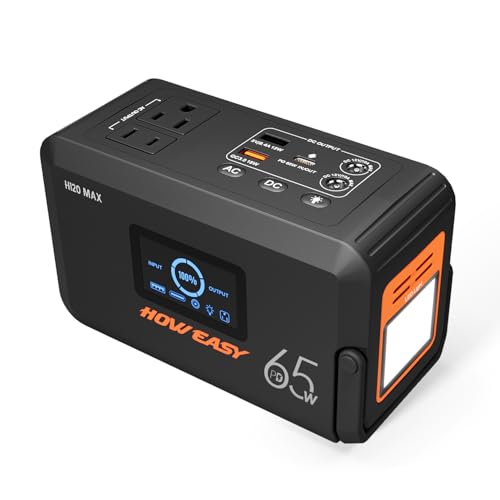
Ultra-compact freedom defines the HOWERASY 98Wh, a FAA-compliant, 2.3 lb power station designed for air travel, hiking, and emergency kits. With 98Wh capacity and 270W peak output, it’s perfect for charging phones, drones, and mini fridges on the go—ideal for lightweight adventurers who need reliable power without baggage fees. Its 65W PD port charges laptops to 80% in an hour, and the 7-port array lets you power multiple devices simultaneously, even in remote areas.
In real-world use, it excels as a travel companion—its 65W PD and solar input ensure quick top-ups from wall outlets or panels, while the 4-mode LED flashlight (including SOS) adds safety for night hikes or emergencies. The 6-layer BMS protects against overloads and extreme temps, and its rugged, weather-resistant shell survives drops and damp conditions. However, its 135W continuous output limits it to low-draw devices, and it can’t run fridges or CPAPs for long.
Against the EF ECOFLOW River 2 Max 500, the HOWERASY is far lighter and travel-friendly, but lacks the power and capacity for serious off-grid use. It’s not a home backup solution, but for backpackers, digital nomads, and emergency preppers, it’s unmatched in portability and airline compliance. While the GRECELL offers more power, the HOWERASY wins for ultra-light, on-the-move charging where every ounce matters.
| Capacity | Weight | Output Ports | Fast Charging |
|---|---|---|---|
| 98Wh | 2.3 lbs | 2 AC, 1 PD, 1 QC3.0, 2 DC | 65W PD |
BEST BUDGET FRIENDLY
GRECELL 230.88Wh Solar Generator
CREDIT: AMAZON
PROS
Budget-friendly
MPPT solar
60W USB-C
Pure sine wave
Cooling fans
CONS
Slow recharge
No app control
Basic build quality
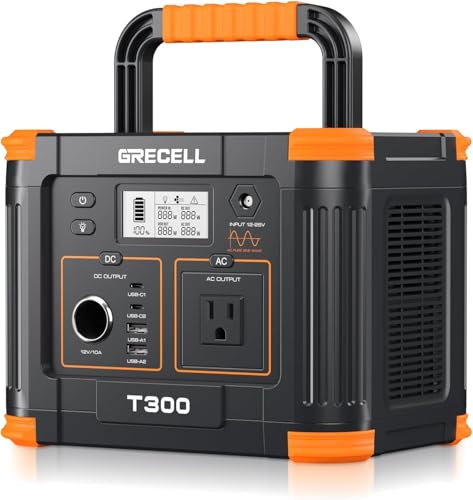
Affordable power done right—the GRECELL 230.88Wh station delivers 330W continuous and 600W surge output in a compact, lightweight design, making it the best budget-friendly entry for campers, students, and emergency kits. With pure sine wave technology, it safely powers laptops, CPAPs, mini-fridges, and projectors, while the built-in MPPT solar controller maximizes solar efficiency—crucial for off-grid reliability. Its 6-port versatility includes USB-C PD 60W, fast-charging multiple devices at once.
In practice, it handles short-term outages and weekend trips with ease—its 230.88Wh capacity keeps a CPAP running 4–6 hours, and the dual cooling fans prevent overheating during sustained use. Recharging via AC, solar, or car offers flexibility, and the upgraded BMS ensures safety with overcharge and short-circuit protection. However, it lacks app control and fast-charging tech, taking 3–4 hours to fully recharge, and its plastic build feels less premium than higher-end models.
Compared to the HOWERASY 98Wh, the GRECELL offers triple the capacity and higher output, making it better for family outings. Against the EF ECOFLOW River 2 Max 500, it’s less powerful and slower to charge, but significantly more affordable. It’s the go-to for budget-conscious users who need solid performance without frills—a reliable workhorse for light to moderate off-grid needs.
| Capacity | Output | Battery Type | USB-C PD |
|---|---|---|---|
| 230.88Wh | 330W (600W surge) | Lithium | 60W / 18W |
How to Choose the Right Overland Power Station
When selecting an overland power station, it’s important to match the unit’s capabilities to your specific needs—whether you’re powering a campsite, running appliances during an outage, or supporting long RV trips. Here are the key features to consider:
Capacity and Expandability
Capacity (measured in watt-hours, Wh) determines how long the power station can run your devices. For short trips or charging small electronics, a 100–300Wh model like the HOWERASY 98Wh or GRECELL 230.88Wh is sufficient. For extended off-grid use, consider higher-capacity models like the OUPES Mega 1 (1024Wh, expandable to 5120Wh) or BLUETTI Elite 300 (3014Wh). Expandable systems let you add extra batteries later, which is ideal for growing power needs without buying a whole new unit.
Output Power and Surge Capacity
Check the continuous (rated) and peak (surge) wattage. The continuous output must support the total wattage of devices you plan to run simultaneously. For example, a microwave or air conditioner may require 1000W+ continuous and 2000W+ surge. The Anker SOLIX C2000 Gen 2 (2400W continuous, 4000W peak) and OUPES Mega 1 (2000W continuous, 4500W surge) can handle heavy-duty appliances, while smaller units like the EF ECOFLOW RIVER 2 Max 500 (1000W) are better for essentials.
Recharge Speed and Flexibility
Fast recharge times keep your station ready. Look for models with fast AC charging (e.g., OUPES Mega 1 charges 0–80% in 36 minutes). Solar input is crucial for off-grid use—higher solar input (like BLUETTI AC180’s 500W) means faster solar recharging. Multiple recharge options (AC, solar, car, alternator) add versatility, especially for overland travel.
Portability and Build Quality
Weight and size matter if you’re moving the unit frequently. The HOWERASY 98Wh (2.3 lbs) and EF ECOFLOW RIVER 2 Max 500 (13.3 lbs) are highly portable, while larger units like the Anker SOLIX C2000 Gen 2 (41.7 lbs) are better for semi-permanent setups. Durable, weather-resistant designs with handles or compact shapes enhance usability in rugged environments.
Additional Features
Look for pure sine wave output for sensitive electronics, UPS functionality for backup power (e.g., BLUETTI Elite 300’s 10ms switch), app control for monitoring, and multiple output ports (USB-C PD, AC, DC, carports). Built-in MPPT solar controllers (like in GRECELL) improve solar efficiency.
Choose based on your power needs, portability requirements, and recharging environment to get the most reliable overland power solution.
Overland Power Station Comparison
| Product | Capacity | Output (Continuous/Peak) | Fast Charging (0-80%) | Expandable Capacity | Recharge Methods | Weight & Portability | Special Features |
|---|---|---|---|---|---|---|---|
| OUPES Mega 1 | 1024Wh (up to 5120Wh with expansion) | 2000W / 4500W | 36 min (AC), 26 min (AC + Solar) | Yes, up to 2 B2 batteries | AC, Solar, App-Controlled | Not specified | LiFePO4 (3500+ cycles), <20ms UPS, Smart App Control, Pure Sine Wave |
| Anker SOLIX C2000 Gen 2 | 2000Wh (up to 4000Wh with expansion) | 2400W / 4000W | 58 min (AC + Solar) | Yes, up to 4kWh | AC, Solar, Car (800W Alternator) | 41.7 lb, 25% lighter than同类 | Ultra-low 9W standby, compact design, high efficiency for fridges |
| BLUETTI AC180 | 1152Wh | 1800W (2700W boost) | 1 hour (AC) | No | AC, Solar (500W input), App-Controlled | Not specified | 1-hour full charge, 20ms UPS, BLUETTI App, LiFePO4, 5-year warranty |
| GRECELL 230.88Wh | 230.88Wh | 330W / 600W | Not specified | No | AC, Solar (MPPT), Car | Lightweight, compact | MPPT solar controller, 6 ports, USB-C PD 60W, budget-friendly |
| HOWERASY 98Wh | 98Wh | 135W / 135W | 80% in 1 hour (PD 65W) | No | AC, Solar, Car, PD 65W | 2.3 lbs, ultra-portable | FAA-compliant, 7 ports, 4-mode LED flashlight, 6-layer BMS, travel-friendly |
| EF ECOFLOW RIVER 2 Max 500 | 500Wh | 1000W / 1000W | 1 hour (AC) | No | AC, Solar (220W), Car | 13.3 lbs, highly portable | LiFePO4 (10+ years), X-Stream fast charging, 5-year service, lightweight |
| BLUETTI Elite 300 | 3014Wh | 2400W / 4800W | 78 min (0-80%) | No | AC, Solar, Car | Compact for capacity, 59% smaller than同类 | TT-30 RV outlet, 12V/30A DC, 10ms UPS, Frost & Sullivan verified, App control |
How We Test Overland Power Stations
To evaluate overland power stations accurately, we combine hands-on testing with in-depth data analysis. Each unit undergoes real-world load tests using calibrated wattmeters to measure actual capacity, runtime, and efficiency against manufacturer claims. We discharge units at standardized loads (50%, 75%, and 100%) to verify watt-hour accuracy and track voltage drop-off curves across lithium-ion and LiFePO4 battery types.
Recharge speed is tested across all input methods—AC wall outlets, solar panels, and vehicle chargers—using both recommended and third-party solar configurations to assess MPPT efficiency. Output quality is verified with an oscilloscope to confirm pure sine wave fidelity and UPS switchover times for sensitive electronics.
We also compare key performance metrics across leading models, including the OUPES Mega 1, BLUETTI Elite 300, and Anker SOLIX C2000 Gen 2, analyzing charge cycles, thermal management under extended use, and port reliability after repeated connections. Portability assessments factor in weight distribution, handle durability, and ease of transport over uneven terrain. All findings are cross-referenced with user-reported data and independent test results to ensure our recommendations reflect genuine, research-backed performance.
FAQs
What is an overland power station used for?
An overland power station provides portable, reliable electricity for off-grid adventures like camping, RV trips, and overlanding. These stations power devices such as lights, fridges, laptops, and even heavy-duty appliances like microwaves, making them essential for extended outdoor travel and emergency backup.
How do I choose the right capacity for my overland power station?
Match the power station’s capacity (in watt-hours) to your energy needs. For short trips or charging small electronics, 100–300Wh is sufficient. For longer off-grid use with high-power appliances, choose 1000Wh or more. Expandable models like the OUPES Mega 1 or Anker SOLIX C2000 Gen 2 allow you to add extra batteries as your overland power demands grow.
Can I recharge an overland power station with solar panels?
Yes, most overland power stations support solar charging. Models like the BLUETTI AC180 (500W solar input) and GRECELL 230.88Wh (with built-in MPPT) offer efficient solar recharge, ideal for remote locations. Ensure your power station’s solar input voltage and connector type are compatible with your solar panels for optimal performance.
Final Thoughts
Choosing the right overland power station comes down to balancing capacity, portability, and recharging flexibility for your specific adventures. Whether you need a lightweight, travel-friendly unit like the HOWERASY 98Wh or a high-powered, expandable system such as the OUPES Mega 1, there’s a model tailored to every off-grid lifestyle.
Prioritize features like fast recharge times, pure sine wave output, and durable construction to ensure reliable performance in rugged conditions. With the right power station, you can confidently power your essentials—and more—no matter how remote your journey gets.