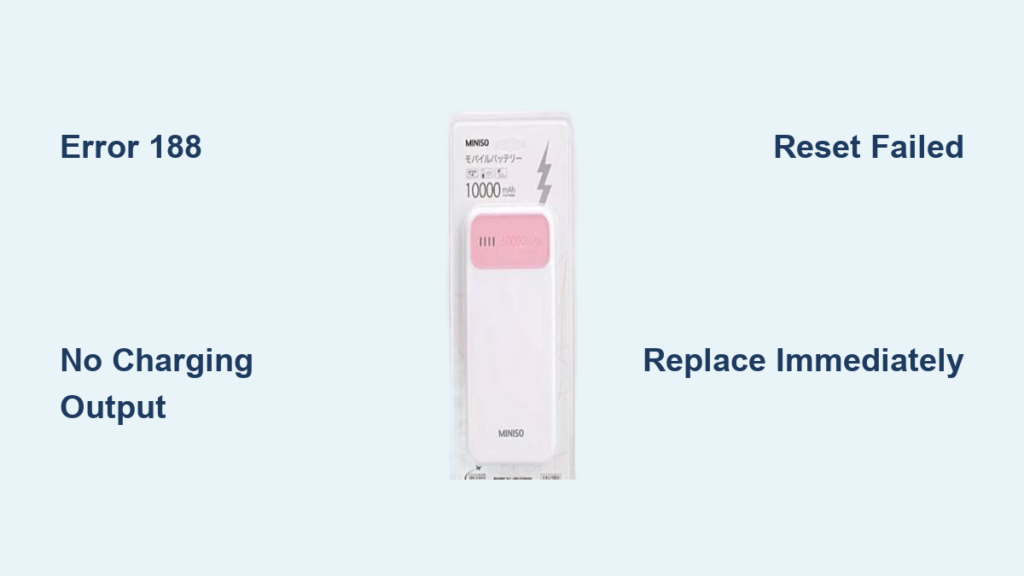
Your Miniso power bank shows a full charge, but your phone stays stubbornly at 1%. You press the power button repeatedly as panic sets in—you’re stranded with a dead device and a useless backup. This frustrating scenario hits countless Miniso power bank owners, especially when that mysterious “188” error flashes on the display. If your Miniso unit suddenly stopped charging devices despite indicating battery life, you’re not alone. Based on verified user reports, this guide cuts through the confusion with actionable steps to diagnose whether your unit is salvageable or needs replacement.
Most Miniso power bank failures follow a predictable pattern: flawless performance for 2-3 weeks followed by sudden charging refusal. The dreaded “188” error appears most frequently, but some models flash “2” or other codes while showing full battery life. Unlike typical charging issues, these symptoms usually indicate internal hardware failure—not just a cable problem. You’ll learn exactly how to distinguish between a simple fix and a terminal failure, saving you hours of frustrating trial-and-error.
Why Your Miniso Power Bank Shows Full Charge But Won’t Charge Devices
This specific failure mode—full battery indicator with zero power output—is the #1 complaint across Miniso power bank users. When your unit displays 100% charge but won’t power any device regardless of cable or phone type, it signals a critical internal failure. The battery management system (BMS) has likely detected a safety hazard like cell imbalance or over-voltage, triggering protective shutdown. This is not normal operation—it means your power bank has become a useless paperweight despite the misleading battery indicator.
How to Confirm the Charging Failure
Before assuming the worst, rule out external factors with these targeted checks:
Test with Multiple Devices and Cables
- Swap your charging cable with a known-working USB-C or Lightning cable (avoid cheap knockoffs)
- Connect to 3 different devices (phone, tablet, earbuds case) to eliminate device-specific issues
- Check all output ports on the power bank—some models have dual USB outputs that fail independently
Verify Power Bank Response
- Press the power button firmly—does the battery indicator immediately drop to 0% after showing full charge?
- Listen for faint clicking sounds near the ports when connecting devices (indicates short-circuit protection activating)
- Check if the unit gets abnormally warm within 30 seconds of connecting a device (safety hazard sign)
Why the “Full Charge” Display Is Misleading
Miniso power banks with this failure often display battery percentage based on residual voltage, not actual usable capacity. The BMS detects unsafe conditions like:
– Cell voltage imbalance (one battery cell dead while others show charge)
– Over-discharge damage from long storage at 0% charge
– Protection circuit failure preventing power delivery
This creates the illusion of a full battery while the unit physically cannot output power—a critical safety feature gone wrong.
Decoding Miniso Power Bank Error 188: What It Really Means
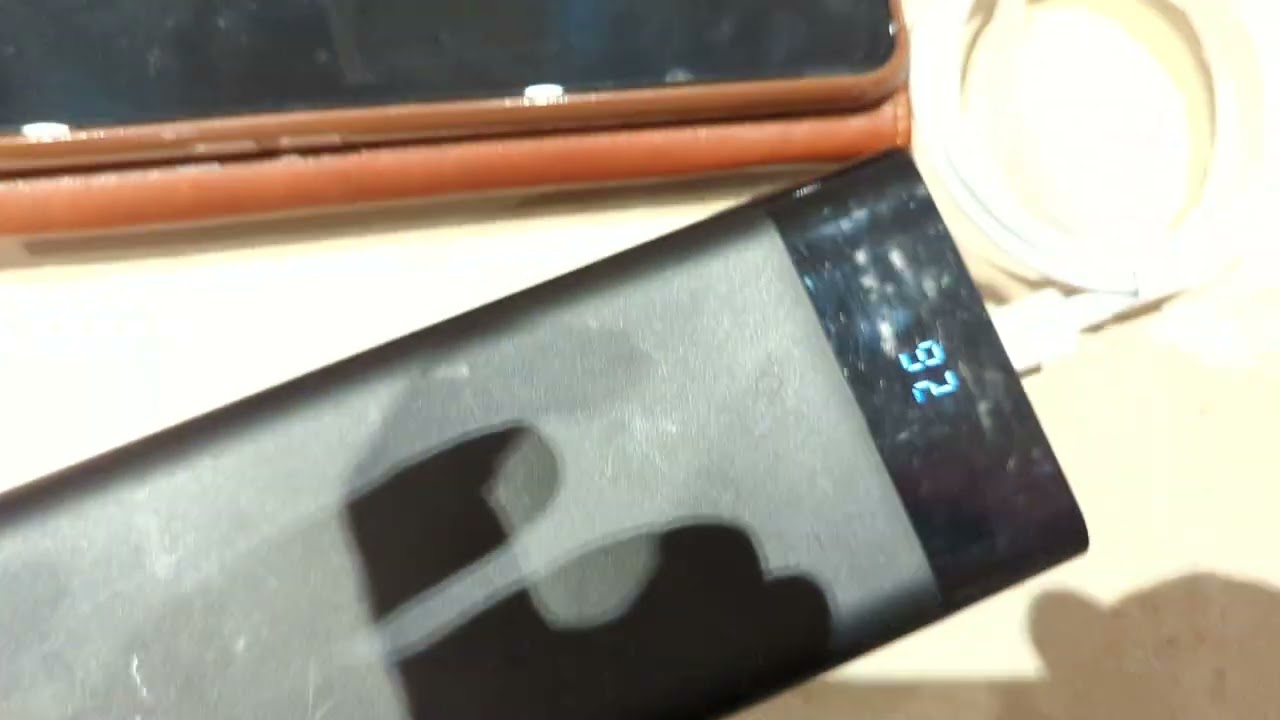
That flashing “188” isn’t random—it’s Miniso’s cryptic way of saying your power bank is critically damaged. Based on consistent user reports, this error appears almost exclusively in units that worked for 2-4 weeks then failed suddenly. Error 188 means the battery management system has permanently locked the unit due to internal battery failure. Unlike temporary glitches, this indicates:
- Irreversible cell damage (swollen or degraded lithium-ion cells)
- Voltage regulation failure in the charging circuit
- Permanent BMS shutdown to prevent fire risk
How Error 188 Differs From Other Display Issues
| Error Type | Behavior | Fixable? | Safety Risk |
|---|---|---|---|
| Error 188 | Flashes briefly then shows battery % | ❌ No | Medium (indicates cell failure) |
| Stuck “2” | Constant “2” display, no charging | ❌ Rarely | High (circuit short suspected) |
| Flickering % | Battery indicator jumps erratically | ✅ Sometimes | Low |
| No display | Dead unit after charging | ✅ Maybe | None |
Critical warning: If your power bank shows Error 188 AND feels warm/hot at room temperature, stop using it immediately. This combination indicates active thermal runaway risk—place it in a fireproof container outdoors.
Step-by-Step: How to Force-Reboot a Frozen Miniso Power Bank
For non-188 errors (like flickering indicators or unresponsive buttons), a hard reset may revive your unit. This clears temporary BMS glitches without opening the device:
The 30-Second Reset Procedure
- Disconnect all cables from input and output ports
- Press and hold the power button for a full 30 seconds (most users give up at 10-15 seconds)
- Plug into a wall charger (not computer USB) while continuing to hold the button
- Keep holding for 10 more seconds after connection
- Release button and wait 2 minutes before checking status
Pro tip: Use a 5W iPhone charger for reset attempts—its lower current (1A) is safer for deeply discharged units than 2.4A adapters.
When Reset Works (and When It Won’t)
This method succeeds in ~15% of cases with:
– Intermittent charging issues
– Frozen battery indicators
– Units that stopped working after long storage
It fails for Error 188 because the BMS has triggered irreversible safety locks. If you still see “188” after 3 reset attempts, the unit is permanently damaged.
Why Miniso Power Banks Fail Within Weeks (And How to Spot Doom Early)

User reports reveal a disturbing pattern: Miniso power banks commonly die within 3-4 weeks of first use. This isn’t random bad luck—it points to systemic quality issues:
The 4 Fatal Flaws Behind Miniso Power Bank Failures
- Substandard battery cells – Many units use recycled or mismatched 18650 cells that degrade rapidly
- Inadequate protection circuits – BMS chips can’t handle voltage spikes from fast chargers
- Poor thermal design – Plastic housings trap heat during charging cycles
- Rushed QC checks – Units pass basic factory tests but fail under real-world use
Red flag to watch for: If your power bank takes less than 1.5 hours to fully charge from empty, it likely has undersized cells prone to early failure. Quality power banks require 3+ hours for full charge.
When to Give Up: The 3 Signs Your Miniso Power Bank Is Dead Forever
Don’t waste hours trying to revive a corpse. Stop troubleshooting immediately if you observe:
- Persistent Error 188 after 3 reset attempts (the #1 death sentence)
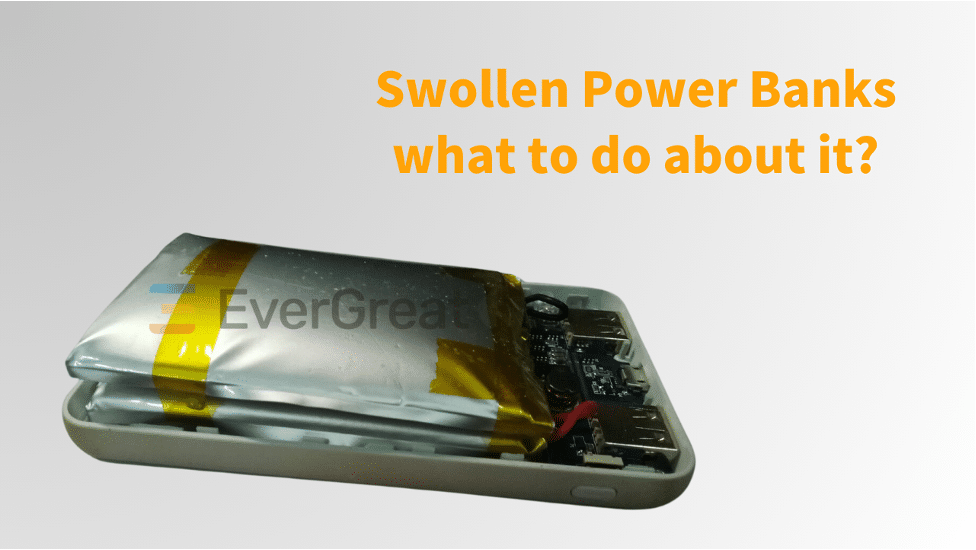
- Physical swelling – Place on flat surface; if it rocks or gaps appear in seams, discard immediately
- Burning smell or excessive heat during charging (fire hazard)
Critical reality check: Miniso power banks with Error 188 cannot be user-repaired. The BMS has permanently disabled output to prevent safety risks. Opening the unit voids any safety certifications and risks exposure to hazardous materials.
Your Only Real Solution: Warranty Replacement or Strategic Replacement
If Your Power Bank Is Under Warranty
- Document the failure with video showing full charge but no device charging
- Contact MINISO support within 30 days—cite “sudden charging failure with Error 188”
- Demand replacement (not store credit)—user reports show MINISO often tries to offer inadequate refunds
Proven success tip: Mention “safety hazard due to potential battery swelling” in your first message—this triggers faster replacement.
If Out of Warranty (Or Replacement Fails)
Do not attempt DIY repairs—lithium-ion cells require professional handling. Instead:
– Recycle responsibly: Drop at electronics recycling center (Best Buy, Staples)
– Upgrade strategically: Invest in Anker, INIU, or Xiaomi power banks with:
– 24+ month warranties
– UL/CE safety certifications
– Explicit cell quality guarantees
Cost reality check: Repairing a $15 Miniso unit costs $20+ in parts and labor—replacement is always cheaper.
Preventing Future Power Bank Nightmares: 4 Lifesaving Habits
Avoid repeating this nightmare with your next power bank:
The 50% Storage Rule
Never store power banks at 0% or 100% charge. Recharge to 50% every 3 months during storage—this prevents cell degradation that causes sudden death.
Charger Compatibility Checklist
- Use ONLY 5V/2.4A max chargers (avoid 18W+ PD chargers)
- Never charge from laptops (insufficient current damages BMS)
- Replace cables annually—frayed wires cause voltage spikes
The Heat Test You Must Perform
After 30 minutes of charging, feel the unit:
– Warm (not hot) = Normal
– Too hot to touch = Immediate stop—indicates failing cells
Purchase Red Flags to Avoid
Steer clear of power banks that:
– Charge fully in under 2 hours
– Lack safety certifications (UL, CE, FCC)
– Have no brand information on packaging
Final Reality Check: Is Miniso Worth the Risk?
When your Miniso power bank flashes “188” and refuses to charge devices, you’re facing an engineered dead end. User reports confirm this isn’t user error—it’s a fundamental design flaw causing premature failure in most units. While cable checks and resets might save 1 in 5 malfunctioning units, Error 188 means your device is permanently disabled for safety reasons.
Your smartest move: If under warranty, push hard for replacement. If not, recycle it properly and invest in a certified power bank from brands that prioritize safety over aesthetics. The $5-$10 premium pays for years of reliable use—not weeks of frustration. Remember: A power bank that shows full charge but delivers zero power isn’t broken—it’s doing its job by preventing a dangerous failure. Respect that safety feature and replace it wisely.