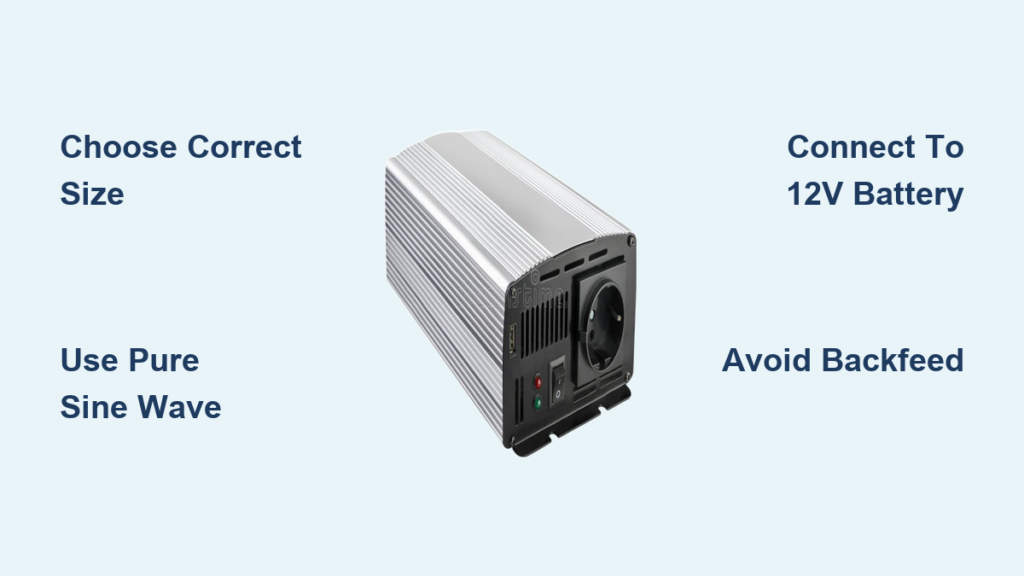
Imagine settling into your campsite as the sun dips below the trees. You have got dinner ready to cook, your phone is nearly dead, and you need a small fan for comfort, but there is no outlet in sight. That is where a power inverter comes in. It transforms your vehicle or portable battery DC power into usable AC electricity, letting you run everything from laptops to mini fridges in the wild. Whether you are car camping, overlanding, or living in an RV, knowing how to use a power inverter while camping safely and efficiently can elevate your outdoor experience from survival to comfort.
This guide walks you through every step, from selecting the right inverter and calculating your power needs, to hooking it up safely and avoiding common pitfalls. You will learn how to run high wattage appliances without draining your battery, integrate your inverter with solar panels, and troubleshoot issues before they ruin your trip.
Choose the Right Inverter Capacity
Calculate Your Total Wattage Needs
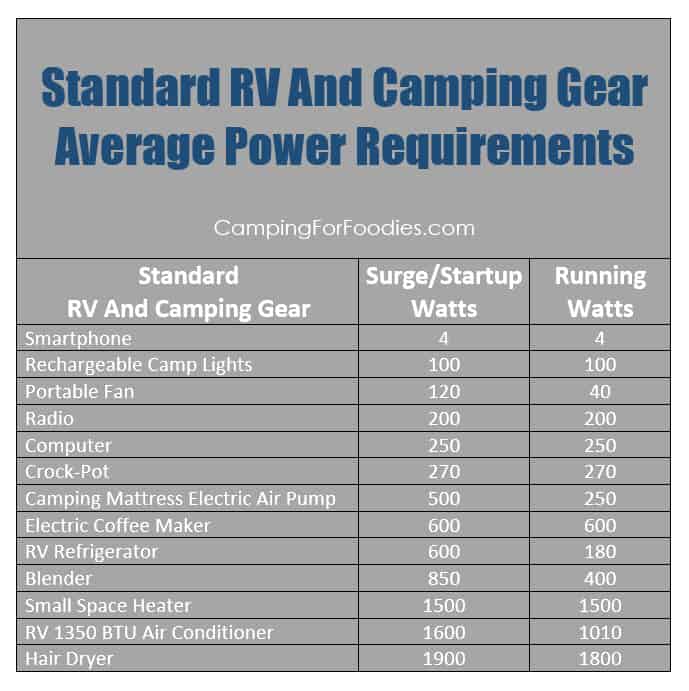
Before buying an inverter, you must know how much power your devices require. Start by listing every appliance or gadget you plan to use, noting their continuous wattage and surge wattage requirements.
Add all continuous watts to get your total load. Then pick an inverter rated at least 20 percent above that number. If your total is 800 watts, choose a 1000 watt inverter.
But do not forget the highest surge demand. A 1000 watt microwave might need 1800 watts at startup. Your inverter must handle that peak, even if only for a second.
Match Inverter Size to Your Activities
Inverter size should match your specific camping activities.
• Light use (charging only): 300 to 500 watt inverter
• Moderate use (lights, fan, small kitchen tools): 800 to 1500 watt
• Heavy use (cooking, power tools, CPAP): 1500 to 2000 watt
A camper using a 2000 watt pure sine wave inverter successfully ran lights, a fan, phone chargers, and drill batteries, all powered by solar. The key is proper sizing and load management.
Pro Tip: Never exceed 80 percent of your inverter rated capacity for sustained use. It reduces strain and heat buildup.
Select Pure Sine Wave for Sensitive Devices
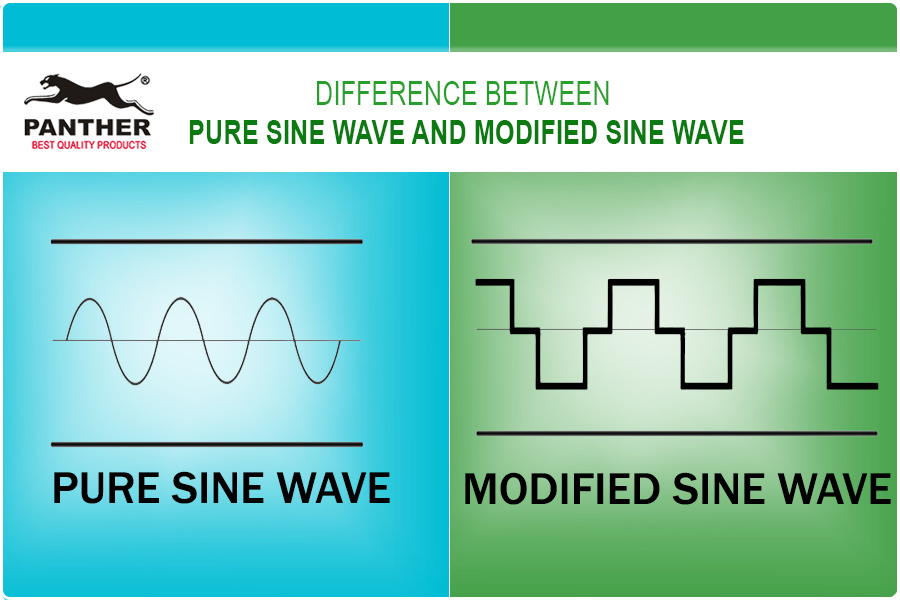
Why Waveform Matters
Not all inverters output the same kind of electricity. Your choice between pure sine wave and modified sine wave affects device performance and safety.
Pure sine wave delivers smooth, utility grade power. It is safe for CPAP machines, laptops and phone chargers, audio equipment, induction cooktops, and any device with a digital motor or circuit board.
Modified sine wave is cheaper but produces rougher power. It may cause buzzing in speakers, overheating in motors, reduced efficiency, and permanent damage to sensitive electronics.
Expert Note: Use a pure sine wave inverter to avoid damage to appliances, even during prolonged use.
When Modified Sine Wave Might Be Acceptable
Only consider modified sine wave if you are running simple resistive loads like incandescent bulbs, basic heaters, or older power tools without speed controls.
For anything else, especially medical or modern electronics, always choose pure sine wave.
Connect to the Correct DC Source
Use 12V Vehicle Battery (Most Common)
Most campers plug into their vehicle 12 volt system. This works well for short term use, but do not run high wattage devices with the engine off for long periods. You risk draining the starter battery and being stranded.
Best practice is to install a dual battery system with an isolator or DC DC charger. This separates your starting battery from a dedicated deep cycle house battery, which safely powers the inverter.
Pair with Portable Power Stations
For car camping or base camps, a portable power station like Jackery or Duracell is ideal. These units combine a lithium battery, inverter, USB ports, and sometimes solar input, all in one box.
Advantages include no wiring needed, lightweight and easy to move, built in safety features like overload and low voltage cutoff, and silent operation.
Portable power stations work well for charging devices, running small appliances, and providing backup for cloudy days.
Integrate with Solar Panels
To go truly off grid, pair your inverter with solar panels and a charge controller.
To size your solar, add up your daily energy use in watt hours, divide by average sun hours (4 to 5 is typical), and increase by 30 percent for inefficiency.
Example calculation shows that a system with 12 watt inverter idle draw times 24 hours, plus 20 watt lights for 5 hours, 30 watt fan for 6 hours, and 20 watt phone charging totals approximately 588 watt hours per day. Solar needed would be 588 divided by 4, which equals 147 watts minimum. Use 200 to 300 watt panels for reliability.
Use an MPPT charge controller. It is 15 to 30 percent more efficient than PWM and maximizes solar harvest.
Install and Wire Safely

Use Proper Cables and Fuses
Low quality or undersized cables cause voltage drop, overheating, and even fire. Follow these rules.
Keep cables short, under 6 feet if possible. Use thick wire gauge: 1000 watt inverter needs 4 AWG cable, 500 watt needs 6 AWG. Install a fuse within 18 inches of the battery, sized equal to or slightly above inverter max draw.
Warning: Reversed polarity (positive to negative) will destroy your inverter instantly. Double check all connections before powering on.
Mount Inverter Securely
Place the inverter in a dry, ventilated area, not inside a sealed compartment. Avoid direct sunlight and moisture. Secure with screws or brackets to prevent vibration damage.
Some models have remote switches or wireless displays. Use them to turn the inverter on or off from inside your RV or tent.
Power Devices Safely and Efficiently
Plug In Devices One at a Time
After turning on the inverter, power your appliances in order of wattage, starting with the largest. This prevents surge overload.
Follow these steps. Turn off all devices first. Power on the inverter. Turn on highest wattage device first, like a microwave. Then add smaller loads like lights and phone charger.
Avoid running multiple high draw appliances at once, like a coffee maker and toaster oven.
Monitor Battery Levels
Use a battery monitor to track state of charge, voltage, and amp hours consumed.
Keep these thresholds in mind. Lead acid batteries should not be discharged below 50 percent. Lithium batteries can go to 80 to 90 percent, but 20 percent is safer for long term health.
Avoid Dangerous Setup Mistakes
Never Backfeed Shore Power
One of the most damaging mistakes is connecting your inverter to your RV AC panel while also plugged into shore power.
This creates a backfeed condition that can destroy the inverter, damage shore power equipment, and create fire hazards.
Solution is to use an automatic transfer switch. It ensures only one power source (shore, generator, or inverter) is active at a time.
Fix GFI Tripping from Neutral Ground Bond
Many pure sine wave inverters have built in GFI protection. If your RV electrical panel already has a neutral to ground bond, the GFI will trip immediately.
The inverter sees the existing bond as a ground fault. To test, disconnect all power sources and use a multimeter to check continuity between neutral and ground bars. If there is continuity, the system is bonded.
Solution is to remove the neutral ground bond in the RV panel when using a GFI equipped inverter.
Reduce Idle Power Drain
Even when nothing is plugged in, inverters draw power called idle or no load consumption.
Example shows a 2000 watt inverter draws approximately 6 to 9.6 watts idle. Over 24 hours, that is 144 to 230 watt hours lost per day.
Worse, if you plug your shore power cord into the inverter, it adds parasitic load from the entire RV wiring.
Fix this by choosing an inverter with auto sleep mode (draws less than 1 watt when idle), turning off the inverter when not in use, and unplugging the shore cord unless actively powering internal outlets.
Troubleshoot Common Problems
Inverter Will Not Turn On
Check these items. Battery voltage (below 11 volts may prevent startup), blown fuse or tripped breaker, loose or reversed connections, and low charge (recharge battery first).
Shuts Off Unexpectedly
Common causes are overload (too many devices running), overheating (poor ventilation or high ambient temp), and low voltage (battery too drained).
Fix by turning off, letting cool, reducing load, recharging battery, and moving inverter to a cooler shaded spot.
Buzzing or Humming Noise
This is likely due to modified sine wave powering incompatible device, loose screws or internal components, or transformer based appliance.
Solution is to switch to pure sine wave inverter or replace the device.
GFI Keeps Tripping
Causes are neutral ground bond present or ground fault in appliance or wiring.
Fix by removing neutral ground bond, testing each appliance individually, and inspecting wiring for damage.
Optimize for Long Term Use
Maintain Your System
Clean vents monthly to prevent dust buildup. Inspect cables for corrosion or fraying. Tighten terminals every few trips. Test inverter before each outing.
Store in a dry, temperature stable place when not in use.
Extend Battery Life
Recharge batteries promptly. Avoid deep discharges. Use solar to offset inverter idle draw. Pair with MPPT controller for efficiency.
Plan for Cloudy Days
Even with solar, weather affects performance. Have a backup plan with extra battery capacity, portable power station, or fuel generator as last resort.
Final Tips for Smart Inverter Use
Start small with a 300 to 500 watt inverter if you only need to charge devices. Upgrade as needed. A 1500 to 2000 watt pure sine wave unit offers maximum flexibility.
Monitor constantly. A battery monitor pays for itself in avoided dead batteries. Conserve power by turning off inverter when idle and unplugging unused devices.
Prioritize safety by using fuses, proper cables, and grounding.
With the right setup, a power inverter turns your campsite into a functional modern space without sacrificing reliability or peace of mind.
Frequently Asked Questions About Using Power Inverters While Camping
What size power inverter do I need for camping?
Choose an inverter with a continuous rating at least 20 percent above your total expected load. For light use (charging phones, laptops), a 300 to 500 watt unit works. For moderate use (lights, fan, small appliances), 800 to 1500 watts. For heavy use (cooking, power tools, medical devices), 1500 to 2000 watts.
Can I use a power inverter while driving?
Yes, you can run an inverter off your vehicle battery while the engine is running. However, avoid high wattage use with the engine off for extended periods, as you may drain your starting battery and get stranded. A dual battery system is recommended for frequent use.
What is the difference between pure sine wave and modified sine wave inverters?
Pure sine wave delivers smooth, utility grade power identical to home outlets. It is safe for all electronics including medical devices, laptops, and appliances with motors. Modified sine wave is cheaper but produces rougher power that can damage sensitive electronics or cause buzzing and inefficiency.
How do I prevent my inverter from draining my battery when not in use?
Choose an inverter with auto sleep mode that draws less than 1 watt when idle. Turn off the inverter completely when not in use. Unplug any shore power cords connected to the inverter. Monitor idle draw with a battery meter to track consumption.
Can I connect a power inverter to my RV existing electrical system?
Yes, but you must use an automatic transfer switch to prevent backfeeding. Never connect the inverter to your RV AC panel while also plugged into shore power. If your inverter has built in GFI protection, you may need to remove the neutral to ground bond in your RV panel to prevent tripping.
How do solar panels work with a power inverter for camping?
Solar panels charge your battery bank through a charge controller. The inverter then converts that battery power to AC for your devices. Size your solar based on daily consumption: divide your total watt hour use by 4 (average sun hours) and add 30 percent for inefficiency. MPPT charge controllers are more efficient than PWM models.
Key Takeaways for Using Power Inverters While Camping
Using a power inverter while camping transforms your outdoor experience by letting you power everyday devices off grid. The most critical factors for success are selecting the right capacity (always account for surge wattage), choosing pure sine wave technology to protect your electronics, and connecting to an appropriate DC source like a dual battery system or portable power station.
Safety should never be compromised. Always use proper gauge cables and fuses, avoid backfeeding shore power with a transfer switch, and address neutral ground bond issues if your GFI trips. Monitor your battery levels continuously and maintain above 50 percent charge for lead acid or 80 percent for lithium batteries.
For sustainable off grid power, pair your inverter with appropriately sized solar panels and an MPPT charge controller. Plan for cloudy days with backup power options, and always turn off the inverter when idle to prevent unnecessary battery drain.
Now go enjoy the outdoors with all the comforts of home.