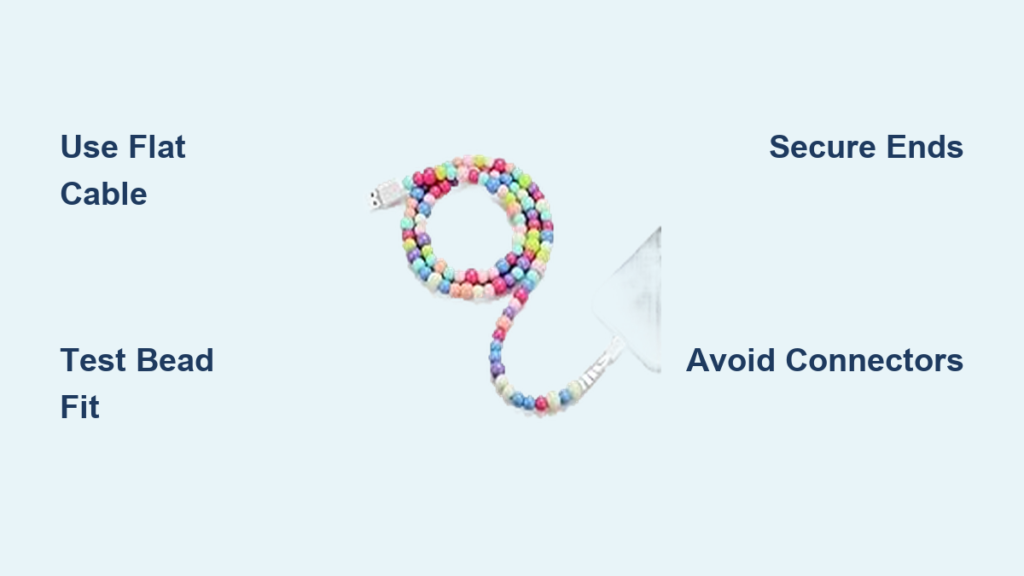
You’ve seen them lighting up TikTok feeds—colorful, eye-catching phone chargers wrapped in vibrant beads, turning an ordinary cable into a fashion statement. A beaded phone charger isn’t just stylish; it’s practical, personalized, and surprisingly easy to make. Whether you’re crafting a unique gift, preventing cable tangles, or simply adding flair to your tech, this DIY project blends creativity with everyday function.
Using just a few simple materials—like a flat charging cable, pony beads, and scissors—you can create a durable, tangle-resistant, and fully functional charger in under 30 minutes. In this guide, you’ll learn how to choose the right beads, modify them safely, secure your design, and avoid common mistakes so your charger looks great and lasts.
How to Prep Your Charging Cable for Beading
Before adding any beads, start with the right foundation. The cable you choose affects both ease of beading and long-term durability.
Remove the Plug Block
Take off the rectangular plug block, the part that connects to the wall outlet. This reduces weight and makes the cable easier to handle while threading or clipping beads. Most standard USB-A to Lightning or USB-C cables allow this separation.
Pro Tip: Work with flat cables—they’re sturdier, prevent beads from sliding, and lie flat when coiled.
Leave Bare Ends Clear
Keep 4 to 6 inches of bare cable at both ends, near the phone plug and the adapter end. This ensures smooth plug insertion, no interference with charging ports, and protection of high-stress zones where cables typically fray.
Avoid placing beads over the strain relief areas, the thickened rubber near plugs, as this can cause tension and damage over time.
Selecting the Right Beads for Your Charger

The right beads make all the difference in look, durability, and ease of use.
Best Bead Types for Chargers
| Bead Type | Best For | Notes |
|---|---|---|
| Pony beads (20mm) | Beginners, bold designs | Large holes fit most cables; easy to slit and clip |
| Acrylic beads | Color variety, lightweight | Avoid sharp edges that could scratch insulation |
| Seed beads | Delicate patterns | Too small for most cables unless pre-drilled |
| Novelty beads | Themed designs | Fun for seasonal or gift chargers |
20mm pony beads are ideal—they cover more cable with fewer pieces and are simple to modify.
Test Fit Before Starting
Slide one bead over the cable to confirm the hole is large enough. If it doesn’t fit, you’ll need to cut a slit. If it’s too tight, it may crack the insulation or damage the cable.
Plan Your Design
Pick a color scheme that matches your phone case, favorite colors, or a holiday theme. Create a pattern using gradients, alternating colors, or friendship bracelet styles like chevrons or spirals. Lay it out first using a small bowl or tray to organize beads in order—this prevents mistakes mid-project.
Attaching Beads to Your Phone Charger
There are two main methods: slitting solid beads or threading pre-drilled beads. Both work—choose based on your materials.
Cut Slits in Solid Beads
Most DIY projects use solid beads that must be modified.
Steps:
- Use small, sharp scissors to make a tiny slit at one end of the bead.
- Gently open the slit to create a flap just wide enough to fit over the cable.
- Clip the bead onto the cable and slide into position.
The slit should be clean, not jagged. A cracked bead won’t stay closed.
Work slowly to avoid splitting the bead entirely. If the plastic is brittle, warm it slightly with your fingers for flexibility.
Thread Pre-Drilled Beads
If your beads have large enough holes or are designed for cables, simply slide them on like a necklace. Start near the plug block end for better pattern control and slide beads one by one along the cable.
Use 20mm beads—you’ll need fewer to cover the same length, speeding up the process.
Locking Beads in Place for Long-Lasting Wear

Without securing, beads can shift or slide over time, especially with frequent use.
Use Adhesive for Stability
Apply a small drop of clear adhesive at the start and end of the beaded section:
- Clear nail polish—easy to find, dries clear
- Fabric glue—stronger hold, longer drying time
- E6000 or jewelry glue—most durable, best for heavy use
Do not glue over connectors or flex points—moisture from wet glue can weaken insulation.
Let adhesive dry completely, 1 to 2 hours, before reassembling or using.
Upgrade with Heat Shrink Tubing
For a professional, long-lasting finish, slide heat shrink tubing over the cable ends of the beaded section. Use a hairdryer or heat gun to shrink it snugly around the cable. This creates a sealed, protected edge that prevents bead migration.
Best for durability—ideal if the charger will be carried in bags or used daily.
Testing Your Finished Beaded Charger
Now that your design is complete, it’s time to put it all back together and make sure it works.
Reattach the Plug Block
Slide the rectangular adapter back onto the cable securely. Ensure it clicks or fits tightly—some models snap into place.
Inspect for Safety and Function
Check that no beads press against strain points. Confirm the cable bends freely near plugs. Look for any sharp bead edges that could scrape skin or surfaces.
Test the Charger
- Plug into a power source and your phone.
- Verify charging begins normally.
- Confirm no overheating near beaded areas.
- Ensure plug inserts smoothly.
Stop if the cable feels stiff, charging is inconsistent, or beads interfere with connection.
Creative Beaded Charger Design Ideas
Make your charger stand out with creative patterns and themes.
Popular Design Styles
Gradient Fade: Transition from light to dark using 3 to 5 shades for a smooth ombre effect.
Alternating Colors: Simple two-tone pattern, great for beginners and kids.
Themed Arrangements:
* Tropical—bright pinks, oranges, greens with flower beads
* Holiday—red/green or gold/silver for Christmas
* Patriotic—red, white, and blue for July 4th
Friendship Bracelet Inspired:
* Spiral—rotate colors in a twisting pattern
* Chevron—V-shaped layers using three colors
* Stripes—even bands of color for a clean look
Placement Options
| Style | Beaded Length | Best For |
|---|---|---|
| Minimalist | 6 to 8 inches near plug | Subtle style, quick project |
| Moderate | Middle third of cable | Balanced look and protection |
| Maximalist | Full visible length | Bold statement, full tangle resistance |
Why a Beaded Charger Is Actually Practical
A beaded charger isn’t just cute—it’s smarter than you think.
Prevents Tangles and Fraying
Beads add structure, reducing tight coils and knots. They act as a protective sleeve, shielding the cable from abrasion. They also reduce stress on flex zones, extending cable life.
The beads not only add style but also extend the life of the charger.
Easy Identification
In dorms, offices, or travel groups, a unique beaded charger is instantly recognizable—no more mix-ups.
Great for Gifting
Handmade chargers are personalized to match the recipient’s favorite colors, affordable at under $10 in materials, and emotionally meaningful as handmade gifts.
Perfect for birthdays, Christmas, graduation, or party favors.
Caring for Your Beaded Phone Charger
Keep your beaded charger looking fresh and working safely.
Cleaning Tips
Wipe with a dry or slightly damp cloth. Avoid soaking, especially if adhesive was used. Do not use harsh chemicals or submerge in water.
Regular Checks
Every few weeks inspect for loose beads. Look for cable wear under or near beads. Test charging speed and plug fit.
When to Replace
Stop using the charger if insulation is cracked or exposed, if beads are cracked or sharp, or if charging becomes intermittent.
With proper care, a beaded charger lasts 6 to 12 months or longer.
DIY vs Store-Bought Beaded Chargers
You can buy pre-made beaded chargers like Erimish, but making your own has advantages.
| Factor | DIY Charger | Store-Bought |
|---|---|---|
| Cost | $5 to $10 | $20 to $35 |
| Customization | Full control | Limited designs |
| Durability | Depends on method | Often professionally secured |
| Time | 15 to 45 minutes | None |
| Emotional Value | High (handmade) | Moderate |
Despite the convenience of commercial options, DIY remains popular for its creativity, cost savings, and personal touch.
Expert Tips and Safety Warnings for Beaded Chargers
Avoid common pitfalls and make your project a success.
Best Practices
- Use flat cables—they hold beads better
- Test one bead first—save time and materials
- Organize beads in advance—use trays or bowls
- Work on a clean surface—prevent losing small beads
- Secure ends—glue or heat shrink for longevity
Safety Warnings
- Never place beads over connectors—can cause damage
- Avoid heavy or sharp beads—they stress the cable
- Don’t overload with beads—extra weight increases strain
- Keep glued areas dry—moisture weakens adhesion
Efficiency Hacks
Use 20mm beads to cover more surface faster. Follow free friendship bracelet patterns online. Batch-make chargers for gifts using the same bead set.
Key Takeaways for Making Your Own Beaded Charger
A beaded phone charger is more than a craft—it’s a fusion of function and style. With minimal tools and a little creativity, you can transform a plain cable into a durable, tangle-resistant, personalized accessory. Whether you’re making one for yourself or gifting it to a friend, the process is quick, fun, and deeply satisfying.
Remember to use flat cables for better bead retention, test fit beads before committing to your design, and secure ends with adhesive or heat shrink tubing for longevity. Leave 4 to 6 inches of bare cable at both ends to ensure proper charging functionality.
From TikTok trends to real-world utility, this project proves that even the smallest tech upgrades can make a big difference. Grab your beads, pick your colors, and start crafting—your perfect charger is just a few slits and slides away.
Frequently Asked Questions About Making a Beaded Phone Charger
What type of cable works best for beading?
Flat cables work best because they hold beads securely and lie flat when coiled. Round cables can allow beads to slide around more easily.
How do I know if my beads will fit my cable?
Test fit one bead before starting your project. The bead hole should slide over the cable easily without forcing or cracking the insulation.
Do I need to use adhesive to keep beads in place?
Adhesive is optional but recommended for longevity. Without it, beads may shift over time, especially with frequent use. Clear nail polish, fabric glue, or heat shrink tubing all work well.
Can I use any type of bead for my phone charger?
Pony beads, specifically 20mm size, are ideal because they have large enough holes and are easy to modify. Avoid sharp-edged or overly hard beads that could damage cable insulation.
Will beading my charger affect charging speed or safety?
No, if done correctly. Beads should not cover connectors or strain relief points. Test your charger after assembly to ensure it charges normally without overheating.
How long does it take to make a beaded phone charger?
The project takes 15 to 45 minutes depending on the length of beading and your experience level. Minimalist designs near the plug take less time than full-length coverage.