That 20,000mAh power bank you bought should easily charge your phone four or five times. Yet somehow, it dies after just one full charge. This frustrating reality affects millions of power bank buyers who discover too late that advertised capacity rarely matches actual performance. Manufacturers exploit technical loopholes to inflate numbers while hiding the conversion losses that slash real-world output. The good news: you don’t need engineering expertise to uncover the truth. This guide reveals exactly how to find the real capacity of a power bank using simple, accessible methods that separate marketing hype from measurable performance.
Stop guessing whether you’ve been scammed by exaggerated capacity claims. With the right testing approach, you can determine precisely how much usable power your power bank delivers before your next trip or emergency. Whether you’re holding a suspiciously cheap bargain or a premium brand unit, these verification techniques work for any power bank. By the end of this guide, you’ll know exactly which measurements matter and how to perform accurate capacity tests at home with minimal equipment.
Why Your 20,000mAh Power Bank Only Delivers 7,400mAh
The massive gap between advertised and actual capacity starts with basic physics. That 20,000mAh label refers to the battery cell capacity measured at 3.7 volts—the native voltage of lithium-ion cells inside. But your phone charges at 5 volts, creating an unavoidable energy loss during conversion.
Here’s the math that explains why you never get what’s promised:
– Battery Energy = Labeled mAh × 3.7V
– Theoretical Output at 5V = (Labeled mAh × 3.7V) / 5V
– For a 20,000mAh power bank: (20,000 × 3.7) / 5 = 14,800mAh theoretical maximum
This theoretical maximum assumes perfect efficiency, which doesn’t exist. Real-world circuitry consumes additional power, bringing actual output down to 65-85% of that theoretical maximum. A genuine 20,000mAh power bank typically delivers only 9,600-12,600mAh at 5V—not the 20,000mAh prominently displayed on the box.
The $20 USB Meter Method That Reveals True Capacity
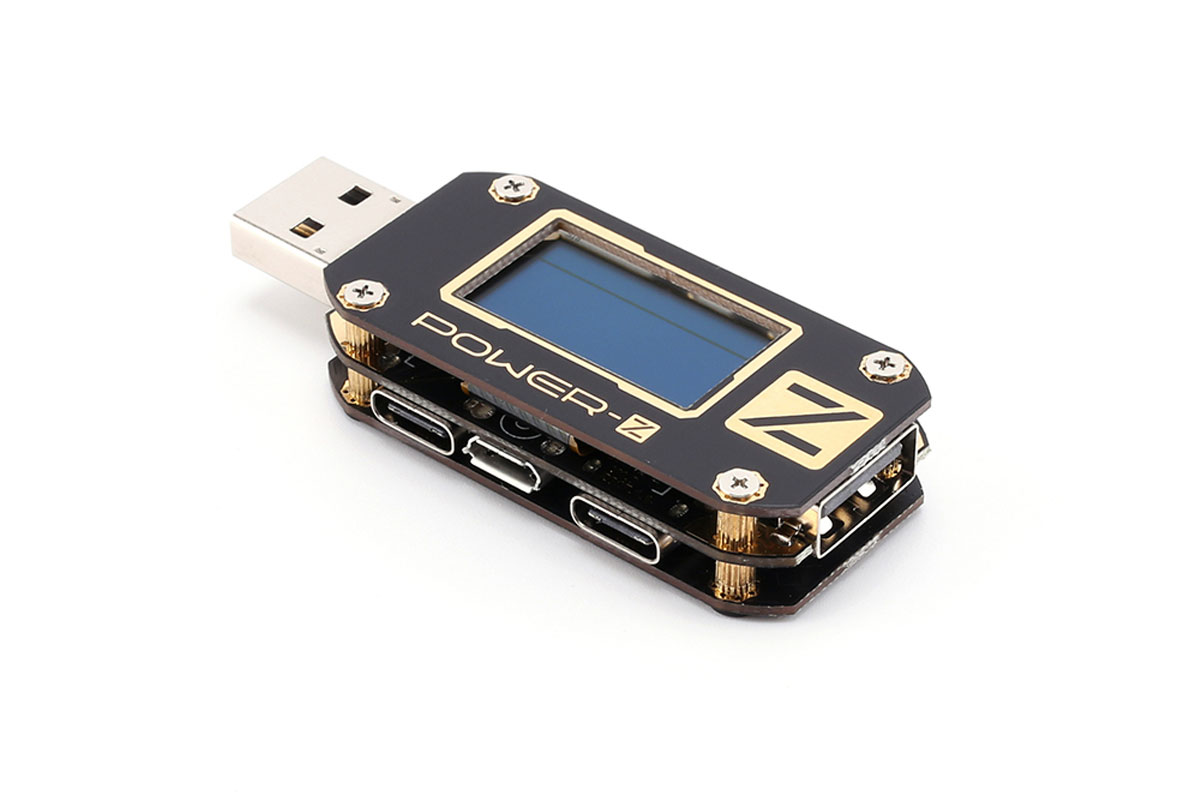
A USB power meter (like the KM001 or similar models under $25) provides the most accurate way to find the real capacity of a power bank. This small device sits between your power bank and device, logging every milliamp delivered during a full discharge cycle.
Step-by-Step USB Meter Testing Procedure
- Fully charge your power bank to 100% using its recommended charger
- Connect the USB meter between the power bank and a consistent load (a 10-ohm, 10W resistor works best)
- Start the logging function and let the power bank discharge completely
- Record the final reading showing total mAh delivered at 5V
Quality power banks deliver 65-85% of their labeled capacity. If your 10,000mAh unit shows less than 6,000mAh output, you’ve either received a defective unit or purchased an overstated product. This method eliminates guesswork by providing concrete numbers you can verify yourself.
Phone Charging Test: Measure Capacity Without Special Tools
Don’t own a USB meter? Your smartphone becomes the perfect testing device when you know how to interpret the results. This real-world test reveals how much usable power your bank actually delivers to your most important device.
- Fully charge both your phone and power bank
- Drain your phone to 1% battery
- Use only the power bank to charge your phone from 1% to 100%
- Count how many full charges you get before the power bank dies
Calculate real capacity: (Phone Battery mAh × Number of Full Charges) / 0.85. The 0.85 factor accounts for efficiency losses the phone’s battery meter doesn’t capture. For example, if your 4,000mAh phone gets 4 full charges, the calculation is (4,000 × 4) / 0.85 = 18,800mAh real capacity. If the label claims 20,000mAh, this represents excellent 94% efficiency—rare in reality.
Weight Check: The 25g Per 1,000mAh Rule for Real Power Banks
Genuine lithium-ion cells have predictable weight-to-capacity ratios. Use this simple verification before even plugging in your power bank:
- A real 10,000mAh power bank weighs at least 250g
- A legitimate 20,000mAh unit weighs 500g or more
- Anything lighter almost certainly has overstated capacity
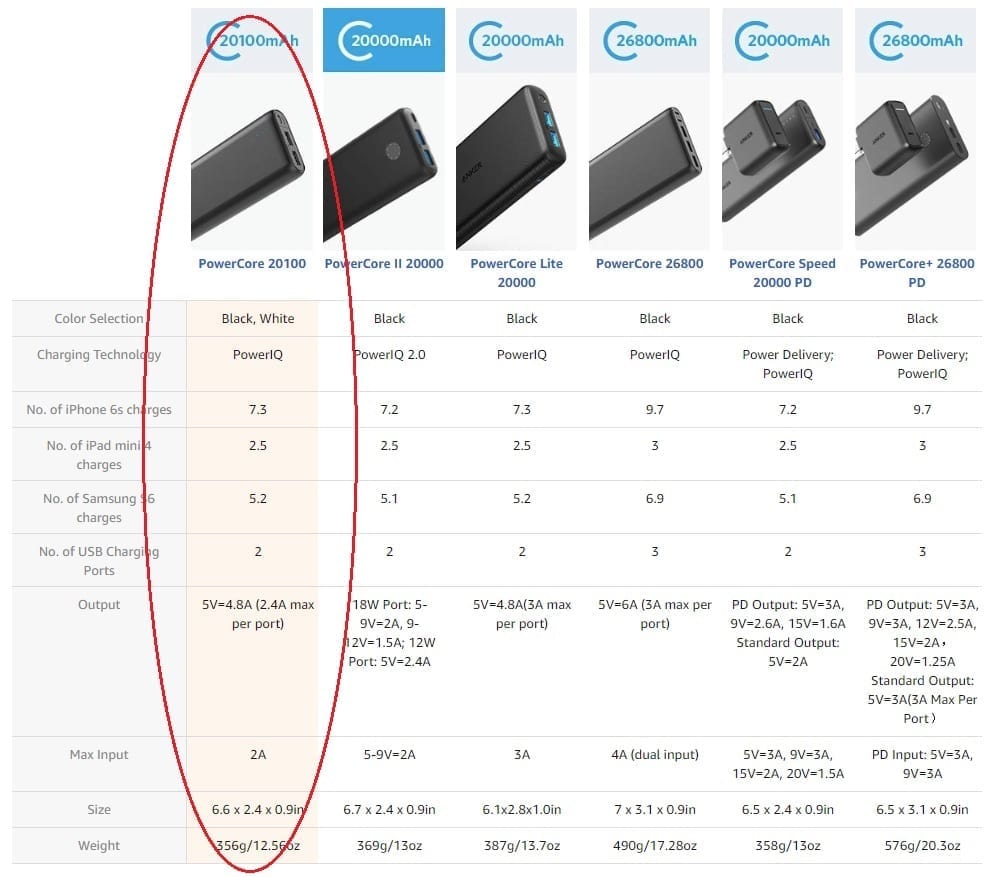
Lithium cells simply can’t defy physics—each 1,000mAh of genuine capacity adds approximately 25g of weight. When you pick up that “50,000mAh” power bank weighing only 350g, you’re holding a scam. Compare your unit to known genuine products: Anker’s 20,100mAh PowerCore weighs 414g, while fake versions often weigh less than 300g.
Charging Time Test: Spot Fake Capacity in Minutes
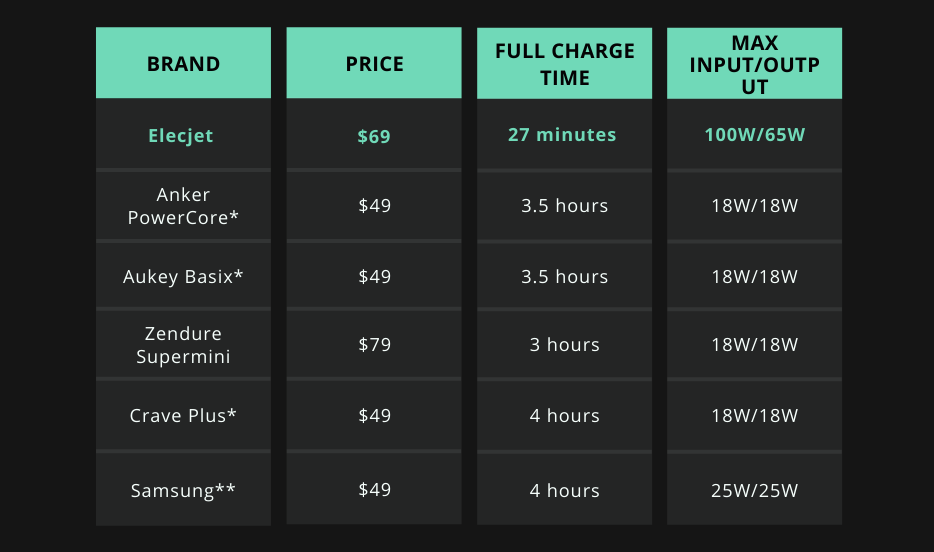
Real battery capacity takes real time to charge. Use your wall charger as a diagnostic tool:
- A genuine 10,000mAh power bank with 2A input takes 5+ hours to charge
- A real 20,000mAh unit with 2A input requires 10+ hours
- If your “20,000mAh” power bank charges fully in under 3 hours, its actual capacity is likely 5,000mAh or less
This test works because charging time directly correlates with capacity. Manufacturers can’t cheat physics—low-quality cells might charge faster but will degrade rapidly. If your power bank charges suspiciously quickly, it either has much less capacity than advertised or dangerous, unstable cells.
Physical Size Analysis: When a Power Bank Is Too Small to Be Real
True 20,000mAh capacity requires space for 6-8 standard 18650 lithium cells (each about 2,600-3,500mAh). If your “50,000mAh” power bank fits in your wallet, it’s physically impossible. Genuine high-capacity power banks have minimum dimensions:
- 10,000mAh: Minimum 100mm × 60mm × 20mm
- 20,000mAh: Minimum 150mm × 70mm × 25mm
- 50,000mAh: Larger than most smartphones
Counterfeit units cram fewer cells into the same space using cheap materials, creating dangerous overheating risks. When a power bank’s size contradicts its capacity claim, trust the physics over the label.
Why Efficiency Below 60% Means You’ve Been Scammed
Calculate your power bank’s efficiency using this formula:
(Efficiency %) = (Measured Output mAh × 5V) / (Labeled mAh × 3.7V) × 100
Quality units deliver 65-85% efficiency. Anything below 60% indicates dangerously poor components or grossly overstated capacity. Be especially wary of units claiming over 90% efficiency—this violates basic physics principles and signals outright fraud.
If your 10,000mAh power bank delivers only 5,000mAh output, that’s 47% efficiency—unacceptably low. Even budget brands should achieve at least 60%. Low efficiency means excessive heat generation and reduced lifespan, making these units potentially dangerous.
Quick Reference: What Real Capacity Looks Like by Label
Don’t get fooled by inflated numbers. Here’s what to actually expect from common power bank capacities:
| Advertised Capacity | Minimum Real Output at 5V | What’s Realistic |
|---|---|---|
| 5,000mAh | 3,000mAh | 3,000-4,000mAh |
| 10,000mAh | 6,000mAh | 6,000-8,000mAh |
| 20,000mAh | 12,000mAh | 12,000-16,000mAh |
| 50,000mAh | 20,000mAh | 20,000-30,000mAh |
If your power bank consistently falls below the “Minimum Real Output” column, you’ve likely purchased an overstated unit. The “What’s Realistic” range represents what quality manufacturers actually deliver—not marketing fantasies.
Final Verification: The 3-Method Cross-Check Process
For conclusive results, never rely on just one testing method. Combine these three approaches:
- Weight verification: Confirm it meets 25g per 1,000mAh minimum
- USB meter test: Measure actual mAh delivered at 5V
- Phone charging test: Validate real-world performance
When all three methods align within expected ranges, you’ve verified the true capacity. If results conflict significantly, investigate further—especially if the USB meter shows dramatically less output than the phone test suggests. Consistency across methods confirms accuracy.
Armed with these verification techniques, you’ll never again wonder how to find the real capacity of a power bank. Before your next purchase, apply the weight check and size analysis. After buying, confirm performance with the USB meter or phone test. Remember: genuine capacity comes with appropriate weight, size, and charging time—never with suspiciously low prices or impossibly high numbers. With these tools, you can confidently select power banks that deliver what they promise when you need them most.