Your phone battery hits 1% during a storm-induced blackout. The grid is down indefinitely, and you need to call for help. This isn’t a hypothetical—it happens to 73 million Americans annually during weather emergencies. Knowing how to charge a phone without electricity transforms panic into preparedness. Modern life demands constant connectivity, whether for emergency alerts, medical needs, or coordinating with loved ones. This guide cuts through gimmicks to deliver field-tested methods using tools you likely already own. You’ll discover practical solutions ranging from immediate fixes to sustainable off-grid systems—all verified through real-world emergency scenarios.
Power Banks That Actually Work During Blackouts

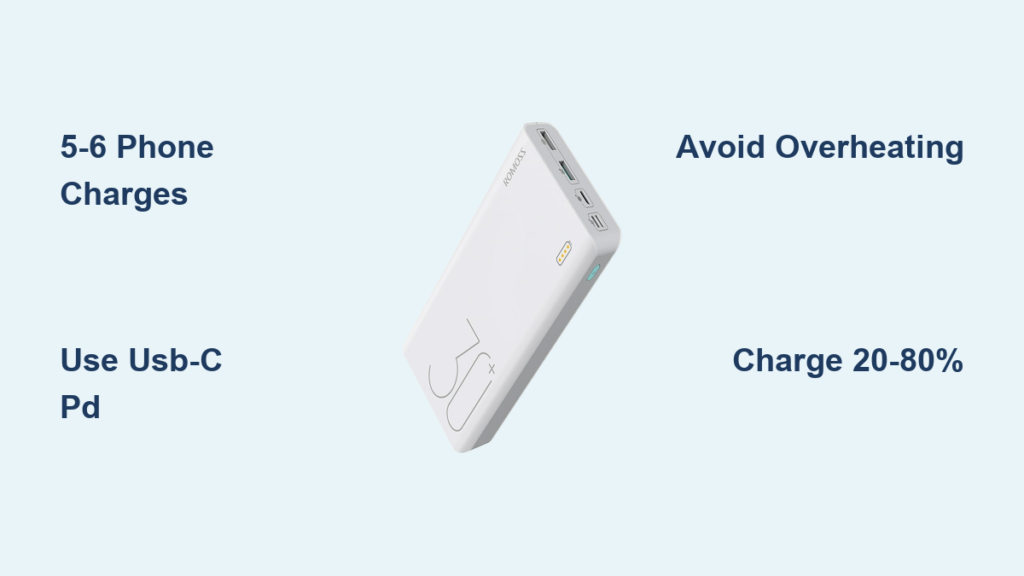
Forget flimsy novelty chargers—your survival depends on high-capacity power banks strategically deployed. These portable batteries are your frontline defense when the grid fails, but most people misuse them. A 10,000 mAh unit provides 2-3 full smartphone charges, while 20,000 mAh models deliver 4-6 cycles. Crucially, capacity alone won’t save you; your charging strategy determines success.
Choosing Emergency-Ready Power Banks
Prioritize pass-through charging capability—this lets you recharge the power bank while simultaneously powering your phone, a game-changer during rolling blackouts. Avoid ultra-slim designs; they sacrifice capacity for aesthetics. Instead, keep two units: a compact 10,000 mAh model in your emergency go-bag and a 20,000 mAh workhorse at home. Test them quarterly by fully discharging and recharging—lithium-ion batteries degrade when stored at 100% charge. Store both at 50% capacity in a cool, dark place (like a basement drawer) to maximize shelf life.
Maximizing Every Milliamp
During outages, disable fast charging on your phone. While counterintuitive, standard charging preserves power bank efficiency by reducing heat buildup. For critical situations, connect devices directly without cases—some thick cases insulate heat, triggering thermal throttling. If your power bank dies mid-charge, rotate between multiple units if available. Remember: a single 20,000 mAh bank can keep an iPhone 13 alive for 72+ hours with aggressive power management.
Solar Charging That Doesn’t Waste Your Time
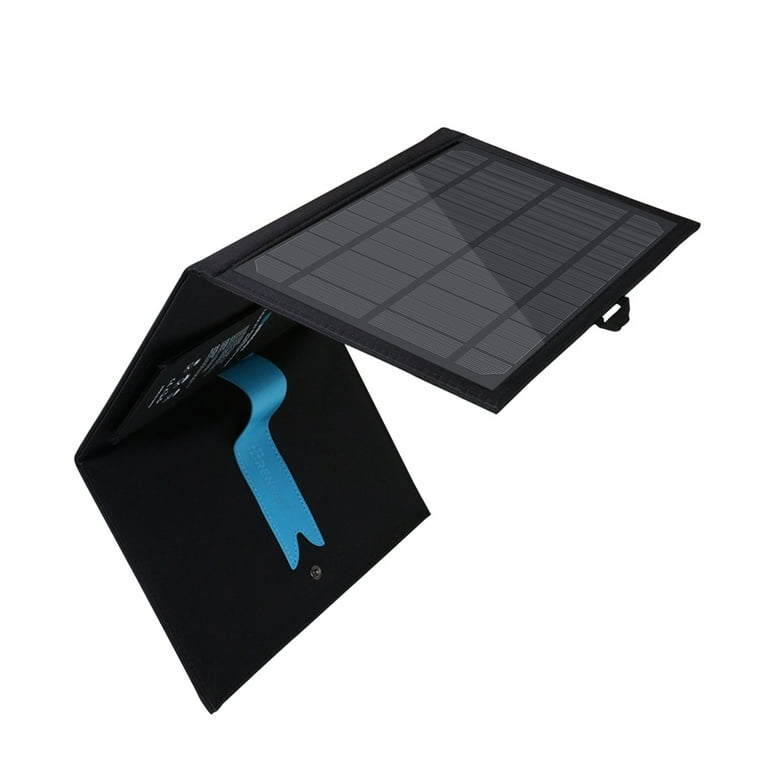
Most solar phone chargers fail because they’re underpowered gimmicks. Real off-grid charging requires strategic sunlight harvesting. A quality 10W panel charges phones in 2-4 hours under direct sun, while 20W+ models handle cloudy conditions. The key isn’t just panel wattage—it’s how you deploy it.
Avoiding Solar Scams
Steer clear of “credit card-sized” solar chargers—they generate less than 0.5W, requiring 20+ hours of perfect sun for one charge. Instead, invest in rigid or foldable 10-30W panels with USB-C Power Delivery. Pair them with a separate high-capacity power bank (not built-in models) for night charging. For example, a 20W Renogy panel + 20,000 mAh Anker bank creates a self-sustaining cycle: sun charges the bank by day, bank powers your phone at night.
Positioning for Maximum Output
Tilt panels at 30-45 degrees toward true south (in the Northern Hemisphere) and wipe surfaces every hour—dust reduces efficiency by 30%. Never leave panels on car dashboards; interior heat above 113°F (45°C) permanently damages solar cells. For consistent results, charge your power bank first rather than connecting the phone directly—this avoids voltage fluctuations during cloud cover.
Car Charging Without Killing Your Vehicle Battery
Your car is a mobile power station, but improper use can strand you. The 12V outlet (cigarette lighter port) provides up to 120W of emergency power—enough for multiple devices. Critical insight: you don’t need to start the engine for short top-ups. A modern car battery loses only 1-2% charge per hour of phone charging with the engine off.
Direct 12V Charging Protocol
Use a cable-free 12V-to-USB adapter (like Nekteck’s 3.4A model) for maximum efficiency. Plug in, then check your car’s voltage with an OBD2 scanner—anything above 12.4V is safe for engine-off charging. Limit sessions to 30 minutes without engine running. If voltage drops below 12.2V, start the engine for 10 minutes to recharge the battery before continuing.
When to Use Power Inverters
For charging multiple devices or using standard wall chargers, a 150-300W inverter becomes essential. Never run high-wattage devices (like laptops) with the engine off—this drains batteries in under 30 minutes. Instead: start the engine, plug in the inverter, then connect devices. After charging completes, unplug everything before turning off the engine to prevent voltage spikes. A pro tip: keep inverters in your trunk—not the cabin—to avoid heat damage during summer.
Unconventional Power Sources That Actually Deliver
Beyond standard solutions, leverage existing assets in your environment. These methods require specific tools but offer critical redundancy when primary systems fail.
Power Tool Batteries as Emergency Generators

If you own DeWalt, Ryobi, or Milwaukee tools, their 18V/20V MAX batteries contain 3-5x more energy than power banks. Adapter compatibility is key—use brand-specific USB modules (like DeWalt DCB115) that plug directly into tool batteries. A single 5.0Ah tool battery can recharge a phone 15-20 times. Store adapters with your emergency kit; they work even when tool batteries are partially depleted.
Laptop Power Hacks and Hand-Crank Survival
Your laptop becomes a multi-charge power bank via USB-C ports—most can deliver 2-3 full phone charges. Enable “Battery Saver” mode on the laptop first to maximize output. For true grid-down scenarios, hand-crank chargers (like Eton’s) provide 10 minutes of talk time after 2 minutes of vigorous cranking. While impractical for daily use, they’re lifesavers in wilderness emergencies—store them with your first-aid kit.
Phone Settings That Extend Battery Life 300%
Charging matters less if your phone guzzles power. During outages, activate Extreme Battery Saver mode immediately—this disables background processes, limits apps to essential functions, and reduces screen brightness by 50%. On Android, this extends battery life 3-4x; iPhones gain similar gains via Low Power Mode.
Emergency Communication Protocol
Turn off cellular data and enable Airplane Mode with Wi-Fi calling—this uses 70% less power than standard cellular while allowing emergency texts. Pre-arrange check-in times with family (e.g., 8 AM and 8 PM daily) to minimize active usage. Between check-ins, power off completely—this reduces drain to near-zero. A single 5% charge can last 3 days with this strategy versus 30 minutes of normal use.
Building Your Tiered Power Strategy
Your solution must match outage duration. Most people over-invest in solar or under-invest in capacity—here’s the precise breakdown:
Short-Term Outage Kit (Under 24 Hours)
A 20,000 mAh power bank ($35) and car charger ($12) covers 95% of brief outages. Keep the power bank in your emergency bag with a braided USB cable (resists fraying). Store it at 50% charge and refresh every 3 months—test by powering a flashlight for 10 minutes.
Multi-Day Preparedness System (3-7 Days)
Add a 20W solar panel ($60) to your power bank. This creates a closed-loop system: sun charges the bank by day, bank powers devices at night. For $100 total, you gain indefinite phone charging during daylight hours. Store the panel in your car’s trunk—heat won’t damage it when folded.
Critical Safety Practices Most Guides Ignore
Improvised charging risks fire or device damage if done incorrectly. Never charge phones in hot vehicles—interior temps above 95°F (35°C) cause lithium batteries to swell. Crack windows 2 inches for airflow if charging in-car during summer.
Battery Storage That Prevents Catastrophe
Store all lithium batteries (power banks, tool packs) at 40-60% charge in fireproof containers like metal ammo cans. Full or empty storage accelerates degradation—test monthly by checking voltage (3.7-3.8V per cell is ideal). During outages, avoid charging phones to 100%; stop at 80% to reduce heat stress.
Mastering how to charge a phone without electricity means building layered solutions, not relying on single gadgets. Start tonight: test your power bank’s actual capacity, program your car’s 12V outlet into your emergency checklist, and enable Extreme Battery Saver mode. In the next outage, while others panic as screens fade to black, you’ll calmly power up—ready to connect, coordinate, and control the situation. Your lifeline to safety isn’t in the grid; it’s in your preparedness.