You’ve probably stood in an electronics store staring at power banks labeled 10,000mAh, 20,000mAh, or even 30,000mAh, wondering which one will actually keep your devices charged through your next trip. Here’s the uncomfortable truth: that mAh number is misleading you. Two power banks with identical mAh ratings can deliver completely different amounts of usable energy depending on their watt-hour (Wh) capacity. Airlines know this—they won’t let you board with a power bank over 100Wh, regardless of its mAh rating. This guide reveals exactly how to calculate watt-hours of any power bank using simple math, so you can compare models accurately, avoid travel hassles, and finally understand how many real charges you’ll get from your portable power source.
Most travelers discover the hard way that a “27,000mAh” power bank might be airline-approved while a “30,000mAh” model gets confiscated at security. The difference? Watt-hours. While mAh measures electrical charge capacity, watt-hours measure actual energy—the only metric that matters for determining real-world performance and airline compliance. Without calculating Wh, you’re essentially shopping blind, potentially overpaying for inflated capacity claims or worse, showing up at the airport with a prohibited power bank. By the end of this guide, you’ll know precisely how to convert any power bank’s specifications to watt-hours, account for real-world efficiency losses, and make confident purchasing decisions based on true energy capacity.
Why Your Power Bank’s mAh Rating Doesn’t Tell the Full Story
Milliamp-hours vs. Watt-hours: What’s the Critical Difference?
That 10,000mAh label on your power bank describes only half the equation—it measures electrical charge capacity without considering voltage, which determines how much actual work that charge can perform. Watt-hours solve this problem by combining both voltage and capacity into a single energy measurement. Think of it like comparing fuel tanks: mAh is like measuring gallons of gasoline, while Wh measures the actual energy content that powers your engine. A gallon of premium fuel contains more energy than a gallon of regular—similarly, a 3.7V 10,000mAh power bank delivers less energy than a 7.4V 10,000mAh model, even with identical mAh ratings.
How Voltage Turns Capacity into Actual Energy
All lithium-ion and lithium-polymer power banks use 3.7V cells internally, regardless of their output voltage. This critical detail explains why two power banks with the same mAh rating can have different energy capacities. When you see “10,000mAh” on a label, it refers to the capacity at the battery’s nominal 3.7V, not the 5V, 9V, or 12V output used for charging devices. Watt-hours account for this voltage difference, giving you the true energy measurement that determines how many times you can charge your phone or laptop. Without converting to Wh, you’re comparing apples to oranges—especially when evaluating power banks for airline travel where Wh is the regulatory standard.
The Exact Watt-hour Calculation Formula Every Traveler Needs

Converting mAh to Watt-hours: The Simple Math That Matters
Here’s the calculation you need: Watt-hours (Wh) = (mAh × Voltage) ÷ 1,000. For nearly all consumer power banks, the voltage is 3.7V—the standard for lithium-based cells. When you see a 20,000mAh power bank, the actual energy calculation is (20,000 × 3.7) ÷ 1,000 = 74Wh. This is the number airlines care about, not the mAh rating. Many manufacturers conveniently omit the Wh rating while prominently displaying inflated mAh numbers, banking on consumers not knowing this simple conversion. Always verify your power bank’s Wh rating before purchasing, especially if you travel frequently.
Why 3.7V Is the Magic Number for Power Bank Calculations
Don’t be fooled by output voltages like 5V or 20V—those are for device charging, not capacity calculation. The critical voltage for Wh calculations is always the internal battery voltage, which is 3.7V for virtually all portable power banks. Some manufacturers list capacity at output voltage (e.g., “10,000mAh at 5V”), which dramatically overstates true energy capacity. To compare models fairly, convert everything to Wh using the 3.7V standard. A power bank claiming “20,000mAh at 5V” actually contains only (20,000 × 3.7) ÷ 1,000 = 74Wh—significantly less than a genuine 20,000mAh (at 3.7V) model that delivers 74Wh.
Step-by-Step: Calculate Your Power Bank’s True Capacity in 3 Minutes
Finding the Hidden Voltage Specification on Your Power Bank
Locate your power bank’s technical specifications—usually on the label, packaging, or manufacturer’s website. You’re looking for two numbers: capacity in mAh and voltage. If voltage isn’t specified (as is common), assume 3.7V. For example, a label showing “26,800mAh” without voltage means 26,800mAh at 3.7V. Apply the formula: (26,800 × 3.7) ÷ 1,000 = 99.16Wh. This explains why some “27,000mAh” power banks are airline-approved (under 100Wh) while others aren’t—they’re using different calculation methods to inflate the mAh number.
Common Calculation Mistakes That Overestimate Power Bank Capacity
Most travelers make these critical errors: using output voltage (5V) instead of battery voltage (3.7V), ignoring efficiency losses, or trusting manufacturer claims without verification. If you calculate using 5V—(10,000 × 5) ÷ 1,000 = 50Wh—you’ll overestimate capacity by 35% compared to the true 37Wh (using 3.7V). Another mistake is assuming 100% efficiency: that 37Wh power bank actually delivers only about 31.5Wh of usable energy after conversion losses. Always use 3.7V in your calculations and factor in 85% efficiency for realistic expectations of how many device charges you’ll actually get.
Airline Travel Rules: Why Watt-hours Determine If Your Power Bank Flies
The 100Wh Limit Explained: What It Means for Your Portable Charger
The FAA and IATA restrict power banks to 100Wh maximum in carry-on luggage without special approval—this is non-negotiable. A power bank labeled “27,000mAh” might be 99.9Wh (airline-approved) while a “30,000mAh” model hits 111Wh (prohibited). The math is simple: 27,000 × 3.7 ÷ 1,000 = 99.9Wh. Always calculate Wh yourself if it’s not printed on the label. At security, agents will check the Wh rating, not mAh—so having the calculation handy prevents last-minute confiscation of your essential charging device.
Power Bank Capacity Cheat Sheet for Stress-Free Air Travel
Use this quick reference when packing:
– 10,000mAh = 37Wh (perfect for international flights)
– 20,000mAh = 74Wh (maximum for most day trips)
– 26,800mAh = 99.16Wh (the largest airline-approved capacity)
– 27,000+mAh = 100+Wh (requires airline approval)
Pro tip: Look for the Wh rating printed directly on quality power banks—it’s usually near the input/output specifications. If it says “99.9Wh” or “74Wh,” you’re good to go. Never rely solely on mAh numbers when traveling; that “30,000mAh” power bank might cost you your trip’s primary charging solution at security.
What Watt-hours Tell You About Charging Your Specific Devices
How Many iPhone Charges You Actually Get From a Power Bank
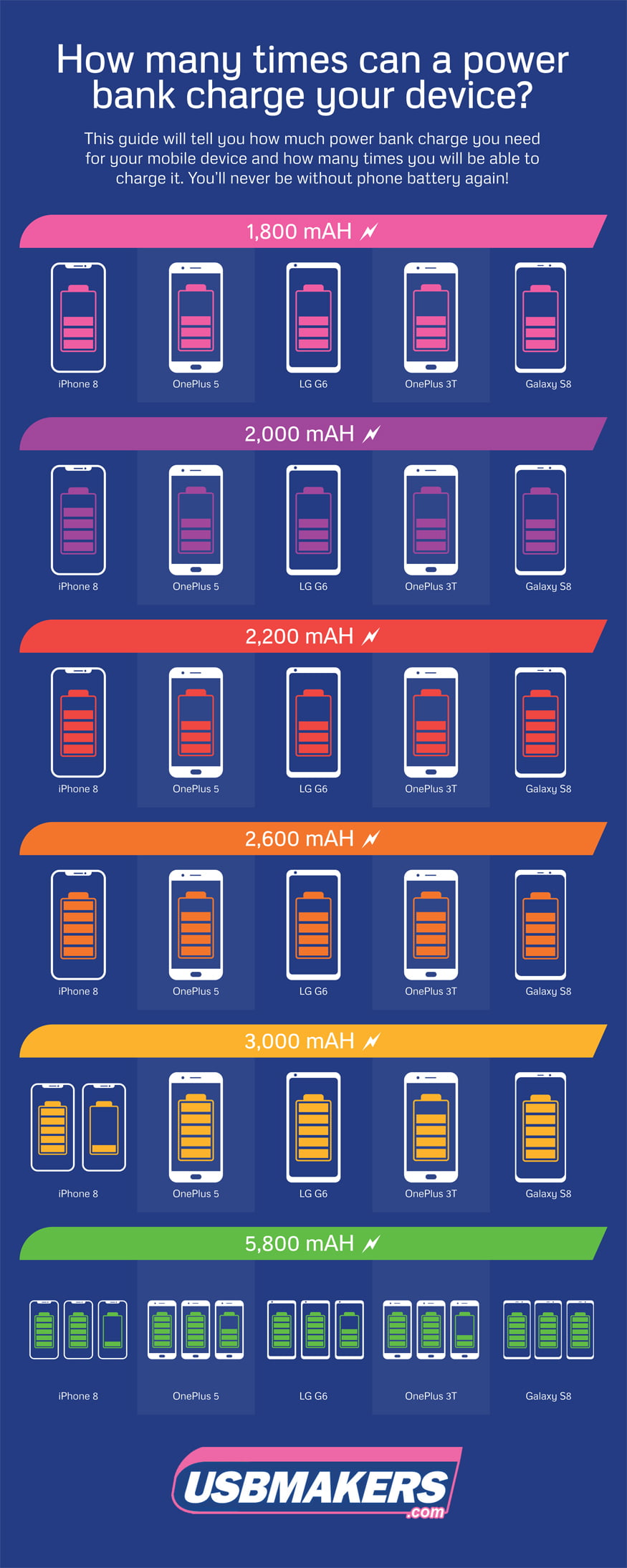
Your iPhone 15 has a 17.5Wh battery. A 37Wh power bank (10,000mAh) delivers about 31.5Wh of usable energy after 85% efficiency losses. Simple division reveals real-world performance: 31.5Wh ÷ 17.5Wh = 1.8 full charges. That “charges your phone 3 times” marketing claim? It’s using idealized math without efficiency losses. For accurate expectations, always multiply your power bank’s Wh by 0.85 before dividing by your device’s battery capacity in Wh.
Why Laptop Charging Requires Higher Watt-hour Power Banks
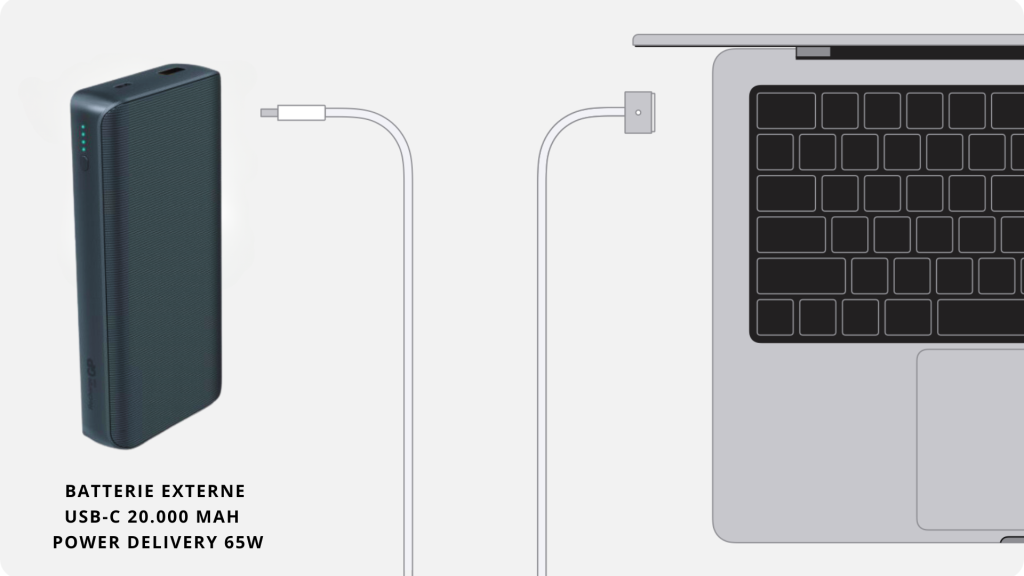
Charging a laptop reveals why Wh matters more than mAh. A MacBook Air has a 52.6Wh battery—more than triple an iPhone’s capacity. That popular 20,000mAh (74Wh) power bank delivers only 62.9Wh of usable energy (74 × 0.85). This provides just one partial laptop charge (62.9Wh ÷ 52.6Wh = 1.2), not the “two full charges” some manufacturers suggest. For reliable laptop charging, you need 100Wh power banks—the largest airline-approved size—delivering about 85Wh of usable energy for 1.6 full MacBook charges.
Avoid These 3 Critical Watt-hour Calculation Errors
The Voltage Confusion That Makes Travelers Miss Flights
The most dangerous mistake is using output voltage (5V) instead of battery voltage (3.7V) in calculations. A “20,000mAh” power bank calculated at 5V appears as 100Wh—right at the airline limit. But using the correct 3.7V gives 74Wh, well under the limit. Some manufacturers exploit this confusion, advertising capacity at output voltage to make numbers look bigger. Always verify which voltage the mAh rating references—when in doubt, assume 3.7V for the calculation.
Why Output mAh Ratings Mislead About True Power Bank Capacity
Beware of power banks advertising “output capacity” like “12,000mAh at 5V.” This refers to the energy delivered after conversion losses, not the total stored energy. The actual battery capacity is lower: 12,000mAh at 5V equals only about 16,200mAh at 3.7V (using Wh equivalence). This marketing tactic makes power banks appear more efficient than they are. For fair comparisons, convert all models to Wh using the 3.7V standard—never compare output mAh ratings across different brands.
Final Note: Understanding how to calculate watt-hours transforms you from a confused shopper to an informed power bank expert. By using the simple formula (mAh × 3.7V) ÷ 1,000 and adjusting for 85% efficiency, you’ll accurately compare models, avoid airline hassles, and set realistic expectations for device charging. Always verify Wh ratings before travel—when your power bank’s fate rests on a single number at security, there’s no room for mAh confusion. Keep this calculation handy, and you’ll never again wonder why your “big capacity” power bank underperforms or gets confiscated at the gate.