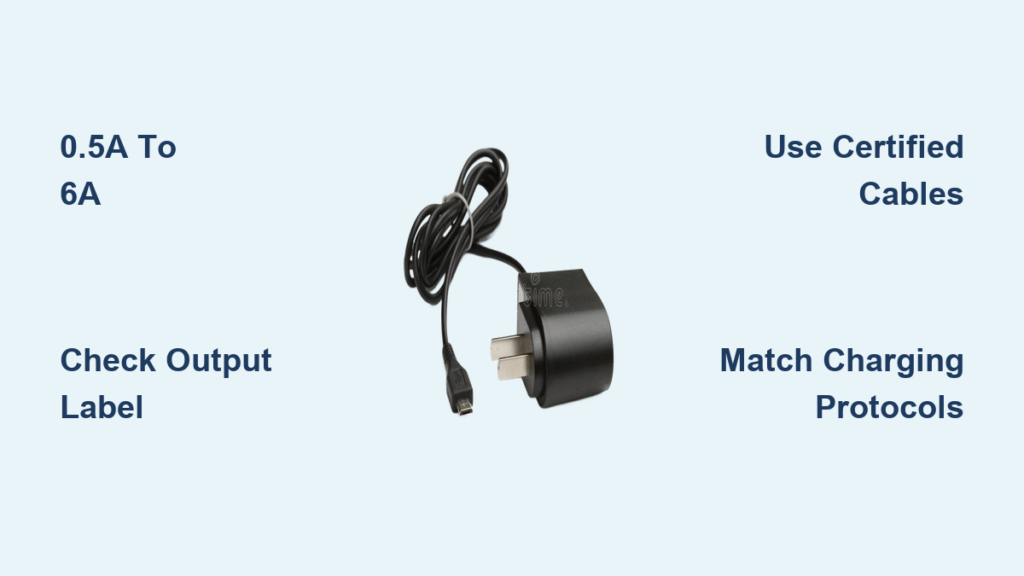
If you have ever plugged in your phone only to watch it charge at a glacial pace while a friend’s device powers up in minutes, the difference comes down to amperage. Most phone chargers use between 0.5 amps and 5 amps, with standard models delivering 1A to 2.4A and fast chargers pushing 3A to 6A under advanced protocols like USB Power Delivery or Qualcomm Quick Charge. Understanding how many amps your phone charger uses helps you choose safer, more efficient charging solutions and avoid damaging your devices.
This guide covers everything from basic electrical units to real-world performance, safety considerations, and even solar charging compatibility. You will learn how to identify your charger is output, what affects actual charging speed, and whether using a higher amp charger is safe for your phone.
Key Electrical Units for Phone Charging
Understanding phone charger amperage requires knowing three core electrical units that work together to determine charging speed and efficiency.
What Is an Amp
An amp measures electric current, which is the rate at which electricity flows through a circuit. In charging terms, higher amps mean faster charging because more power reaches your phone battery per second. Most smartphones are designed to safely accept between 1A and 3A depending on their charging capabilities.
Volts and Wattage Basics
Volts measure electrical pressure. Standard USB chargers output 5 volts, while fast chargers may increase voltage to 9V, 12V, or even 20V. Watts measure total power delivered, calculated as watts equals volts multiplied by amps. For example, a 5V/1A charger delivers 5 watts of power, while a 9V/2A charger delivers 18 watts, charging compatible phones much faster.
Phone Chargers Have No Surge Current
Unlike refrigerators or power tools, phone chargers do not have surge or starting watts. The current draw at startup is the same as during continuous use, which makes them safe and predictable in terms of electrical load. There is no risk of overloading circuits when plugging in multiple chargers simultaneously.
Typical Amps for Phone Chargers
Phone chargers vary widely in amperage based on design, age, and technology. Here is a breakdown of common ranges.
| Charger Type | Amperage Range | Use Case |
|---|---|---|
| Low-power chargers | 0.5A to 1A | Older models, basic charging |
| Standard chargers | 1A to 2.4A | Everyday charging for most phones |
| Fast chargers | 3A to 5A | Rapid charging for modern smartphones |
| High-end models | Up to 6A | Flagship devices with proprietary tech |
Most users today rely on 2.1A to 2.4A chargers, which strike a balance between speed and compatibility.
Apple vs Android Amp Ratings
Older Apple chargers were typically rated at 1A before the shift to USB-PD. Modern iPhones support up to 3A with USB-PD, especially when using 20W or higher adapters. Standard Android chargers often deliver 1.5A to 2.4A using USB Battery Charging 1.2. Fast-charging Androids can draw 3A to 5A with protocols like Quick Charge or VOOC. USB-C chargers now dominate the market, capable of delivering up to 5A at 20V under USB Power Delivery standards.
How Wattage Affects Amp Output

Amperage is not fixed. It changes based on voltage and total wattage. Use this formula to calculate it.
Amps equals watts divided by volts.
Here is how different charger ratings translate into real-world amperage.
| Charger Wattage | Voltage | Amps | Calculation |
|---|---|---|---|
| 5W | 5V | 1A | 5 ÷ 5 = 1 |
| 10W | 5V | 2A | 10 ÷ 5 = 2 |
| 18W | 9V | 2A | 18 ÷ 9 = 2 |
| 30W | 9V | 3.3A | 30 ÷ 9 ≈ 3.3 |
| 45W | 9V | 5A | 45 ÷ 9 = 5 |
| 65W | 20V | 3.25A | 65 ÷ 20 = 3.25 |
| 100W | 20V | 5A | 100 ÷ 20 = 5 |
Fast chargers dynamically adjust both voltage and current. For instance, a 45W charger might deliver 5A at 9V for rapid top-ups or 3A at 15V to reduce heat during extended charging.
How to Check Your Charger Amp Rating
Do not guess. Verify your charger amperage using these reliable methods.
Read the Charger Label
Look for the output specifications printed on the side or base of the charger. It usually reads something like output 5V 2.4A. That 2.4A is the maximum current it can deliver.
Use the Power Formula
If you know the wattage and voltage, calculate amps by dividing watts by volts. Example: a 65W charger at 15V draws approximately 4.33A. This method works well for USB-C PD chargers.
Measure with a Digital Power Meter
Plug your charger into a USB power meter to see real-time voltage, current, and power usage. These devices show actual amps being drawn, voltage fluctuations, and charging efficiency. They are especially useful for diagnosing slow charging issues.
Check Phone Settings or Apps
Some smartphones display charging current in battery settings. Others support third-party apps like Ampere that show real-time charging speed including milliamps. Note that 1A equals 1000mA, so if your app shows 1500mA, your phone is drawing 1.5A.
Factors That Change Charging Amps
Even if your charger is rated for high amperage, several factors can reduce the actual current your phone receives.
Device Limits Current Draw
Your phone controls how much current it pulls, not the charger. A 5A charger will not force excess power into a phone that only supports 2A. Instead, the phone communicates with the charger and draws only what it can handle.
Cable Quality Matters
A damaged, thin, or uncertified cable can limit current flow, cause overheating, and trigger safety throttling. Always use MFi-certified cables for Apple or USB-IF-certified cables for Android for full performance.
Battery Health Impacts Charging
Older or degraded batteries often accept lower currents to prevent stress and overheating. This leads to slower charging even with a high-powered adapter.
Dirty or Damaged Charging Port
Dust, lint, or corrosion in the USB port can break electrical contact, reducing current. Clean it gently with a toothpick or compressed air.
Temperature Affects Performance
Extreme heat or cold causes phones to limit charging speed. In freezing conditions, your phone might charge at less than 0.5A to protect the battery.
Charger-Device Compatibility
Mismatched chargers may fall back to 5V/1A mode if they cannot negotiate higher speeds. This happens with non-standard chargers, old wall adapters, and poorly made third-party units. Always match charging protocols for best results.
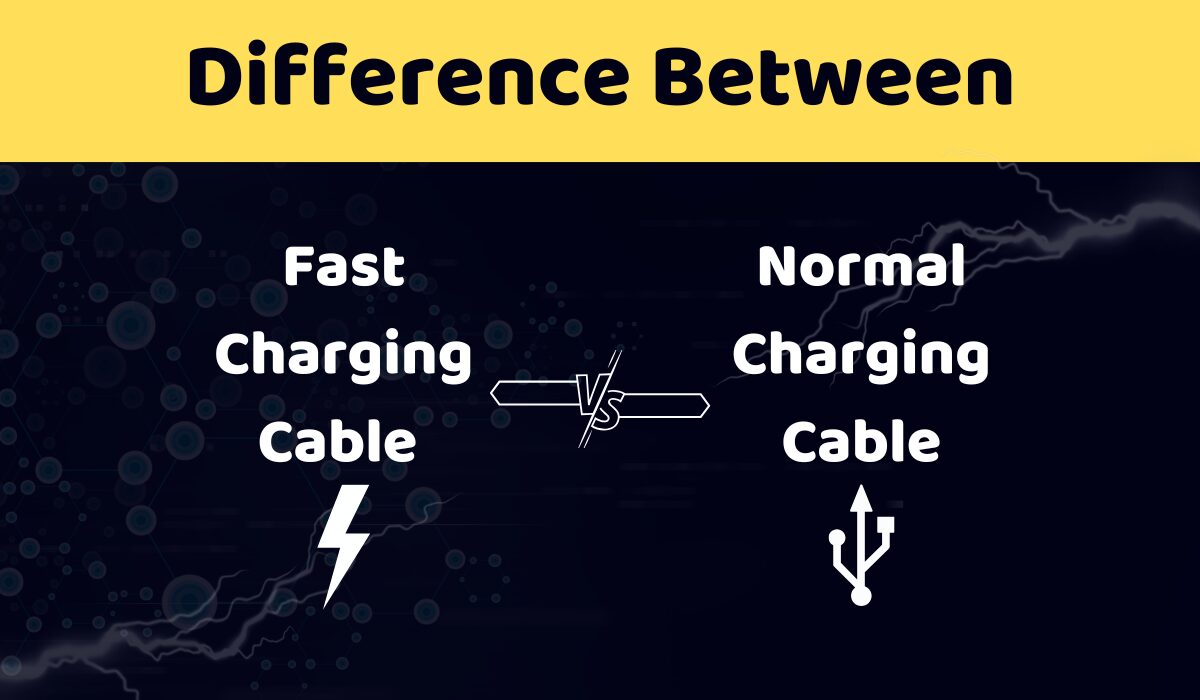
Standard vs Fast Chargers: Key Differences
| Feature | Standard Charger | Fast Charger |
|---|---|---|
| Amp Range | 1A to 2.4A | 3A to 6A |
| Wattage | 5W to 18W | 18W to 100W+ |
| Voltage | Fixed 5V | Adaptive |
| Charging Time | 2 to 4 hours | 30 to 60 minutes |
| Protocol | Basic USB BC 1.2 | USB-PD, Quick Charge, VOOC |
Fast chargers use intelligent negotiation, which is a handshake between the phone and charger, to select the optimal voltage and current. This maximizes speed while minimizing heat.
Can You Use a Different Amp Charger
Yes, you can safely use a charger with a different amperage rating than your original one.
Using a Higher-Amp Charger
Your phone only draws the current it needs, so using a higher-amp charger is safe. It may even improve efficiency and reduce heat. A phone rated for 2.1A will still charge safely on a 3A or 5A charger. Just ensure the charger supports the correct voltage and protocol.
Using a Lower-Amp Charger
Charging will be slower, limited by the charger max output. A 1A charger will take twice as long as a 2.4A model. Avoid using old 5W chargers with modern smartphones because they will work but very slowly.
Pro tip: Always use reputable brands and certified cables. Counterfeit chargers often lack safety circuits and can damage your phone or pose fire risks.
Real Charging Current Behavior
Charging is not constant. It changes based on battery level.
Fast Charging Phase
When your battery is low, it enters constant current mode, drawing maximum supported amps, often 1.5A to 5A depending on the device and charger. This is when charging is fastest.
Tapered Charging
As the battery fills, the phone switches to constant voltage mode, gradually reducing current to prevent overheating and extend battery life. At 90%, your phone might drop to 1A or less.
Trickle Charging
Near full charge, some phones use trickle charging, drawing under 0.5A to maintain 100% without stressing the battery. This helps preserve long-term battery health.
Save Energy: Reduce Phantom Load
Phone chargers consume small amounts of power even when unplugged from the phone.
Vampire Power Explained
Idle draw ranges from 0.1W to 0.5W, known as phantom load or vampire power. This adds up over time with multiple devices.
Easy Ways to Cut Waste
Unplug chargers when not in use. Use a smart power strip to cut all standby power. Choose energy-efficient models with more than 85% conversion efficiency. Over a year, these habits can save several dollars per charger and reduce your carbon footprint.
Solar Generators for Phone Charging

Phone chargers are ideal for solar power due to their low energy needs.
Best Solar Generators for Charging
| Model | Capacity | Max Output | Runtime 5W Charger | Runtime 65W Charger |
|---|---|---|---|---|
| Jackery Solar Generator 500 | 518Wh | 500W | 88 hours | 6.8 hours |
| Jackery Solar Generator 300 Plus | 288Wh | 300W | 49 hours | 3.8 hours |
| Jackery Explorer 100 Plus | 99.2Wh | 128W | 16.9 hours | 1.3 hours |
These systems provide clean, portable power for emergency outages, camping trips, and off-grid living. They support multiple USB and AC outlets, charge silently, and pair well with foldable solar panels.
Frequently Asked Questions About Phone Charger Amps
Is 2.4A Enough to Charge a Phone
Yes, 2.4A is ideal for most smartphones, offering significantly faster charging than 1A, up to 58% faster under similar conditions.
What Is the Difference Between 1A and 2.1A Chargers
A 2.1A charger delivers more current, reducing charging time. It is safe to use on devices that support lower amps because the phone regulates the draw.
How Many Amps Does a USB-C Charger Provide
USB-C chargers range from 1A to 5A, supporting up to 100W via USB Power Delivery. Actual output depends on device negotiation.
How Much Current Does a Phone Draw While Charging
Typically 1A to 2A when the battery is low. It decreases as the battery fills, dropping below 0.5A near full charge.
Can a High-Amp Charger Damage My Phone
No, the phone controls current draw, so even a 5A charger will not force excess power. However, poor-quality chargers can fail and damage devices.
Do Fast Chargers Reduce Battery Lifespan
Frequent fast charging can increase heat, accelerating battery wear over time. But modern phones include thermal management and adaptive charging to minimize damage. Occasional use is safe.
Key Takeaways for Understanding Phone Charger Amps
The number of amps a phone charger uses typically ranges from 0.5A to 6A, with most standard models delivering 1A to 2.4A and fast chargers reaching 3A to 5A. Your phone decides how much current it takes, not the charger, so using a higher-amp charger is generally safe. Always use certified chargers and cables, match charging protocols like USB-PD or Quick Charge, and avoid counterfeit products. For energy savings, unplug chargers when not in use, and consider a portable solar generator for emergency backup power. By understanding amps, volts, and watts, you can charge smarter, safer, and faster without risking your device or electricity bill.