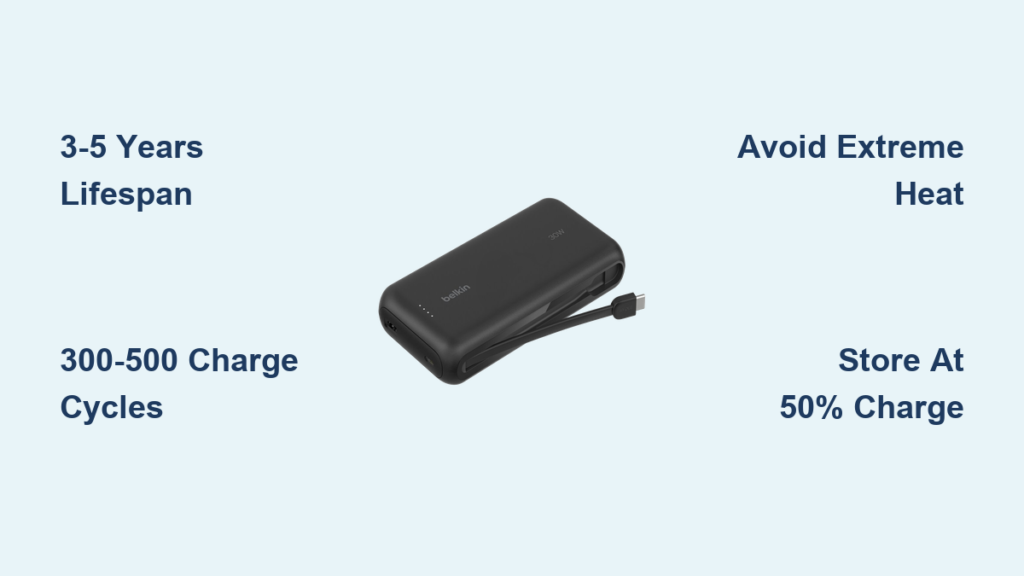
You’ve probably wondered exactly how long does Belkin power bank last before needing replacement. When your portable charger starts delivering less power or takes longer to recharge, it’s natural to question its remaining lifespan. Most Belkin power banks operate reliably for 3 to 5 years or 300 to 500 full charge cycles before significant capacity degradation occurs. Understanding what affects your specific device’s longevity helps you maximize its useful life and recognize when it’s time for replacement. This guide reveals the precise factors that determine how long your Belkin power bank will deliver reliable portable power.
Why Your Belkin Power Bank Loses Capacity Over Time
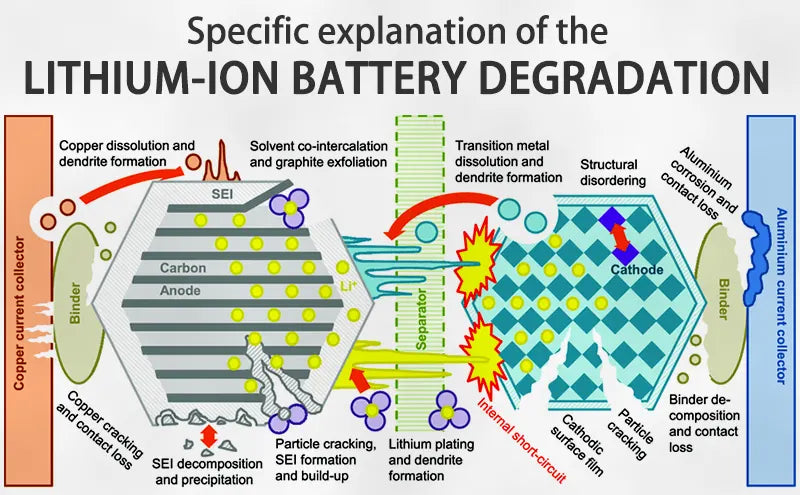
The Chemistry Behind Battery Degradation
Your Belkin power bank’s lifespan is governed by lithium-ion battery chemistry that degrades through two unavoidable processes. Calendar aging occurs simply with the passage of time—the electrolyte decomposes and the solid electrolyte interphase (SEI) layer grows thicker, reducing capacity even when the power bank sits unused. Meanwhile, cycle aging accumulates with each charge-discharge process as lithium inventory depletes and internal resistance increases. At 25°C (77°F), expect about 4.5% capacity loss annually just from calendar aging, but this doubles to 8% at 35°C (95°F).
Measuring Your Power Bank’s Actual Age
Most users don’t realize that manufacturing date codes determine your Belkin power bank’s baseline age. These typically appear as four-digit codes where the first two numbers indicate the year (last two digits) and the next two show the production week—like “2115” for week 15 of 2021. This matters because even an unused power bank degrades: stored at 100% charge in a hot environment (40°C), it can lose 20% capacity in just three months. Properly stored at 50% charge in cool conditions (25°C), the same unit might only lose 4-5% capacity annually.
Real-World Capacity Expectations by Usage
Your Belkin power bank’s performance follows predictable degradation patterns based on usage intensity. During years one and two, it should deliver 95-98% of its original rated capacity when fully charged. By year three, expect 85-90% capacity retention—meaning a 10,000mAh unit now provides about 8,500-9,000mAh. At the five-year mark, most units operate at 70-80% capacity, which many users consider the practical end of service life. If you continue using it beyond seven years, capacity may drop below 60%, making it unreliable for critical charging needs.
How Your Charging Habits Shorten Power Bank Lifespan
Extreme Temperatures Accelerate Degradation
Heat remains the most destructive factor for your Belkin power bank’s longevity. Charging or using it in temperatures above 30°C (86°F) significantly accelerates chemical degradation—capacity loss jumps to 20% annually at 45°C (113°F). Never leave your power bank in a hot car, near radiators, or in direct sunlight. Conversely, cold temperatures below 0°C (32°F) cause temporary performance issues and can damage cells during charging. The ideal operating range sits between 15-25°C (59-77°F), where both safety and longevity are optimized.
Dangerous Charging Practices That Wear Out Batteries
Several common charging habits dramatically shorten how long your Belkin power bank lasts. Deep discharging—regularly running it down to 0%—strains the battery chemistry far more than maintaining a 20-80% state of charge. Similarly, keeping it plugged in at 100% charge for extended periods creates constant voltage stress. Fast charging provides convenience but generates more heat than standard charging, accelerating degradation over time. Always use manufacturer-recommended chargers, as incompatible ones can deliver incorrect voltage that damages internal circuitry.
Physical Handling Mistakes That Damage Internal Components
Physical impacts and environmental exposure silently compromise your power bank’s lifespan. Dropping it creates micro-fractures in battery cells that worsen with each charge cycle. Moisture exposure—even high humidity—corrodes internal connections over time. Leaving cables partially inserted wears out USB ports, eventually causing connection failures. Always store your Belkin power bank in a dry place away from metal objects that could short-circuit the ports. If you notice unusual weight loss, it likely indicates electrolyte evaporation from damaged cells.
Extend Your Belkin Power Bank’s Life With These Proven Techniques
Optimal Storage Practices for Long-Term Preservation
When storing your Belkin power bank for a month or longer, charge it to exactly 50-60% before putting it away. This partial charge minimizes stress on lithium-ion cells during storage. Keep it in a cool, dry place between 10-25°C (50-77°F) with 50-60% humidity—never in attics, garages, or vehicles where temperatures fluctuate wildly. Every three months, check stored units and top up to 50% if needed. This simple routine can extend calendar life from 3 to 5+ years by slowing electrolyte decomposition.
Smart Daily Usage Patterns That Preserve Capacity
Adopt these daily habits to maximize how long your Belkin power bank lasts. Avoid complete discharge cycles—recharge when it reaches 20-30% remaining. Disconnect it immediately after reaching 100% charge rather than leaving it plugged in overnight. When possible, choose standard charging over fast charging to reduce thermal stress. Never charge your power bank while it’s inside an insulated case or on heat-generating surfaces. During travel, keep it in your main luggage compartment rather than checked baggage where temperature extremes occur.
Monthly Maintenance Routine for Peak Performance
Perform these simple checks monthly to catch issues early. Visually inspect for case bulging, port corrosion, or cable damage. Clean USB ports with a dry toothpick to remove lint buildup that causes connection issues. Test each output port with your devices to verify consistent performance. Monitor charge times—increases over 50% indicate internal degradation. If your unit has an LED capacity indicator, verify its accuracy against actual performance. These quick checks take minutes but prevent minor issues from becoming major failures.
Recognize These Critical Warning Signs It’s Time to Replace

Immediate Safety Hazards Requiring Discontinuation
Stop using your Belkin power bank immediately if you notice any of these dangerous conditions: case swelling or deformation indicating internal pressure buildup, temperatures exceeding 60°C during charging, audible hissing or popping sounds, visible smoke, or chemical odors resembling nail polish remover. These signal imminent thermal runaway risk where the battery could catch fire or explode. Place the unit on a non-flammable surface away from people and contact Belkin support immediately—do not attempt further charging.
Performance Red Flags Indicating End of Service Life

Several performance issues signal your power bank has reached its practical lifespan. If it now takes more than 50% longer to charge than when new, or delivers less than 70% of its original rated capacity (a 10,000mAh unit providing under 7,000mAh), replacement is warranted. Noticeable voltage drops (>10%) under normal load cause devices to disconnect unexpectedly. Requiring multiple charge cycles to “wake” the battery indicates severe internal resistance buildup. These issues compromise reliability when you need power most.
The 70% Capacity Threshold: When to Retire Your Power Bank
Most battery experts consider 70% capacity retention the practical end-of-life threshold for lithium-ion power banks. Below this point, performance becomes increasingly unreliable—you’ll experience unexpected shutdowns, inconsistent charging, and longer recharge times. While technically functional, these units deliver poor user experience and carry higher safety risks. If your Belkin power bank has exceeded five years of use or 500 charge cycles, even with decent capacity, consider proactive replacement before it fails during critical use.
Proper Disposal and Replacement Protocol for Aging Units
Safe End-of-Life Discharge Procedure
Before recycling, safely discharge your Belkin power bank to 0% capacity. Connect it to a low-power device like Bluetooth earbuds until completely drained. For stubborn units that won’t discharge normally, the saltwater method provides complete discharge: submerge in a saltwater solution (1 tablespoon salt per cup water) for 24 hours, checking periodically. This neutralizes remaining charge and prevents hazards during transportation. Never puncture, crush, or incinerate lithium-ion batteries.
Certified Recycling Options Near You
Dispose of your retired Belkin power bank through proper e-waste channels—never in household trash. Major electronics retailers like Best Buy and Staples accept battery recycling. Municipal hazardous waste facilities typically have dedicated collection points. Belkin’s official website provides a recycling locator tool for certified facilities. Proper recycling recovers valuable materials like cobalt and lithium while preventing environmental contamination from toxic components.
Choosing Your Next Power Bank for Maximum Longevity
When replacing your aging unit, select features that promote longer lifespan. Prioritize models with robust thermal management systems that prevent overheating. Units with multiple output ports reduce wear from constantly plugging/unplugging cables. Consider slightly higher capacity than needed—you’ll use fewer full discharge cycles. Check warranty terms; Belkin typically offers 2-year coverage that reflects their confidence in product longevity. Most importantly, apply the care techniques you’ve learned to extend your next power bank’s service life.
Final Note: Your Belkin power bank’s lifespan directly reflects how you treat it—quality units can deliver reliable power for five years or more with proper care. By understanding the precise factors that determine how long does Belkin power bank last and implementing these storage, usage, and maintenance strategies, you’ll maximize value from your investment while ensuring safety throughout its service life. When replacement becomes necessary, follow proper disposal protocols to protect both yourself and the environment.