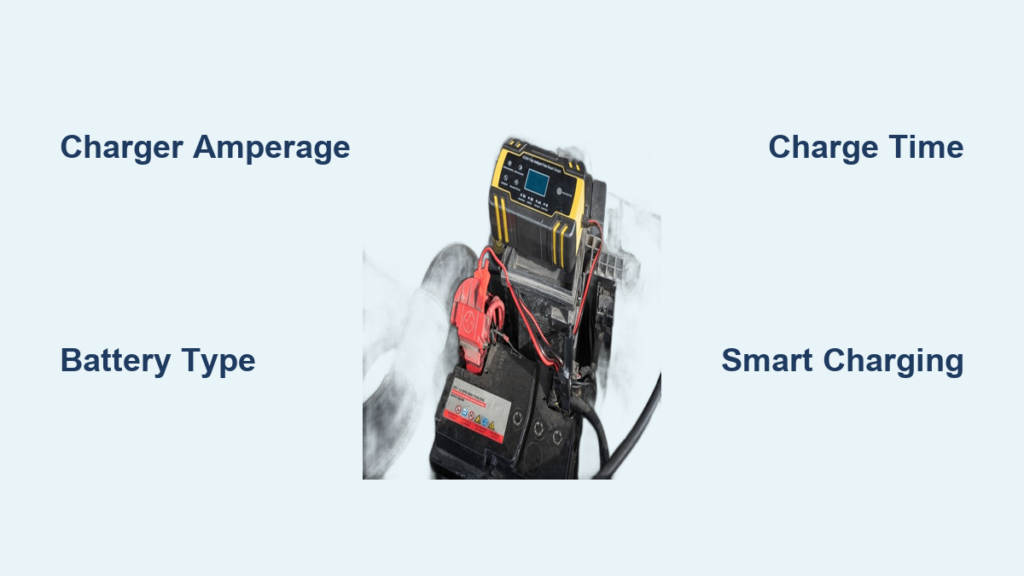
If your car won’t start and the battery is dead, one of the most urgent questions is: how long does a car battery charger take to bring it back to life? The answer isn’t simple. It depends on your battery size, how depleted it is, the charger type you use, and even the weather. Most standard 12V car batteries take between 4 and 24 hours to fully charge with a typical 2A to 10A charger, but times can range from under 1 hour with a high-powered unit to over 60 hours with a trickle charger.
This guide breaks down every factor affecting charging time. You’ll learn how to estimate recharge duration, choose the right charger, avoid common mistakes, and know when battery replacement makes more sense than recharging.
Battery Capacity and Charger Output: The Core Formula
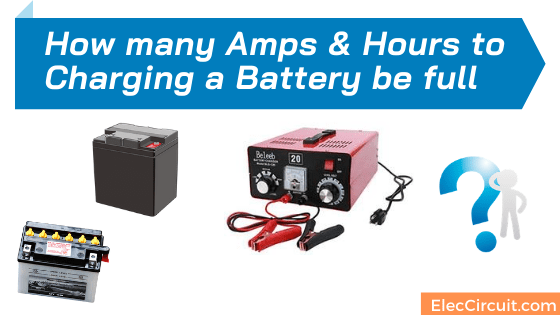
The relationship between battery capacity and charger amperage determines how long your charge will take. Battery capacity is measured in ampere-hours (Ah), indicating how much current a battery can deliver over time. The bigger the Ah rating, the longer recharging takes. Most passenger vehicles use 50 to 70 Ah batteries, while trucks and vans may have 80 to 100+ Ah units.
The charging time formula accounts for energy loss during the process. Charging time equals battery Ah multiplied by 1.2, then divided by charger amperage. The 1.2 multiplier represents roughly 20% energy loss from heat and gassing.
Charging Time Examples for a 60 Ah Battery
A 2A charger takes approximately 36 hours to fully charge a 60 Ah battery from empty. A 5A charger reduces this to about 14.5 hours. A 10A charger completes the job in roughly 7 hours. These times assume a completely discharged battery. If your battery still has partial charge, actual time will be shorter.
How Charger Amperage Affects Charging Time
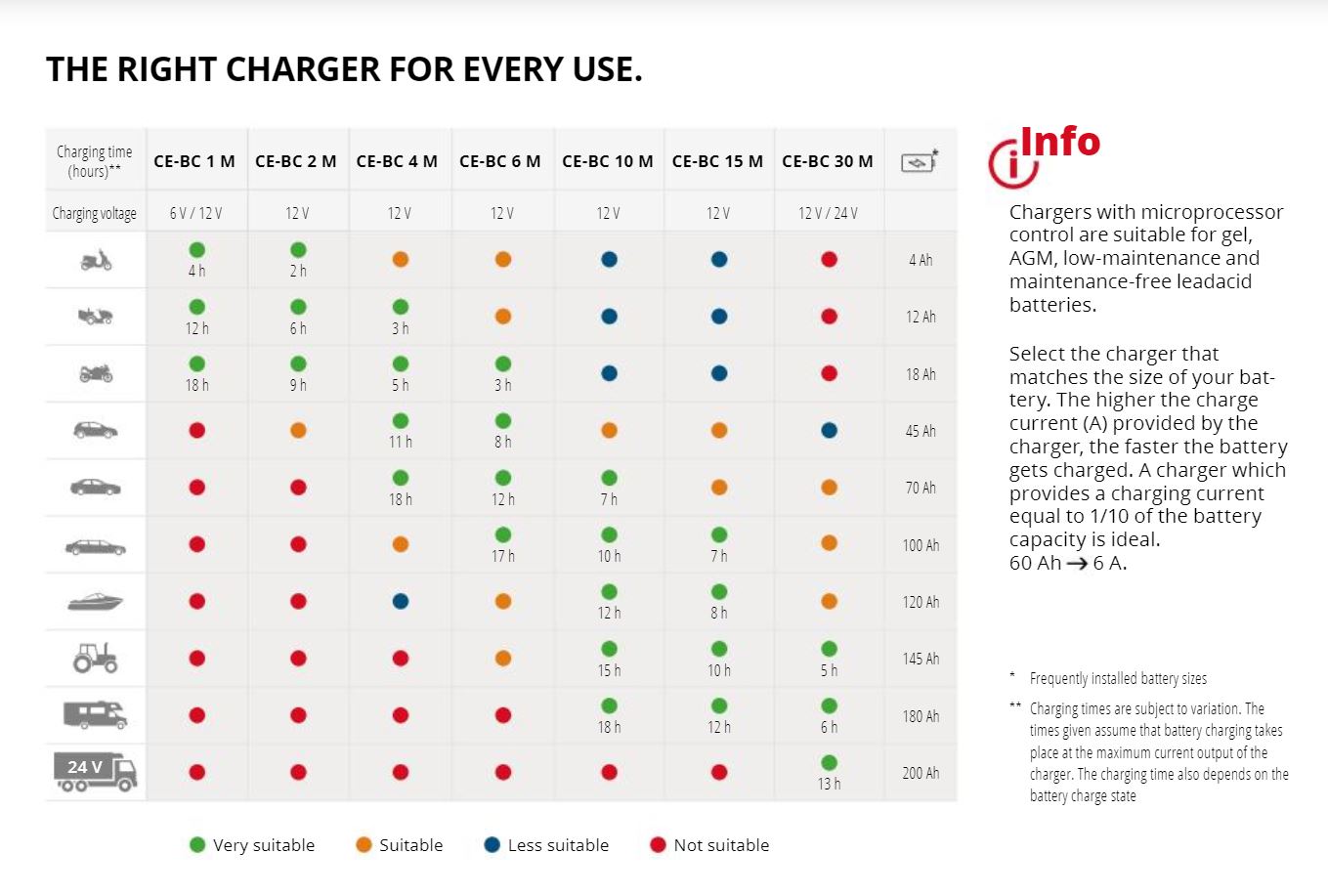
Charger types vary significantly in speed and safety. Understanding these differences helps you choose the right one for your situation.
Slow Chargers: 0.8A to 2A
Chargers in this range are ideal for maintenance and deeply discharged batteries. They prevent overheating and reduce sulfation, extending battery life. A 2A charger on a 50 Ah battery takes approximately 30 hours for a full charge. These units are impractical for emergencies but perfect for vehicles stored for weeks or months.
Standard Chargers: 5A to 10A
Most home-use chargers fall in this range, offering a practical balance between speed and safety. A 6A charger fully recharges a 60 Ah battery in about 6 hours. A 10A charger completes the same task in roughly 3.6 hours. Avoid using 10A+ chargers on completely dead or old batteries, as they risk overheating and plate damage.
Fast Chargers: 15A to 50A
High-amp chargers deliver rapid recovery but carry significant risks. A 25A charger can fully charge a 60 Ah battery in about 3 hours. A 50A unit accomplishes the same in roughly 1.5 hours. Use these only on healthy batteries with minimal discharge. Stop immediately if the battery feels hot to the touch.
Battery Type and Chemistry Impact on Charge Speed
Different battery chemistries charge at different rates and require specific chargers for optimal results and safety.
Flooded Lead-Acid Batteries
These are the most common batteries in older vehicles. They are sensitive to overcharging and prone to gassing and fluid loss. The maximum safe charge rate is 10% of Ah capacity, meaning a 6A charger is the limit for a 60 Ah battery. Always ventilate well during charging, as these batteries produce hydrogen gas.
AGM Batteries
Found in modern vehicles with start-stop systems, AGM batteries charge up to three times faster than flooded batteries. They require an AGM-specific smart charger with 14.4 to 14.8V absorption voltage. A 10A charger on a 60 Ah AGM battery takes roughly 7 hours compared to 9+ hours for a flooded battery.
Lithium-Ion Batteries
Lightweight and highly efficient, lithium batteries charge in 1 to 3 hours with a proper charger. They require a lithium-specific charger and will be damaged by lead-acid chargers. Never use a lead-acid charger on lithium batteries, as this risks fire or explosion.
Starting Battery Voltage: How Dead Is Your Battery?
The starting voltage indicates how much charge needs restoration. A dead battery isn’t truly at 0%, but the lower the voltage, the longer the charge takes.
Voltage to Charge Level Reference
A fully charged 12V battery reads 12.6 to 12.7V. At 12.4V, it holds approximately 75% charge. At 12.2V, it’s at 50% capacity. At 12.0V, only 25% charge remains. Batteries at 11.9V or below are considered 0 to 10% charged.
Batteries below 10.5V may have suffered permanent damage and might not hold a full charge. To estimate charge time, calculate amp-hours needed by multiplying battery Ah by depth of discharge percentage, then apply the 1.2 inefficiency factor.
Smart Chargers vs Traditional Chargers

Modern smart chargers optimize both charging time and battery health through multi-stage technology.
How Smart Charging Works
The bulk stage delivers maximum safe current until the battery reaches roughly 80% capacity. The absorption stage holds voltage steady while current tapers off. The float stage switches to maintenance mode at 13.2 to 13.8V. Advanced models include desulfation mode to clear sulfate buildup.
Smart Charger Time Estimates
A CTEK MXS 10 (10A) charges a 60 Ah AGM battery in about 7 hours. A NOCO Genius 5 (5A) takes roughly 12 hours for a 50 Ah flooded battery. A Pro 25 (25A) can charge an 84 Ah battery in approximately 2 hours.
Smart chargers can be left connected for weeks or months without overcharging. They automatically detect battery type and adjust settings accordingly.
Emergency Options: Jump Starts and Portable Packs
When you need power immediately, jump starting is the fastest option, but it doesn’t fully recharge the battery.
Jump Starting Procedure
The jump itself takes only seconds once cables are properly connected. After starting the engine, drive for 20 to 30 minutes at highway speeds to let the alternator recharge partially. The alternator produces 50 to 100A but only a portion goes to the battery after powering vehicle systems.
The alternator cannot fully recharge a dead battery. It’s designed to maintain a healthy battery, not restore a depleted one. Always follow up a jump start with a dedicated charger for complete recovery.
Portable Jump Starters
These devices deliver high current to start the engine, typically requiring 1 to 3 attempts. Some models offer slow charging capability via USB or 12V port, but they cannot fully recharge a car battery. Use them for emergencies only.
Driving to Recharge: What to Expect
Some drivers wonder if simply driving can recharge a dead battery. Under ideal conditions, the alternator can recharge a partially depleted battery in about 1 hour of highway driving.
Factors Affecting In-Vehicle Charging
Higher engine RPM means faster alternator spinning and more charge. Electrical loads like headlights, AC, and infotainment reduce the net charge rate. Old or sulfated batteries accept charge poorly regardless of driving time.
A fully dead battery may take 3 to 4+ hours of continuous driving to reach full charge, and success isn’t guaranteed. After a jump start, use a smart charger at home for complete recovery rather than relying on driving alone.
Safety Guidelines for Battery Charging
Charging incorrectly can destroy your battery or create safety hazards.
Critical Safety Rules
Never charge a frozen battery, as this risks explosion. Always charge in a well-ventilated area to prevent hydrogen gas accumulation. Don’t exceed 16V, as this risks gassing and damage. Check for cracks, leaks, or bulging before charging. If the battery feels hot to the touch, disconnect immediately.
Avoid charging in enclosed spaces like closed garages without ventilation. Inspect terminals for corrosion and clean if necessary before connecting chargers.
How to Tell When Charging Is Complete
Don’t guess at full charge. Use these methods to verify completion accurately.
Smart Charger Indicators
Most smart chargers display charging progress via LED. Red indicates charging, green means complete. The charger automatically switches to float mode when full. Some models show estimated time remaining.
Multimeter Test
For the most accurate reading, wait 1 to 2 hours after disconnecting the charger, then measure open-circuit voltage. A reading of 12.6 to 12.7V indicates full charge. At 12.4V, the battery is about 75% charged. A reading of 12.2V or below means more charging is needed.
When to Replace Instead of Recharge
Sometimes charging won’t help, and replacement is necessary.
Signs It’s Time for a New Battery
Replace the battery if it’s over 3 to 5 years old. Replace if voltage stays below 12.4V after full charging. Replace if the battery dies frequently even after complete charges. Replace if the case appears swollen or leaking. Replace if it fails a load test at an auto shop.
If a healthy battery dies often, check for parasitic drain or alternator issues rather than assuming the battery is at fault.
Frequently Asked Questions About Car Battery Charging Times
Can a completely dead battery be recharged?
Yes, if it hasn’t suffered permanent damage. Most batteries down to 11.9V can be revived with proper charging. Below 10V, success becomes unlikely due to possible sulfation or cell damage.
Is it safe to leave a battery charger on overnight?
Only with a smart charger. Modern units automatically switch to float mode to prevent overcharging. Basic chargers without auto-shutoff should not be left unattended for extended periods.
How often should I check the battery while charging?
With manual chargers, check every 2 to 3 hours for heat, smell, or leakage. Smart chargers require minimal supervision thanks to built-in safety features.
Do trickle chargers extend battery life?
Yes. By maintaining full charge and preventing deep discharge cycles, trickle chargers reduce sulfation and extend battery lifespan, especially in seasonal or stored vehicles.
Can I use a portable jump starter to recharge a battery?
No. Jump starters deliver high current for starting only. They are not designed for full recharging and provide only a few amp-hours of capacity.
How long should I drive after a jump start?
Drive for at least 20 to 30 minutes at moderate speed to allow the alternator to recharge. Short trips may not fully restore the charge.
Key Takeaways for Charging Your Car Battery
Charging time for a car battery ranges from 1 hour with a 50A charger to over 60 hours with a trickle charger, depending on battery capacity, charger output, and battery condition. The smart middle ground of 2 to 10A chargers offers the best balance of speed and safety for most situations.
Match your charger to your battery type. Use AGM-specific settings for AGM batteries and lithium-specific chargers for lithium batteries. After any emergency jump start, follow up with a dedicated smart charger for complete and safe recovery. Always prioritize battery health over charging speed, as fast charging accelerates wear when used regularly.