You’re on a long flight, your phone’s battery is dying, and your power bank—your last lifeline—is failing to deliver even a fraction of its promised charge. This frustrating scenario is more common than you think, and it all comes down to one critical question: how long can a power bank last before it degrades beyond usefulness? The answer isn’t just about time—it’s about chemistry, care, and how you use it.
Most power banks last 2 to 5 years, with high-quality models potentially lasting 7+ years under ideal conditions. But that timeline depends heavily on battery type, usage habits, and storage environment. While a cheap, no-name power bank may fail within 18 months, premium units from brands like Anker or Xiaomi have been known to work reliably for over half a decade. The difference? It’s not luck—it’s better materials, smarter design, and proper maintenance.
In this guide, you’ll learn exactly what determines a power bank’s lifespan, how to recognize when it’s failing, and most importantly—how to make yours last as long as possible. Whether you use it daily or keep it for emergencies, understanding these factors can prevent you from being left powerless when you need it most.
Battery Chemistry: The Lifespan Decider

The type of battery inside your power bank is the single biggest factor in how long it will last. Different chemistries degrade at vastly different rates, and knowing which one you have can help predict its longevity.
Lithium-Ion (Li-ion): Common but Less Durable
Li-ion batteries are the most widely used in budget and mid-range power banks. They typically last 300–500 full charge cycles before their capacity drops to 60–80% of the original. After that, performance declines quickly.
- Self-discharge rate: 5–10% per month
- Best for: Occasional use, moderate temperatures
- Weaknesses: Degrades faster when fully drained or kept at 100% for long periods
Daily use accelerates wear, especially if exposed to heat. These models usually deliver 2–3 years of reliable service before noticeable decline.
Lithium-Polymer (Li-Po): Slimmer and Slightly Better
Li-Po batteries offer similar cycle life (300–500 cycles) but with better energy density and flexibility in design. They’re often found in sleek, compact power banks.
- More stable than Li-ion under normal use
- Less prone to swelling
- Still sensitive to extreme temperatures and deep discharges
While not dramatically longer-lasting, Li-Po models maintain efficiency better over time—especially in well-built units from trusted brands.
LiFePO4: Built to Last a Decade
Lithium Iron Phosphate (LiFePO4) batteries are the gold standard for longevity and safety. Used in premium and industrial-grade power banks like VIDVIE, they can endure 2,000+ charge cycles and last up to 10 years.
- Highly resistant to heat, overcharging, and physical stress
- Safer chemistry—much lower risk of fire or explosion
- More expensive upfront, but cost-effective over time
For emergency kits, outdoor trips, or long-term backup, LiFePO4 is worth the investment. It may cost 2–3 times more, but it lasts 2–3 times longer than standard models.
Charge Cycles: How Use Affects Longevity

A charge cycle means using 100% of the battery’s capacity—whether all at once or spread over several partial charges. Understanding this helps predict when your power bank will start losing effectiveness.
What Happens After 500 Cycles?
Most standard power banks begin showing significant wear after 300–500 cycles. At this point:
– Usable capacity drops to 60–80% of original
– Takes longer to charge devices
– May fail to fully charge a smartphone
For example, a 10,000mAh power bank might only deliver 6,000–7,000mAh after heavy use—enough for one full phone charge instead of two.
High-Capacity Models Last Longer
A 20,000mAh power bank often lasts longer than a 5,000mAh one—not because of better cells, but because it undergoes fewer full cycles to deliver the same energy.
| Capacity | Estimated Cycles | Real-World Lifespan |
|---|---|---|
| 5000mAh | 300–500 | 1.5–2.5 years |
| 10000mAh | 300–1000 | 2–4 years |
| 20000mAh | 1000+ | 4–5+ years |
Higher-capacity models are ideal for travelers or heavy users who want fewer recharges and extended service life.
How Long Before a Power Bank Dies—Even Unused?
Even if you never use it, your power bank won’t last forever. All lithium batteries degrade over time due to calendar aging and self-discharge.
Self-Discharge Rate: The Silent Killer
All power banks lose charge when sitting idle:
– Budget models: Lose 5–10% per month
– Premium models (e.g., VRURC): As low as 2% per month
– After 6 months, stored units may retain only 40–70% of charge
If left uncharged too long—especially below 5%—the battery can enter “deep sleep,” making it hard or impossible to revive.
Storage Tips to Maximize Shelf Life
To keep your backup power bank ready when needed:
– Store at 50–80% charge
– Keep in a cool, dry place (below 25°C / 77°F)
– Recharge every 2–3 months if unused
Following these steps can keep a power bank functional for 5+ years, even with minimal use.
Signs Your Power Bank Is Failing
Don’t wait for total failure. Watch for these red flags that signal your power bank is degrading—or worse, becoming dangerous.
Reduced Charging Capacity
The most common sign: your power bank can no longer fully charge your phone. What once gave two full charges now delivers only half.
Rule of thumb: If it can’t provide at least one full charge to your device, it’s time to replace it.
Swelling or Bulging Case
Physical deformation means gas buildup inside—a serious safety hazard. Stop using immediately.
- Caused by overcharging, heat, or cell failure
- Increases risk of fire or explosion
- Never puncture or compress a swollen unit
Dispose of it safely at an e-waste center.
Overheating During Use
Mild warmth is normal. But if it’s too hot to touch, there’s a problem.
- Could indicate short circuit, failing BMS, or damaged cells
- High risk during charging or pass-through use
- Replace immediately—do not charge again
Smoke or Burning Smell
This is an emergency. Stop using, unplug, and move away.
- Indicates thermal runaway—a chain reaction that can lead to fire
- Often linked to low-quality, uncertified power banks
- Never attempt to open or repair
Report the incident and dispose of the unit properly.
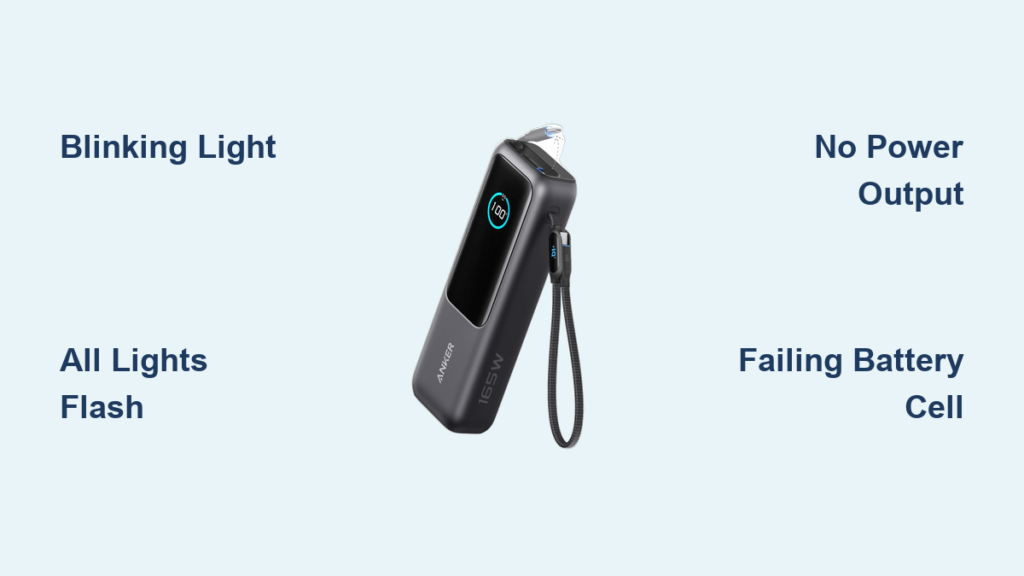
Random Shutdowns or No Output
If your power bank turns off mid-charge or won’t power any device:
– Battery may be deeply discharged
– Internal circuitry could be damaged
– BMS might be malfunctioning
Try charging it for several hours. If it still doesn’t work, it’s likely dead.
How to Extend Your Power Bank’s Lifespan

You can double—or even triple—the life of your power bank with simple habits. Most degradation is preventable.
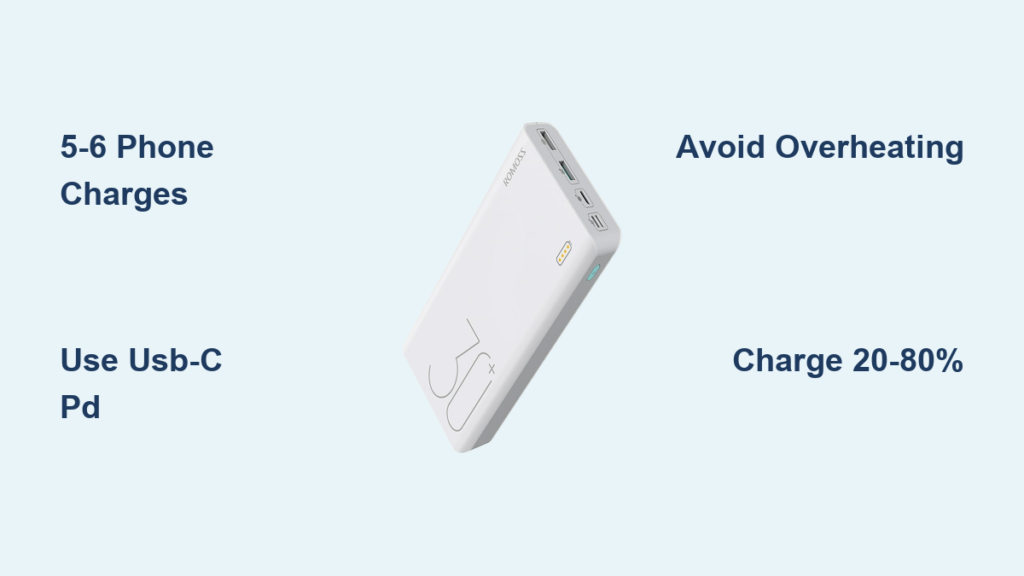
Keep Charge Between 20% and 80%
Avoid full discharges and leaving it plugged in at 100%. Both stress the battery.
- Recharge when it hits 10–20%
- Unplug once it reaches 80–90%
- This range minimizes chemical strain and heat buildup
Think of it like keeping a car engine running smoothly—no redlining, no idling.
Avoid Extreme Temperatures
Heat is the #1 enemy of lithium batteries.
- Above 35°C (95°F): Accelerates degradation
- Below 0°C (32°F): Reduces efficiency, risks damage
- Never leave in a parked car—interior temps can exceed 60°C (140°F) in summer
Store and use in moderate environments whenever possible.
Limit Pass-Through Charging
Using the power bank while it’s charging generates excess heat and stresses components.
- Avoid if you can
- If necessary, use only for short durations
- Monitor temperature closely
This feature is convenient but shortens lifespan over time.
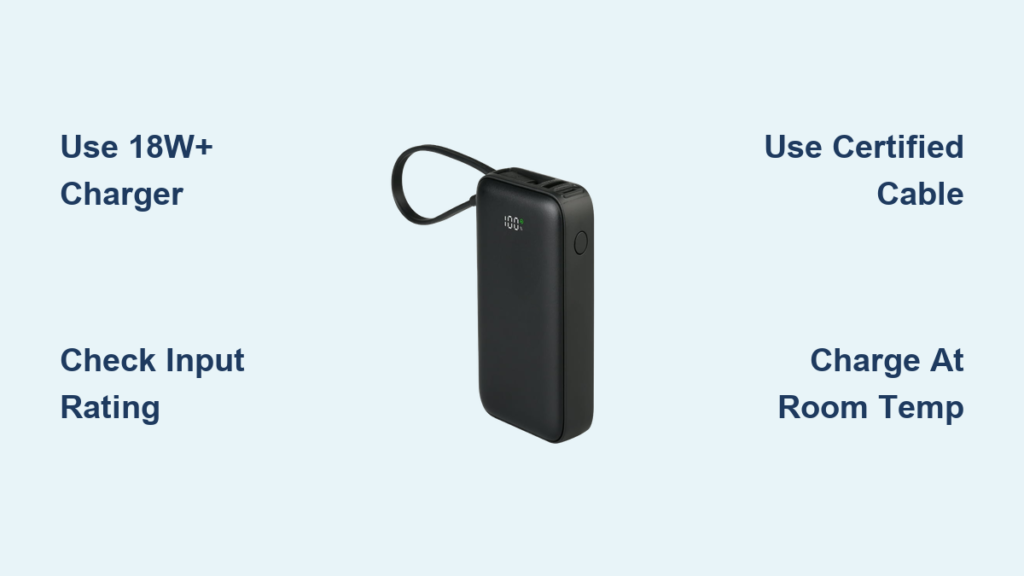
Use Certified Cables and Chargers
Cheap or incompatible accessories can cause:
– Inefficient charging
– Voltage spikes
– Long-term damage to internal circuits
Always use original or MFi/USB-IF certified cables and adapters.
Store Properly for Long-Term Use
For backup or emergency power banks:
– Charge to 50–80% before storage
– Place in a protective case
– Recharge every 90 days
This prevents deep discharge and keeps the battery healthy.
When to Replace Your Power Bank
Even with perfect care, every power bank eventually needs replacing. Here’s when:
After 3–5 Years of Daily Use
Heavy users should expect 2–3 years of reliable service. By year 4, performance drops noticeably.
If It Shows Any Failure Signs
Replace immediately if you notice:
– Swelling
– Overheating
– Smoke or odor
– Inability to hold charge
Before Air Travel
Aging power banks pose real risks on planes. One user reported concern after hearing about an in-flight explosion.
“I never had issues like leaking or explosions, but I keep mine at room temperature—never leave them in a car.”
If your power bank is old, damaged, or from an unknown brand, replace it before flying.
Final Note: A well-maintained power bank can last 4–7 years, but most users see 2–3 years of peak performance. By choosing quality, avoiding heat, and charging wisely, you can extend its life and avoid dangerous failures. Replace aging units early—especially before travel—and always recycle responsibly at e-waste centers.