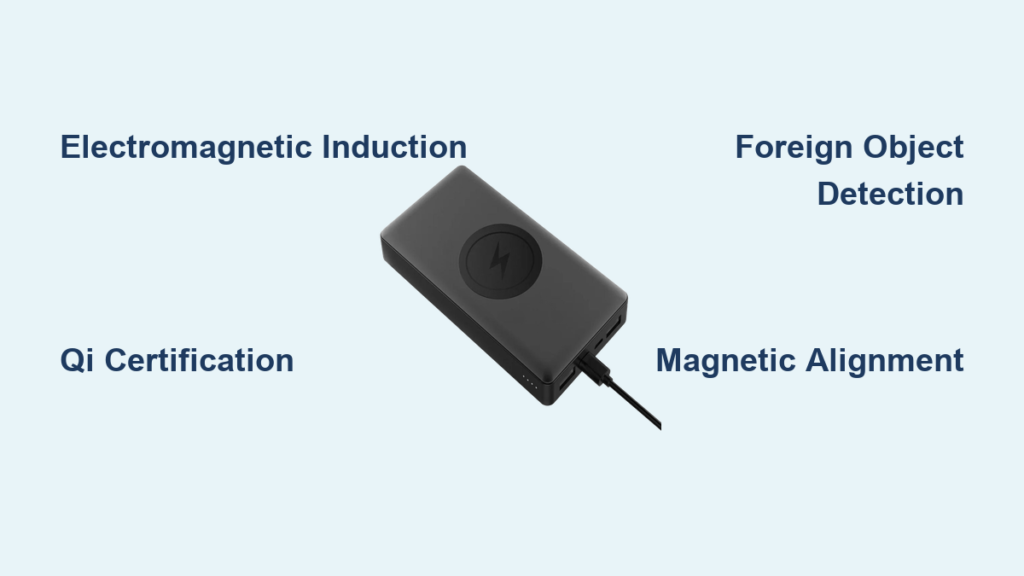
Ever fumbled with tangled cables only to find your charging port clogged with lint? Wireless power banks solve this frustration by delivering energy through thin air. Understanding how does a wireless power bank work reveals a clever application of 19th-century physics that’s now powering our modern mobile lives. When you place your phone on a wireless power bank, invisible electromagnetic fields bridge the gap between device and charger, eliminating the need for physical connections while maintaining safety and efficiency.
This technology has transformed how we keep devices powered on the go, with 73% of new smartphones now supporting wireless charging. But what’s actually happening beneath that sleek surface when you drop your phone on a wireless power bank? The answer lies in electromagnetic principles that make cord-free energy transfer possible without compromising battery health or safety. By the end of this guide, you’ll understand exactly how does a wireless power bank work, why some charge faster than others, and how to maximize this convenient technology.
Electromagnetic Induction: The Invisible Energy Bridge in Your Power Bank
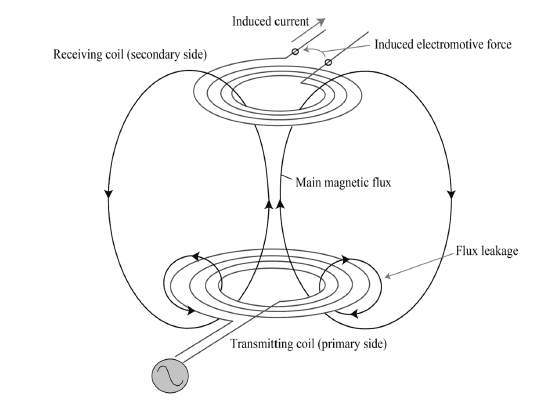
Your wireless power bank creates an invisible energy highway using electromagnetic induction—the same principle that powers electric transformers and induction cooktops. This process converts electrical energy from the power bank’s battery into a magnetic field, which then crosses the air gap to your device before transforming back into usable electricity. Unlike wired charging where electrons flow directly through a conductor, wireless charging uses magnetic fields as the energy carrier, making physical contact unnecessary.
How Transmitter Coils Convert Electricity to Magnetic Fields
Inside your wireless power bank, a precisely wound copper coil (typically 30-45mm in diameter) receives high-frequency alternating current from the battery. This coil, often made with specialized Litz wire to minimize resistance, operates at frequencies between 110-205 kHz. As electricity flows through this transmitter coil, it generates an oscillating magnetic field that extends up to 8mm above the power bank’s surface. This field isn’t electricity itself but rather the medium that will induce current in your device’s receiver coil.
Why Receiver Coils Must Perfectly Match the Magnetic Frequency
For efficient energy transfer, your phone’s internal receiver coil must resonate at the same frequency as the power bank’s transmitter. Modern wireless power banks use sophisticated circuitry to detect your device’s presence and automatically adjust the magnetic field’s characteristics. When the coils are properly aligned within 5mm of each other, the magnetic field induces an alternating current in your phone’s receiver coil at efficiencies between 70-85%. Any significant misalignment or increased distance causes this efficiency to drop rapidly, which is why proper placement matters.
Inside Your Wireless Power Bank: 4 Critical Components That Make It Work
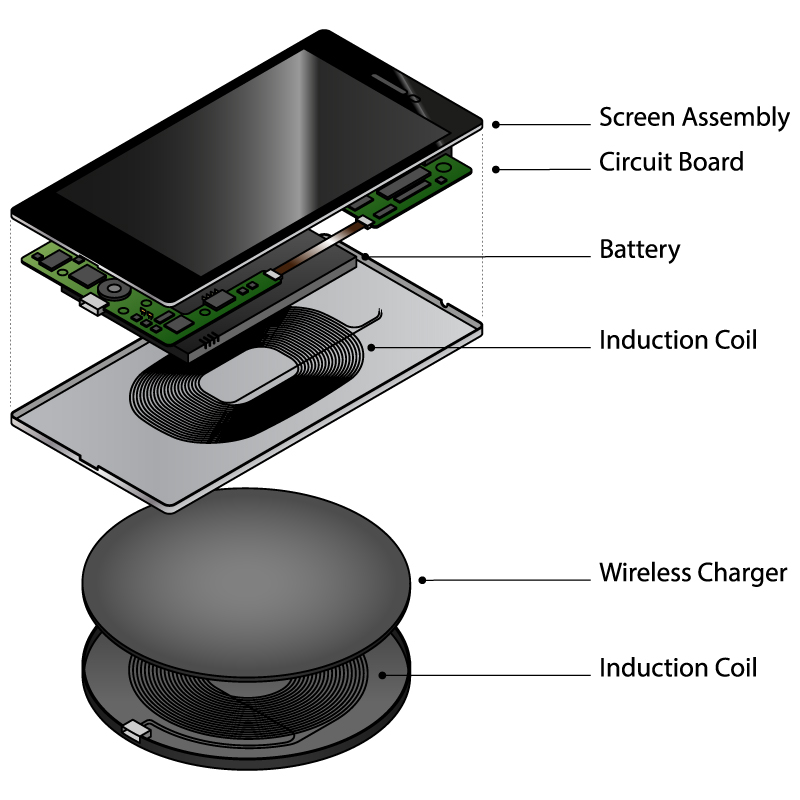
A wireless power bank contains precisely engineered components working in harmony to deliver safe, efficient charging without cables. At its heart are high-capacity lithium-polymer batteries storing the energy, but the magic happens through four interconnected systems that transform stored DC power into usable wireless energy.
- Transmitter Coil Assembly: Precision-wound copper coils mounted on ferrite shields that concentrate the magnetic field upward
- Power Conversion Circuitry: Advanced electronics that convert DC battery power to high-frequency AC (110-205 kHz)
- Control Chipset: The “brain” that manages communication, power levels, and safety protocols
- Foreign Object Detection System: Sensors that monitor power transfer efficiency to prevent metal objects from overheating
These components work together through a sophisticated dance of energy conversion and communication that ensures your device receives the right amount of power at the right time—all without a single physical connection.
The 4-Step Wireless Charging Sequence From Power Bank to Device
When you place your phone on a wireless power bank, a carefully choreographed sequence ensures safe, efficient energy transfer. This process happens in seconds but involves multiple technical steps that most users never see.
- Handshake Communication: Your power bank and phone exchange digital signals to confirm compatibility and establish power requirements. The power bank checks if the object on its surface is a valid Qi-certified device rather than keys or coins.
- Magnetic Field Activation: Once validated, the power bank’s circuitry converts battery DC power to high-frequency AC, energizing the transmitter coil to create the oscillating magnetic field.
- Energy Transfer Through Air Gap: This magnetic field crosses the small space between devices (typically 4-8mm), inducing current in your phone’s receiver coil without physical contact.
- Power Conversion and Regulation: Your phone converts the induced AC back to DC, regulates the voltage, and safely delivers it to the battery while monitoring temperature and charge status.
How Your Phone and Power Bank Communicate Before Charging Begins
This critical handshake uses backscatter modulation at 2kHz to exchange data packets between devices. The power bank sends small power pulses to detect your phone’s presence, then negotiates the optimal power level based on your device’s battery status and capabilities. This two-way communication prevents overcharging and ensures your phone only draws what it can safely handle—typically 5W, 7.5W, 10W, or 15W depending on both devices’ specifications.
Why Misalignment Slows Down Your Wireless Charging Speed
Proper coil alignment is crucial for efficiency. When your phone sits perfectly centered over the transmitter coil, energy transfer reaches 80-85% efficiency. But just 5mm of misalignment can drop this to 60%, significantly slowing charging. This is why many modern power banks incorporate magnet arrays that create that satisfying “snap” feeling—ensuring optimal coil positioning for maximum power transfer.
Qi Standard Technology: What Makes Different Brands Work Together
The Qi (pronounced “chee”) standard, developed by the Wireless Power Consortium, is the universal language that allows your Samsung phone to charge on an Anker power bank or iPhone on a Belkin pad. This standard defines everything from communication protocols to safety requirements, ensuring interoperability across brands while preventing incompatible devices from attempting to charge.
How Magnet Arrays Create the Perfect “Snap” for iPhone Users
Apple’s MagSafe technology takes alignment to the next level with precisely arranged neodymium magnets surrounding the charging coil. These create a magnetic attraction that pulls your iPhone into perfect alignment every time, boosting efficiency from the typical 70% to over 80%. The satisfying “snap” isn’t just marketing—it’s physics ensuring maximum power transfer through optimal coil positioning.
Why Multi-Coil Power Banks Work with Any Phone Placement
Advanced wireless power banks contain 3-5 overlapping transmitter coils rather than a single coil. This multi-coil array creates multiple charging zones, allowing you to place your phone anywhere on the surface. Sophisticated circuitry detects which coil has the strongest connection to your device’s receiver and activates only that coil, maintaining efficiency regardless of placement. This eliminates the frustration of finding the “sweet spot” on single-coil models.
Can Foreign Objects Damage Wireless Power Banks? Safety Mechanisms Explained
Wireless power banks incorporate multiple safety systems that constantly monitor the charging process to prevent hazards. The most critical is Foreign Object Detection (FOD), which continuously measures power transfer efficiency. If a metal object like keys or coins is placed on the charger, the system detects abnormal power absorption (since metal objects heat up but don’t convert energy to charge) and immediately cuts power—typically within 200 milliseconds.
Additional safety layers include:
– Over-temperature protection that throttles power if components exceed 40°C
– Over-voltage/current safeguards that prevent battery damage
– Real-time impedance monitoring that detects changes indicating improper device placement
– Automatic shutdown if no valid device is detected after 30 seconds
These systems work together to ensure that even if you accidentally place your keys on the charger, the power bank will shut down before any dangerous heating occurs.
Wireless vs. Wired: Real-World Charging Speeds and Efficiency Differences

While wireless charging offers unmatched convenience, it comes with trade-offs in speed and efficiency compared to traditional wired charging. Understanding these differences helps set realistic expectations and optimize your charging experience.
How Temperature Affects Your Wireless Power Bank’s Performance
Heat is the enemy of efficient wireless charging. As energy transfers across the air gap, 15-30% of the power converts to heat due to coil resistance and magnetic losses. Most wireless power banks incorporate thermal sensors that automatically reduce charging speed when temperatures rise to protect battery health. This is why you’ll notice slower charging during extended use or in hot environments—your power bank is actively managing heat to prevent long-term damage.
Why Your Phone Heats Up During Wireless Charging
That warmth you feel isn’t just from the power bank—your phone’s receiver coil and conversion circuitry also generate heat during wireless charging. While some warmth is normal (typically 5-10°C above ambient temperature), excessive heat indicates inefficient transfer. Using your phone while charging wirelessly compounds this effect, as both the charging process and phone operation generate heat simultaneously. For fastest charging, place your phone on the power bank and let it rest undisturbed.
Choosing the Right Wireless Power Bank: What Specifications Matter Most
When shopping for a wireless power bank, look beyond just capacity (mAh) to these critical specifications that determine real-world performance:
- Qi Certification: Ensures compatibility and safety compliance (look for the official Qi logo)
- Power Output: 10W or 15W (EPP) for faster charging with compatible devices
- Multi-Coil Design: Provides placement flexibility without sacrificing speed
- Integrated Magnets: For iPhone users, MagSafe-compatible models offer superior alignment
- Dual Charging Capability: Models that charge wirelessly while accepting wired input
A high-quality 10,000mAh wireless power bank with 15W output can fully charge an iPhone 13 twice wirelessly while maintaining safety and efficiency. Check for models with USB-C Power Delivery input for faster recharging of the power bank itself.
Maximizing Your Wireless Power Bank’s Lifespan: 3 Proven Strategies
To keep your wireless power bank performing optimally for years:
- Avoid Extreme Temperatures: Don’t leave it in direct sunlight or freezing conditions—lithium batteries degrade fastest at temperature extremes
- Maintain 20-80% Charge: For long-term storage, keep the power bank at about 50% charge rather than fully charged or depleted
- Clean Regularly: Wipe the charging surface with a dry microfiber cloth to remove dust and debris that could interfere with magnetic coupling
By following these simple practices, you’ll maintain both the wireless charging efficiency and overall battery health of your power bank, ensuring reliable performance for daily use.
Wireless power banks represent a perfect marriage of convenience and engineering, transforming complex electromagnetic principles into everyday simplicity. While they may not match wired charging speeds, their ability to deliver power through thin air—safely and reliably—makes them invaluable for modern mobile lifestyles. As technology advances with higher efficiencies, faster speeds, and improved thermal management, understanding how does a wireless power bank work helps you make informed choices that maximize both convenience and device longevity. The next time you drop your phone on a power bank and hear that satisfying notification tone, you’ll appreciate the invisible physics making cord-free charging possible.