You’ve got your home office set up perfectly, but the nearest wall outlet sits fifteen feet away. Your power strip can’t reach, so you grab an extension cord and plug it in. The devices power up and everything seems fine. But here’s the problem: this common setup is exactly what electrical safety experts warn against. The configuration works mechanically, but it creates multiple failure points that can lead to overheating, fire, or equipment damage.
This guide breaks down exactly why plugging an extension cord into a power strip is dangerous, when minimal-risk scenarios might exist, and what safer alternatives you should use instead. You’ll learn how to protect your home, stay code-compliant, and avoid voiding warranties or insurance coverage.
Why Daisy-Chaining Creates Serious Fire Hazards
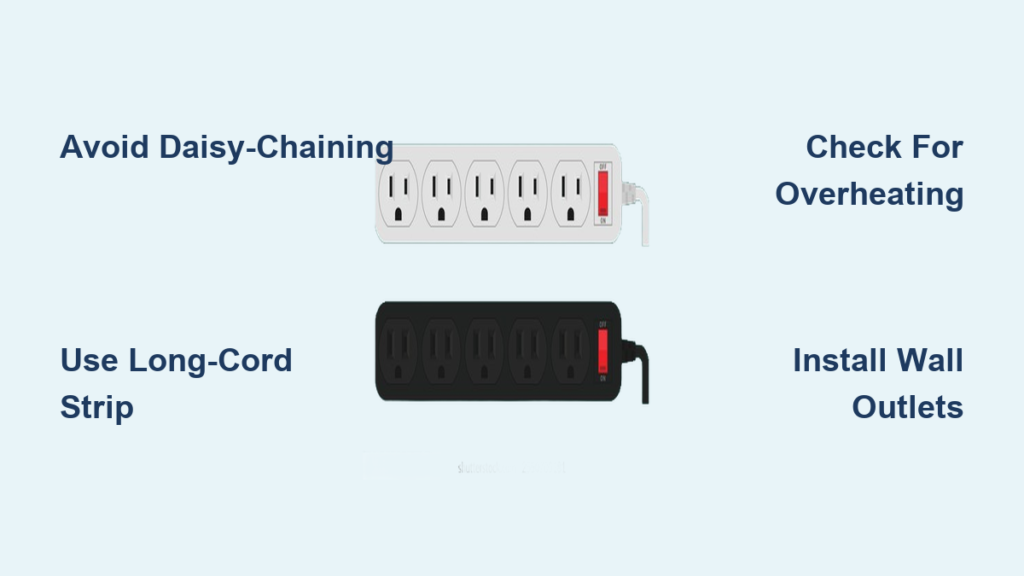
Combining an extension cord with a power strip creates what electricians call a daisy chain. This series connection multiplies the risk factors at every junction point. Each plug-and-socket connection adds resistance, and that resistance generates heat whenever current flows through.
The core danger lies in how heat compounds across multiple connections. A wall outlet feeds the extension cord, which feeds the power strip, which then feeds your devices. Three connection points mean three opportunities for heat buildup, loose contacts, and eventual failure. Even if everything feels cool to the touch today, conditions can change as connections loosen or as you add more devices to the setup.
Fire departments across the country cite daisy-chained cords as a common cause of electrical fires. The Kansas Fire Marshal’s office specifically identifies this practice as a fire hazard that can invalidate insurance claims. When multiple connections exist, the weakest link determines the entire chain’s safety margin, and that weakest link often fails without warning.
Understanding How Overheating Destroys Connections
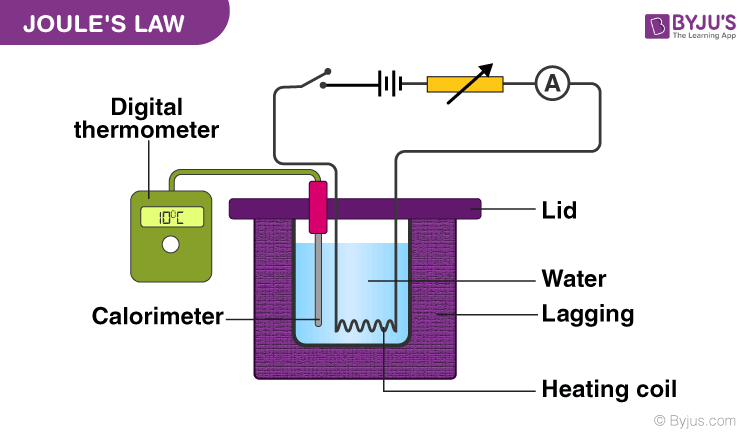
Every electrical connection generates some resistance, and resistance produces heat through a principle called Joule’s Law. The heat equation shows that doubling the current quadruples the heat generated in the same resistance. In a daisy chain, you have multiple points each producing heat, and those heat sources compound rather than cancel out.
Under heavy load, a slightly loose connection can reach temperatures exceeding 140°F. At that temperature, plastic insulation begins to melt and nearby materials can ignite. The danger escalates because this overheating often happens inside walls or beneath furniture where you cannot see the damage developing.
Voltage drop adds another dimension to the problem. Longer or thinner extension cords lose voltage as electricity travels through them. This inefficiency forces connected devices to draw more current to compensate, which generates additional heat. A fifty-foot 16 AWG cord might lose five to ten percent of its voltage under load, straining power supplies and motors in the process.
What Electrical Codes Say About Extension Cord Use

The National Electrical Code treats extension cords as temporary solutions only. Article 400 explicitly states that flexible cords and cables are not intended for permanent wiring installations. Power strips, legally called relocatable power taps, must plug directly into wall outlets according to NEC Article 408.18.
While the code does not explicitly ban every possible daisy-chain scenario, it prohibits the practice by implication. NEC 110.3(B) requires devices to be used as listed and labeled, and manufacturer instructions almost universally forbid connecting power strips to extension cords. Violating these requirements creates a non-compliant installation that insurers can cite when denying claims.
OSHA takes an even stronger stance in commercial settings. The agency prohibits using extension cords as substitutes for permanent wiring and specifically bans connecting power strips to extension cords in workplaces. Violations can result in fines up to $15,000 per incident, and fire inspectors routinely cite offices and workshops for daisy-chained setups.
When Minimal-Risk Scenarios Actually Exist
Electrical experts universally discourage plugging power strips into extension cords, but extremely low-load situations may present manageable risk if you meet strict conditions. The key is keeping total electrical draw far below the circuit’s capacity, using properly rated components, and monitoring the setup closely.
Acceptable conditions include total load under 500 watts, which might cover phone chargers, LED lamps, and small fans. The extension cord must be 14 AWG or thicker, rated for fifteen amps on standard household circuits. The power strip should be UL-listed with overload protection. No high-wattage devices like heaters, air conditioners, or laser printers can connect to this setup.
Even under these conditions, this configuration should remain temporary and monitored. The margin for error stays small, and any deviation from these specifications dramatically increases risk. If you must use this setup for a short period, check all connections for warmth during the first thirty minutes of operation and periodically thereafter.
How Manufacturers Specifically Warn Against This Practice
Every major power strip manufacturer explicitly prohibits using their products with extension cords. Anker states that using their power strips with extension cords voids the warranty and may cause damage. Belkin warns users to plug their strips directly into wall outlets and not to use them with cords. Tripp Lite explicitly instructs users never to connect their power taps to extension cords.
These warnings exist because manufacturers understand the engineering limitations of their products. Power strips are designed to receive power directly from wall outlets, not through additional cordage that can compromise protection mechanisms, create unexpected resistance, and void safety certifications.
When you violate manufacturer instructions, you lose more than just the warranty. If a fire occurs from a non-compliant setup, insurance companies can deny claims based on improper electrical configuration. The financial consequences far exceed whatever convenience the daisy chain provides.
What Safer Alternatives Work Better
Instead of daisy-chaining devices, consider solutions engineered specifically for your situation. Installing additional wall outlets through a licensed electrician provides the safest permanent fix. This distributes load across multiple circuits and eliminates reliance on cords entirely.
Long-cord power strips offer another practical solution. Many manufacturers sell power strips with cords ranging from ten to fifteen feet in length. These reach distant outlets without requiring an extension cord, and they maintain direct connection to the wall so surge protection and overload features work as designed.
For high-demand setups like gaming computers or server equipment, upgrade to a twenty-amp power strip rated for 2400 watts. These require twenty-amp wall outlets with the distinctive T-slot configuration, but they handle heavy loads safely. Heavy-duty extension cords rated twelve or ten AWG work safely for single high-power devices like power tools, but never connect a power strip to these cords.
How to Check Your Setup for Hidden Dangers

If you currently use a daisy-chained configuration despite the warnings, test your setup for safety before continuing use. A watt-meter or smart plug reveals your actual power draw in real time. Stay below twelve amps on a fifteen-amp circuit, which represents eighty percent of rated capacity and provides a safety margin.
Thermal imaging provides the most accurate assessment of connection health. Use an infrared thermometer or thermal camera to scan each plug and junction. Temperatures below 122°F indicate safe operation. Readings between 122°F and 140°F demand inspection and potential correction. Anything above 140°F requires immediate shutdown.
Perform visual and sensory inspections regularly. Look for discoloration, melting, or fraying on cords and plugs. Watch for flickering lights when devices activate. Smell for burning odors and listen for buzzing or sizzling sounds. Any of these warning signs demand immediate disconnection and replacement.
Recognizing Critical Warning Signs Before Fire
Certain symptoms demand immediate action regardless of what your thermal readings show. Hot plugs or cords indicate dangerous resistance buildup somewhere in the chain. Frequent breaker trips mean your setup consistently exceeds safe capacity. Flickering lights suggest unstable connections that could arc or spark.
Burning smells, even faint ones, signal insulation beginning to degrade. Discoloration or melting on any component means heat damage has already occurred. Buzzing or sizzling sounds indicate arcing inside connections, a leading cause of electrical fires. When any of these signs appear, disconnect everything immediately and reconsider your configuration.
The lesson here is simple: electricity provides warning signs before failure. Ignoring those signs because everything worked yesterday creates unnecessary risk. Pay attention to what your equipment tells you.
Frequently Asked Questions About Extension Cord and Power Strip Safety
Is it safe to plug a power strip into an extension cord?
No. This configuration increases fire risk, violates electrical codes, and voids manufacturer warranties. Use a long-cord power strip or install additional outlets instead.
Can I use this setup for phone chargers or small devices?
Only as a short-term, monitored solution. Even low-wattage loads create heat at connection points that accumulates over time. This is not recommended for regular or permanent use.
Why do power strips catch fire?
Most fires result from overloading circuits, daisy-chaining multiple power strips, connecting high-wattage appliances like heaters, or using poor-quality equipment with inadequate safety features.
Is a surge protector safe with an extension cord?
No. Surge protectors are designed for direct wall connection. Adding an extension cord compromises their effectiveness and may increase fire risk by creating additional heat-generating connections.
Can I plug two power strips into one extension cord?
Absolutely not. This doubles the load capacity problems and creates extreme overheating risk. Each wall outlet should connect to only one strip or one extension cord, never both.
How can I safely power devices far from an outlet?
Use a single heavy-duty extension cord rated for your load, or choose a power strip with a long cord built in. For permanent needs, install additional wall outlets through an electrician.
Key Steps for Building a Safe Electrical Setup
Building a safe electrical setup starts with understanding your actual power needs. Calculate the total wattage of everything you plan to connect and ensure your circuit can handle eighty percent of that total safely. Choose components with ratings exceeding your needs rather than pushing limits.
Select appropriately gauged extension cords for your load. Fourteen AWG cords handle fifteen amps safely, while twelve AWG or lower handles twenty amps. Never use sixteen AWG cords for high-draw devices, and never chain multiple cords together regardless of gauge.
Prioritize direct wall connections whenever possible. Power strips, surge protectors, and UPS systems all work best when plugged directly into outlets. Reserve extension cords for temporary situations where adding outlets proves impractical.
Monitor your setup during first use and periodically thereafter. Thermal checks, visual inspections, and power metering take minutes but prevent hours of regret. When warning signs appear, act immediately rather than hoping the problem resolves itself.
The bottom line is straightforward: convenience never justifies electrical risk. Invest in proper outlets, use appropriately rated components, and respect the limits built into every device you own. Your home and your safety depend on making these choices consistently.