Imagine your flashlight dies during a blackout, your cordless drill stops mid-project, or your car won’t start in the morning and the charger is missing. When you are locked out of power, knowing how to recharge a battery without a charger can save the day. While manufacturers design chargers for safety and precision, emergencies do not wait. The good news is that with the right knowledge, you can safely revive batteries using alternative methods.
This guide reveals proven techniques to charge AA, AAA, 18650, power tool, and car batteries, even alkaline cells in a pinch. Every method is grounded in electrical principles like voltage regulation, current control, and chemistry compatibility. You will learn how to use a bench power supply, solar panels, another battery, or a jump starter to restore power. But more importantly, you will understand the risks, especially with lithium and alkaline batteries, so you never compromise safety for convenience.
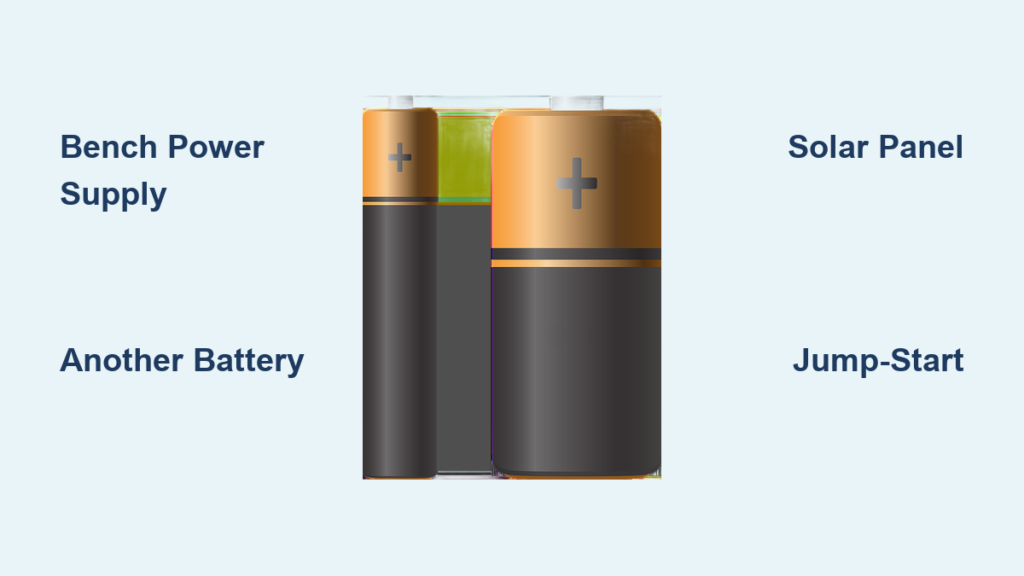
Use a Bench Power Supply Safely

A variable DC power supply is the most reliable way to charge any battery without a factory charger. It gives you full control over voltage and current, preventing overcharging and thermal runaway. This method works best for 18650 cells, power tool packs, and car batteries.
Set Correct Voltage and Current Limits
Each battery type has strict charging limits. Exceeding them risks fire or explosion. Use a multimeter to verify output before connecting the battery.
For NiMH and AA/AAA batteries, set voltage to 1.4V maximum and current to 100mA for a 1000mAh cell (0.1C rate). For lithium-ion cells like the 18650, set voltage to 4.2V maximum per cell and limit current to 0.2C to 0.5C. For 12V lead-acid car batteries, set voltage to 14.4V maximum and current between 2A and 10A depending on size.
Connect and Monitor the Charging Process
Follow these steps to charge safely.
Set the voltage limit slightly above your target (4.25V for lithium-ion) to account for wire resistance. Limit current using the power supply is constant current mode. Attach red clips to positive terminals and black clips to negative terminals, double-checking polarity before proceeding.
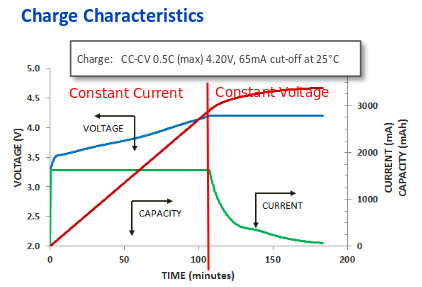
Monitor the constant current phase first, watching as voltage rises slowly. As voltage hits the limit, the mode switches to constant voltage and current begins to drop. Stop charging when current falls below 0.1A or roughly 3% of capacity.
Never leave the battery unattended while charging. If the battery feels warm to the touch, stop immediately and disconnect.
Best Applications for Bench Power Supply Charging
This method works excellently for charging loose 18650 cells removed from flashlights or laptops. It revives cordless drill battery packs whether they contain NiCd, NiMH, or lithium-ion chemistry. It handles mismatched cells and can slowly charge car batteries using a 14.4V/2A setting.
Charge With Another Battery
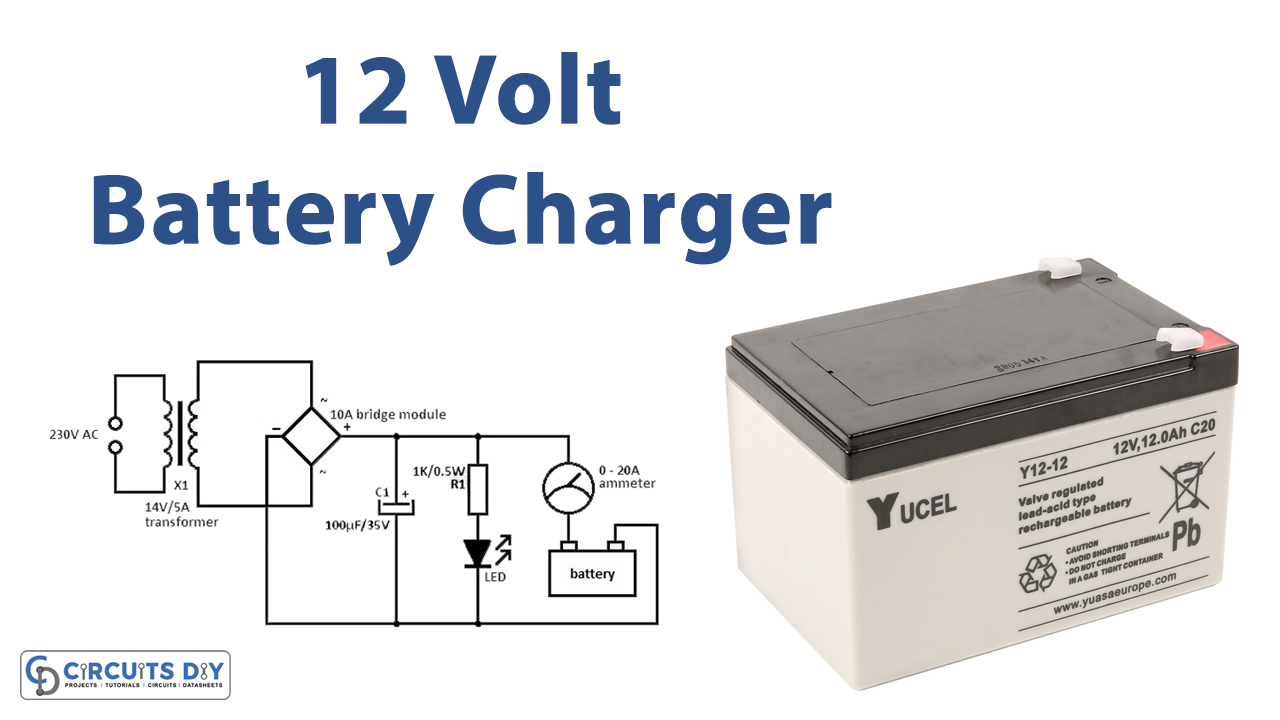
You can transfer energy from a charged battery to a dead one when no wall power is available. This technique is useful for emergency situations but carries risks that require careful attention.
Match Voltage and Limit Risk
Only use this method for NiMH or lead-acid batteries. Lithium cells lack protection circuits and can overcharge dangerously. The donor battery must be the same voltage or slightly higher, never exceeding a 1V to 2V difference. Avoid using car batteries to charge small cells directly.
Connect and Trickle Charge Safely
Use insulated wires with alligator clips for this process. Connect positive to positive and negative to negative. Let the batteries sit connected for 30 to 60 minutes for a small boost on small cells. Check temperature every 15 minutes and disconnect before the battery gets warm.
This method is not a full charging solution. It works best for giving a weak car battery enough juice to start, temporarily reviving a doorbell or flashlight, or providing power in off-grid scenarios.
Do not use this method for lithium-ion or alkaline batteries.
Solar Panels for Maintenance Charging
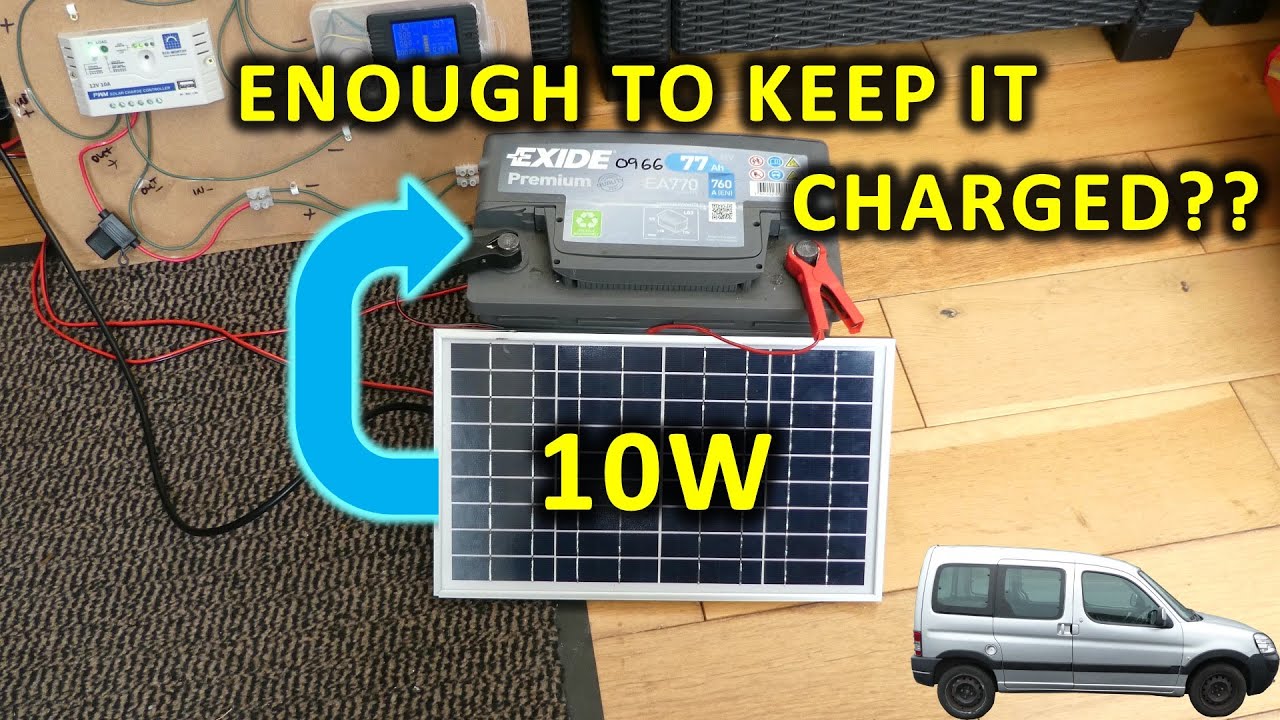
Solar energy offers a safe, long-term way to keep batteries topped off, especially for vehicles and outdoor devices. This approach prevents sulfation in stored batteries and provides maintenance charging without grid power.
Choose the Right Solar Panel
Select a panel based on your vehicle or device needs. A 7W 12V panel works well for older vehicles with less than 50mA parasitic drain. A 12V 12W panel is better for modern vehicles with 50mA to 85mA drain. Daily output ranges from 1.5 to 4.5 amps depending on sunlight conditions.
Always use a charge controller to prevent overvoltage and battery damage.
Install for Maximum Efficiency
Mount the panel outside the windshield for full sun exposure. UV coatings on indoor glass can block up to 50% of light, drastically reducing charging efficiency. Use framed panels on poles or garage mounts for permanent installations.
Connect the panel using clamps or ring terminals to battery terminals. Include a battery disconnect switch or quick disconnect for easy removal. Pair with Battery Tender cables for clean, tool-free access.
Hand-Crank Generators for Emergency Power
These devices appear in survival kits and emergency radios. They generate small amounts of power manually without external power sources.
How Effective Are They
Output is quite low, with 5 to 10 minutes of cranking producing only 1 to 2 minutes of LED light. This is not enough to fully recharge AA or car batteries. They work best for charging a USB power bank slowly, powering a flashlight or radio during outages, or sending a distress signal from a satellite communicator.
This method is good for preparedness but not for daily use.
Recharge AA/AAA NiMH Batteries Correctly
NiMH (Nickel-Metal Hydride) AA and AAA batteries are designed to be recharged, but not with random power sources. Proper method matters for safety and battery life.
Use a Proper Multi-Chemistry Charger
The best options include the Nitecore i2, which charges NiMH, NiCd, and Li-ion for about $25. The Panasonic BQ-CC17 is reliable and costs under $20. The EBL USB Charger is affordable and charges via power bank.
These chargers detect cell type automatically and stop charging when complete.
DIY Charging With a Bench Supply
If you must DIY, use a bench power supply set to 1.4V and 100mA. Add a 10-ohm resistor for basic current control. Charge for 16 hours at 0.1C due to approximately 70% charging efficiency.
Why 16 hours? The 10-hour theoretical charge time plus 60% efficiency loss requires roughly 160% input, resulting in the 16-hour standard.
Avoid YouTube tutorials that skip current limiting. Without a resistor or regulated supply, overcharging causes heat, leaks, and fire risk increases with unattended charging.
Charge Lithium-Ion (18650) Without a Charger
Lithium-ion cells are high-risk but common in flashlights, vapes, and power tools. Strict voltage limits make this method dangerous without proper equipment.
Use a Bench Supply With Extreme Caution
Set voltage to 4.2V maximum per cell. Limit current to 0.2C (500mA for a 2500mAh cell). Connect with insulated alligator clips and monitor every 10 minutes.
Stop immediately if voltage exceeds 4.2V, the battery gets warm, or swelling occurs. Never charge a damaged or puffed cell.
Charge to 3.8V for Longer Lifespan
Charging to 4.2V gives 100% capacity but shortens lifespan. Charging to 3.8V provides roughly 80% capacity but doubles cycle life. This is ideal for storage or daily use if you can tolerate slightly less runtime.
USB Charging for Devices
If the lithium-ion is inside a device, plug into a power bank, computer, or wall adapter. Confirm USB charging is supported by checking the device manual. This method is slow but safe.
Jump-Start a Car Battery Without a Charger
When your car will not start, you need power immediately, not a charger. Several methods can get you moving.
Jump-Start With Another Vehicle
Connect the red positive clamp to the dead battery is positive terminal. Connect the other red clamp to the good battery is positive terminal. Connect the black negative clamp to the good battery is negative terminal. Attach the last black clamp to unpainted metal on the dead car, such as the engine block.
Start the good car and let it run for 3 to 5 minutes. Try starting the dead car. Once running, drive for 20 to 30 minutes to recharge via the alternator.
Disconnect cables in reverse order to avoid sparks.
Use a Portable Jump Starter
Fully charge the unit before emergencies. Connect red to positive and black to ground. Wait 1 to 2 minutes before starting the car. Recharge the jump starter after use.
Drive to Recharge
After jump-starting, drive at steady speed rather than idling. Turn off the AC, lights, and stereo to reduce electrical load. The alternator outputs 13.8V to 14.4V, which slowly recharges the battery.
This does not fully charge a dead battery. Drive for at least 30 minutes for meaningful recharge.
Can You Recharge Alkaline Batteries
Standard alkaline AA and AAA batteries are not designed to be recharged, but people attempt it anyway.
Why It Is Dangerous
Internal chemical reactions are not reversible. Zinc crystals can pierce the separator, causing leakage. Risk of leaking potassium hydroxide, which is caustic and burns skin. Gas buildup can cause explosion.
Never put alkalines in a NiMH charger. The 163mA to 180mA output causes leaks.
Emergency Methods With High Risk
Low-current charging uses a bench supply set to less than 1.65V and less than 20mA. Charge for 30 minutes maximum and monitor constantly for heat or swelling.
Pulse charging uses 2 seconds on and 4 seconds off at 40Hz to 200Hz, which reduces stress but requires a timer circuit or Arduino.
Warming the battery between your hands or in a warm pocket does not actually recharge it. This only lowers internal resistance and may restore temporary voltage in nearly dead cells, and it only works if the battery is less than 50% discharged.
Better Alternatives Exist
NiMH rechargeable batteries last 500 to 1000 cycles. USB-rechargeable lithium AA batteries last over 1,000 cycles. Rechargeable alkaline manganese (RAM) batteries last 7 to 10 cycles but are rare.
Recharging alkalines is risky, inefficient, and not worth the effort.
Battery-Specific Workarounds
Different devices require different approaches for charging without their dedicated chargers.
Cordless Drill Battery
Use a 9V to 24.5V adjustable power supply. For NiCd and NiMH, set voltage to 1.4V per cell at 0.1C current. For lithium-ion, set voltage to 4.2V per cell with current limiting. An Arduino system with voltage feedback can pause charging at 4.15V to prevent overcharge.
Lawn Mower Battery
Connect to a car battery via jumper cables using low current (5A to 10A). Monitor for heat every 15 minutes. This is not a long-term fix.
Camera Battery
Use USB charging if the camera supports it. Connect to a power bank, computer, or wall adapter. Use a solar charger with the correct cable or an external universal charger that is compatible.
Phone Battery
A power bank is the easiest emergency solution. There is no safe way to charge a bare phone battery without proper tools and equipment.
Universal Safety Rules
No method is worth risking injury. Follow these rules every time.
Wear gloves and eye protection when handling batteries. Work in a ventilated area because hydrogen gas can build up, especially with lead-acid batteries. Avoid sparks or open flames near batteries. Use insulated tools. Never leave charging unattended. Stop immediately if a battery heats up, swells, or leaks. Dispose of failed batteries at a recycling center. Do not charge damaged or puffed batteries.
A real user comment captured the danger perfectly: “I do not wanna kill myself, I am 15 yo.”
Best Tools for Safe Charging
Having the right equipment makes battery charging safer and more effective.
A multi-chemistry charger like the Nitecore i2 or Panasonic BQ-CC17 works best for AA, AAA, and Li-ion batteries. These units auto-detect chemistry and stop charging automatically, costing under $30.
A bench power supply like the Opus C3100 or MTEC model provides precision charging with current limiting. This is essential for safe manual charging.
A 12W solar panel works well for car battery maintenance when paired with a charge controller. Use with Battery Tender cables for easy connections.
A DC-to-DC charger like the OptiMATE 2A works for off-grid charging. The source battery must be 1.5x larger than the target.
A portable jump starter like the NOCO Boost or Tacklife provides emergency car starts. Recharge it after every use.
Key Takeaways for Recharging Batteries Without a Charger
While it is technically possible to charge batteries without a dedicated charger, the safest and most effective approach is always to use the proper charger designed for your battery chemistry. Improvised methods should only be used in emergencies and only with full awareness of the risks involved.
Bench power supplies offer the most control and work across multiple battery types when set correctly. Solar panels excel at maintenance charging for car batteries and outdoor devices, preventing sulfation during storage. Jump-starting provides immediate power for dead car batteries, but the alternator only partially recharges them.
Lithium-ion and alkaline batteries carry the highest risks when charging incorrectly. Never exceed voltage limits, and stop immediately if any battery becomes warm or shows signs of damage. Prioritize safety over convenience, monitor constantly, and when in doubt, replace the battery or purchase a proper charger.
Frequently Asked Questions About Recharging Batteries Without a Charger
Can I charge my phone battery directly without the phone?
No. There is no safe way to charge a bare phone battery outside of the device without specialized equipment. Use a power bank or USB cable connected to any USB power source instead.
Is it safe to charge AA batteries with a laptop USB port?
It depends on the battery type. USB ports output 5V at up to 500mA or 900mA. You can charge USB-rechargeable AA batteries using an adapter, but never connect standard alkaline or NiMH batteries directly to USB power without a proper charging circuit.
How long does it take to charge a car battery with a solar panel?
A 12W solar panel produces approximately 3 to 4.5 amps per day depending on sunlight. To fully charge a dead car battery would take several days of optimal conditions. Solar panels are better suited for maintenance charging to prevent discharge during storage.
What happens if I charge a lithium battery with too much voltage?
Exceeding 4.2V per cell can cause thermal runaway, leading to fire or explosion. The battery may swell, leak, or become dangerously hot. Always use a power supply with voltage limiting or a proper lithium charger.
Can I use a power tool battery to charge another power tool battery?
Only if both batteries have the same voltage and chemistry. Connect positive to positive and negative to negative using insulated cables. Monitor temperature closely and disconnect after 30 to 60 minutes. This is an emergency method only, not a replacement for proper charging.