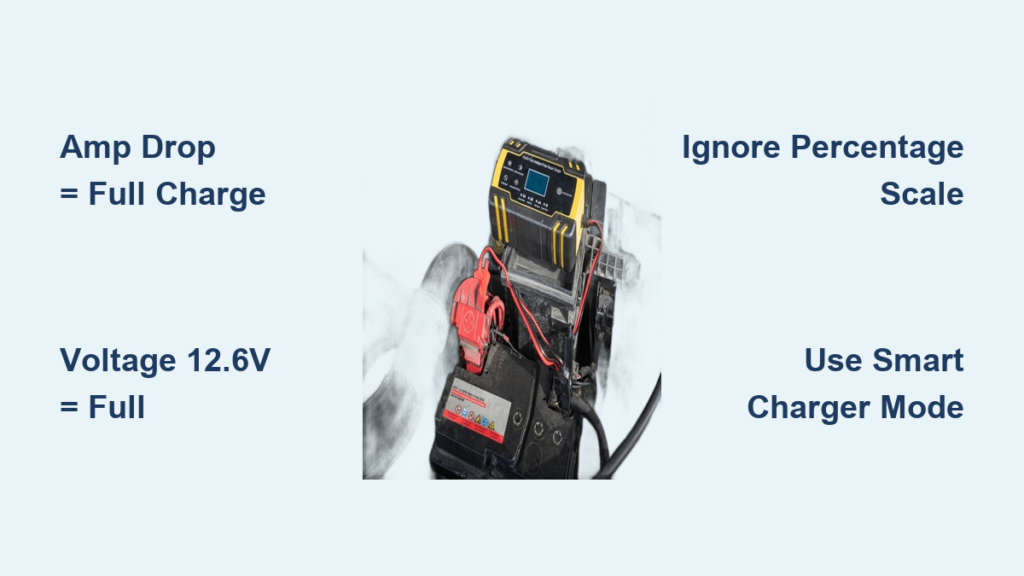
You’ve plugged in your car battery charger and see a needle moving or a digital display flickering, but what does it actually mean? Understanding how to read a car battery charger is essential for safely recharging your battery without damaging it or cutting the process short. Whether you’re using an old-school analog model with a needle or a modern smart charger with digital readouts, knowing how to interpret the ammeter, voltage signs, and indicator lights can save you time, money, and prevent unnecessary battery replacements.
This guide cuts through the confusion. You’ll learn exactly what the numbers and lights mean, how to tell when your battery is truly full, and how to avoid common mistakes that could shorten your battery’s life. Most importantly, you’ll discover why a high amperage reading doesn’t mean “full charge,” and why relying solely on the charger’s gauge can be misleading.
Analog vs Digital Charger Displays

Which Meter Type Is Better for Your Needs
Analog and digital chargers display charging data differently, and each has pros and cons that affect accuracy and ease of use.
Analog chargers use a needle and scale to show current flow. They’re durable and don’t need external power, making them reliable in harsh environments. However, they’re prone to parallax error, meaning reading the needle from an angle can give false values, and their scales often fade over time. The percentage markings on top of the scale, like 50%, 75%, and 100%, are especially misleading. A needle at “100%” may actually indicate a dead battery pulling maximum current, not a full one.
Digital chargers provide precise numeric readings of amps and often include voltage displays, charging stage indicators, and auto-detection features. They eliminate guesswork and are ideal for beginners. But they’re more fragile. Drops, moisture, or power surges can damage the electronics, and they usually cost more.
When to Consider Upgrading to a Digital Charger
If you frequently charge batteries or want peace of mind, upgrading to a digital smart charger is worth it. These models automatically detect battery type, whether lead-acid, AGM, or gel, adjust charging stages, and switch to maintenance mode when full. Many display both amps and volts, reducing the need for a separate multimeter.
Digital units also prevent overcharging, a common issue with manual analog chargers left connected too long. For long-term storage or seasonal vehicles, a digital maintainer keeps your battery at optimal health with zero effort.
Interpreting Ammeter Readings Correctly
What High Amperage Actually Means
The ammeter shows how much current is flowing into the battery right now. This isn’t a direct measure of charge level. It reflects the battery’s demand.
When you first connect a deeply discharged battery, the ammeter will spike, often near the charger’s maximum output. A 6-amp charger may show 5 to 6 amps, and a 10-amp charger may read 8 to 10 amps. This high draw is normal. The battery is like a dry sponge, soaking up energy quickly. Don’t panic if the needle pegs high. It doesn’t mean something’s wrong.
On analog meters, the needle starts on the far right and slowly moves left as charging progresses.
The Amp Drop: Your Key Charging Indicator
As the battery charges, its internal resistance rises and it pulls less current. This causes the ammeter reading to gradually decrease.
After 1 to 2 hours, the reading may drop from 6A to 4A. After 6 to 8 hours, it could fall to 2 to 3A. Near full charge, it settles at 1 to 2 amps or lower. This tapering is a key sign the battery is nearing capacity. A healthy battery naturally reduces current draw as it fills.
If the ammeter stays above 3 amps after 12 to 24 hours, the battery likely has an internal fault, such as a shorted cell or severe sulfation, and cannot hold a charge.
Why Low Current Means Full Charge
Here’s the crucial rule. A fully charged battery draws very little current.
When the ammeter reads 1 to 2 amps or less and remains stable for over an hour, charging is effectively complete. On smart chargers, this triggers a switch to float or maintenance mode, reducing voltage to prevent overcharging.
On basic chargers without auto-shutoff, you must disconnect manually to avoid damaging the battery.
The common mistake is thinking a high amp reading means “almost full.” In reality, high amps mean the battery is still very empty and working hard to accept charge.
Confirming Full Charge Accurately

Using Voltage to Verify Charge Level
Ammeter readings give real-time data, but voltage is the true measure of charge. Unfortunately, many basic chargers lack voltmeters, so you’ll need a multimeter for accuracy.
Wait 1 to 2 hours after disconnecting the charger before measuring. This allows surface charge, a temporary voltage boost, to dissipate.
| Resting Voltage | State of Charge |
|---|---|
| 12.6 to 12.8V | 100% charged |
| 12.4V | About 75% charged |
| 12.2V | About 50% charged |
| 12.0V or below | Severely discharged |
Immediately after charging, voltage may read 13.2 to 14.1V. This is not true charge level. Always wait before testing.
Smart Charger Indicator Lights Explained
Modern smart chargers simplify the process with clear indicators. A red light means charging is in progress, in the bulk or absorption phase. A green light or “Float” display means full charge has been reached and switched to maintenance. A flashing light indicates an error or battery problem detected.
These chargers automatically deliver high current until about 80% charge, known as the Bulk Phase, then hold voltage steady while current tapers in the Absorption Phase, and finally reduce voltage to about 13.2 to 13.8V to maintain without overcharging in the Float Phase.
You can leave smart chargers connected for weeks safely, ideal for winter storage or infrequently used vehicles.
Why to Ignore the Percentage Scale
Many analog chargers have a top row labeled 0%, 50%, and 100%, but this is misleading. A needle pointing to “100%” may just mean high current draw from a dead battery. The scale doesn’t account for battery size, age, or chemistry, and it’s not calibrated to actual charge level.
Ignore the percentage scale entirely and rely on amp values and voltage checks instead.
Matching Charging Rate to Battery Needs
How Charger Amperage Affects Charging Time
Charging speed matters. Too fast and you risk overheating. Too slow and it takes forever.
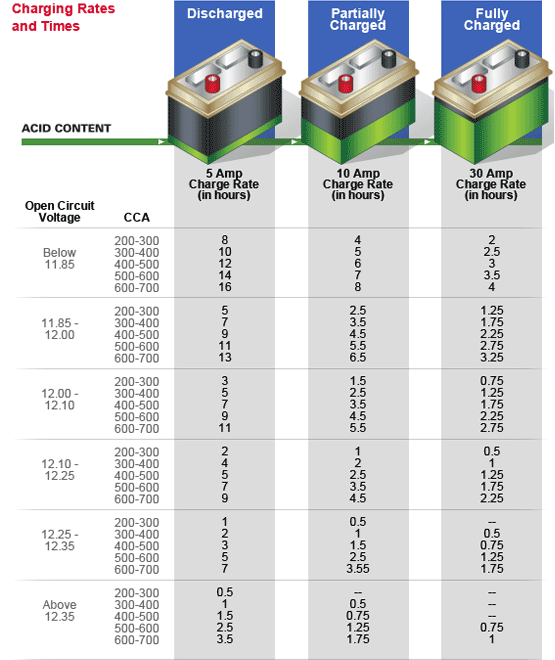
For a typical 48Ah battery, a 2-amp charger takes about 24 hours, best for overnight charging and long-term health. A 6-amp charger takes 8 to 12 hours, offering balanced speed and safety. A 10-amp charger takes 5 to 6 hours, but should be used for emergency boost only.
Low and slow is best. Charging at 2 to 4 amps minimizes heat, reduces plate stress, and helps break down sulfate crystals, extending battery life.
The Risks of Frequent Fast Charging
High-amp charging at 6 to 10A generates heat, which can warp lead plates, boil off electrolyte, and accelerate internal degradation.
Use fast charging only when necessary, like getting your car started in the morning. For routine recharging, stick to 2 to 4 amps.
If your charger has a Maintain or Trickle mode at 1 to 2A, use it for storage. It keeps the battery topped up without risk of overcharge.
Safe Charger Connection and Disconnection
The Correct Order for Connecting Clamps
A wrong connection can cause sparks, damage electronics, or even ignite hydrogen gas from the battery.
To connect, first turn off the charger. Attach the red clamp to the positive terminal. Attach the black clamp to the negative terminal or engine ground. Finally, plug in and turn on the charger.
To disconnect, turn off and unplug the charger first. Remove the black clamp first, then remove the red clamp last.
Always unplug before removing clamps. Removing them while powered can create sparks near the battery where flammable hydrogen may be present.
Battery Preparation Before Charging
Before connecting, inspect the battery for cracks, leaks, or swelling. Clean terminals with a wire brush to remove corrosion. Ensure ventilation by charging in a well-ventilated area. Remove cell caps if present on non-sealed batteries to allow gas escape.
For AGM or sealed batteries, no cap removal is needed.
Never charge a frozen battery. Let it warm to room temperature first.
Troubleshooting Charger Reading Problems
What to Do When Ammeter Shows Zero
If the ammeter reads 0A, charging isn’t happening. Possible causes include loose or corroded clamps, poor terminal contact, a dead battery with an open circuit, or a faulty charger or cable.
Reconnect both clamps firmly. Clean terminals and cable ends. Test the charger on a known-good battery.
Use a multimeter to check for voltage at the clamps. No voltage means the charger isn’t working.
When Needle Stays Pegged at Maximum
If the ammeter stays at maximum, for example 10A, and never drops, the battery may have a shorted cell. Internal damage is preventing charge retention, or the charger may be malfunctioning, though this is rare.
Disconnect immediately. Test battery voltage. If it’s below 10V, the battery is likely defective and needs replacement.
Handling Fluctuating or Erratic Readings
Erratic ammeter behavior suggests a loose connection, a bad battery, or a charger fault.
Tighten all connections. Clean terminals. Try a different battery.
If the problem persists, the charger may need repair or replacement.
Validating Battery Health with Load Testing
How to Perform a Load Test Properly
A battery can show full voltage but still fail to start your car. That’s why load testing is essential.
Fully charge the battery first. Let it rest for 1 to 2 hours. Connect a load tester or use headlights as a load. Apply the load for 15 seconds. Monitor voltage during this time. Above 9.6V is good. Below 9.6V indicates a weak or failing battery.
If the battery is installed in your vehicle, you can alternatively crank the engine and measure voltage drop. A healthy battery should stay above 10V during startup.
Why Load Testing Matters
Some batteries charge but can’t deliver high current. This is common in older batteries with worn plates or internal corrosion. Load testing confirms real-world performance.
Test every 6 months if you live in extreme climates or make frequent short trips.
Choosing the Right Charger Type
Matching Charger Features to Your Needs
Not all chargers are the same. Pick one based on how you use it.
Basic chargers at 2 to 6A work for occasional use with manual control and an analog meter. Multi-rate chargers with hi/lo switches offer flexibility between 3A and 6A. Smart chargers are best for long-term care with auto-stage, float mode, and diagnostics. Battery maintainers at 1 to 2A are ideal for storage with trickle charging that’s fully automatic. Lithium-specific chargers are for LiFePO4 batteries with proper voltage limits.
Never use a standard lead-acid charger on a lithium battery unless it’s explicitly compatible.
Always Use a Fuse for Safety
If your charger doesn’t have a built-in fuse, use a fused plug or inline fuse, typically 10A. This protects against short circuits and fire hazards.
A fused connection is non-negotiable for unattended charging.
Maximizing Battery Life Through Smart Charging
Best Practices for Battery Longevity
To maximize battery lifespan, charge at 2 to 4A whenever possible. Recharge after short trips because the alternator doesn’t fully replenish the drain. Use a smart charger for storage. Check voltage monthly. Keep terminals clean.
Avoid letting the battery drop below 12.2V. Deep discharges accelerate sulfation.
Proper Storage for Seasonal Batteries
For seasonal or backup batteries, charge to 50% to 80%. Store in a cool, dry place. Use a maintainer to prevent self-discharge.
For lithium LiFePO4 batteries, never exceed 0.5C charging rate. For a 100Ah battery, that’s 50A max, though 0.2C, or 20A, is better for longevity.
Frequently Asked Questions About Reading Car Battery Chargers
What Does the Ammeter Needle Position Tell Me?
The ammeter shows real-time current flow into the battery. A high reading means the battery is heavily discharged and accepting charge actively. A low reading, 1 to 2 amps or less, indicates the battery is nearly full. The needle moving from right to left over time shows the charging progress.
How Do I Know When My Battery Is Fully Charged?
Look for the ammeter to drop to 1 to 2 amps and stay stable for over an hour. On smart chargers, a green light or “Float” display indicates full charge. Use a multimeter to check resting voltage, which should be 12.6 to 12.8V measured 1 to 2 hours after disconnecting.
Can I Trust the Percentage Scale on My Analog Charger?
No. The percentage scale on most analog chargers is misleading and not accurate. A needle at “100%” often means high current draw from a dead battery, not a full charge. Focus on the amp scale and voltage readings instead.
Is It Safe to Leave a Smart Charger Connected Overnight?
Yes, smart chargers are designed for extended connection. They automatically switch to float or maintenance mode when the battery is full, preventing overcharge. You can safely leave them connected for days or weeks, making them ideal for winter storage.
What Should I Do If the Charger Shows Abnormal Readings?
If the ammeter shows 0A, check connections and try a different battery. If the needle stays pegged at maximum for over an hour, the battery likely has internal damage and needs replacement. Fluctuating readings usually indicate loose connections or a faulty charger.
Do I Need a Separate Multimeter to Check Battery Charge?
Yes, using a multimeter provides the most accurate charge verification. Chargers often lack voltmeters, and the ammeter alone doesn’t tell you the actual charge level. Measure resting voltage 1 to 2 hours after charging for accurate results.
Key Takeaways for Reading Your Car Battery Charger
Reading a car battery charger isn’t about chasing high numbers. It’s about understanding the story the meter tells. A dropping amp reading, stable voltage at 12.6 to 12.8V, and smart charger indicators are your real signals of success.
Always verify with a multimeter rather than relying solely on the charger’s gauge. Prioritize slow charging at 2 to 4 amps to extend battery life, and avoid the temptation of fast charging except in emergencies. Use smart chargers with float mode for storage to prevent overcharging.
With these steps, you’ll keep your battery healthy, safe, and ready to start every time.