You’ve likely experienced the frustration of your power bank dying unexpectedly during a winter hike or failing to charge your phone on a scorching summer day. This isn’t just bad luck—it’s the direct result of how temperature impacts power bank performance and battery chemistry. When your portable charger seems to lose capacity in extreme conditions, you’re witnessing fundamental electrochemical principles in action.
Exposing your power bank to temperatures outside its optimal range doesn’t just temporarily reduce performance—it can cause permanent damage that shortens its lifespan. Understanding exactly how temperature impacts power bank performance and battery health is crucial for anyone who relies on portable power, whether you’re camping in sub-zero conditions or traveling through desert heat.
Why Your Power Bank Slows Down in Freezing Conditions

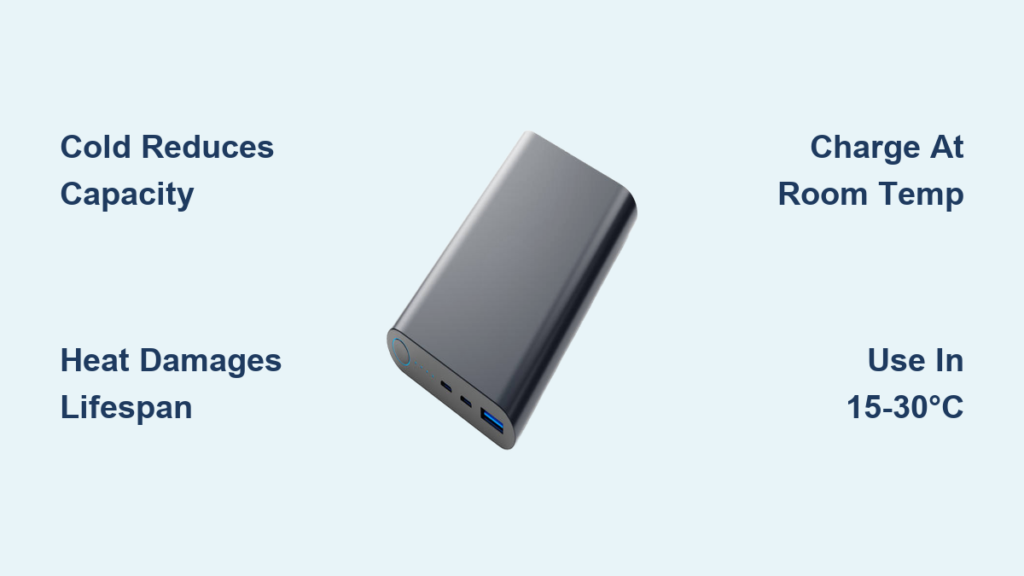
The moment your power bank drops below 59°F (15°C), the lithium ions inside begin moving sluggishly through the electrolyte. This isn’t just a minor inconvenience—it’s a fundamental chemical slowdown that directly impacts how much power you can access when you need it most.
How Cold Temperatures Cripple Lithium-Ion Chemistry
At freezing temperatures (32°F/0°C), lithium-ion batteries experience a 30-40% drop in usable capacity. The power is still technically in the battery (it may show 100% charge), but the cold has essentially locked the lithium ions in place. When you try to use your power bank in these conditions, you might only get 40-60% of the rated capacity—meaning that 10,000mAh power bank performs like a 4,000-6,000mAh unit.
The Dangerous Reality of Lithium Plating in Extreme Cold
Attempting to charge a frozen power bank creates serious risks. When temperatures fall below freezing, lithium ions can’t embed properly into the graphite anode during charging. Instead, they form metallic deposits on the surface—a process called “lithium plating.” This not only permanently reduces capacity but can create internal short circuits that compromise safety. Most quality power banks will refuse to charge when too cold specifically to prevent this dangerous condition.
How Heat Secretly Destroys Your Power Bank’s Lifespan

While cold weather temporarily limits performance, excessive heat delivers a one-two punch: it immediately reduces efficiency while simultaneously accelerating permanent degradation. The damage from heat exposure often goes unnoticed until your power bank suddenly can’t hold a charge.
Why Your Power Bank Gets Hotter Than You Think
Leaving your power bank on a car dashboard on a 90°F (32°C) day can expose it to internal temperatures exceeding 140°F (60°C). At these temperatures, the electrolyte breaks down rapidly and the solid-electrolyte interphase layer becomes unstable. For every 15°F (8°C) above 77°F (25°C), battery degradation rates double—meaning your power bank could lose capacity twice as fast in hot conditions.
The Accelerated Aging Effect of High Temperatures
A power bank stored at 100°F (38°C) will lose about 35% more of its total capacity after one year compared to one stored at room temperature. This isn’t theoretical—real-world testing shows that power banks left in hot cars for just one summer can lose 20% of their original capacity. Unlike cold weather effects that reverse when warmed, heat damage is permanent and cumulative.
The Goldilocks Zone: Finding Your Power Bank’s Sweet Spot
Lithium-ion batteries perform best between 59°F and 86°F (15°C and 30°C)—the narrow window where chemical reactions occur efficiently without causing damage. Within this range, your power bank delivers near 100% of its rated capacity with minimal degradation.
Temperature Ranges That Maximize Charging Speed
Charging your power bank at 68-77°F (20-25°C) delivers 95-98% efficiency—the sweet spot where lithium ions move freely without stressing the battery. Below 50°F (10°C), charging efficiency drops to 50-70%, while above 95°F (35°C), it falls to 80-85% with accelerated aging. For fastest charging with minimal damage, aim for that 68-77°F range.
What 30% Capacity Loss Looks Like in Real-World Use
When your power bank operates at freezing temperatures, that 30% capacity loss translates to tangible consequences: a fully charged 20,000mAh unit might only deliver enough power to charge your smartphone once instead of twice. The battery isn’t “dead”—it’s simply unable to access the stored energy until it warms up. This is why your seemingly dead power bank often “magically” recovers when brought indoors.
Emergency Fixes When Your Power Bank Fails in Extreme Weather
When your power bank fails in extreme temperatures, quick action can often restore functionality without causing permanent damage. Knowing exactly what to do (and what not to do) can save your portable power when you need it most.
How to Revive a Frozen Power Bank in 10 Minutes
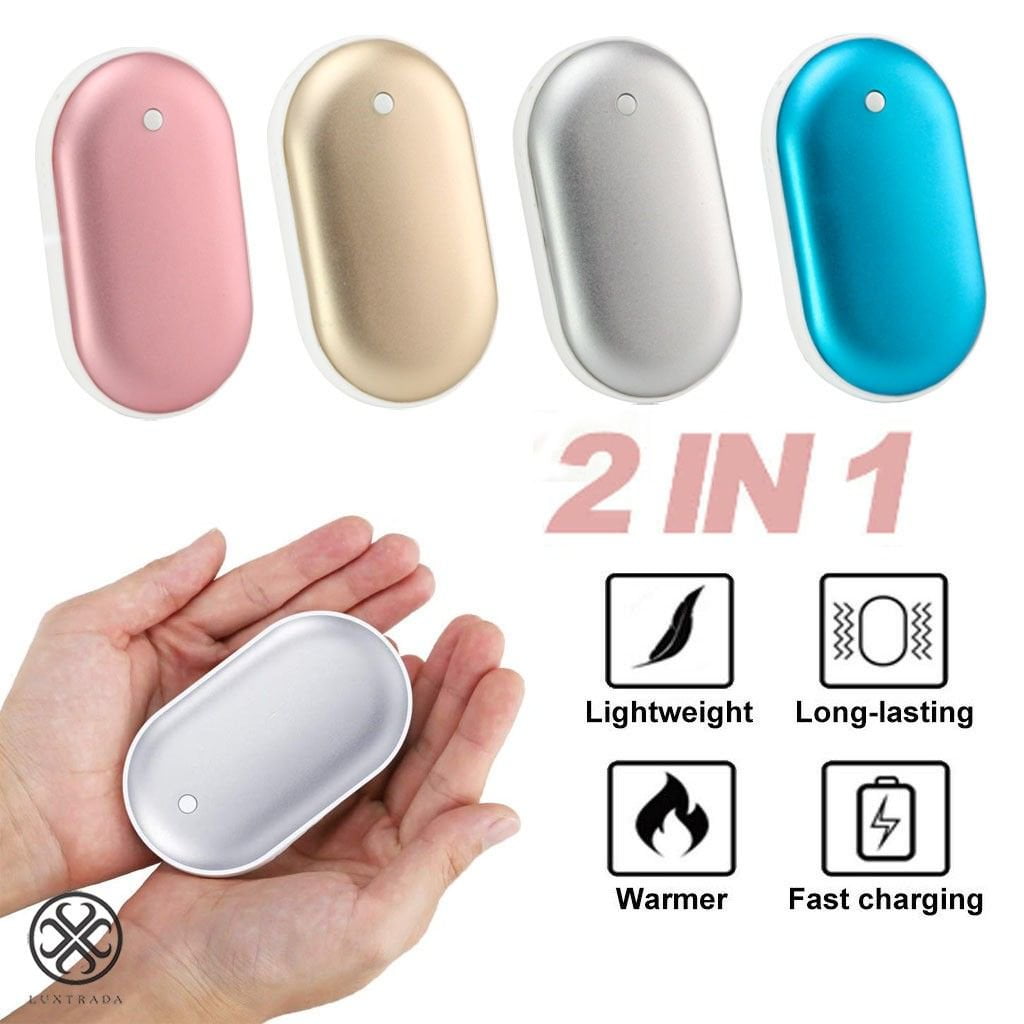
If your power bank fails in cold weather, don’t try charging it immediately. Instead:
– Keep it close to your body (inside a jacket pocket) for 10-15 minutes
– Gently warm it with hand warmers (never direct heat sources)
– Wait until it reaches at least 50°F (10°C) before attempting to use it
– Avoid rapid temperature changes that cause condensation
Cooling Down an Overheated Power Bank Safely
When your power bank becomes uncomfortably hot:
– Immediately stop charging or using it
– Move it to a room-temperature environment (not directly to cold)
– Place it on a cool surface like tile or stone (not metal)
– Allow 30-60 minutes for it to return to normal temperature
– Never put an overheated power bank in a refrigerator
8 Temperature Hacks That Extend Power Bank Life
Implement these proven strategies to maximize your power bank’s performance and lifespan in any climate. These simple habits can double the usable life of your portable charger.
- Charge at Room Temperature Only: Never charge when the unit feels hot or cold to the touch
- Store at 50% Charge: For storage longer than a month, maintain 50-60% charge
- Avoid Car Storage: Temperatures in parked cars can exceed 140°F (60°C) in summer
- Warm Before Winter Use: Keep your power bank inside your coat for 15 minutes before use
- Use the Right Charger: Incompatible chargers generate excess heat during charging
- Remove Cases During Charging: Phone cases trap heat that accelerates battery degradation
- Monitor for Swelling: Slight bulging indicates internal damage from temperature stress
- Check Before Every Trip: Verify capacity in normal temperatures before relying on it outdoors
How to Choose a Power Bank for Extreme Temperatures
Not all power banks handle temperature extremes equally. If you regularly face harsh conditions, these specifications make the difference between reliable power and constant failures.
Lithium Iron Phosphate vs. Standard Lithium-Ion

Most consumer power banks use standard lithium-ion (LiCoO₂) chemistry with a narrow operating range (32-104°F/0-40°C). For extreme conditions, look for Lithium Iron Phosphate (LiFePO₄) models, which operate safely from -4°F to 140°F (-20°C to 60°C) and withstand more heat-related degradation. While they’re slightly bulkier, they deliver far better performance in temperature extremes.
What Rugged Power Bank Specs Actually Mean
When manufacturers claim “rugged” or “all-weather” performance, check the fine print:
– True all-weather units specify operating ranges below 14°F (-10°C)
– Look for “wide temperature range” in specifications, not just marketing claims
– IP67 or higher ratings indicate better internal thermal management
– Avoid units that only list “storage temperature” without operating range
Future-Proofing Your Power Bank Against Temperature Damage
As battery technology evolves, new solutions are emerging to combat temperature-related issues. Understanding these developments helps you make smarter purchasing decisions today while anticipating what’s coming tomorrow.
Emerging Technologies That Handle Extreme Temperatures
Next-generation power banks are incorporating phase change materials that absorb excess heat during operation and release it slowly. Some premium models now use graphene-enhanced materials for better heat dissipation, while others integrate passive cooling channels that work without additional power. These innovations maintain optimal internal temperatures even when external conditions are extreme.
How Solid-State Batteries Change the Game
The most promising development is solid-state battery technology, which replaces liquid electrolytes with solid materials. These batteries operate reliably from -4°F to 140°F (-20°C to 60°C) with minimal performance loss and dramatically reduced thermal runaway risk. While currently expensive, solid-state power banks are expected to become mainstream within 3-5 years, effectively solving most temperature-related performance issues.
By understanding exactly how temperature impacts power bank performance and battery chemistry, you can protect your investment and ensure reliable power in any condition. Remember that the ideal operating range is narrow (59-86°F/15-30°C), but with proper handling techniques and smart product choices, you can minimize temperature-related issues. For maximum lifespan, store your power bank at 50% charge in a cool, dry place—and always let it reach room temperature before charging. These simple habits will keep your portable power performing at its best for years to come.