You’re out and about, your phone’s battery is critically low, and you reach for your trusty Anker power bank—only to discover it won’t hold a charge like it used to. This frustrating scenario happens to millions of users who rely on portable power, but rarely consider how long their Anker power bank will actually last. Understanding “how long does an Anker power bank last” requires examining two critical aspects: the number of years it will function properly before degrading, and how many device charges you can expect from a single power bank charge.
Most consumers don’t realize that power banks, like all rechargeable batteries, have a finite lifespan determined by chemistry, usage patterns, and environmental factors. Anker’s reputation for quality means their power banks generally outlast cheaper alternatives, but even the best portable chargers eventually degrade. The good news is that with proper care and understanding of battery technology, you can significantly extend your Anker power bank’s useful life and get the most value from your investment.
Let’s break down exactly what determines your Anker power bank’s longevity, realistic timeframes for reliable performance, and specific steps you can take to maximize how long your portable charger remains effective.
What Determines Your Anker Power Bank’s Actual Lifespan

Lithium-Ion Battery Chemistry Explained
All Anker power banks use either Lithium-Ion (Li-ion) or Lithium Polymer (Li-Po) battery technology, both of which degrade over time regardless of usage. These batteries typically maintain 80% or more of their original capacity for 300-500 full charge cycles before noticeable degradation occurs. A full cycle means using 100% of the battery’s capacity, whether in one go or accumulated over multiple partial charges. For example, charging your phone halfway twice equals one full cycle of your power bank’s capacity.
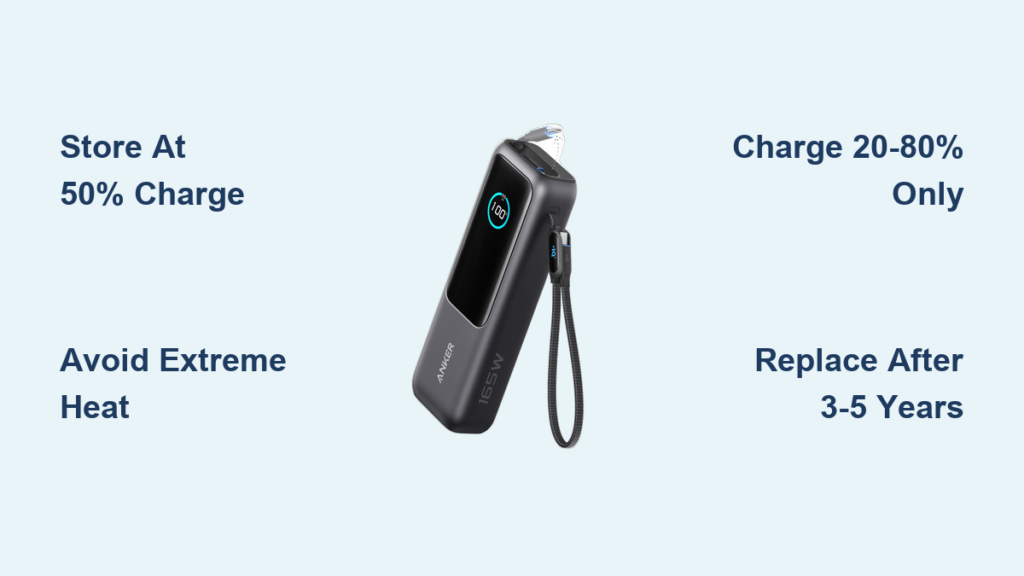
Critical insight: Lithium batteries degrade even when not in use. Anker power banks stored at 100% charge lose capacity faster than those stored at 50% charge. This chemical aging process means your power bank has a shelf life regardless of how often you use it—typically 2-3 years if stored improperly versus 4-5 years with optimal storage conditions.
Environmental Factors That Accelerate Battery Degradation
Extreme temperatures are the silent killer of portable power banks. Leaving your Anker in a hot car on a summer day (above 95°F/35°C) can cause permanent damage to the internal cells within hours. Conversely, using it in freezing conditions below 32°F (0°C) temporarily reduces performance and can cause long-term damage with repeated exposure.
Watch for these environmental red flags:
– Power bank feels unusually warm during normal use
– Noticeable capacity loss after exposure to extreme temperatures
– Slower charging after leaving it in direct sunlight
Physical handling matters more than most users realize. Dropping your Anker power bank, especially on hard surfaces, can damage internal connections or create micro-fractures in battery cells that accelerate degradation. Always store your power bank in a protective case when carrying it in bags or pockets with other items.
Charge Habits That Make or Break Your Power Bank’s Longevity
The way you charge your Anker power bank significantly impacts how long it lasts. Never let it discharge completely to 0%—lithium batteries perform best with “shallow discharges” between 20-80% capacity. Power banks left at 0% for extended periods can enter deep discharge states that permanently damage cells.
Similarly problematic is leaving your power bank plugged in at 100% charge for weeks at a time. This constant “trickle charging” stresses the battery management system and accelerates chemical degradation. For optimal lifespan, recharge when capacity drops to 20-30% and unplug once it reaches 80-90%.
Real-World Anker Power Bank Lifespan Expectations
Year-by-Year Battery Capacity Degradation Estimates
With proper care, here’s what you can realistically expect from your Anker power bank over time:
- Year 1: Near full capacity (95-100%) with minimal degradation
- Year 2: Slight reduction (85-90% of original capacity)
- Year 3: Noticeable but acceptable degradation (75-85%)
- Year 4: Significant capacity loss (65-75%)
- Year 5: Below 65% capacity—time to consider replacement
Pro tip: Track your power bank’s performance by timing how long it takes to charge your phone from 20% to 80%. When this takes 25% longer than when new, your power bank has likely degraded below 80% capacity.
How Many Device Charges to Expect From Popular Models
Your specific Anker model determines initial charging capacity, but degradation affects all models similarly:
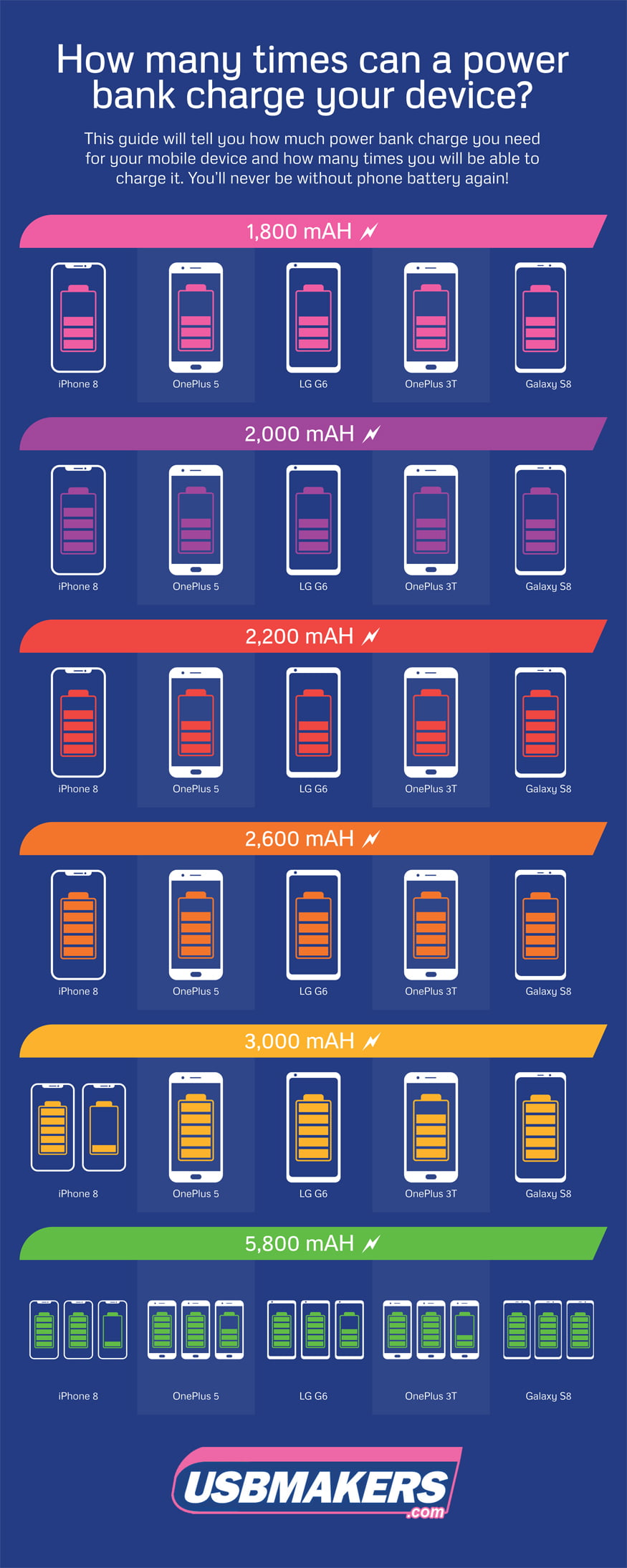
- 5,000mAh models: Initially charges iPhone 13/14 about 1.5 times; expect this to drop to just one full charge by year 3
- 10,000mAh models: Starts with 2-3 full phone charges; degrades to 1.5-2 charges after 2 years
- 20,000mAh models: Provides 4-5 initial charges; drops to 3-4 charges after 3 years of regular use
Important note: Power bank capacity ratings represent the internal battery size, not the actual output to your device. Due to conversion inefficiencies (typically 60-70% efficiency), a 10,000mAh power bank delivers about 6,000-7,000mAh to your phone.
Warning Signs Your Anker Power Bank Needs Replacement

Physical Changes That Signal Danger
Stop using your power bank immediately if you notice:
– Visible swelling or bulging of the casing
– Excessive heat during normal charging (too hot to comfortably hold)
– Unusual odors, especially chemical or burning smells
– Leaking or visible corrosion around ports
A swollen Anker power bank indicates serious battery failure and poses fire or explosion risks. Do not attempt to puncture or disassemble it—place it in a fireproof container and take it to an electronics recycling center immediately.
Performance Issues That Warrant Replacement
When your power bank exhibits these problems, replacement time has likely arrived:
– Requires multiple recharges to deliver one full phone charge
– Randomly shuts off during device charging
– Takes significantly longer to recharge than when new
– Shows full charge but delivers minimal power to devices
Troubleshooting tip: Before replacing, try resetting your power bank by fully discharging it (until lights turn off), then charging uninterrupted for 4-6 hours with the original cable. If problems persist, replacement is necessary.
Maximizing Your Anker Power Bank’s Service Life
Ideal Charging and Storage Practices
For maximum longevity, follow these specific care instructions:
– Store at 50-60% charge when not in use for extended periods
– Keep in a cool, dry place (60-75°F/15-24°C is ideal)
– Use every 3-4 weeks even when stored to prevent deep discharge
– Avoid using third-party cables that may deliver incorrect voltage
Pro technique: When traveling, place your power bank in an anti-static bag with a silica gel packet to protect against moisture and static electricity—common culprits of premature failure.
When to Replace Your Power Bank Before Failure
Don’t wait for complete failure—replace your Anker power bank when:
– It no longer meets your daily charging needs
– Capacity has dropped below 70% of original rating
– You notice any physical abnormalities
– It’s been in regular use for more than 3 years
Cost analysis: Calculate your cost per charge by dividing purchase price by estimated total charges over lifespan. For a $30 Anker with 1,000 total charges, each charge costs just 3 cents—making timely replacement financially sensible when performance degrades significantly.
Conclusion: Getting Maximum Value From Your Anker Investment
How long does an Anker power bank last? With proper care, expect 3-5 years of reliable service before significant capacity degradation occurs. The key factors determining your specific power bank’s lifespan are charging habits, environmental exposure, and storage practices—elements entirely within your control. By avoiding extreme temperatures, maintaining partial charge states during storage, and recognizing early failure signs, you can maximize both the functional life and safety of your portable charger.
When the time comes to replace your aging power bank, consider newer Anker models with improved battery management systems that extend cycle life. Remember that all rechargeable batteries eventually degrade, but Anker’s quality engineering ensures you get more years of reliable service than with budget alternatives. For optimal performance, treat your power bank like the precision electronic device it is—not just a disposable accessory—and you’ll enjoy dependable portable power for years to come.