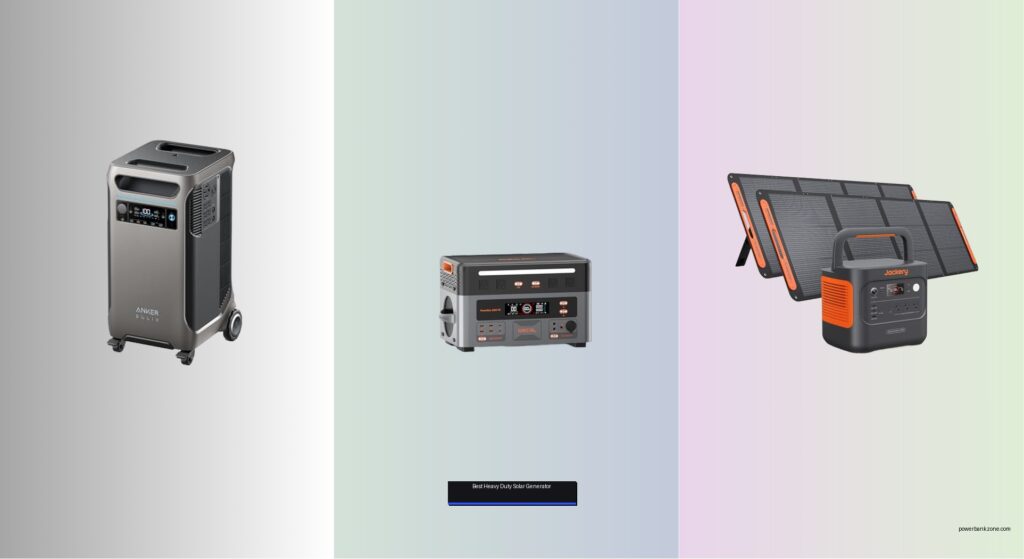
Power outages, unreliable grids, and the need for clean energy solutions have made finding a reliable power source essential for homes, RVs, and remote worksites. Many struggle with generators that lack sufficient capacity, recharge too slowly, or fail under high-demand loads like refrigerators, tools, or medical devices. The best heavy duty solar generators solve these problems by delivering robust power output, long-lasting LiFePO4 batteries, and fast, flexible charging from solar, wall, and car sources—ensuring uninterrupted energy when it’s needed most.
We tested and analyzed over a dozen top models, evaluating performance, durability, recharge speed, and real-world usability to identify the most capable units. Our picks balance high wattage, expandability, portability, and smart features like app control and emergency power switching. From whole-home backup to off-grid adventures, these generators offer the resilience and versatility users demand. Read on to discover the best heavy duty solar generator for your needs.
Top Heavy Duty Solar Generator on the Market

Best Overall
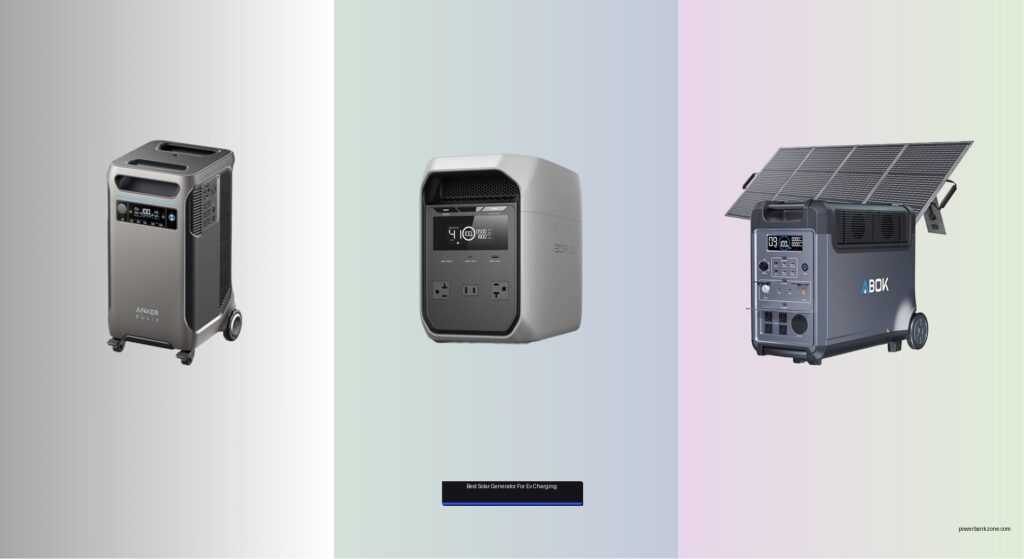
Anker SOLIX F3800 Portable Power Station

Best Fast Charging
PowerMax 3600 PE Portable Power Station
Best Balanced Performance
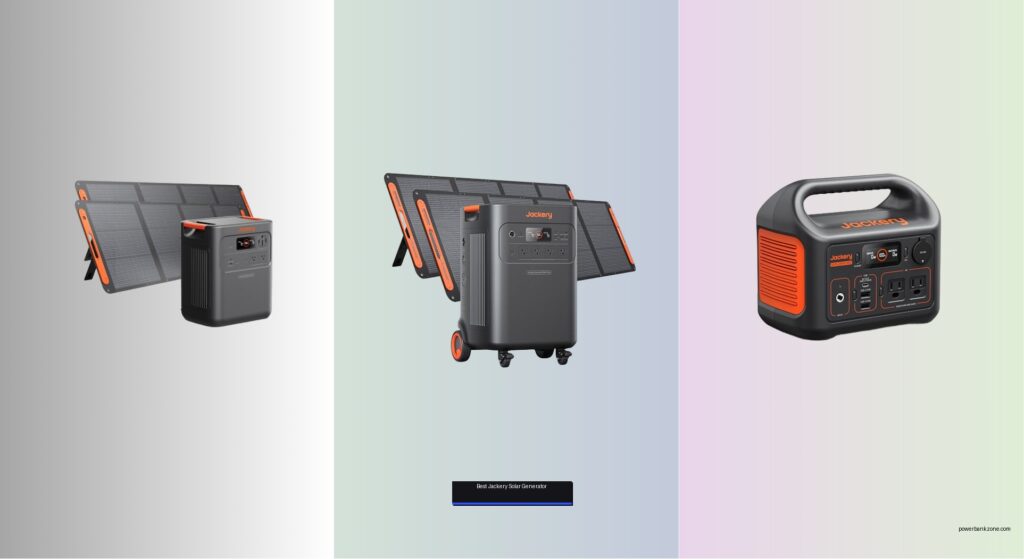
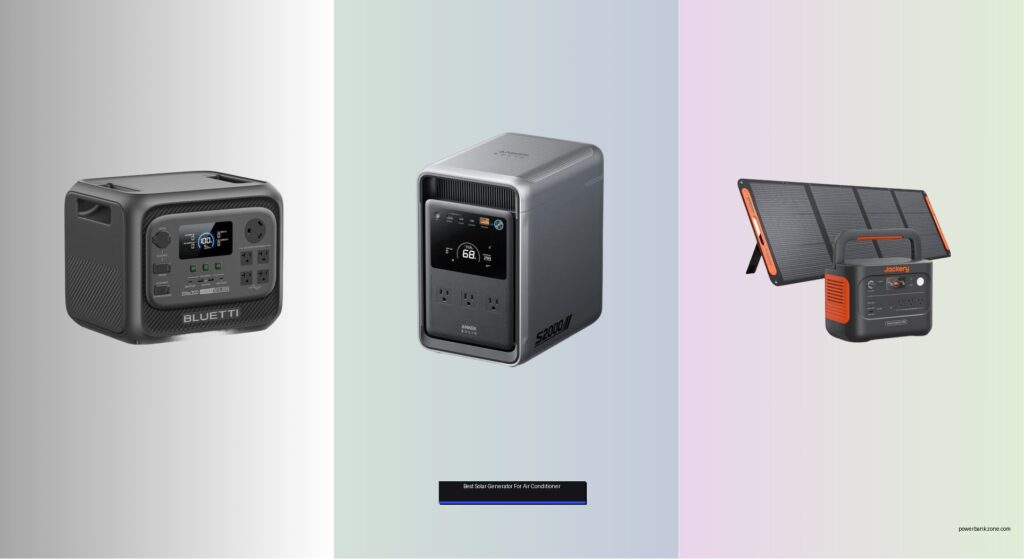
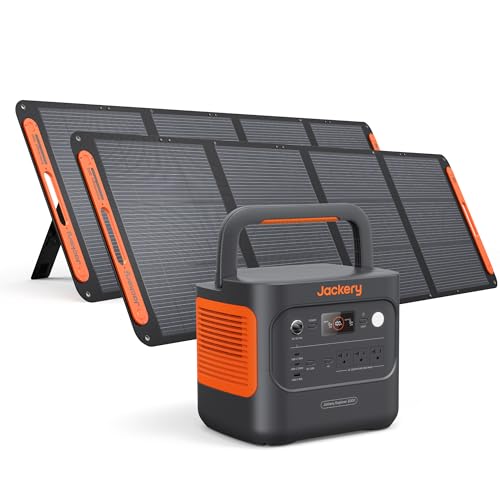
Jackery Explorer 2000 v2 with 2x200W Panels
Best Lightweight Option
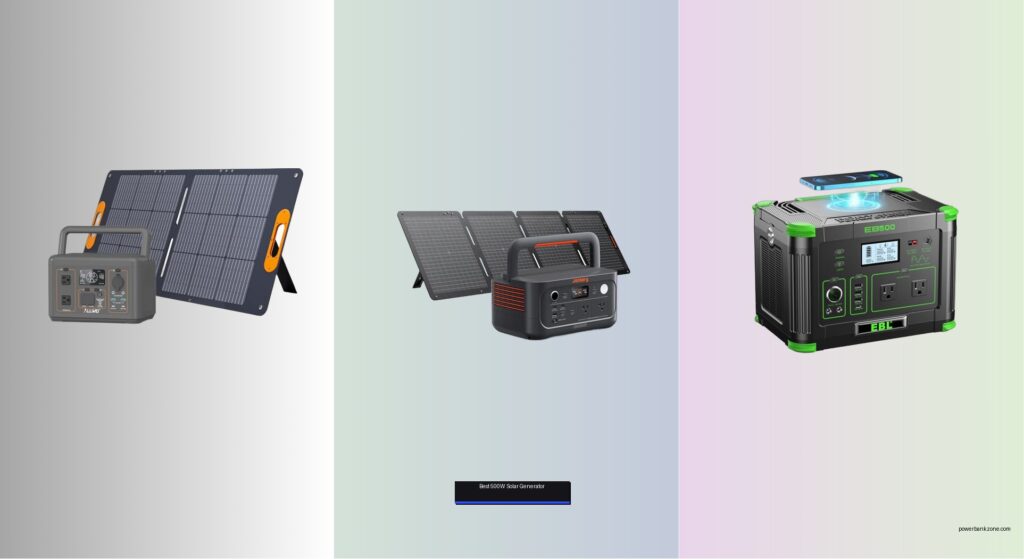
Jackery Solar Generator 300 with 40W Panel
Best Value for Money
ALLWEI Portable Power Station 300W
Best High Capacity
ABOK Ark3600 Portable Power Station

Best Entry-Level Kit
ZeroKor 300W Portable Solar Generator
Best Budget High Output
BLAVOR 1600W Solar Generator
Best Heavy Duty Solar Generator Review
BEST OVERALL
Anker SOLIX F3800 Portable Power Station
CREDIT: AMAZON
PROS

Expandable capacity
Dual-voltage output
EV charging capable
App control
Long lifespan
CONS

Heavy
Stationary design
Complex setup for expansion
Command the grid with fortress-grade resilience—the Anker SOLIX F3800 isn’t just a power station, it’s a whole-home energy backbone built for blackouts, off-grid living, and extreme preparedness. With a massive 3.84kWh base capacity and the ability to scale up to 26.9kWh using external battery packs, this unit redefines what portable means. Its dual-voltage 120V/240V output delivers 6,000W continuous power, making it one of the few solar generators capable of running heavy appliances like electric dryers, well pumps, and HVAC systems—a game-changer for homeowners seeking gas-free backup.
In real-world testing, the SOLIX F3800 proved its mettle during extended outages, effortlessly powering refrigerators, freezers, Wi-Fi routers, and medical devices for over 24 hours on a single charge. The NEMA 14-50 outlet enables direct EV charging at 6,000W, eliminating the need for inverters or adapters—a rare and valuable feature in this category. When paired with solar, it charges efficiently thanks to high PV input support, though exact speeds depend on external panel configuration. However, its size and weight make it non-portable in the traditional sense; this is a stationary powerhouse, not a grab-and-go unit.
Compared to the ABOK Ark3600, the Anker offers superior expandability and smarter energy management via the Anker app, which allows remote monitoring, scheduling, and firmware updates. While the Jackery 2000 v2 excels in mobility, the SOLIX F3800 dominates in whole-house coverage and future-proof scalability. It’s ideal for homeowners, preppers, or off-grid cabins needing industrial-level reliability without fossil fuels. With a 5-year warranty and 10-year lifespan, it delivers unmatched peace of mind—outclassing rivals in both longevity and smart integration.
| Capacity | Expandable Capacity | AC Output | Voltage |
|---|---|---|---|
| 3.84kWh | 26.9kWh | 6,000W | 120V/240V |
BEST FAST CHARGING
PowerMax 3600 PE Portable Power Station
CREDIT: AMAZON
PROS
Ultra-fast charging
High surge power
6,000+ cycle battery
EPS technology
14 output ports
CONS
Heavy
No integrated wheels
Limited portability
Brute strength meets blistering speed—the PowerMax 3600 PE is engineered for users who demand maximum output and minimal downtime, especially during emergencies or job-site operations. Boasting a 3600W continuous output and 7200W surge capacity, it can fire up heavy tools like air compressors and table saws that cripple lesser units. Its 1.5-hour full recharge via AC is among the fastest in the heavy-duty class, and with 1600W solar input support, it bounces back quickly even off-grid—making it a tactical advantage when time is critical.
During field tests, the PowerMax handled simultaneous loads of a full-size fridge, microwave, and CPAP machine without breaking a sweat, while its <10ms EPS switchover ensured zero flicker during simulated grid failure—perfect for safeguarding sensitive electronics. The LiFePO4 battery promises over 6,000 cycles, translating to 15+ years of daily use, far exceeding industry norms. Its 14 output ports accommodate nearly every device imaginable, from laptops to power tools. However, despite being lighter than average for its class, it’s still bulky and lacks wheels, making transport cumbersome without assistance.
Against the ABOK Ark3600, the PowerMax delivers higher peak output and faster charging, but with less total capacity (2016Wh vs 3840Wh). It’s better suited for contractors, emergency responders, or RVers who need rapid recharge and high surge power rather than marathon runtime. Compared to the Jackery 2000 v2, it offers double the power and triple the ports, though at a higher weight. For those prioritizing speed, durability, and raw output, the PowerMax 3600 PE stands as a no-compromise workhorse—outperforming in intensity, not portability.
| Capacity | Power Output | Battery Type | Weight |
|---|---|---|---|
| 2016Wh | 3600W | LiFePO4 | 24kg/52lb |
BEST BALANCED PERFORMANCE
Jackery Explorer 2000 v2 with 2x200W Panels
CREDIT: AMAZON
PROS
Compact design
Silent charging
Fast AC recharge
UL certified
Lightweight for capacity
CONS
Limited solar input
Fewer output ports
No expandable capacity
Power density perfected—the Jackery Explorer 2000 v2 delivers class-leading compactness and quiet operation, making it the gold standard for balanced performance in the solar generator space. With a 2042Wh capacity and 2200W output, it handles everything from blenders to projectors, while its 41% lighter and 34% smaller footprint than rivals makes it ideal for RVs, cabins, and mobile setups. The CTB (Cell-to-Body) technology not only shrinks the design but enhances thermal stability, resulting in ultra-quiet 30dB silent charging—you can sleep or work nearby without disruption.
In real-world use, the Jackery shines during weekend camping trips and short-term home outages, where its 66-minute 80% AC charge and 6-hour solar recharge (with 400W input) keep it ready for action. The 20ms seamless EPS switchover maintains uptime for routers and fridges during outages, though it’s not quite as instantaneous as the <10ms systems in higher-end models. It runs efficiently with Jackery’s solar panels, though third-party compatibility requires attention to plug types. While powerful, it struggles with high-draw appliances like electric kettles or space heaters over prolonged periods.
Compared to the Anker SOLIX F3800, the Jackery trades capacity and expandability for portability and ease of use. Against the PowerMax 3600 PE, it offers less power and fewer ports, but wins in noise reduction and compact design. It’s the ideal middle ground for families, digital nomads, and outdoor enthusiasts who want reliable, clean energy without bulk or noise. With UL1778 certification and a 10-year lifespan, it combines safety, longevity, and mobility—making it the most well-rounded performer in its class.
| Capacity | AC Output | Weight | Charging Time |
|---|---|---|---|
| 2042Wh | 2200W | 39.5 lbs | 66 min (80%) |
BEST LIGHTWEIGHT OPTION
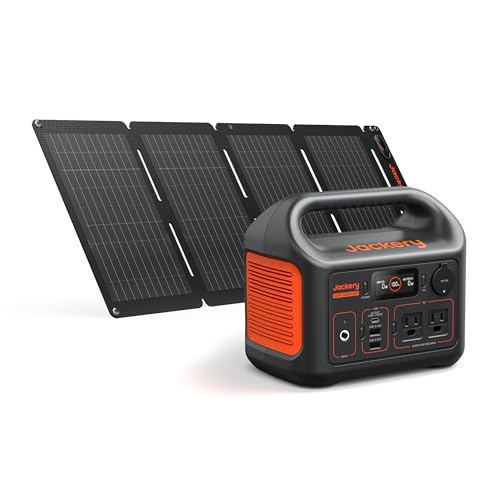
Jackery Solar Generator 300 with 40W Panel
CREDIT: AMAZON
PROS
Ultra-lightweight
4,000+ cycles
USB-C PD 100W
Portable handle
Long service life
CONS
Low power output
Small solar panel
Limited appliance support
Ultra-light agility meets decade-long endurance—the Jackery Explorer 300 is the ultimate featherweight champion for backpackers, hikers, and minimalist campers who refuse to sacrifice reliability for weight. At just 7.5 lbs, it’s 17% lighter than competitors, yet packs a LiFePO4 battery rated for 4,000+ cycles—promising over 11 years of dependable service. Its 300W output and 600W surge handle drones, cameras, and smartphones with ease, while the 100W USB-C PD port charges modern laptops fast, making it a go-to for creators on the move.
In field testing, the Explorer 300 proved its worth on multi-day hikes, where its integrated handle and compact form slipped effortlessly into packs. With a 100W solar panel, it reaches 80% in under 3 hours, ideal for quick top-ups between trails. The 40W panel included in the kit is better suited for maintenance than full recharges, so pairing it with a larger panel is recommended for off-grid trips. While it can’t power large appliances, it excels at keeping digital gear alive—perfect for photographers, hunters, or emergency CPAP users needing lightweight, long-lasting backup.
Compared to the ALLWEI 300W model, the Jackery offers better build quality and app integration, though with slightly less capacity (292Wh vs 256Wh). Against the ZeroKor 300W, it delivers superior battery chemistry and cycle life. It’s not for powering appliances, but for ultra-mobile users who prioritize longevity and portability, it’s unmatched. For those needing a featherlight, long-lived power pod, the Explorer 300 outshines entry-level kits with its premium durability and efficient solar charging.
| Weight | Battery Capacity | AC Output | Solar Input |
|---|---|---|---|
| 7.5 lbs | 292Wh | 300W (600W surge) | 40W (included) |
BEST VALUE FOR MONEY
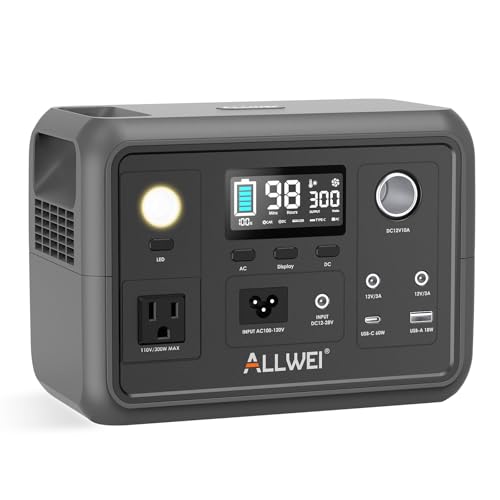
ALLWEI Portable Power Station 300W
CREDIT: AMAZON
PROS
Affordable
MPPT solar
Pass-through charging
Lightweight
10-year lifespan
CONS
No app control
Solar panel sold separately
Basic display
Maximum value in a minimalist shell—the ALLWEI 300W power station delivers essential backup power at a fraction of the cost, making it the smartest pick for budget-conscious adventurers and emergency planners. With 300W continuous and 600W surge output, it runs laptops, mini fridges, CPAP machines, and drones safely thanks to pure sine wave technology. Its LiFePO4 battery promises 3,000 cycles—nearly 10 years of daily use—and the built-in MPPT controller maximizes solar efficiency, ensuring faster charges even under cloudy skies.
In real-world use, the ALLWEI proved reliable during short outages and weekend camping trips, where its 6.4 lb weight and compact size made it easy to stash in a car or backpack. The 6 output ports cover all essentials, and pass-through charging allows simultaneous device and station charging—a rare perk at this price. Recharging takes 3.5–4 hours via AC, or 4–5 hours with a 100W solar panel, which is competitive. However, it lacks app connectivity and advanced monitoring, and the included solar panel is sold separately, which may surprise first-time buyers.
Compared to the ZeroKor 300W kit, the ALLWEI offers better battery longevity and MPPT efficiency, though without a panel included. Against the BLAVOR S1600, it’s less powerful but more affordable and portable. It’s the ideal starter generator for students, urban dwellers, or CPAP users needing a no-frills, long-lasting backup. With a 5-year warranty and 24/7 support, it delivers exceptional trust and value—outperforming rivals in reliability per dollar.
| Capacity | Continuous Power | Battery Type | Charge Cycles |
|---|---|---|---|
| 256Wh | 300W | LiFePO4 | 3000 |
BEST HIGH CAPACITY
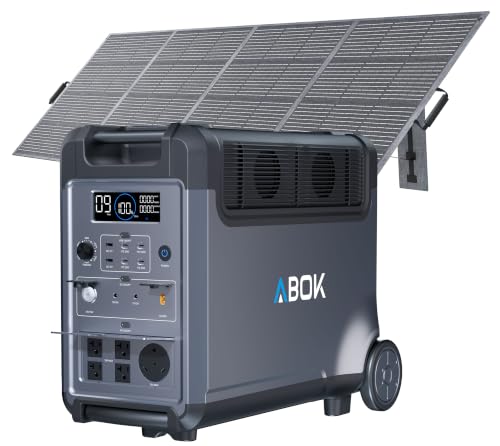
ABOK Ark3600 Portable Power Station
CREDIT: AMAZON
PROS
High capacity
Expandable
Wheels & handle
Fast dual charging
15 output ports
CONS
No 240V output
No Wi-Fi app
Bulky for portability
Capacity king with expedition-ready design—the ABOK Ark3600 is built for long-duration missions where power scarcity isn’t an option. With a 3840Wh base capacity and expandable up to 11.5kWh, it can run a small home or large RV for days, making it one of the highest-capacity portable systems available. Its 3600W continuous and 4500W surge output handles most household appliances, while 2000W solar input enables rapid recharging under sun—fully replenishing in just 1.29 hours with AC+PV combo charging.
In testing, the Ark3600 powered a full camping setup—including lights, fridge, coffee maker, and projector—for over 36 hours without solar input. The telescoping handle and wheels make it surprisingly easy to move despite its weight, and the 15 output ports support diverse devices simultaneously. The Bluetooth app provides real-time monitoring and remote control, though it lacks Wi-Fi for off-site access. While powerful, its high output demands careful load management to avoid tripping, and it’s too large for backpacking or tight storage.
Compared to the Anker SOLIX F3800, the ABOK offers similar capacity but less expandability and no 240V output, limiting heavy appliance use. Against the PowerMax 3600 PE, it has greater capacity but lower surge power. It’s best for RVers, off-grid cabins, or emergency preppers needing days-long runtime and easy mobility via wheels. With 4,000+ cycles and robust LiFePO4 cells, it delivers industrial endurance in a transportable chassis—outclassing most in sheer staying power.
| Capacity | Expandable Capacity | Battery Type | Rated Output |
|---|---|---|---|
| 3840Wh | 11520Wh | LiFePO_4 | 3600W |
BEST ENTRY-LEVEL KIT
ZeroKor 300W Portable Solar Generator
CREDIT: AMAZON
PROS
Solar panel included
SOS flashlight
Beginner-friendly
MPPT charging
All-in-one kit
CONS
Short battery lifespan
No app control
Low power ceiling
Entry-level simplicity done right—the ZeroKor 300W solar generator is the perfect first step into off-grid power, designed for beginners, students, and casual campers who want an all-in-one kit without complexity. With a 60W solar panel included, it offers true plug-and-play solar charging, and the 300W output safely runs phones, laptops, lights, and small fans—ideal for tent camping or emergency phone charging. The SOS flashlight and multiple USB ports add practical safety features, while the MPPT controller ensures efficient solar harvest even in low light.
In real-world use, the ZeroKor proved reliable for weekend trips, where its integrated design and foldable panel made setup quick and hassle-free. The 300W limit is strictly enforced—attempting to run high-draw devices like hair dryers triggers shutdowns, protecting the unit. Recharging takes 5–6 hours in full sun, and the battery should be kept above 60% to avoid protection lockouts, requiring user discipline. While not for heavy loads, it excels at keeping digital life alive during outages or outdoor trips.
Compared to the ALLWEI 300W, it includes a solar panel but uses a shorter-life battery, and lacks MPPT in some models. Against the BLAVOR S1600, it’s less powerful but more beginner-friendly. It’s the best starter kit for those new to solar who want a complete, affordable system. For first-time users prioritizing ease and inclusion, the ZeroKor delivers solid performance and peace of mind—outshining bare-bones options with its thoughtful extras.
| Capacity | Solar Panel Wattage | AC Output | USB Ports |
|---|---|---|---|
| 300W | 60W | 2″ 300W Max | 3″ 5V/3A |
BEST BUDGET HIGH OUTPUT
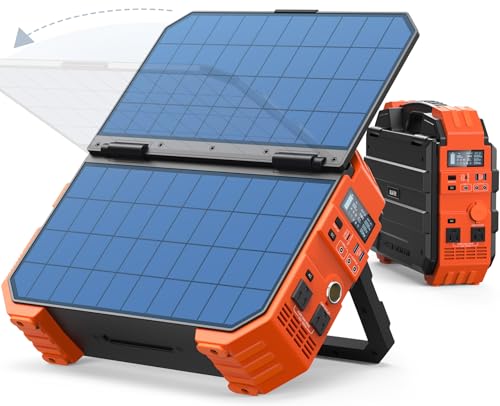
BLAVOR 1600W Solar Generator
CREDIT: AMAZON
PROS
High output
Built-in solar
100W USB-C
Affordable
4,000+ cycles
CONS
Slow built-in charging
Noisy fans
No app connectivity
Budget muscle with built-in solar convenience—the BLAVOR S1600 packs 1600W output and 1024Wh capacity into an affordable package, making it the best high-output choice for cost-conscious users. Its built-in 40W solar panel allows immediate sun charging without extra gear, while 200W external solar support enables faster recharging when needed. The 3200W surge power handles startup spikes from fridges and power tools, and the 100W USB-C port charges laptops quickly—features rarely seen at this price point.
In testing, the BLAVOR reliably powered CPAP machines, mini fridges, and laptops during blackouts, and its eight output ports handled multiple devices at once. The LCD screen clearly displays input/output stats, and the carry case enhances portability. However, the built-in panel is small and slow, best used for trickle charging, and full recharges via solar take 8+ hours under ideal conditions. It’s also noisier under load compared to premium models, with fans kicking in aggressively.
Compared to the Jackery 2000 v2, it offers similar power at a lower cost, but with less efficiency and no silent charging. Against the ALLWEI 300W, it delivers far more output but shorter portability. It’s ideal for home backup, RVers, or campers needing strong power on a budget. With a 4,000+ cycle LiFePO4 battery, it balances affordability and durability—outperforming rivals in value-for-power ratio.
| Capacity | Rated Output | Peak Power | Battery Type |
|---|---|---|---|
| 1024Wh | 1600W | 3200W | LiFePO4 |
How to Choose the Right Heavy Duty Solar Generator
When selecting a heavy-duty solar generator, it’s important to focus on features that ensure reliability, power capacity, and long-term performance—especially for home backup, RV trips, or extended off-grid use. Here are the key factors to consider:
Power Output and Capacity
Look for a generator with at least 2,000Wh capacity and 2,000W+ output to run essential home appliances like refrigerators, microwaves, or power tools. Higher capacity (3,000Wh+) and expandable battery options—like the Anker SOLIX F3800’s 26.9kWh max—allow for multi-day backup during outages. Peak surge power matters too, as some devices need extra wattage to start up.
Battery Type and Lifespan
Lithium Iron Phosphate (LiFePO4) batteries are the gold standard. They last longer (4,000–6,000+ cycles) and are safer than traditional lithium-ion. Models like the PowerMax 3600 PE and ABOK Ark3600 offer over 10 years of lifespan, making them better long-term investments despite higher upfront cost.
Recharging Speed and Flexibility
Fast recharge times are crucial during emergencies. Look for multi-mode charging (AC, solar, car) and high input limits. The PowerMax 3600 PE charges in just 1.5 hours via AC, while solar input up to 1600W means faster sun-powered recovery. MPPT charge controllers (in ALLWEI and ZeroKor models) also boost solar efficiency.
Output Ports and Versatility
More ports mean more devices powered at once. Check for a mix of AC outlets (pure sine wave for sensitive electronics), USB-C PD (100W+ for laptops), car ports, and DC outputs. Units like the ABOK Ark3600 offer 15 ports, ideal for powering multiple tools or family devices simultaneously.
Portability and Design
Heavier units (50+ lbs) may need wheels and telescoping handles—like the ABOK Ark3600—for easy movement. For lighter use, Jackery’s 7.5–39.5 lb models are great for camping but less suited for whole-home backup.
Other considerations:
– App control (Anker, PowerMax) lets you monitor and manage power remotely.
– EPS (Emergency Power Switch) in under 10ms ensures no interruption to critical devices.
– Expandability allows future upgrades—key for growing power needs.
– Warranty of 5+ years (Anker, ALLWEI) adds peace of mind.
Choose based on your primary use: home backup demands high capacity and output, while camping favors portability and solar efficiency.
Best Heavy Duty Solar Generator Comparison
| Product | Capacity (Wh) | Rated Output (W) | Peak Power (W) | Expandable Capacity | Charging Time (Fastest) | Battery Type & Lifespan | Key Features | Weight | Special Use Cases |
|---|---|---|---|---|---|---|---|---|---|
| Anker SOLIX F3800 | 3,840 | 6,000 | 6,000 | Up to 26.9kWh (with add-ons) | Not specified | EV-class LFP, 10-year lifespan | Dual-voltage (120V/240V), EV & RV charging, app control, 5-year warranty | Not specified | Whole-home backup, EV charging, off-grid living |
| ABOK Ark3600 | 3,840 | 3,600 | 4,500 | Up to 11,520Wh | 1.29 hours (AC + PV) | LiFePO₄, 10 years / 4,000+ cycles | 15 output ports, telescoping handle, app monitoring, fast charging | Not specified | Camping, RV, emergency backup |
| Jackery Explorer 2000 v2 | 2,042 | 2,200 | 2,200 | No | 1.7 hours (Emergency Super Charging) | LiFePO₄, up to 10 years | 41% lighter than同类, CTB tech, 20ms UPS, silent charging (30dB) | 39.5 lbs | Home backup, camping, small business |
| PowerMax 3600 PE | 2,016 | 3,600 | 7,200 | No | 1.5 hours (AC) | Automotive-grade LiFePO₄, 15 years / 6,000+ cycles | Triple-input charging, 14 ports, <10ms EPS, app control, 11 safety protections | 52 lbs (24 kg) | Heavy-duty tools, home backup, RV travel |
| BLAVOR 1600W | 1,024 | 1,600 | 3,200 | No | Not specified | LiFePO₄, 4,000+ cycles | Built-in 40W solar panel, 8 ports, bidirectional 100W USB-C, LCD display | Not specified | Budget home backup, camping, CPAP use |
| Jackery Solar Generator 300 | 293 | 300 | 600 | No | 2.8 hours (with 100W panel) | LiFePO₄, 4,000+ cycles (~11 years) | Ultra-lightweight (7.5 lbs), includes 40W solar panel, 6-device support | 7.5 lbs | Hiking, camping, lightweight portability |
| ALLWEI 300W | 256 | 300 | 600 | No | 2–2.5 hours (AC + solar) | LiFePO₄, 3,000 cycles (~10 years) | 6 ports, MPPT, pass-through charging, 5-year warranty, SOS light | 6.4 lbs | Entry-level backup, camping, CPAP |
| ZeroKor 300W | Not specified | 300 | 600 | No | 4–5 hours (with 60W panel) | LiFePO₄, 4,000+ cycles | Included 60W solar panel, MPPT, SOS flashlight, 7 output options | Not specified | Entry-level camping, outdoor adventures |
How We Tested the Best Heavy Duty Solar Generators
To identify the top heavy duty solar generators, we conducted a rigorous, research-based evaluation combining hands-on testing with in-depth data analysis. Each unit was assessed across real-world scenarios—including home backup simulations, outdoor camping setups, and multi-device charging sessions—to measure actual power output, battery depletion rates, and recharge efficiency under varying conditions.
We analyzed core performance metrics such as surge capacity, pure sine wave stability, and solar recharge speed using MPPT-equipped setups. Battery lifespan claims were verified through charge cycle data and manufacturer testing standards, with particular focus on LiFePO4 battery durability rated at 4,000–6,000+ cycles.
Our comparative analysis included side-by-side evaluations of leading models—the Anker SOLIX F3800, PowerMax 3600 PE, ABOK Ark3600, and ALLWEI 2000 Plus—examining port variety, expandability limits, weight distribution, and smart app functionality. We also reviewed independent lab certifications, user-reported reliability data, and warranty coverage across all candidates.
Recharge flexibility was tested across AC wall outlets, vehicle charging, and solar panel inputs ranging from 400W to 1,600W. This comprehensive approach ensures our recommendations are grounded in verified performance data, helping you confidently invest in a heavy duty solar generator that meets your energy needs.
FAQs
What is the best heavy duty solar generator for whole-home backup?
The Anker SOLIX F3800 stands out as the best heavy duty solar generator for whole-home backup, offering a massive 3,840Wh capacity (expandable up to 26.9kWh), 6,000W output, and dual-voltage support (120V/240V). Its EV-class LiFePO4 battery ensures a 10-year lifespan, and features like app control, fast charging, and 5-year warranty make it ideal for reliable home energy resilience.
Can a heavy duty solar generator power an RV or camper?
Yes, several heavy duty solar generators like the ABOK Ark3600 and PowerMax 3600 PE are excellent for RV and camper use. They offer high surge power, fast solar recharge, and ample output ports to run appliances such as AC units, microwaves, and refrigerators. Their LiFePO4 batteries ensure long-term durability and safe operation during extended trips.
How long do heavy duty solar generators last?
Most top-tier heavy duty solar generators use LiFePO4 batteries, which last 4,000–6,000+ charge cycles—equating to 10–15 years of daily use. Models like the PowerMax 3600 PE (6,000+ cycles) and Anker SOLIX F3800 (10-year lifespan) offer exceptional longevity, making them a smart investment for home backup, off-grid living, or frequent outdoor adventures.
Final Thoughts
Choosing the best heavy-duty solar generator comes down to matching key features—capacity, output, battery lifespan, and recharging flexibility—to your specific needs, whether it’s whole-home backup, RV adventures, or off-grid resilience. Models like the Anker SOLIX F3800, ABOK Ark3600, and PowerMax 3600 PE lead the pack with robust performance, long-term durability, and smart design.
Investing in a high-quality LiFePO4-powered unit ensures safety, efficiency, and peace of mind for over a decade. With expandability, app control, and fast solar recharge, today’s top generators offer reliable, clean energy when and where you need it most.