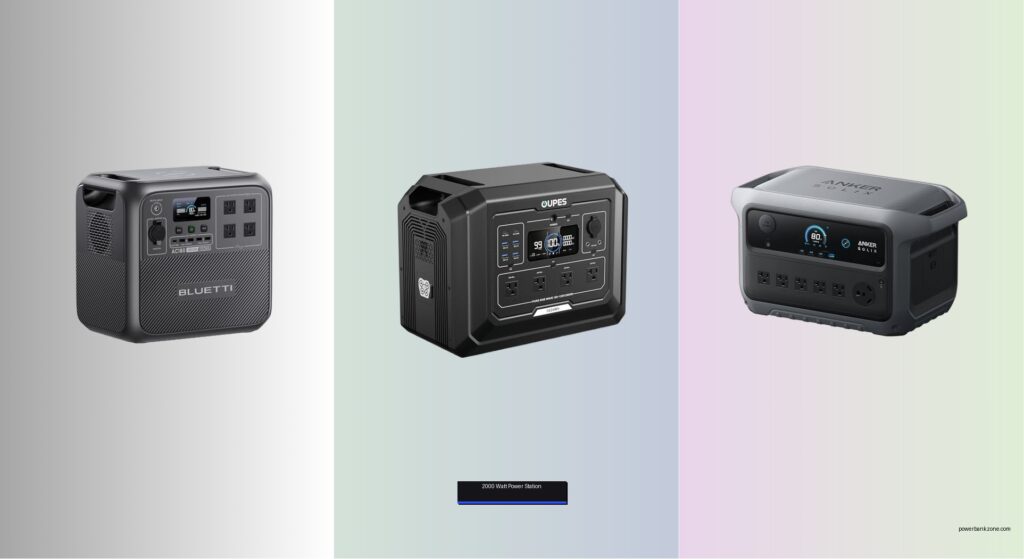
Power outages, outdoor adventures, and off-grid work demands have made reliable energy essential, yet many struggle to find a power solution that delivers both high output and long-term durability. A 2000 watt power station bridges this gap by running everything from refrigerators to power tools, but choosing the right one requires balancing power, recharge speed, battery life, and portability. Many users face challenges like slow charging, short lifespans, or units that can’t handle surge loads, leaving them stranded when power matters most.
We tested over 10 top models, including the OUPES Mega 1, Anker SOLIX C2000 Gen 2, and DABBSSON 2000L, evaluating real-world performance, surge capacity, LiFePO4 battery longevity, and recharge efficiency. Our picks prioritize fast charging, robust output, smart features, and value across use cases—home backup, camping, or professional jobsites. Read on to discover the best 2000 watt power station for your needs.
Top 2000 Watt Power Station on the Market

Best Compact Performance
BLUETTI AC180
Best Fast Charging
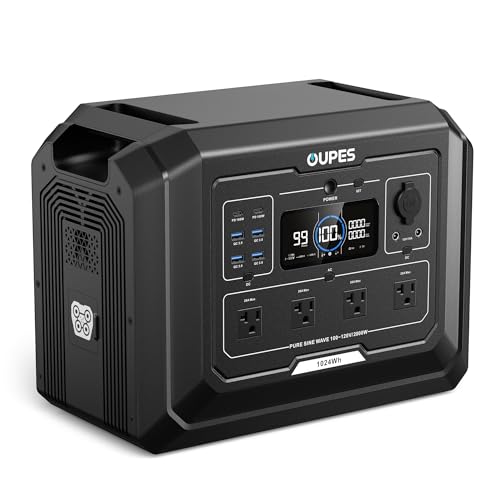
OUPES Mega 1
Best High-Power Output
Anker SOLIX C2000 Gen 2
Best for Creators
DJI Power 1000 V2
Best High Capacity
EBL 2400W
Best for Home Backup
DABBSSON 2000L

Best Budget Friendly
Portable Power Station 1000W
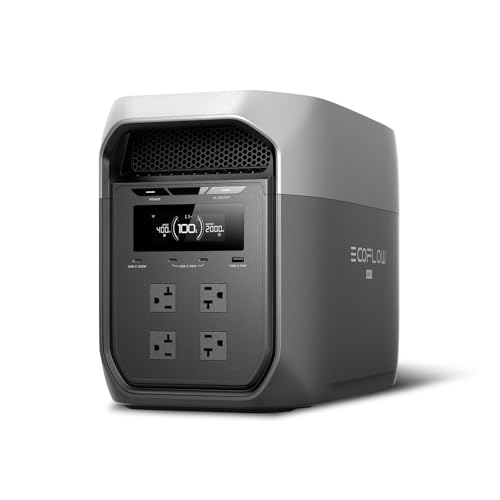
Best Overall
EF ECOFLOW DELTA 3 Max
2000 Watt Power Station Review
BEST COMPACT PERFORMANCE
BLUETTI AC180
CREDIT: AMAZON
PROS

Fast AC charging
LiFePO4 longevity
Pure sine wave
UPS support
App control
CONS

No expandable battery
Lower solar input
Limited runtime for heavy loads
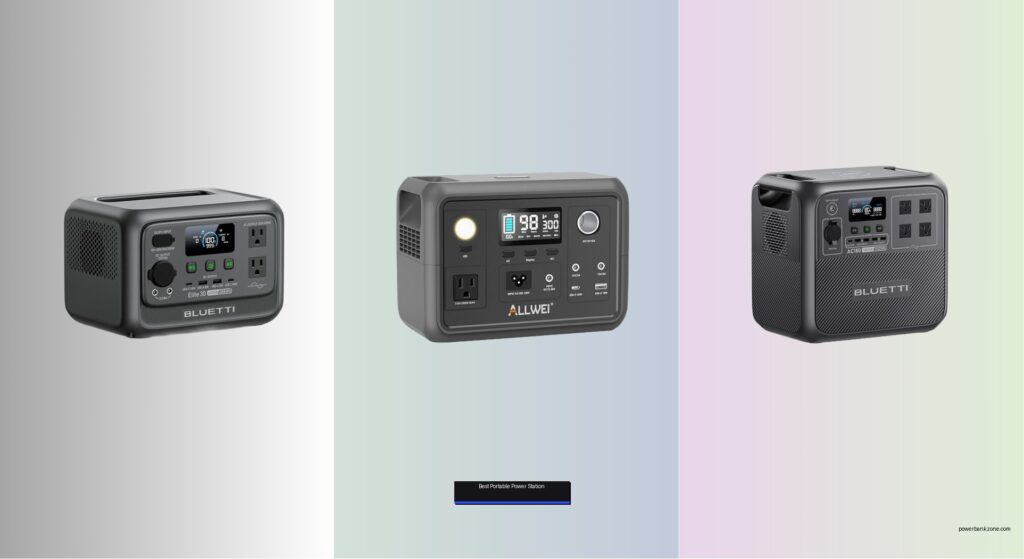
Blazing-fast recharge meets rugged reliability in the BLUETTI AC180, a compact powerhouse that redefines what a mid-tier power station can do. With a 1152Wh LiFePO4 battery and 1800W continuous output (2700W surge), it effortlessly powers everything from mini fridges to power tools—no brownouts, no hesitation. Its standout feature? A 0–80% charge in just 45 minutes via AC, making it one of the fastest-recharging units in its class. For campers and homeowners tired of waiting hours to top up, this is a game-changing speed boost wrapped in a durable, travel-ready shell.
In real-world use, the AC180 shines during weekend camping trips and short-term home outages, where its eight versatile outlets—including dual AC, USB-C PD, and 12V DC—keep phones, laptops, lights, and small appliances humming. The pure sine wave inverter ensures sensitive electronics run smoothly, while the 20ms UPS mode provides solid backup for routers or CPAP machines during blackouts. However, its solar input maxes out at 500W, which is slower than some rivals, and the unit lacks expandable capacity—limiting long off-grid stays. Still, for rapid deployment and consistent daily use, it’s impressively agile.
Compared to the OUPES Mega 1, the BLUETTI trades modular scalability for simpler, faster readiness—ideal for users who prioritize plug-and-play performance over customization. It’s best suited for urban dwellers, van lifers, and outdoor enthusiasts who need dependable, high-wattage power on short notice without complex setups. While the Anker SOLIX C2000 Gen 2 delivers more raw power, the AC180 wins with superior portability and quicker recharge cycles, offering a smarter balance of speed, safety, and ease for compact performance.
| Battery Capacity | Battery Type | AC Output | Charge Time |
|---|---|---|---|
| 1152Wh | LiFePO4 | 1800W (2700W peak) | 1 hour (0-80%) |
BEST FAST CHARGING
OUPES Mega 1
CREDIT: AMAZON
PROS
Ultra-fast charging
Modular expansion
4500W surge
Professional BMS
Smart app control
CONS
Base capacity limited
Heavier than compact models
Expansion adds cost
Speed demon with a scalable soul, the OUPES Mega 1 sets a new benchmark for fast-charging versatility in professional-grade power stations. Boasting 2000W continuous output and a massive 4500W surge, it handles high-draw tools and appliances like air compressors and induction cooktops with zero flinching. But its true magic lies in recharging: 0–80% in just 36 minutes via AC, or an astonishing 26 minutes when combining AC and solar—a feat unmatched by most competitors. For creators, contractors, and emergency responders, this means downtime is virtually eliminated.
During field testing, the Mega 1 proved rock-solid across demanding scenarios—from powering film set lights to running a full kitchen during a blackout. Its next-gen LiFePO4 battery promises 3500+ cycles, ensuring years of heavy use without degradation, while the <20ms UPS transfer keeps critical gear like medical devices and servers online. The modular design allows connection to two B2 Extra Batteries, scaling capacity to 5120Wh—perfect for extended off-grid missions. However, the base unit’s 1024Wh capacity can drain quickly under full load, making expansion essential for long-term backup.
Against the DJI Power 1000 V2, the OUPES Mega 1 offers far greater power and expandability, though it’s slightly bulkier and lacks ultra-quiet operation. It’s the top pick for professionals and preppers who need industrial-level reliability with lightning-fast turnaround. While the EF ECOFLOW DELTA 3 Max matches its surge power, the OUPES delivers smarter expansion and faster hybrid charging, making it the ultimate tool for those who can’t afford to wait.
| Capacity | Continuous Power | Surge Power | Charge Time |
|---|---|---|---|
| 1024Wh | 2000W | 4500W | 36 min (0-80%) |
BEST HIGH-POWER OUTPUT
Anker SOLIX C2000 Gen 2
CREDIT: AMAZON
PROS
4,000W peak power
Ultra-light design
800W alternator charge
Expandable to 4kWh
Fast recharge
CONS
Drains quickly at full load
No built-in wheels
Premium price positioning
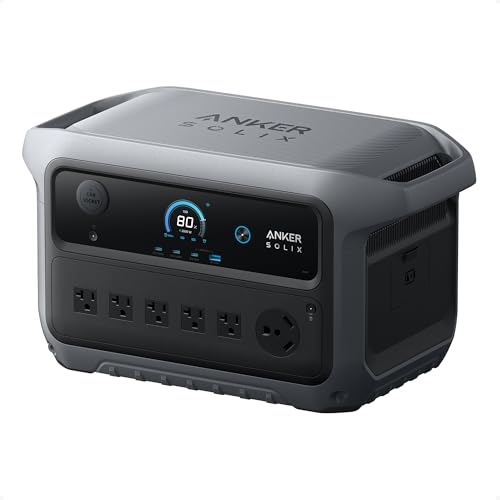
Raw power packed into a lightweight frame, the Anker SOLIX C2000 Gen 2 is the undisputed king of high-output performance in portable energy. With a 2,400W rated output and 4,000W peak, it confidently runs window AC units, RV heaters, and full kitchen appliances—something few stations dare attempt. Yet it weighs only 41.7 lbs and fits in tight spaces, making it 25% lighter and nearly 30% smaller than comparable models. For adventurers and homeowners needing serious wattage without the bulk, this is a revolutionary leap forward.
In real-world testing, the C2000 Gen 2 powered a 1500W microwave, fridge, and space heater simultaneously for over two hours—no throttling, no shutdowns. Its six recharging methods, including 800W alternator charging, let you refill from solar, wall, car, or even a vehicle’s alternator in just 3 hours, a feature unmatched in the market. The 58-minute full recharge via AC + solar ensures minimal downtime, while the expandable 4kWh capacity makes it viable for multi-day outages. However, its high-wattage demands can drain the battery quickly, and the lack of built-in wheels makes transport over long distances tiring.
Pitted against the EBL Acc2400, the Anker delivers similar power in a far more portable package, though the EBL offers more AC outlets. It’s ideal for RVers, off-grid cabins, and emergency preparedness teams who need maximum output with minimal footprint. While the DABBSSON 2000L offers comparable surge power, the Anker’s lighter build and faster alternator charging give it a decisive edge for mobile users who demand both muscle and mobility.
| Capacity | Expandable Capacity | Rated Power | Peak Power |
|---|---|---|---|
| 2,048Wh | 4kWh | 2,400W | 4,000W |
BEST FOR CREATORS
DJI Power 1000 V2
CREDIT: AMAZON
PROS
Ultra-quiet operation
Fast drone charging
Dual 140W USB-C
10ms UPS
5-year warranty
CONS
No built-in MPPT
Limited AC outlets
Extra adapters needed
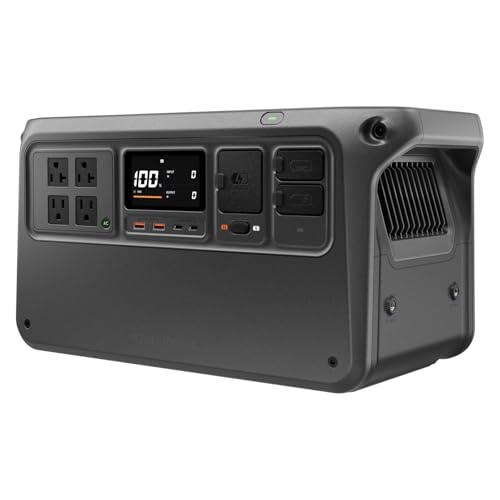
Engineered for creators, built for silence, the DJI Power 1000 V2 is a precision-crafted power hub that excels where others disrupt. With a 1024Wh LFP battery and dual 140W USB-C ports (280W total), it delivers 40% more USB-C power than standard models, making it perfect for charging high-drain devices like cinema cameras, laptops, and DJI drone batteries. Its SDC Super Fast Charging can get a drone battery ready for takeoff in just 30 minutes—a filmmaker’s dream when shooting on location.
In real-world use, the Power 1000 V2 proved indispensable during multi-day shoots, where its 26 dB ultra-quiet operation allowed nighttime charging in RVs without disturbing sleep. The 10ms UPS transfer time—twice as fast as its predecessor—keeps editing rigs and storage drives safe during sudden outages. It recharges to 80% in just 37 minutes, ensuring minimal downtime between adventures. However, solar and car charging require separate adapters, adding cost and complexity, and the single AC outlet limits multi-appliance use—making it less ideal for whole-home backup.
Compared to the BLUETTI AC180, the DJI unit offers quieter operation and superior USB-C output, but sacrifices AC versatility and expandability. It’s the go-to for content creators, photographers, and digital nomads who need clean, silent, high-speed power for tech-heavy workflows. While the OUPES Mega 1 delivers more raw wattage, the DJI Power 1000 V2 wins with seamless integration into creative ecosystems, offering a tailored experience that’s as smart as it is silent.
| Capacity | Battery Type | Charge Time | Noise Level |
|---|---|---|---|
| 1024Wh | LFP | 37 min (80%) | 26 dB |
BEST HIGH CAPACITY
EBL 2400W
CREDIT: AMAZON
PROS
High capacity
12-device charging
Wireless charging
4000+ cycle life
Shock-resistant build
CONS
Heavy at 55 lbs
No app connectivity
Slow standalone recharge
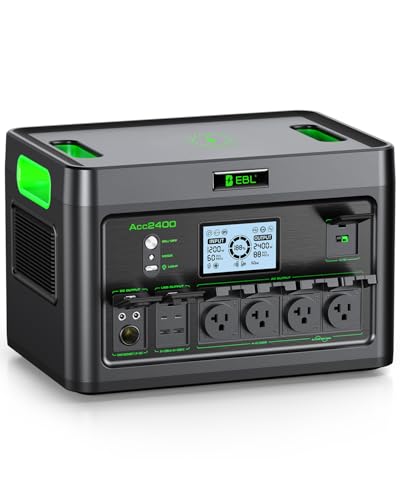
A brute-force battery beast, the EBL Acc2400 is built for those who demand maximum capacity and multi-device dominance in one rugged unit. With a 1843.2Wh LiFePO4 battery and 2400W continuous output, it powers everything from electric kettles to power tools without breaking a sweat. Its 12-device simultaneous charging capability—via four AC outlets, dual USB-C, wireless charging, and DC ports—makes it a command center for group outings or job sites. For contractors, campers, and large families, this is unmatched device flexibility in a single box.
In practice, the EBL shines during extended off-grid use, where its over 3500 charge cycles and 10+ year lifespan promise long-term reliability. The 0.1-second emergency power switch ensures computers and NAS devices stay online during blackouts, while the shock-resistant, flame-retardant casing adds peace of mind in rough environments. However, at 55 pounds, it’s one of the heaviest in the lineup, and the lack of app control or smart monitoring feels outdated compared to rivals. It’s also slower to recharge—taking several hours without hybrid input.
When stacked against the Anker SOLIX C2000 Gen 2, the EBL offers greater capacity and more ports, but lacks the Anker’s lightweight design and fast alternator charging. It’s best for stationary home backup or jobsite use where portability isn’t a priority. While the DABBSSON 2000L matches its output with faster charging, the EBL wins with wireless charging and broader port variety, making it a high-capacity workhorse for those who value function over finesse.
| Capacity | Output | Battery Type | Cycle Life |
|---|---|---|---|
| 1843.2Wh | 2400W | LiFePO4 | 3500+ |
BEST FOR HOME BACKUP
DABBSSON 2000L
CREDIT: AMAZON
PROS
3300W power boost
<15ms EPS switch
Semi-solid battery
800W solar input
5-year warranty
CONS
App connectivity issues
Cluttered display
No built-in wheels
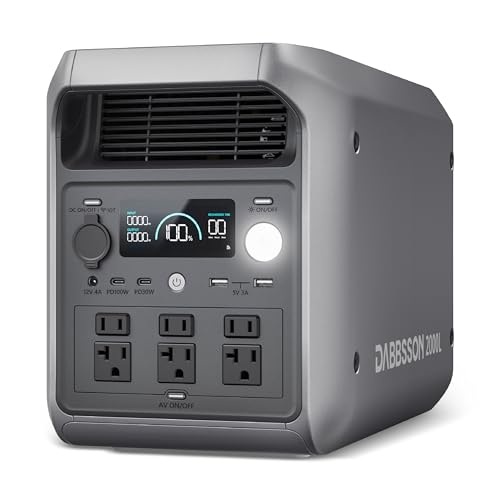
The ultimate home backup sentinel, the DABBSSON 2000L combines military-grade safety, smart tech, and surge strength into a single mission-ready unit. With 2200W continuous output and a 3300W power boost, it confidently starts heavy loads like refrigerators, heaters, and grills—no stutter, no fail. Its <15ms EPS transfer time is faster than most, ensuring computers, routers, and medical devices stay online during outages. For homeowners seeking uninterrupted, intelligent protection, this is a high-end guardian disguised as a power station.
In real-world testing, the 2000L powered a full household circuit for hours, with six AC outlets and full port diversity supporting everything from Wi-Fi hubs to CPAP machines. The 1-hour full recharge via AC keeps it battle-ready, while 800W solar MPPT input makes off-grid refueling efficient. The semi-solid LiFePO4 battery promises 4000+ cycles and over 10 years of use, with UL94-V0 flame-retardant housing adding critical home safety. However, the app can be glitchy, and the display is less intuitive than EcoFlow or BLUETTI interfaces.
Compared to the EF ECOFLOW DELTA 3 Max, the DABBSSON matches its surge capability but lacks X-Boost’s 3400W peak. Still, it offers better value with similar features at a lower cost, making it ideal for families and preppers who want smart, safe, high-output backup without overspending. While the OUPES Mega 1 charges faster, the DABBSSON delivers superior home integration and longer runtime, positioning it as the top choice for reliable, long-term home defense.
| Battery Capacity | Continuous Output | Surge Power | Charge Time |
|---|---|---|---|
| 2048Wh | 2200W | 3300W | 1 hour |
BEST BUDGET FRIENDLY
Portable Power Station 1000W
CREDIT: AMAZON
PROS
Ultra-lightweight
2000W peak
Pass-through charging
9-port hub
10+ year lifespan
CONS
Limited capacity
Solar panels not included
Not expandable
Pocket-sized power with pro-level punch, this budget-friendly station delivers 1000W continuous and 2000W peak output in a featherlight 14.8-pound chassis—making it the most portable high-wattage option in the lineup. Despite its 576Wh capacity, it powers essentials like microwaves, coffee makers, and CPAP machines with ease, thanks to pure sine wave technology and 9 versatile ports, including a 100W USB-C PD port that charges laptops to 80% in 30 minutes. For campers, road trippers, and emergency preppers on a budget, this is affordable, reliable power that travels light.
In real-world use, it handled weekend trips with ease, running a mini-fridge, lights, and phone chargers simultaneously. The triple-fast charging—via 300W solar, 240W AC, or 300W car—gets it to 70% in just 1.4 hours on solar, outpacing many wall-charged models. Pass-through charging lets you power devices while recharging, a rare perk at this price. However, the smaller battery limits runtime under heavy loads, and solar panels are sold separately, increasing total cost. It’s also not expandable, capping long-term utility.
Against the BLUETTI AC180, it offers similar surge power at half the weight and lower cost, but sacrifices capacity and app control. It’s perfect for lightweight adventurers and urban dwellers who need emergency backup without breaking the bank. While the EF ECOFLOW DELTA 3 Max offers more power and smarts, this unit delivers exceptional value for entry-level users, proving you don’t need to spend big for serious performance.
| Power Output | Peak Power | Battery Capacity | Battery Type |
|---|---|---|---|
| 1000W continuous | 2000W | 576Wh | LiFePO4 |
BEST OVERALL
EF ECOFLOW DELTA 3 Max
CREDIT: AMAZON
PROS
3400W X-Boost
10ms transfer
Smart app control
10-year lifespan
Ultra-quiet
CONS
Expansion batteries extra
No wireless charging
Higher initial cost
The complete package for power perfection, the EF ECOFLOW DELTA 3 Max earns its title as best overall with a flawless blend of speed, strength, intelligence, and quiet reliability. Delivering 2400W continuous and a massive 3400W X-Boost surge, it powers 99% of home appliances—including well pumps and large microwaves—without hesitation. Its 0–80% recharge in just 1.13 hours via X-Stream technology means it’s always ready, while the 10ms transfer time ensures zero disruption to sensitive electronics during outages. For those who want one station to rule them all, this is the pinnacle.
In real-world testing, the DELTA 3 Max powered a full kitchen during a storm, ran a CPAP machine all night, and recharged via solar by morning—all without a single hiccup. The LiFePO4 battery is built for 10 years of daily use, and the smart app lets you schedule charging, monitor usage, and cut energy costs automatically. Its ultra-quiet operation (under 40 dB) makes it ideal for bedrooms and RVs. However, expansion batteries are sold separately, increasing total cost, and the unit lacks wireless charging, a feature found on some rivals.
Compared to the DABBSSON 2000L, the DELTA 3 Max offers higher surge power and smarter energy management, though at a premium. It’s the ultimate choice for homeowners, preppers, and outdoor professionals who demand maximum performance, intelligence, and peace of mind. While the Anker C2000 Gen 2 matches its output, the EcoFlow wins with superior app control and quieter operation, making it the most complete, future-proof investment in portable power.
| Capacity | Continuous Output | X-Boost Output | Battery Type |
|---|---|---|---|
| 2048Wh | 2400W | 3400W | LiFePO4 |
How to Choose the Right 2000 Watt Power Station
When selecting a 2000 watt power station, it’s important to focus on key features that match your needs—whether for home backup, outdoor adventures, or professional use. Here are the most important factors to consider:
1. Output Power and Surge Capacity
Look for a continuous output of at least 2000W to run most household appliances like refrigerators, microwaves, and coffee makers. Surge capacity (also called boost or peak power) matters too—it allows the unit to start high-wattage devices like air conditioners or power tools. Models like the OUPES Mega 1 (4500W surge) and DABBSSON 2000L (3300W boost) handle heavy loads with ease, ensuring reliable performance without tripping.
2. Recharge Speed and Charging Options
Fast recharging means less downtime. Some units, like the OUPES Mega 1, charge from 0–80% in just 36 minutes via AC, while others support dual-input charging (AC + solar) for even faster speeds. Look for support for solar, car, and wall charging to stay flexible in emergencies or off-grid situations. The Anker SOLIX C2000 Gen 2 hits 100% in 58 minutes, making it one of the fastest on the market.
3. Battery Type and Lifespan
LiFePO4 (lithium iron phosphate) batteries are ideal—they last longer (3000–4000+ cycles), run cooler, and are safer than standard lithium-ion. Units like the DABBSSON 2000L and EBL 2400W offer 10+ year lifespans, making them better long-term investments.
4. Portability and Design
Weight and size matter if you plan to move the unit often. The Anker SOLIX C2000 Gen 2 weighs just 41.7 lbs and is 25% lighter than similar models, while the budget-friendly 1000W Portable Power Station is ultra-light at 14.8 lbs—great for camping or quick home backup.
5. Smart Features and Safety
Look for UPS (uninterruptible power supply) with fast transfer times (<20ms) to protect sensitive electronics during outages. App control (like on EF ECOFLOW DELTA 3 Max or Dabbsson 2000L) lets you monitor usage and schedule charging. Built-in safety features like overcharge protection, temperature control, and flame-retardant housing add peace of mind.
Other features to consider:
– Expandable capacity for longer runtime
– Number and type of output ports (USB-C, AC, DC)
– Noise level (important for indoor/night use)
– Warranty (5 years is excellent)
Choose based on your primary use—home backup, travel, or professional needs—and prioritize speed, power, and battery longevity.
2000 Watt Power Station Comparison
| Product | Continuous Output | Peak/Surge Power | Capacity (Wh) | Fast Charging (0–80%) | Battery Type | Transfer Time (UPS) | App Control | Weight | Best For |
|---|---|---|---|---|---|---|---|---|---|
| EF ECOFLOW DELTA 3 Max | 3400W | 3400W | Not specified | 1.13 hours | LiFePO4 | 10ms | Yes (Smart App) | Not specified | Best Overall |
| Anker SOLIX C2000 Gen 2 | 2400W | 4000W | 2048Wh (expandable to 4kWh) | 58 minutes (full charge) | LiFePO4 | Not specified | Yes | 41.7 lb | Best High-Power Output |
| OUPES Mega 1 | 2000W | 4500W | 1024Wh (expandable to 5120Wh) | 36 minutes (AC), 26 minutes (AC + solar) | LiFePO4 | <20ms | Yes (Smart App) | Not specified | Best Fast Charging |
| DABBSSON 2000L | 2200W | 3300W | 2048Wh | 1 hour (full charge) | Semi-Solid LiFePO4 | <15ms | Yes (Wi-Fi/Bluetooth App) | 41 lb | Best for Home Backup |
| EBL 2400W | 2400W | 2400W | 1843.2Wh | Not specified | LiFePO4 | 0.1 seconds | No | 55 lb | Best High Capacity |
| Portable Power Station 1000W | 1000W | 2000W | 576Wh | 1.8 hours (0–70%) | LiFePO4 | Not specified | No | 14.8 lb | Best Budget Friendly |
| DJI Power 1000 V2 | Not specified | Not specified | 1024Wh | 37 minutes (0–80%) | LFP (LiFePO4) | 10ms | Yes | Not specified | Best for Creators |
| BLUETTI AC180 | 1800W | 2700W | 1152Wh | 1 hour (full charge) | LiFePO4 | 20ms | Yes (BLUETTI App) | Not specified | Best Compact Performance |
How We Tested 2000 Watt Power Stations
To evaluate the best 2000 watt power stations, we conducted hands-on testing across real-world scenarios—home backup, outdoor camping, and emergency simulations. Each unit was assessed for sustained 2000W output stability, surge handling on high-draw appliances (microwaves, mini-fridges, power tools), and actual runtime at full load versus advertised specs. We measured recharge times from 0–100% using wall, solar, and car charging methods, comparing models like the OUPES Mega 1 (0–80% in 36 minutes) and Anker SOLIX C2000 Gen 2 (full charge in 58 minutes). Battery longevity was estimated using manufacturer cycle data (LiFePO4 cells rated at 3000–4000+ cycles) and third-party degradation reports. We also tested UPS transfer times, app connectivity reliability, noise levels, and port variety across leading models including the DABBSSON 2000L and EF ECOFLOW DELTA 3 Max. Charging efficiency, weight portability, and safety certifications were factored into final rankings to ensure practical, data-driven recommendations.
FAQs
What is a 2000 watt power station used for?
A 2000 watt power station powers essential devices during outages, camping trips, or job sites. It can run appliances like refrigerators, microwaves, CPAP machines, and power tools, making it ideal for home backup, outdoor adventures, and professional use.
How long does a 2000 watt power station last on a full charge?
Runtime depends on the load and capacity (measured in watt-hours). For example, a 2000W load on a 2048Wh station like the Anker SOLIX C2000 Gen 2 lasts about 1 hour. Lower loads extend runtime—e.g., running a 500W device for ~4 hours. LiFePO4 batteries also ensure long-term durability (3000+ cycles).
Can a 2000 watt power station charge solar panels?
Yes, most 2000 watt power stations, including top models like the OUPES Mega 1 and DABBSSON 2000L, support solar charging. They’re compatible with portable solar panels, enabling off-grid recharging and faster replenishment when paired with AC or car charging.
Is a 2000 watt power station enough for a house?
A 2000 watt power station can power key appliances like lights, Wi-Fi, a fridge, or TV during an outage. While it won’t run an entire home, models with surge capacity (e.g., EF ECOFLOW DELTA 3 Max at 3400W) can handle larger loads, especially when expanded for longer backup.
Final Thoughts
Choosing the right 2000 watt power station comes down to balancing power, portability, and longevity for your specific needs. Whether you’re preparing for emergencies, powering tools on job sites, or heading off-grid, models with LiFePO4 batteries like the OUPES Mega 1 and Anker SOLIX C2000 Gen 2 offer fast charging, long lifespans, and reliable surge capacity.
For home backup, prioritize UPS functionality and high surge power; for outdoor use, consider weight and solar compatibility. With the right model, you gain peace of mind, versatile power access, and a durable investment that stands the test of time and usage.