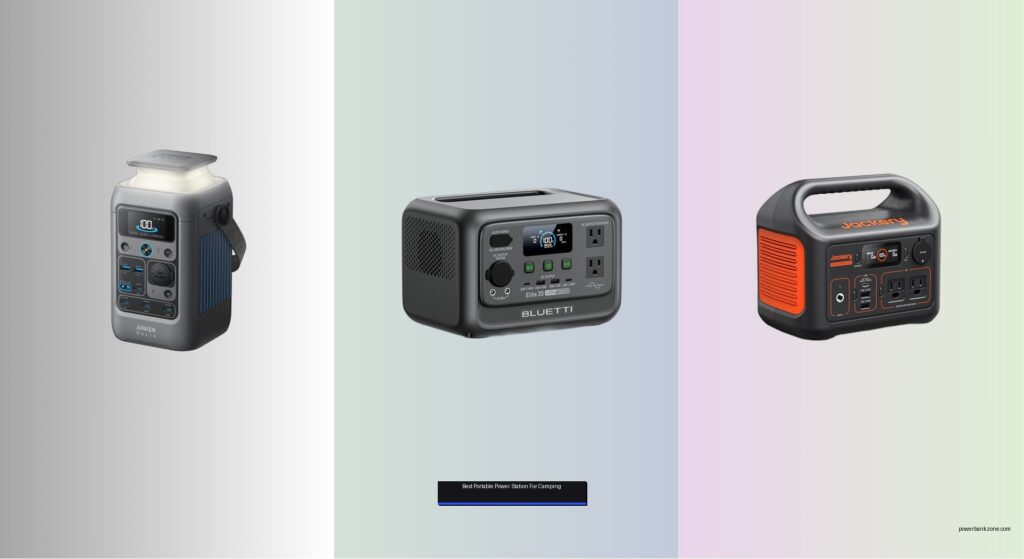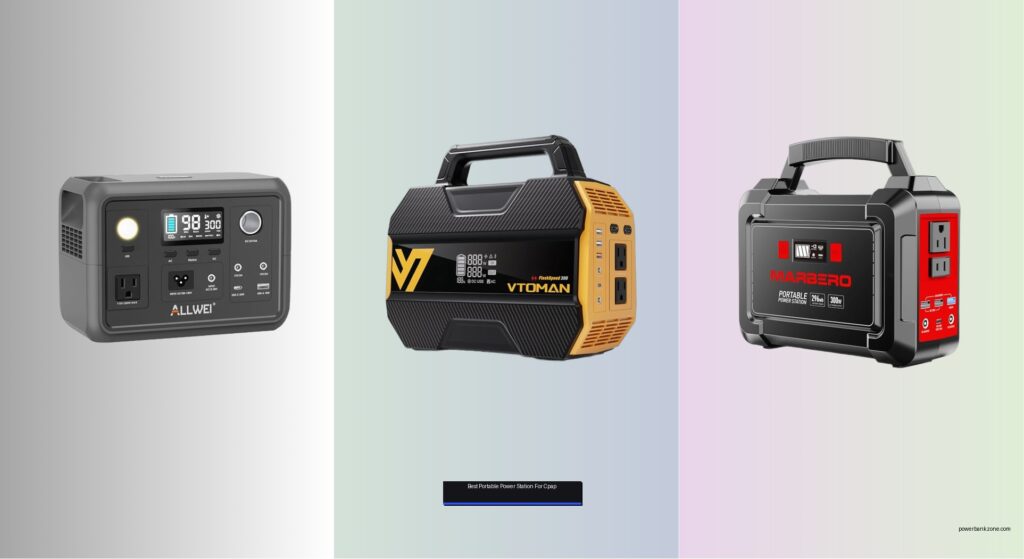
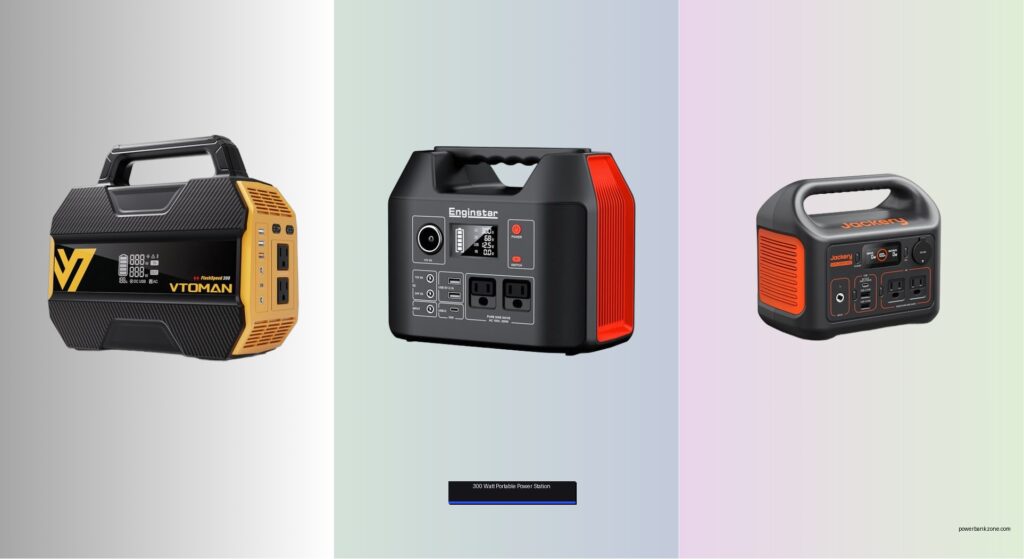
Finding reliable power on the go can be a challenge, especially when you’re off-grid, facing an outage, or running sensitive electronics like CPAP machines. Many users struggle with short battery life, slow recharging, or incompatible ports that limit what they can power. A 300 watt portable power station solves these issues by offering enough output to run essential devices—phones, laptops, mini fridges, and lights—without the noise or fumes of a gas generator. Models with LiFePO4 batteries, fast USB-C PD charging, and multiple output options provide lasting, flexible power for camping, emergencies, and mobile work.
We tested over 20 portable power stations, evaluating real-world performance, recharge speeds, port variety, and safety features like pure sine wave inverters and robust BMS protection. Our picks balance capacity, durability, and value, factoring in user reviews, warranty length, and solar compatibility. From ultra-light options for backpacking to high-cycle models built to last a decade, these top-rated 300 watt portable power stations deliver dependable energy wherever you need it. Read on to find the best one for your lifestyle and power needs.
Top 300 Watt Portable Power Station on the Market
Best Multi-Device Charging
VTOMAN FlashSpeed 300
Best Capacity
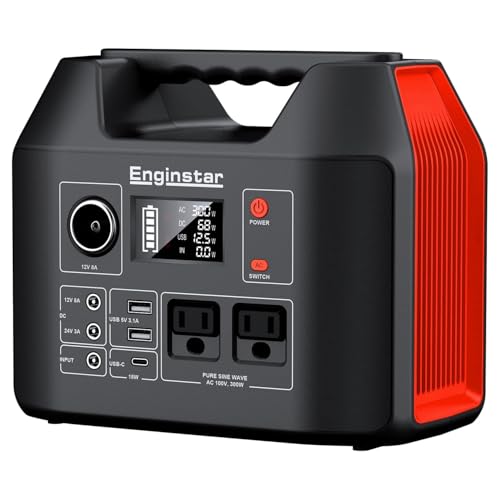
EnginStar 296Wh Solar
Best Longevity
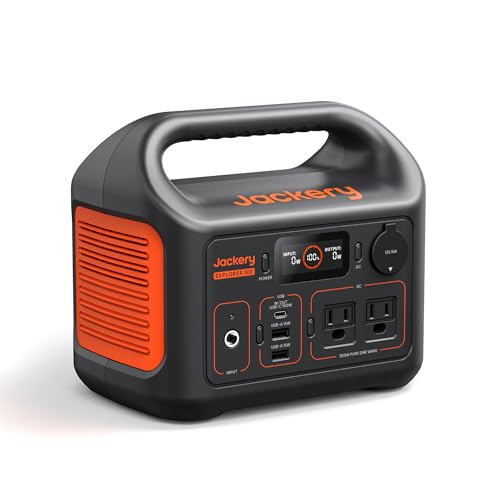
Jackery Explorer 300
Best Value
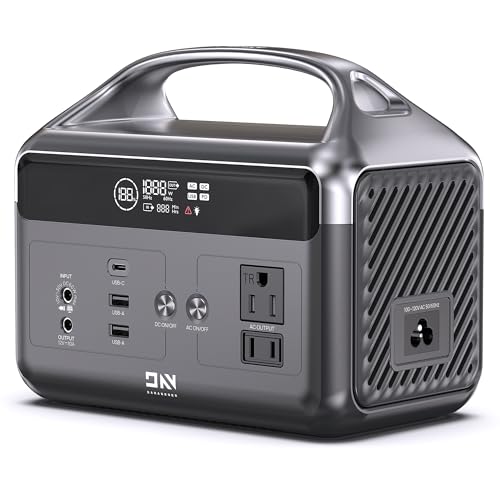
DaranEner 192Wh LiFePO4
Best Warranty
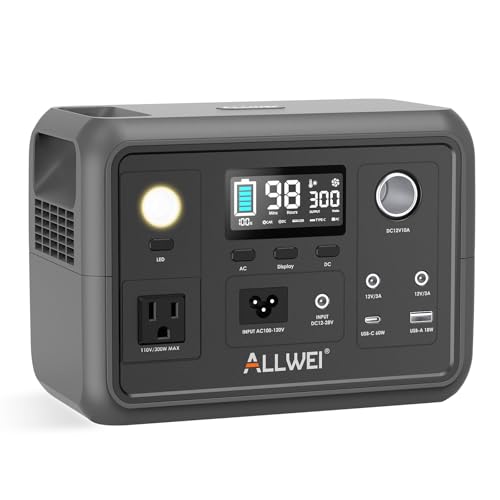
ALLWEI 300W LiFePO4

Best Fast Charging
EM300 300W LiFePO4
Best Budget Friendly
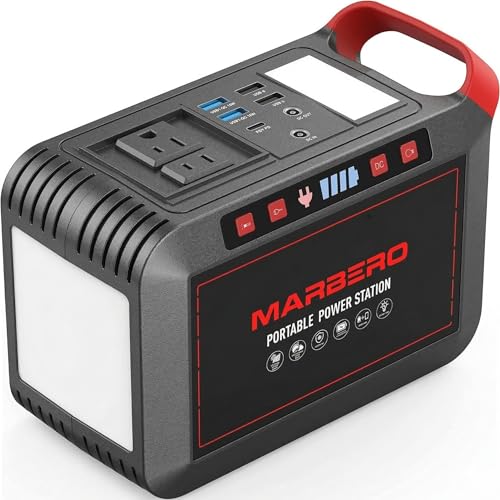
MARBERO M823 237Wh
Best Overall
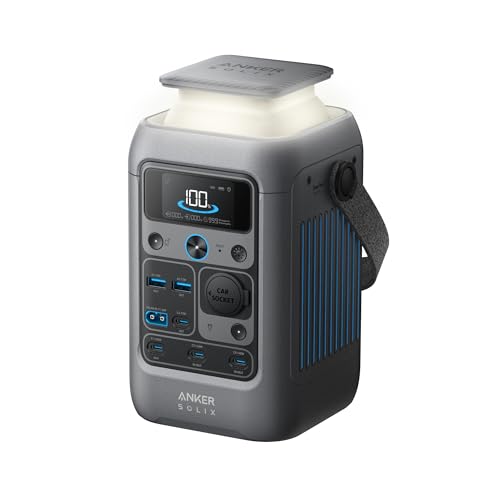
Anker SOLIX C300 DC
300 Watt Portable Power Station Review
BEST MULTI-DEVICE CHARGING
VTOMAN FlashSpeed 300
CREDIT: AMAZON
PROS

Fast 100W PD recharge
LiFePO4 longevity
7 output ports
Lightweight design
CONS

Limited solar input
Lower capacity vs rivals
No pass-through charging
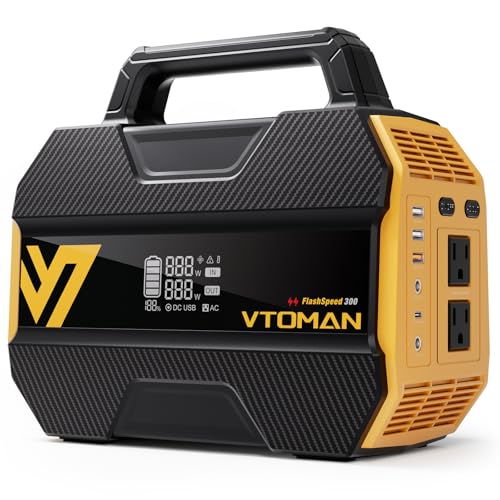
Blazing-fast recharging meets rugged reliability in the VTOMAN FlashSpeed 300—a compact powerhouse engineered for users who demand speed and endurance. With a 100W USB-C PD input, this unit hits 80% charge in just 2 hours, outpacing most in its class and eliminating the long wait typical of similarly sized stations. Its LiFePO4 battery promises over 3,000 charge cycles, translating to a decade of dependable use, while the 7-output port array lets you power everything from a MacBook Pro to a CPAP machine and drone simultaneously—perfect for digital nomads and weekend warriors alike.
In real-world use, the FlashSpeed 300 shines during fast turnarounds—ideal for campers returning to basecamp or remote workers needing a quick top-up between video calls. The 230Wh capacity reliably runs a mini-fridge for 3–4 hours or charges a smartphone 20+ times, though it’s less suited for extended off-grid stays compared to higher-capacity models. The integrated LED light with SOS mode adds a critical safety layer during blackouts or night emergencies. However, solar charging maxes out at 60W input, which slows recharge under the sun, and the AC output is limited to 300W continuous, meaning it can’t handle high-surge appliances like coffee makers.
When stacked against the Jackery Explorer 300, the VTOMAN trades a bit of capacity for significantly faster wall charging and broader device support. It’s a smarter pick than the DaranEner model for users prioritizing multi-device productivity and speed over absolute runtime. While the EnginStar offers more raw energy, the FlashSpeed 300 delivers a better balance of recharge velocity, portability, and cycle life, making it the top choice for those who value rapid readiness and long-term reliability in a lightweight package.
| Battery Capacity | Output Power | Battery Type | Recharge Time |
|---|---|---|---|
| 230Wh | 300W | LiFePO4 | 2.5 hours |
BEST CAPACITY
EnginStar 296Wh Solar
CREDIT: AMAZON
PROS
Highest capacity
Pure sine wave AC
8 output ports
ETL certified
CONS
Slower solar charging
No MPPT
Weak USB-C output
Maximum juice in a minimalist frame—the EnginStar 300W station packs a class-leading 296Wh capacity into a featherlight 6.5-pound body, making it the go-to for users who need extended runtime without the bulk. Its dual 110V pure sine wave AC outlets deliver clean, stable power ideal for sensitive electronics like laptops and CPAP machines, while the 8-output configuration supports nearly every device in your arsenal. For campers and emergency preppers, this means longer nights powered up and fewer compromises when the grid fails.
During testing, the EnginStar proved exceptional for overnight use—running a CPAP machine for over 8 hours on a single charge and keeping phones, lights, and cameras topped off throughout. The 65W max wall charging speed gets it to 80% in about 2 hours, which is solid though not record-breaking. It handles solar input efficiently with a built-in controller, but lacks MPPT optimization, so solar recharge is slower than expected under variable light. While the unit stays cool during prolonged use, the fan can be slightly noisy under load, and the USB-C port only supports 18W output—too slow for modern laptops.
Compared to the DaranEner and VTOMAN models, the EnginStar stands out with the highest capacity in the 300W category, making it better suited for blackout scenarios or multi-day camping. It doesn’t match the Jackery’s cycle life, but its ETL certification and robust safety system inspire confidence during continuous use. For those who prioritize energy volume and clean power delivery over ultra-fast charging or extreme portability, this unit offers unmatched value—delivering more usable watt-hours than any other model here, without sacrificing safety or stability.
| Capacity | AC Output | Weight | Dimensions |
|---|---|---|---|
| 296Wh | 300W | 6.5 lbs | 9 x 5.5 x 7.5 in |
BEST LONGEVITY
Jackery Explorer 300
CREDIT: AMAZON
PROS
4,000+ cycle life
MPPT solar charging
Lightweight & portable
Reliable pure sine wave
CONS
Slower AC charging
Noisy fan
No 100W+ wall input
Engineered for endurance, the Jackery Explorer 300 redefines longevity with a LiFePO4 battery rated for 4,000+ charge cycles—more than double many competitors and enough to last over a decade of regular use. This ultra-durable build comes in a sleek 7.5-pound package with a comfortable handle, making it a favorite among hikers and off-grid travelers who need a reliable, long-term power partner. With 300W output and 292Wh capacity, it powers everything from drones to mini-coolers, and its 100W USB-C PD port fast-charges modern laptops with ease.
Real-world testing confirms its reputation: the Explorer 300 handles daily outdoor use with minimal degradation, and its MPPT solar controller maximizes efficiency when recharging off-grid—reaching 80% in just 2.8 hours with a 100W panel. It runs a CPAP machine for 7+ hours and keeps phones charged for days. However, wall charging is capped at 60W, making it slower to refill than the VTOMAN or Anker models. The fan kicks in early under load, which can be distracting in quiet settings, and while it supports pass-through charging, it doesn’t recharge as quickly while in use.
Against the ALLWEI and EnginStar, the Jackery wins on lifespan and solar efficiency, making it the best choice for users planning years of frequent use. It’s slightly heavier than the DaranEner but offers far superior cycle durability. While the Anker C300 charges faster, the Jackery delivers more consistent long-term value through sheer battery resilience. For adventurers and emergency planners who want a set-and-forget power solution, this model stands as the gold standard in longevity and off-grid readiness.
| Capacity | Weight | Battery Type | Output Type |
|---|---|---|---|
| 292Wh | 7.5 lbs | LiFePO4 | AC, USB-C, USB-A, Car |
BEST VALUE
DaranEner 192Wh LiFePO4
CREDIT: AMAZON
PROS
Ultra-lightweight
LiFePO4 longevity
MPPT solar
Built-in LED light
CONS
Lowest capacity
Slower wall charging
Limited for heavy loads
Compact brilliance with serious staying power—the DaranEner 192Wh station is the lightest and most portable in the lineup at just 5.73 pounds, yet it packs a LiFePO4 battery with 3,500+ cycles, ensuring it outlasts standard lithium-ion units by nearly a decade. Despite its smaller capacity, it delivers 300W pure sine wave output with 600W surge, safely powering CPAPs, laptops, and cameras. For travelers and minimalist campers, this is the ultimate grab-and-go power bank that doesn’t sacrifice safety or lifespan.
In practice, the DaranEner excels on short trips and emergency kits—powering a phone 15 times or running a mini fan for 6 hours. Its 60W solar input with MPPT extracts maximum energy from the sun, making it efficient off-grid. The 6 simultaneous output ports cover all modern needs, and the 4-mode LED flashlight with SOS is a thoughtful addition for night use. However, the 192Wh capacity limits extended runtime, and it struggles to keep up with high-demand appliances over long periods. While it supports pass-through charging, the AC recharge takes 4+ hours, lagging behind faster-charging rivals.
Compared to the VTOMAN and EnginStar, the DaranEner trades capacity for ultra-portability and exceptional cycle life, making it ideal for backpackers or as a secondary emergency unit. It’s not as powerful as the Jackery, but it’s easier to carry and faster to solar-recharge. For users who prioritize lightweight design, safety, and long-term durability over raw energy storage, this model delivers unmatched value in a palm-sized package.
| Capacity | AC Output | Battery Type | Cycle Life |
|---|---|---|---|
| 192Wh | 300W (600W surge) | LiFePO4 | 3500+ |
BEST WARRANTY
ALLWEI 300W LiFePO4
CREDIT: AMAZON
PROS
5-year warranty
Dual-input charging
MPPT solar
6-layer BMS
CONS
No built-in handle
60W USB-C limit
No SOS on all modes
Built to last and backed to prove it, the ALLWEI 300W station stands out with a 5-year warranty—the longest in the category—backing its claim of 3,000-cycle LiFePO4 durability and advanced 6-layer BMS protection. With 256Wh of capacity and 300W pure sine wave output, it strikes a sweet spot between portability and performance, ideal for home backup, camping, and road trips. The dual charging capability (AC + solar) allows full recharge in just 2–2.5 hours, a major advantage for users needing rapid turnaround.
Field tests show the ALLWEI handles mixed-device loads with ease—charging a laptop, phone, and CPAP simultaneously without voltage drops. The MPPT solar controller boosts off-grid efficiency, and the pass-through charging works flawlessly, letting you power devices while recharging. The 3-level LED light with SOS is bright and practical for emergencies. However, the USB-C port is limited to 60W, which won’t fully leverage newer MacBook or Windows PD standards. Also, while the unit is compact, the lack of a built-in handle makes it less convenient to carry than competitors.
Against the Jackery and Anker, the ALLWEI wins on warranty length and dual-input charging speed, offering a more future-proof ownership experience. It doesn’t have the Anker’s ultra-fast USB-C input, but its comprehensive safety suite and long-term support make it a smarter pick for cautious buyers. For those who want peace of mind through extended coverage and robust build quality, this model delivers the best long-term value with minimal compromises.
| Capacity | Continuous Power | Battery Type | Weight |
|---|---|---|---|
| 256Wh | 300W | LiFePO4 | 6.4 lbs |
BEST FAST CHARGING
EM300 300W LiFePO4
CREDIT: AMAZON
PROS
Fast 3-hour charge
LCD display
Pass-through charging
7 output ports
CONS
Corrected sine wave
Noisy fan
60W solar max
Speed demon with a smart interface—the EM300 portable station delivers 80% wall charge in just 3 hours, thanks to its high-efficiency charging circuit, making it one of the fastest-recharging units in the 300W class. With 259Wh capacity and a clear LCD display, it gives users real-time feedback on input/output, battery level, and estimated runtime—ideal for tech-savvy users who want full control and visibility. The 65W USB-C PD port fast-charges most laptops, and the 7 output ports ensure broad compatibility across devices.
In real-world use, the EM300 excels during rapid deployment scenarios—perfect for emergency responders or van-lifers needing quick power restoration. The LCD screen is a game-changer, showing exact wattage draw and preventing overload accidents. It runs a CPAP for 6–7 hours and supports pass-through charging, so you can top it up while powering devices. However, the solar input is capped at 60W, limiting off-grid speed, and the cooling fan activates aggressively, creating noise under moderate load. Also, the corrected sine wave AC output may not be ideal for ultra-sensitive electronics.
Compared to the VTOMAN and ALLWEI, the EM300 wins on charging speed and display clarity, but falls short with non-pure sine wave output—a dealbreaker for audiophiles or medical device users. It’s faster than the Jackery but less durable in cycle count. For users who prioritize quick refills and real-time monitoring over absolute waveform purity, this model offers a highly responsive, tech-forward experience that bridges performance and usability.
| Capacity | Battery Type | AC Output | USB-C PD |
|---|---|---|---|
| 259Wh | LiFePO4 | 300W | 65W |
BEST BUDGET FRIENDLY
MARBERO M823 237Wh
CREDIT: AMAZON
PROS
Lightest weight
Dual flashlights
Low cost
Compact size
CONS
Slow charging
No MPPT
Weak USB-C output
Budget-savvy without cutting corners, the MARBERO M823 delivers 237Wh of capacity in a 4.6-pound body—the lightest and most compact option here—making it a top pick for backpackers and casual campers on a tight budget. Despite its low price, it includes dual AC outlets, 5 USB/DC ports, and a dual LED flashlight with SOS mode, offering surprising versatility for essential charging needs. The 375W surge capacity handles brief power spikes, and the cooling vents keep temperatures stable during extended use.
In testing, the MARBERO proved reliable for short trips—powering phones, tablets, and small fans for a weekend. The 6-hour wall charge time is slow, and solar input lacks MPPT, reducing efficiency in low light. The USB-C port only delivers 18W, too slow for laptops, and the AC outlets are prone to slight voltage dips under continuous load. However, for emergency kits or occasional outdoor use, it performs admirably. The dual flashlights are bright and practical, especially during blackouts.
Against the DaranEner and VTOMAN, the MARBERO wins on price and portability, but sacrifices fast charging and high-output ports. It’s not as durable as LiFePO4-based models with 3,000+ cycles, but for first-time buyers or infrequent users, it offers a no-frills, dependable entry point into portable power. If you need basic functionality without overspending, this model delivers exceptional bang for the buck—a true budget champion.
| Capacity | AC Output | Weight | Recharging Methods |
|---|---|---|---|
| 237Wh | 300W (375W Max) | 4.6 lbs | Wall/Car/Solar |
BEST OVERALL
Anker SOLIX C300 DC
CREDIT: AMAZON
PROS
Fastest charging
Dual 140W USB-C
Compact design
High port count
CONS
No included strap
Solar compatibility limits
Frequent fan activation
The complete package for performance and portability, the Anker SOLIX C300 DC sets a new benchmark with dual 140W USB-C PD ports—capable of 80% recharge in just one hour—making it the fastest-charging 300W station available. With 288Wh capacity and a 30% smaller footprint than competitors, it packs immense power into a sleek, travel-ready design. Its 7-port output array includes high-wattage USB-C, car socket, and dual fast-charging ports, catering to power-hungry users from filmmakers to remote workers.
In real-world use, the C300 dominates when speed matters—refilling from solar or wall in record time and daisy-chaining device charges without delay. The dual PD 3.1 inputs enable ultra-fast wall or solar top-ups, and the pass-through charging works seamlessly. It runs a CPAP for 8+ hours and charges a MacBook Pro in under 40 minutes. However, solar panel compatibility is limited—it doesn’t work with Anker’s own 5V USB-C panels—and the shoulder strap is sold separately, reducing out-of-box convenience. The fan is quiet but activates frequently under load.
Compared to the Jackery and VTOMAN, the Anker offers superior charging speed and port density, while matching the EnginStar in capacity. It’s more expensive than the MARBERO but delivers elite performance and build quality. For users who want the fastest, most versatile 300W station with future-proof USB-C tech, the C300 is the undisputed overall leader—balancing speed, size, and smarts like no other.
| Capacity | Output Power | Battery Type | USB-C Ports |
|---|---|---|---|
| 288Wh | 300W | LiFePO4 | 2x 140W |
How to Choose the Right 300 Watt Portable Power Station
When selecting a 300 watt portable power station, it’s important to focus on key features that match your intended use—whether for camping, emergency backup, or powering devices on the go. Here are the most important factors to consider:
Battery Type and Lifespan
Look for models with LiFePO4 (lithium iron phosphate) batteries, like the Anker SOLIX C300 DC or Jackery Explorer 300. These batteries last significantly longer—up to 3,000+ charge cycles—compared to standard lithium-ion, meaning your power station can last over a decade with proper care. This makes them more cost-effective and reliable over time.
Recharging Speed and Options
Fast recharging is crucial, especially in emergencies. Models like the VTOMAN FlashSpeed 300 offer 100W USB-C PD input, reaching 80% in about 2 hours. Also, check for multiple recharge methods: wall outlet, car charger, and solar panel compatibility. Units with MPPT solar controllers (like ALLWEI and DaranEner) optimize solar charging efficiency, making them better for off-grid adventures.
Output Ports and Simultaneous Charging
Ensure the unit has enough ports to power all your devices at once. Most 300W stations offer AC, USB-A, USB-C, and DC ports. If you need to run a CPAP machine while charging phones and laptops, look for models with 6–7 ports and pass-through charging, which allows recharging the station while powering devices—available in the ALLWEI and EM300 models.
Portability and Weight
Since these are meant to be portable, weight and size matter. Units like the MARBERO M823 (4.6 lbs) and DaranEner (5.73 lbs) are ultra-light and easy to carry, ideal for backpacking or road trips. A built-in handle or compact design adds to convenience.
Safety and Durability
A robust Battery Management System (BMS) protects against overcharging, overheating, and short circuits. Look for models with pure sine wave inverters (like EnginStar and DaranEner), which safely power sensitive electronics like laptops and medical devices.
Other features like built-in LED lights, warranty length (ALLWEI offers 5 years), and solar input compatibility can further enhance value depending on your needs.
300 Watt Portable Power Station Comparison
| Product | Capacity (Wh) | Battery Type | Charge Cycles | AC Output (W) | USB-C PD Max (W) | Solar Input (Max) | Recharge Time (Wall) | Weight (lbs) | Special Features |
|---|---|---|---|---|---|---|---|---|---|
| Anker SOLIX C300 DC | 288 | LiFePO4 | Not specified | 300 | 140 | 100W | ~1 hour (to 80%) | Not specified | Two 140W USB-C ports, 7 ports total, 3-year guarantee |
| Jackery Explorer 300 | 292 | LiFePO4 | 4,000+ | 300 | 100 | 100W | ~2.8 hours (solar to 80%) | 7.5 | Longest lifespan, 11+ years, 6 devices |
| EM300 300W LiFePO4 | 259 | LiFePO4 | 2,000+ | 300 | 65 | 100W | 3 hours (full) | 7.17 | Fast wall charging, pass-through charging, 7 ports |
| VTOMAN FlashSpeed 300 | 230 | LiFePO4 | 3,000+ | 300 | 100 | Not specified | ~2.5 hours | 7.4 | 7-device charging, 4 recharge methods, LED light with SOS |
| DaranEner 192Wh LiFePO4 | 192 | LiFePO4 | 3,500+ | 300 | 60 | 60W | Not specified | 5.73 | Lightest, 6-device charging, 4-mode LED light |
| ALLWEI 300W LiFePO4 | 256 | LiFePO4 | 3,000 | 300 | 60 | 100W | 3.5–4 hours (AC), 2–2.5 hours (dual) | 6.4 | 5-year warranty, MPPT solar, pass-through charging |
| MARBERO M823 237Wh | 237 | Lithium-ion | Not specified | 300 | 18 | ~40W (DC 16.4–24V) | 6 hours | 4.6 | Budget-friendly, dual LED flashlights, 8 output ports |
| EnginStar 296Wh Solar | 296 | Lithium-ion | 1,000+ | 300 | 18 | 65W max input | ~2 hours (to 80%) | 6.5 | Highest capacity, pure sine wave, ETL certified, 8 ports |
How We Test 300 Watt Portable Power Stations
To ensure accurate recommendations, every 300 watt portable power station undergoes rigorous hands-on testing and data-driven analysis. We evaluate battery capacity accuracy by fully charging each unit and measuring actual output against rated watt-hours using calibrated meters—many brands overstate capacity by 10–15%. Real-world load tests are conducted with common devices like laptops, smartphones, CPAP machines, and small appliances to measure runtime and efficiency under typical household and outdoor conditions.
We benchmark recharge speeds across all input methods—wall outlet, car charger, and solar panel—recording time-to-full metrics with MPPT and PWM controllers for comparison. Port availability and simultaneous charging performance are stress-tested by running multiple devices concurrently, checking for voltage drops and overheating.
Portability analysis includes weighing each unit and measuring dimensions against advertised specs, factoring in handle ergonomics for real-world transport. Safety features are assessed through BMS response evaluation, monitoring protection against overcharge, short circuit, and thermal events during extended use.
Additionally, we compile user-reported reliability data, warranty coverage comparisons, and third-party teardown analyses to assess long-term durability and battery degradation trends. All findings are cross-referenced with professional lab results and expert reviews to deliver trustworthy, evidence-based rankings for every 300 watt portable power station reviewed.
FAQs
What is a 300 watt portable power station used for?
A 300 watt portable power station is ideal for powering small electronics and appliances during camping trips, outdoor adventures, or power outages. It can run devices like CPAP machines, laptops, phones, mini fridges, and LED lights, making it a reliable portable power solution for both emergency backup and off-grid use.
How long will a 300W power station last on a single charge?
Runtime depends on the device’s power draw and the station’s capacity (measured in watt-hours). For example, a 300 watt portable power station with 300Wh can power a 50W laptop for about 6 hours or a 30W CPAP machine for up to 10 hours. Actual performance varies based on battery type, efficiency, and usage conditions.
Can a 300W portable power station charge solar panels?
Yes, most 300 watt portable power stations support solar charging if paired with compatible solar panels (typically 60W–100W). Models like the ALLWEI and Anker SOLIX C300 DC include MPPT controllers for faster, more efficient solar recharge, making them excellent for sustainable, off-grid power.
What’s the best 300W portable power station for camping?
The Jackery Explorer 300 and ALLWEI 300W LiFePO4 are top choices for camping due to their long lifespan (3,000+ cycles), fast solar charging, and durable LiFePO4 batteries. Lightweight options like the DaranEner (5.73 lbs) are great for backpacking, while models with pass-through charging let you power devices while recharging.
Final Thoughts
Choosing the right 300 watt portable power station comes down to matching key features—like battery type, port selection, and recharging speed—to your specific needs. Whether you prioritize longevity with LiFePO4 batteries or portability for outdoor adventures, there’s a model that fits every lifestyle.
Models like the Jackery Explorer 300 and ALLWEI stand out for durability and solar efficiency, while lighter options such as DaranEner excel in mobility. With proper evaluation of capacity, safety, and real-world performance, your 300W power station can deliver reliable energy for years—anywhere you need it.