Imagine losing power during a storm. Your fridge goes silent, your phone dies, and the hum of everyday life stops. Now picture flipping on a compact, silent device that keeps your lights on, your devices charged, and your essential equipment running. That device is a solar power station, and it is changing how we think about backup power.
But how does a solar power station work? Unlike traditional generators, it does not burn fuel. Instead, it captures sunlight, converts it to electricity, stores it in a battery, and delivers clean power on demand. This guide breaks down every component, explains the energy flow from sun to socket, and helps you understand why these systems are revolutionizing emergency backup, outdoor adventures, and sustainable living.
Solar Energy Capture Process
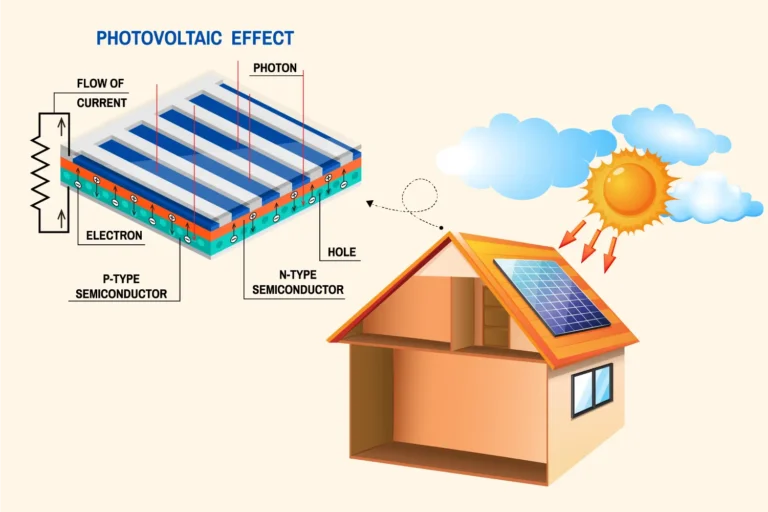
The journey of power begins with sunlight. Solar panels mounted on your station or set up nearby capture photons and convert them into usable electricity through a process called the photovoltaic effect.
How Photovoltaic Cells Generate Electricity
When photons from sunlight strike photovoltaic cells made of silicon semiconductor material, they excite electrons loose from their atoms. This movement creates a flow of direct current electricity, known as the photovoltaic effect. Most portable solar power stations use monocrystalline silicon panels because they achieve 18 to 23 percent efficiency while remaining compact and lightweight. These panels connect to your power station using MC4, XT60, or XT90 connectors that allow flexible setup and easy expansion.
On a sunny day, a 200W panel produces close to its rated output. Under cloudy conditions, output drops to 30 to 50 percent. Always position panels in direct sunlight and angle them toward the sun for maximum energy harvest.
Connecting Multiple Solar Panels
You can link multiple panels together to increase charging speed. Series connections increase voltage, which works well when your station requires higher input voltage. Parallel connections increase current while maintaining voltage, which is ideal for boosting amperage without raising voltage. High end models like the EcoFlow DELTA Pro support up to 1,600W of solar input using dual panel setups, cutting recharge time significantly.
Battery Storage and Power Capacity
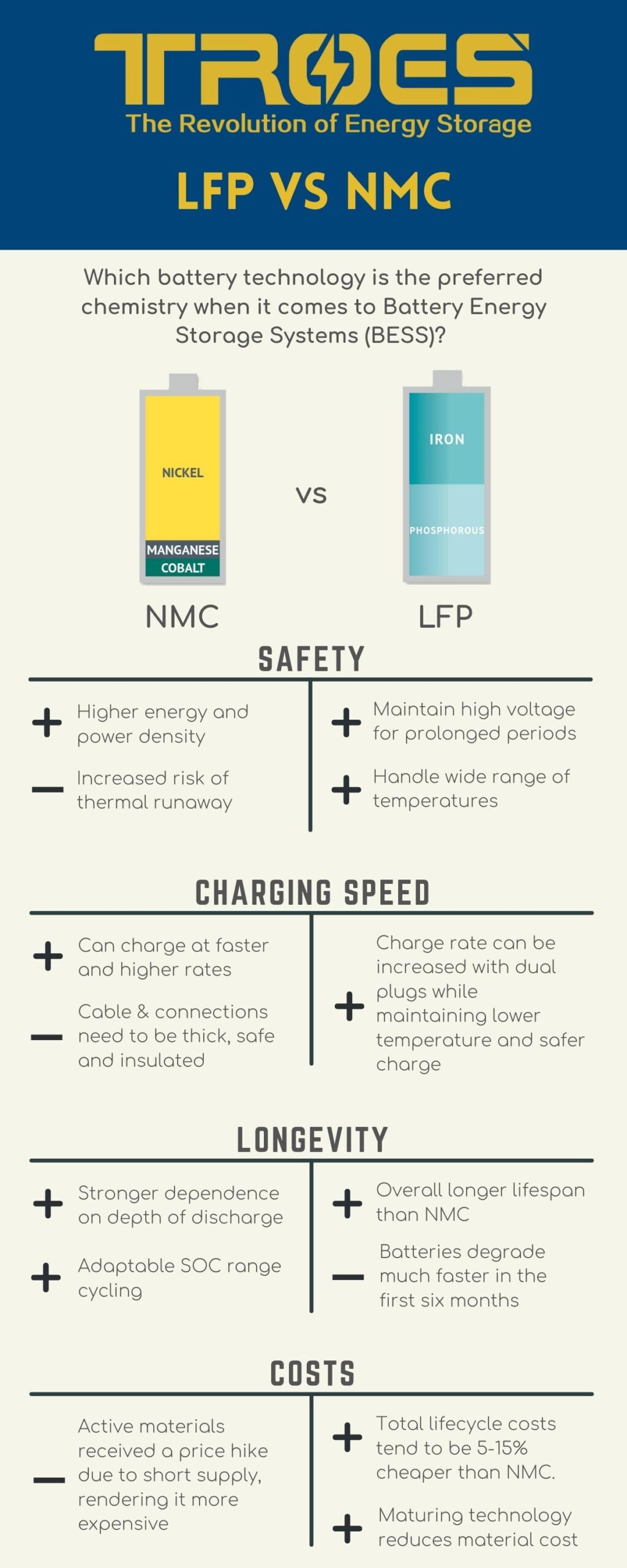
The battery is the heart of any solar power station. It stores all the captured energy until you need it, enabling power access even at night or during cloudy weather.
Lithium Iron Phosphate vs. NMC Batteries
Two battery chemistries dominate the modern market. Lithium iron phosphate, also called LiFePO4, offers over 3,000 charge cycles, deep discharge capability of 80 to 100 percent, and superior safety with no thermal runaway risk. This makes it ideal for home backup and long term use. NMC batteries, which contain nickel, manganese, and cobalt, are lighter and more compact but limited to 500 to 1,000 cycles. They work best for portable models where weight matters more than longevity.
Lead acid batteries have virtually disappeared from modern units because they require maintenance, weigh significantly more, and offer far shorter lifespans. While LiFePO4 costs more upfront, it lasts three to five times longer than lead acid, making it more cost effective over time.
Understanding Watt-Hours and Runtime
Battery capacity is measured in watt-hours. A 1,000Wh station can theoretically power a 100W device for 10 hours, though inverter losses of 10 to 15 percent reduce real world runtime. A 10W LED light runs for roughly 90 hours on a 1,000Wh station, while a 60W laptop runs for about 14 hours. A 50W mini-fridge operates for roughly 17 hours, and a 60W CPAP machine runs for approximately 14 hours.
Choose a station with 20 percent more capacity than your daily needs to account for inefficiencies and partial charging scenarios.
Charge Controller Function and Types
The charge controller acts as a gatekeeper between your solar panels and the battery, regulating electricity flow to prevent damage and maximize efficiency.
MPPT vs. PWM Controllers
Two controller types exist in modern systems. PWM controllers are basic and low cost but achieve only 70 to 80 percent efficiency. They are found primarily in budget systems. MPPT controllers are advanced units that adjust voltage and current in real time to maximize solar harvest, achieving 90 to 95 percent efficiency. An MPPT controller can deliver up to 30 percent more energy than PWM, especially on cloudy or cold days when conditions are less than ideal.
Protection Features in Modern Controllers
Quality charge controllers include multiple protection mechanisms. Overvoltage protection prevents battery damage from excessive input. Reverse polarity protection stops current from flowing the wrong direction. Short circuit and thermal shutdown features protect against electrical faults. Low voltage disconnect prevents the battery from draining too deeply, which would damage its capacity.
The AFERIY P210 uses MPPT technology to optimize solar input while protecting its 2,000Wh battery from damage.
Inverter Operation and Power Output
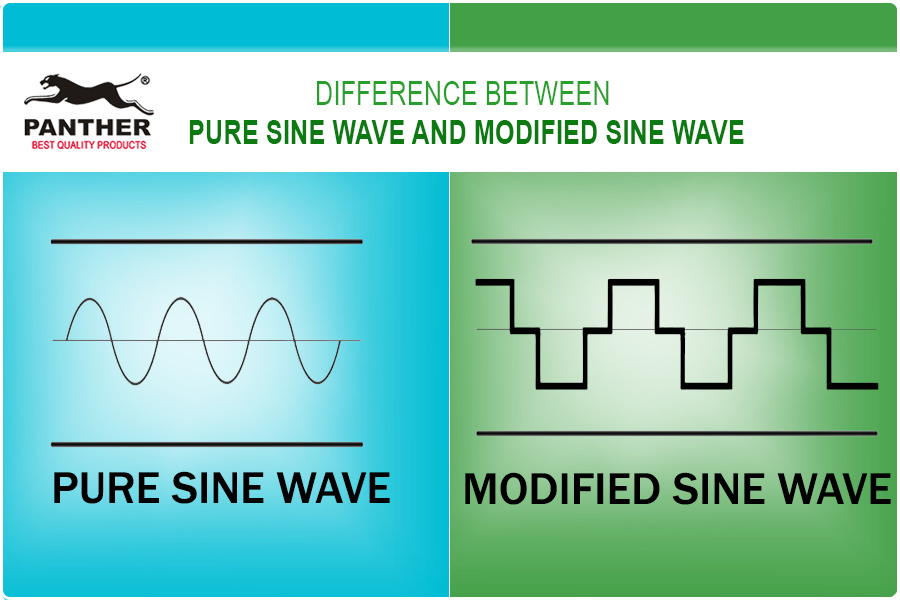
The inverter transforms stored battery power into the alternating current that most household devices require.
Pure Sine Wave vs. Modified Sine Wave
Modified sine wave inverters are cheaper but can damage sensitive electronics like laptops, medical devices, and equipment with AC motors. They have largely disappeared from quality modern systems. Pure sine wave inverters produce smooth, grid quality power that matches what comes from wall outlets. This waveform is standard in reputable brands like Bluetti, EcoFlow, and Anker. It is essential for running CPAP machines, refrigerators, and electronics with motors.
Continuous vs. Surge Power Ratings
Inverters list two power specifications. Continuous wattage represents sustained output, such as 2,000W. Surge wattage indicates the short burst capacity needed to start motors, which can reach 4,800W on some models. A refrigerator may run on 150W but require 800 to 1,200W surge to start its compressor. Always check both ratings before connecting high draw appliances.
Step-by-Step Energy Flow Process
Understanding how energy moves through your system helps you optimize performance and troubleshoot issues.
From Sunlight to Usable Electricity
The energy flow follows five distinct steps. First, sunlight hits the solar panels and generates DC electricity. Second, the charge controller regulates voltage and current to safely charge the battery. Third, the battery stores energy for use day or night. Fourth, when you plug in a device, the inverter converts DC to AC. Fifth, power delivers through AC outlets, USB ports, or 12V DC sockets. The LCD screen shows real time input from solar, output to your devices, and battery percentage.
Avoiding Double Conversion Loss
Some devices like 12V fridges and LED lights run on DC power natively. Plugging them into an AC outlet forces a DC to AC to DC conversion, losing 10 to 15 percent efficiency in the process. Use the 12V DC or USB-C PD port directly for compatible devices to maximize your runtime.
Recharging Methods and Speed
Solar power stations support multiple ways to recharge, giving you flexibility when sunlight is limited.
Solar vs. Wall vs. Car Charging
Solar charging is the primary method and takes three to eight hours depending on panel wattage and sunlight conditions. AC wall outlet charging is the fastest option, with high end models recharging in one to three hours using technologies like EcoFlow X-Stream. Car charging via 12V adapter is slower but useful for emergency top ups during road trips.
A 1,000Wh station takes approximately six hours via 200W solar panel but only 1.5 hours via AC wall outlet.
Dual Input Charging Benefits
Some models accept solar and AC input simultaneously, reducing total recharge time. The EcoFlow DELTA Pro can accept solar and AC at once, which proves ideal for cloudy days when solar input alone would take much longer.
Key Applications and Use Cases
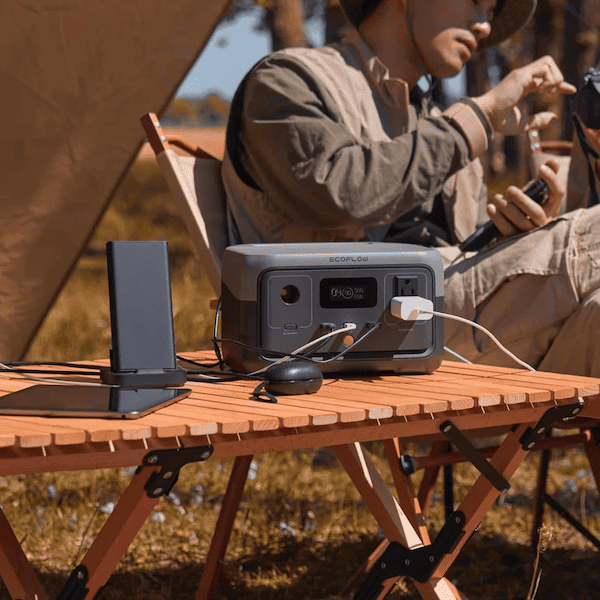
Solar power stations serve diverse needs across multiple scenarios.
Emergency Home Backup
During blackouts, a 1,500 to 3,000Wh LiFePO4 station can power a refrigerator at 150W, a CPAP machine at 60W, a Wi-Fi router at 10W, and LED lights at 10W each. Use a transfer switch or plug directly into outlets to avoid back feeding the grid.
Outdoor and Mobile Living
These stations excel for camping, powering lights, stoves, and phones. They work equally well in RVs and boats where silent, emission free energy makes a real difference. For tiny homes, they enable off grid living without the need for refueling. The EcoFlow RIVER 2 weighs just 7.7 pounds, making it perfect for backpacking and hiking trips.
Advantages Over Gas Generators
Solar power stations offer compelling benefits compared to traditional fossil fuel generators.
Silent, Clean, and Low Maintenance
Unlike gas generators, solar stations produce zero emissions, making them safe for indoor use. They operate silently with noise under 50 dB, which is only fan noise. There is no maintenance required, no oil changes, no spark plugs, and no fuel storage needed. Best of all, sunlight is free and limitless.
A 2,000Wh unit can run a mini-fridge for 15 or more hours, which is enough for most emergency scenarios.
Long-Term Cost and Environmental Benefits
After your initial purchase, operating cost is zero. LiFePO4 batteries last 10 or more years with over 3,000 cycles. Solar panels last 25 to 30 years. Higher upfront cost saves money and carbon over the lifetime of the system.
Limitations and Realistic Expectations
Understanding what solar power stations cannot do helps you set realistic expectations.
Power Capacity and Appliance Limits
Solar power stations cannot run high wattage appliances like central air conditioning, electric water heaters, ovens, or dryers. They are best suited for small to medium loads. The total device wattage must stay below the inverter continuous rating.
Sunlight Dependence and Recharge Time
Charging slows significantly on cloudy days or during winter months. Always have a backup charging method available, whether AC wall outlet or car adapter. Store your station at 50 to 80 percent charge and recharge every three to six months if unused for extended periods.
Smart Features and System Monitoring
Modern solar power stations include intelligent features that enhance usability and control.
App Connectivity and Remote Control
Many models from EcoFlow, Bluetti, and Anker offer Wi-Fi or Bluetooth connectivity to smartphone apps. These apps enable real time power usage tracking, battery level alerts, charging schedule setup, and firmware updates. The AFERIY P210 lacks app support but provides complete data on its LCD screen.
LCD Display and Error Codes
Front panel displays show input and output wattage, battery percentage, estimated runtime, and error codes. If an overload warning appears, unplug high wattage devices immediately to prevent damage.
Buying Guide: Choosing the Right Model
Selecting the right solar power station requires evaluating several key factors.
Battery Chemistry and Lifespan
Prioritize LiFePO4 for longevity with over 3,000 cycles, safety with no thermal runaway, and deep discharge capability. Avoid lead acid unless budget constraints are severe.
Output Ports and Device Compatibility
Ensure the station has AC outlets with pure sine wave output, USB-C PD at 60W or higher for laptops, 12V DC for fridges, and XT60 or XT90 connectors for power tools. Verify that your specific devices are supported before purchasing.
Expandability and Warranty
Look for models that allow additional solar panels and external battery expansion. Choose brands offering five to 10 year warranties, particularly for LiFePO4 units. Top brands include EcoFlow, Bluetti, Anker, Goal Zero, and Jackery.
Frequently Asked Questions About Solar Power Stations
Can a solar power station power a refrigerator?
Yes, most mid to large capacity stations can power a refrigerator. A 1,000Wh station runs a typical mini-fridge for 15 to 17 hours. Full size refrigerators require more capacity, so choose a model with at least 2,000Wh and sufficient surge wattage for compressor startup.
How long does it take to charge a solar power station with solar panels?
Charging time depends on panel wattage and sunlight conditions. A 200W panel charges a 1,000Wh station in approximately five to six hours of optimal sunlight. Cloudy conditions extend this to 10 hours or more. Higher wattage panels reduce charging time proportionally.
Can I use a solar power station indoors?
Yes, solar power stations are completely safe for indoor use. They produce zero emissions, unlike gas generators which create dangerous carbon monoxide. You can safely operate them in basements, apartments, or garages during power outages.
What is the lifespan of a solar power station battery?
LiFePO4 batteries last over 3,000 charge cycles, which translates to roughly 10 years of regular use. NMC batteries typically last 500 to 1,000 cycles or three to five years. Solar panels themselves last 25 to 30 years.
Can I connect multiple solar panels to one power station?
Yes, most stations support multiple panel connections. You can connect panels in series to increase voltage or in parallel to increase current. Check your station specifications for maximum solar input capacity, which ranges from 200W on small units to 1,600W on expandable systems like the EcoFlow DELTA Pro.
Final Thoughts on How Solar Power Stations Work
A solar power station is more than a convenient gadget. It represents a fundamental shift toward resilient, sustainable energy independence. The system works by capturing sunlight through photovoltaic panels, converting that energy to DC electricity, regulating it through a charge controller, storing it in a lithium battery, and converting it to AC power through a pure sine wave inverter for use whenever you need it.
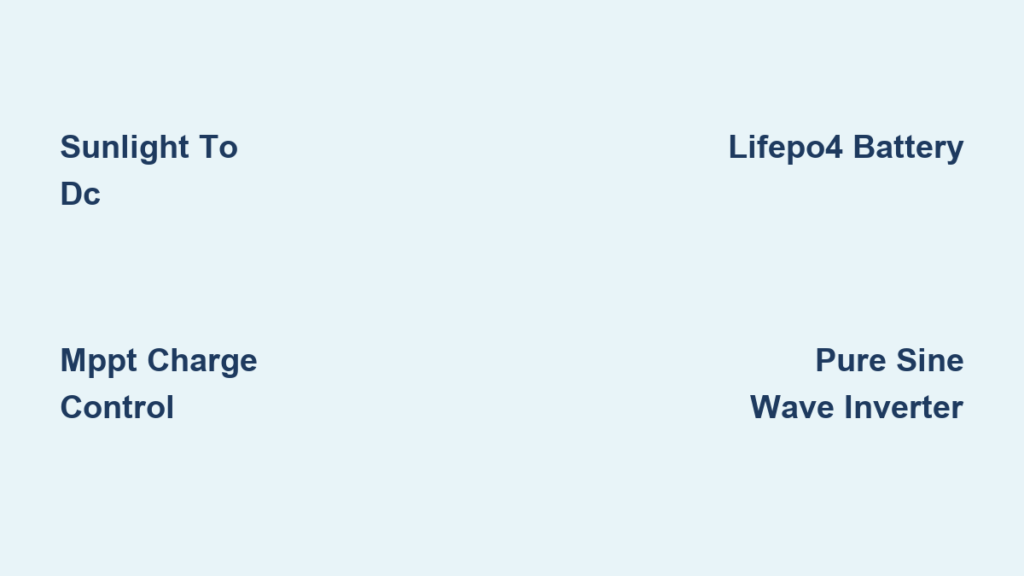
The key components work together seamlessly. Solar panels capture free energy from the sun. MPPT controllers maximize harvest efficiency. LiFePO4 batteries provide safe, long lasting storage. Pure sine wave inverters deliver clean power compatible with all electronics. This integrated approach creates a silent, emission free alternative to gas generators that works for emergency backup, outdoor recreation, and off grid living.
Choosing the right model comes down to understanding your power needs, prioritizing LiFePO4 chemistry for longevity, ensuring adequate inverter capacity for your devices, and selecting a brand with strong warranty support. With falling prices, rising efficiency, and expanding smart features, now is the best time to invest in clean, silent, solar powered energy that keeps you powered through outages, adventures, and beyond.