You connect your battery charger, watch the needle swing, and wonder what it actually means. Understanding how to read a battery charger gauge is essential for safe and effective charging, especially with older manual models that use analog ammeters. Unlike smart chargers with digital displays, analog gauges require interpretation. The needle does not tell you the percentage charged. Instead, it shows current flow in amps, and watching how that changes over time reveals whether your battery is charging, full, or failing. This guide walks you through decoding every needle movement, avoiding common mistakes, and knowing exactly when your battery is ready.
Interpreting the Analog Ammeter on Your Charger
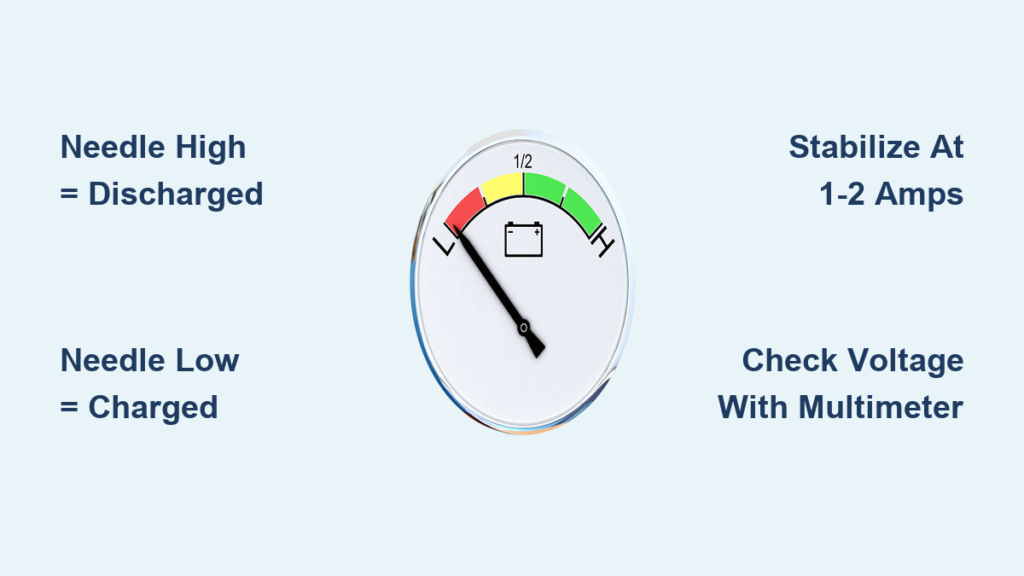
The gauge on most manual battery chargers is an analog ammeter that measures current flowing into the battery. It does not display voltage or precise charge level. Instead, it reflects how much power the battery is pulling at that moment.
What the Needle Position Means
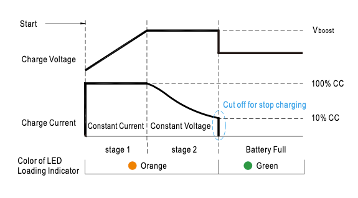
When the needle is far right at high amps, the battery is deeply discharged and drawing maximum current. As the needle moves left, charging is progressing and current is decreasing. When the needle is near zero to two amps on the far left, the battery is nearly or fully charged.
Key Gauge Features Explained
Most analog charger gauges include several important components you should understand.
The amps scale, typically ranging from zero to twelve amps, shows current draw. Color zones indicate status, with red meaning high draw and discharged, while green indicates low draw and charged. The optional percentage scale is only an estimate and not accurate. The selector switch lets you set the charge rate and battery type.
Understanding Needle Movement During Charging
A common misconception is that a needle near one hundred percent on the gauge means the battery is fully charged. The opposite is actually true. Low amperage indicates a full battery, while high amperage indicates a discharged battery.
How the Needle Behaves Over Time
On a ten amp charge setting, the needle may peg at ten amps when you first connect it to a dead battery. After thirty to sixty minutes, it should start dropping to eight amps, then six amps. After several hours, it drops to two to four amps. When fully charged, the needle settles at one to two amps or lower, usually in the green zone.
On a two amp trickle setting, the needle starts around two amps and gradually drops. When fully charged, it falls below one amp, often near zero.
How Charge Rate Settings Affect Gauge Readings
.webp)
On Ten Amp Fast Charge
The needle slowly drifts left over six to twelve hours during normal charging. If the needle stays above four amps after twelve or more hours, the battery may be sulfated or failing and unable to accept a full charge.
On Two Amp Trickle Charge
This setting works well for long term charging or maintenance. If the needle drops to zero immediately, check for loose connections or a dead battery that cannot accept any charge.
What Battery Charger Gauges Do Not Tell You
No Voltage Measurement
The gauge shows current in amps, not voltage. A battery can appear to be charging with the needle moving but still be weak or damaged. You need a digital multimeter to check the actual state of charge. A fully charged battery at rest reads twelve point six to twelve point eight volts. Below twelve point four volts means it needs more charge. Below twelve point zero volts indicates likely damage or deep sulfation.
Not a True State of Charge Meter
The percentage scale on many gauges is estimated and misleading. It is based on current draw, not voltage, and often overstates the charge level. A healthy battery draws less current as it charges, so low amps equals high charge, even if the percentage scale suggests otherwise.
Does Not Indicate Battery Health
A failing battery may continue drawing high current because it cannot hold a charge. If the needle does not drop after twelve to twenty-four hours, the battery is likely bad and needs replacement.
Identifying When Your Battery Is Fully Charged
Ammeter Needle Stabilizes
The final reading should be one to two amps on a ten amp setting, or below one amp on a two amp setting. There should be no further drop after two to three hours. The needle should be in the green zone. If the needle remains above three to four amps after twelve hours, the battery may be faulty.
Voltage Confirms Full Charge
Disconnect the charger and wait one to two hours for surface charge to dissipate. Test with a multimeter. Twelve point six to twelve point eight volts means fully charged. Below twelve point four volts means it still needs more charging time.
Specific Gravity Test for Flooded Batteries
Use a hydrometer to test electrolyte in each cell. A reading of one point two six five to one point two seven five means fully charged. All cells should read within zero point zero five zero of each other.
Troubleshooting Common Gauge Readings
Needle Pegged at Maximum Amps
This indicates the battery is severely discharged or possibly shorted. Monitor it for ten to fifteen minutes. If no drop occurs, the battery is likely defective.
Needle Does Not Move
This could mean poor connection, a dead battery, or a faulty charger. Check clamp connections, test battery voltage, and try a different outlet or charger.
Needle Fluctuates Wildly
Loose cables, a bad battery, or a charger issue can cause this. Inspect all connections and replace damaged cables.
Needle Stays High After Twelve Plus Hours
The battery cannot hold a charge and is likely sulfated or failing. Test with a multimeter or load tester and replace if needed.
Needle Drops to Zero Immediately
This indicates an open circuit or completely dead battery. Verify connections and check battery voltage.
Charger Types and Their Gauge Behavior
Manual Chargers
These chargers have no auto shutoff. The needle behavior is your only clue to charging progress. You must monitor constantly. There is a risk of overcharging, gassing, or explosion if left on too long. Use a timer and limit charging to twelve hours maximum unless closely watched.
Fully Automatic Chargers
The needle drops as the battery charges. These chargers have auto shutoff when current falls below a threshold. They often include a green full light. These are safer for unattended use.
Smart Chargers
These chargers use LEDs or a digital screen instead of an analog gauge. They use multi stage charging: bulk, absorption, then float. They automatically switch to maintenance mode.
Essential Safety Tips for Battery Charging
Choose the Right Charge Rate
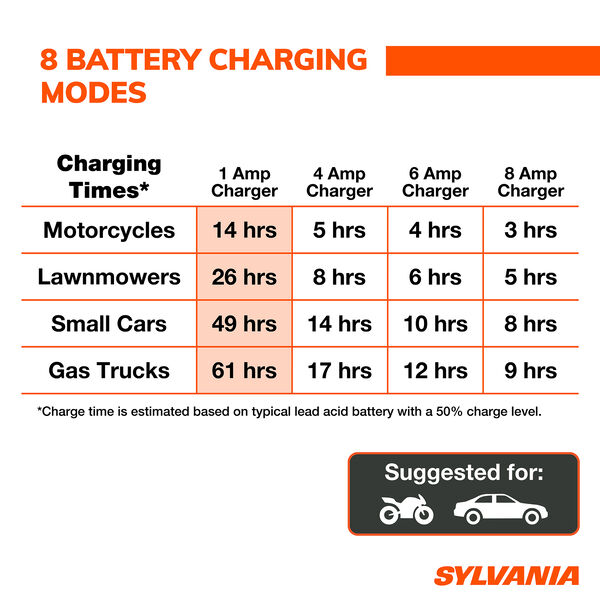
Using ten amps is like a firehose, fast but can overheat. Using two amps is like a garden hose, slow but safe and controlled. Choose two amps for deep cycle, old, or weak batteries, which takes eight to twelve hours. Choose ten amps for quick boosts on healthy batteries, taking three to six hours.
Set Charger Correctly
Select the battery type, either standard flooded or AGM. Choose the amperage, two amps for long term or ten amps for speed. Confirm the voltage setting matches six volts or twelve volts. Always use AGM mode for AGM batteries, as standard mode can overcharge and damage them.
Connect Safely
Attach the black clamp to the negative battery terminal. Attach the red clamp to the positive terminal. Plug in the charger only after connections are secure. Wear gloves and goggles. Charge in a well ventilated area because batteries emit explosive hydrogen gas.
Special Considerations for Different Battery Types
AGM vs Standard Batteries
AGM batteries are sealed and require voltage regulated charging. Standard flooded batteries may have removable caps and can be tested with a hydrometer. Always match the charger setting to the battery type.
Lithium and LiFePO4 Batteries
Do not use standard lead acid chargers unless explicitly compatible. Lithium requires constant current constant voltage charging. The full charge voltage is thirteen point six to fourteen point six volts depending on chemistry. Using a lead acid charger on lithium can cause fire or explosion.
Final Recommendations for Accurate Charging
Verify with a Multimeter
Never trust the gauge alone. Always confirm with a digital multimeter. Twelve point six volts or higher at rest means fully charged. Below twelve point four volts means it needs more time.
Upgrade to a Smart Charger
Models with auto shutoff, multi stage charging, and digital display eliminate guesswork and reduce risk.
Charge Slowly When Possible
Two amp charging extends battery life by reducing heat and stress on the battery cells.
Use Old Chargers Wisely
Manual chargers work well for jump starting or boosting but are not ideal for full charging unless you monitor them constantly.
Frequently Asked Questions About Reading Battery Charger Gauges
What does the needle on a battery charger gauge show?
The needle shows current flow in amps, not the percentage charged. When the needle is on the right at high amps, the battery is discharged. When it moves to the left near zero to two amps, the battery is nearly full.
Why does the needle start high and then move lower?
This is normal behavior. A deeply discharged battery draws maximum current, causing the needle to start high. As the battery accepts charge, it draws less current, causing the needle to move left toward the green zone.
How do I know when my battery is fully charged?
The needle should stabilize at one to two amps or lower with no further movement after several hours. Confirm with a multimeter reading of twelve point six to twelve point eight volts at rest.
Can I rely on the percentage scale on my charger gauge?
No, the percentage scale is estimated and often misleading. It is based on current draw, not voltage, and usually overstates the charge level. Always verify with a multimeter.
What if the needle stays high after charging for hours?
If the needle remains above three to four amps after twelve or more hours, the battery cannot hold a charge and is likely sulfated or failing. Test with a multimeter or load tester and replace if needed.
Is it safe to leave a manual battery charger unattended?
No, manual chargers have no auto shutoff and can overcharge, causing overheating, gassing, or explosion. Use a timer and monitor the charging process, or upgrade to an automatic or smart charger.
Key Takeaways for Reading Your Battery Charger Gauge
The battery charger gauge tells you about current flow, not charge level. A low needle reading means high charge, and a high needle reading means low charge. Combine gauge observation with voltage testing using a multimeter for accurate results. When the needle stabilizes at one to two amps and voltage reads twelve point six to twelve point eight volts at rest, your battery is fully charged. If the needle does not drop after twelve hours, the battery is likely bad and needs replacement. For safe and accurate charging, consider upgrading to a smart charger that handles everything automatically.